How Did the Peugeot 205 GTI Become a Hot Hatch Legend?
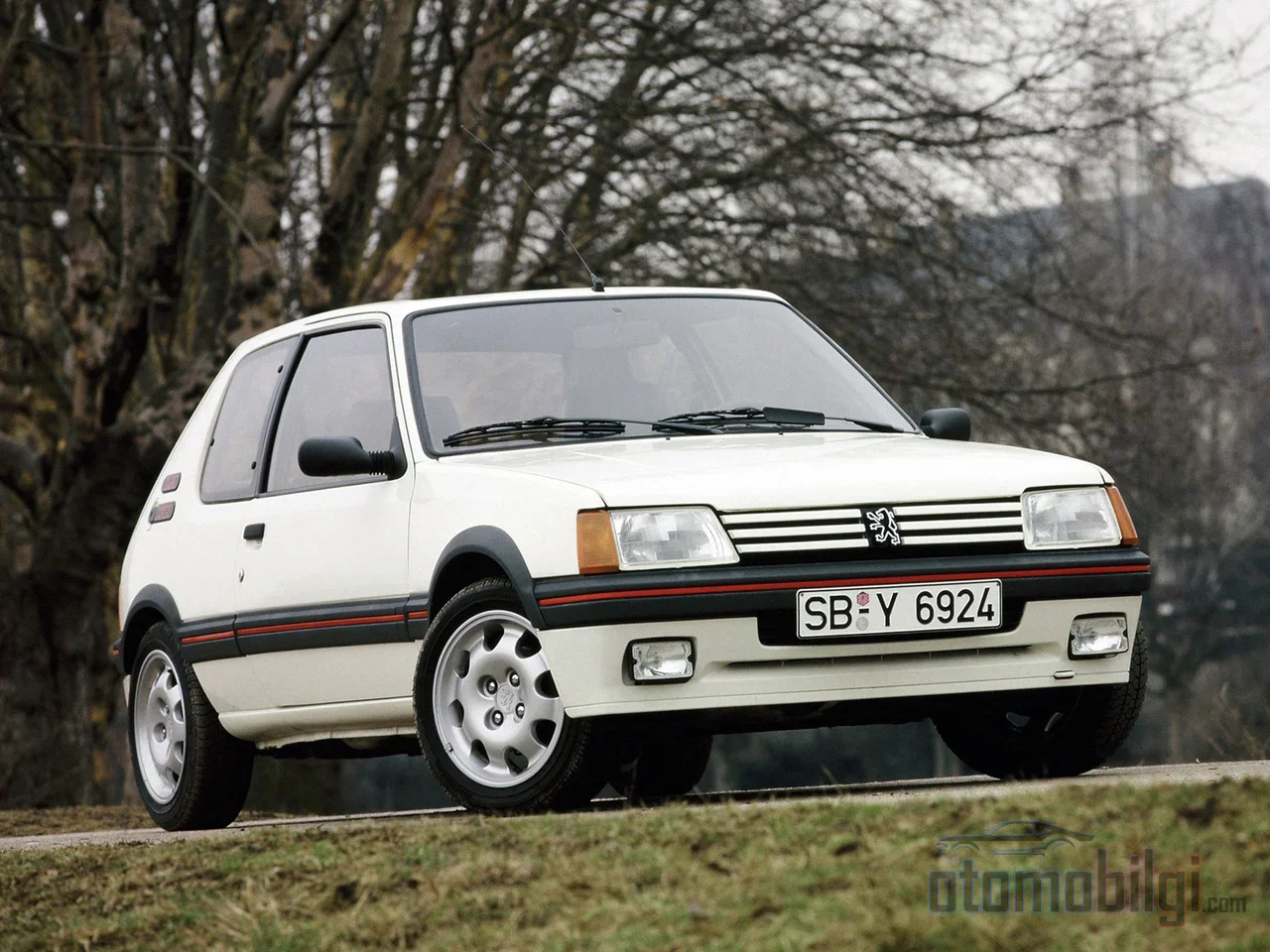
Think of a small hatchback: Weighing around 850 kilos, with no forced induction, no turbo, no supercharger, just a petrol engine that opens its arms at high revs. Moreover, the company that gave birth to it was the most conservative among its rivals, one in serious need of a turning point in those years. So how did this simple formula turn the Peugeot 205 GTI into a hot hatch legend still talked about forty years on? Here is the story of the most vibrant driving icon of the 1980s.
The Star of the Crisis Exit Plan: What Was Happening Before the 205 Was Born?
Peugeot's hands were pretty empty at the end of the 1970s. The brand was seen as the most conservative, the most uninspiring of France's big three, and it needed a serious recovery. In fact, the company had not come close to bankruptcy, but it was in need of a car that would change its destiny. Acquiring Chrysler's European operations in 1978 worked precisely at this point: The team coming from Simca and the old Rootes Group gave Peugeot expertise in building small cars.
The result was the Peugeot 205: A B-segment supermini introduced on February 25, 1983, replacing the 104 and the Talbot Samba. It is endlessly said that the design belongs to Pininfarina; yet Gerard Welter says the exterior design was done within Peugeot, and the Italian studio only drew the Cabriolet. So even the "Pininfarina design" label attached to the legend is disputed - isn't that a nice detail?
The 205 was an incredible commercial success: Between 1983 and 1999, in a single generation, a total of 5,278,050 units were produced. *What Car?* magazine named it Car of the Year in 1984, while CAR Magazine declared it "the car of the decade" in 1990. But the real story began in 1984, when the letters GTI were written under its hood.
Highlights
- The first 1.6 GTI weighed only 848 kg - not even half of today's hot hatches, but it feels far lighter.
- The 1.9 GTI, with a power-to-weight ratio of 142 hp per tonne, completed 0-60 mph in about 7.8 seconds.
- The 205 GTI ended the VW Golf GTI hegemony that had run since 1976 in 1984.
- On the rally side, the 205 T16 won back-to-back world championships in 1985 and 1986, becoming Group B's most successful car with 16 WRC victories.
- Good examples today fetch over 30,000 pounds in the UK; one example found a buyer for 69,768 pounds.
The Formula Is This Simple: Light Body, High Revs, Zero Forced Induction
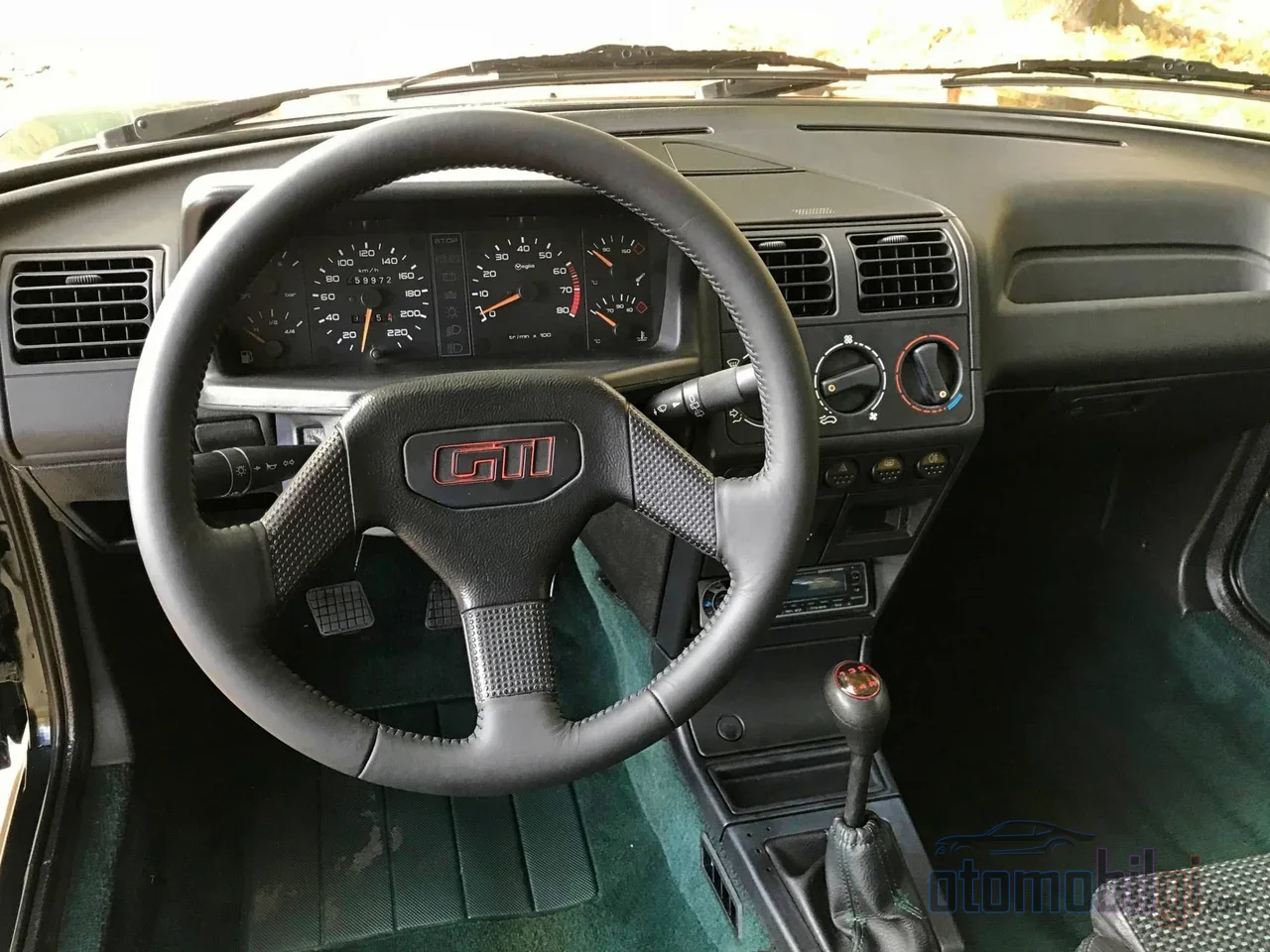
To sum up the secret of the 205 GTI in one sentence: weightlessness and communication. Today, "hot hatch" brings powerful turbo engines to mind, but the 205 GTI played exactly the opposite game. Its engine was fed by neither a turbo nor a mechanical supercharger; the power came naturally aspirated and at high revs. When this engine, placed in a body as light as a bicycle, was matched with a steering wheel that told the driver what was happening at every moment, an icon was born.
1.6: Revvy and Attacking
The first 205 GTI 1.6, which arrived in 1984, produced 105 PS with its fuel-injected XU5J engine; From the 1987 model year onward, with the large-valve XU5JA cylinder head, output rose to 115 bhp. A five-speed manual gearbox was standard. The first examples weighed just 848 kg - it is hard not to smile when you hear today's classmates. On the suspension side, the springs were lower and stiffer, and the control arms and anti-roll bar differed from the regular 205; a torsion bar setup worked at the rear and MacPherson suspension at the front.
1.9: Dignified and Torquey
In 1986, the 205 GTI 1.9 took the stage: a 1,905 cc XU9JA inline-four with 130 PS at 6,000 rpm and 164 Nm of torque at 4,750 rpm. The 0-60 mph time was around 7.8 seconds. In the final catalyst-equipped models, power dropped to 122 PS; these models had a slightly softer character than their catalyst-free siblings. Although weight rose to 910 kg, the power-to-weight ratio still reached an impressive figure of 142 hp per tonne.
The difference between the two siblings was not just in the engine. The 1.9 had half-leather seats, disc brakes on all four wheels, and 15-inch Speedline SL299 wheels; the 1.6 came with fabric seats, a front disc and rear drum setup, and 14-inch SL201 wheels. The long-stroke 1.9 drives more mature and torquey, while the 1.6 plays aggressively all the way to the redline. Which one is better? This debate still continues on forums: some purists prefer the balance of the 1.6, while those who want fast laps lean toward the traction of the 1.9. So why did this little car leave all its rivals in the shade?
| Specification | GTI 1.6 | GTI 1.9 |
|---|---|---|
| Power | 105 PS (later 115 bhp) | 128 PS (catalyst-equipped: 122 PS) |
| Weight | 848 kg | 910 kg |
| Character | Revvy, aggressive | Torquey, dignified |
| Brakes | Front discs, rear drums | Discs on all four wheels |
| Wheels | 14" SL201 | 15" Speedline SL299 |
The Frenchman Who Shook the Golf GTI's Throne: Where Did the 205 GTI Stand Against Its Rivals?
The arrival of the 205 GTI in 1984 effectively ended the Golf GTI hegemony that had continued uninterrupted since 1976. The VW Golf GTI Mk2 was a more refined car, but it was heavier and did not offer the same agility. The Renault 5 GT Turbo was fast in a straight line, but due to turbo lag it had a jumpy character; the engine hesitated for a moment before delivering full power. The Ford Fiesta XR2 and Escort RS were capable, but they lacked the 205's steering feel. The Vauxhall Astra GTE, the Lancia Delta HF Turbo, and the 105/125/130 TC versions of the Fiat Ritmo also appeared on the same list - none of them managed to capture that same purity.
An example comparison: The 205 GTI had a 5 hp advantage over the Fiesta XR2i; Ford, on the other hand, had a 4 lb-ft torque advantage. The XR2i was livelier at low revs, the 205 at high revs. In other words, rivals could win in certain areas, but in that channel of communication between driver and car, the 205 was in a class of its own. That is why, even today, the 205 GTI is used as the benchmark in group tests of new GTI models - and Peugeot, with the exception of the 306 GTI-6, never quite managed to recapture that success later.
Toward the end of its career, things got harder: In Britain in the early 1990s, rising insurance premiums and increasing theft negatively affected GTI sales; meanwhile, emissions rules ended production of the 1.6 GTI in 1992. Production came to a complete end in 1994.
The Monster of Group B: How Closely Related Is the 205 T16 to the Road Car?
The 205 GTI's relative on the racing scene shared almost nothing with the road car apart from its silhouette. The 205 T16 was developed solely for Group B rallying between 1984 and 1986: a mid-mounted turbocharged engine, all-wheel drive, and a spaceframe chassis. At least 200 road versions were produced for homologation; with their 1.8-liter turbo engine producing around 200 hp on the road, their wide body and fiberglass-heavy construction made them truly without equal. Twenty "Evo" cars were later added on top of that.
The results on the stage speak for themselves: world championships in 1985 with Timo Salonen and in 1986 with Juha Kankkunen - two consecutive titles and a total of 16 WRC victories. This made it the most successful car of Group B. When Group B was banned, Peugeot did not throw the T16 away; it moved to the Dakar and won the 1987 and 1988 Paris-Dakar with drivers like Ari Vatanen. And a bit of fresh news: in October 2026, Peugeot unveiled the electric E-T16 concept commemorating the 40th anniversary of the T16's back-to-back championships. The legend is still in the brand's showcase.
The 205 GTI on the Collector Market: How Much Today?
The 205 GTI, once an ordinary young person's car, is now a serious classic. While the 1.6 GTI cost 6,425 pounds in Britain in 1984, good examples today change hands for over 30,000 pounds, and one example sold for a record 69,768 pounds. The 1.9 GTI, meanwhile, trades 4,968 pounds above Peugeot's median price (8,250 pounds); meaning it sits in the brand's high-end segment. US auction data paints a more modest picture: 1.9 examples range from $13,000 to $14,000, with market value starting at $13,850 across all years. The regional differences of the market are a lesson in themselves - there is a serious gap between British enthusiasm and US auctions.
Special editions sell out quickly for enthusiasts, too: 1,200 GTIs in Miami blue and Sorrento green between 1989-90 (leather interior, sunroof and power steering), the 300-unit automatic Gentry, the 200-unit 1.9 series planned for the Japanese market of which only 33 were completed and sold to Europe, approximately 1,652 units of the fluorescent green Griffe exclusive to France in 1991, and the Pininfarina-built CTI convertible... Hagerty offers a detailed buying guide for the 1984-1994 range; the model is described there as "the icon of the '80s." And there is another very welcome development: in October 2020, Peugeot opened a factory restoration program for the 205 GTI under the "l'Aventure Peugeot" banner; parts that cannot be found will be produced with 3D printers. A manufacturer restoring a forty-year-old hatchback to factory standard really sums up the scale of the legend.
So What Made the 205 GTI a Legend? The Short Version of a Long Story
The formula that made the 205 GTI a legend is still understandable even today: lightness, a communicative steering wheel, a naturally aspirated engine that comes alive at high revs, everyday usability and affordability. It was a car that made the driver feel like they had done everything themselves, working with little assistance but plenty of feedback. Because it arrived before the turbo era, it had no concept of "lag"; the engine responded the instant you pressed the pedal. Conceptually, it delivered the organic evolution of the compact, lightweight hot hatch idea and cemented it - when people say "French hot hatch," it is still the first one that comes to mind.
Its rivals could beat it in some areas, of course. The Fiesta was livelier at low revs, and the Golf offered better material quality. But none of them made 105 PS as much fun with an 848-kilogram body. The title of "the best hot hatch of all time" is open to debate, of course; some defend the torquey maturity of the 1.9, others the rev-happy balance of the 1.6. But the common ground of the debate is clear: the 205 GTI set the standards of the genre, and for forty years no one has managed to write that formula more purely. If it were up to you, which one would you choose - the rev-happy 1.6 or the torquey 1.9?
Sources
- Peugeot 205 - Wikipedia
- 10 REASONS WHY THE PEUGEOT 205 GTi IS THE GREATEST HOT HATCH EVER - Stellantis Media
- Peugeot 205 T16 - Group B's double world champion - Racing Car Network
- The Peugeot E-T16 Concept Is An Electrified Group B Rally Homage - Carscoops
- Peugeot 205 1.9 GTI - Retro Car Dispatch
- The Peugeot 205 GTI – a classic in the making - Financial Times
- Ford Fiesta XR2i vs Peugeot 205 GTI - Throwback Thursday - Autocar
- Buying guide: Peugeot 205 GTI (1984 - 1994) - Hagerty UK
- Peugeot 205 GTI 1.9 Value by Year - DriveIndex
- Peugeot 205 GTi 1.9: Buyer's Guide [UPDATED 2026] - The Classic Valuer