How Did the Alpine A110 Become France's Sweetheart?
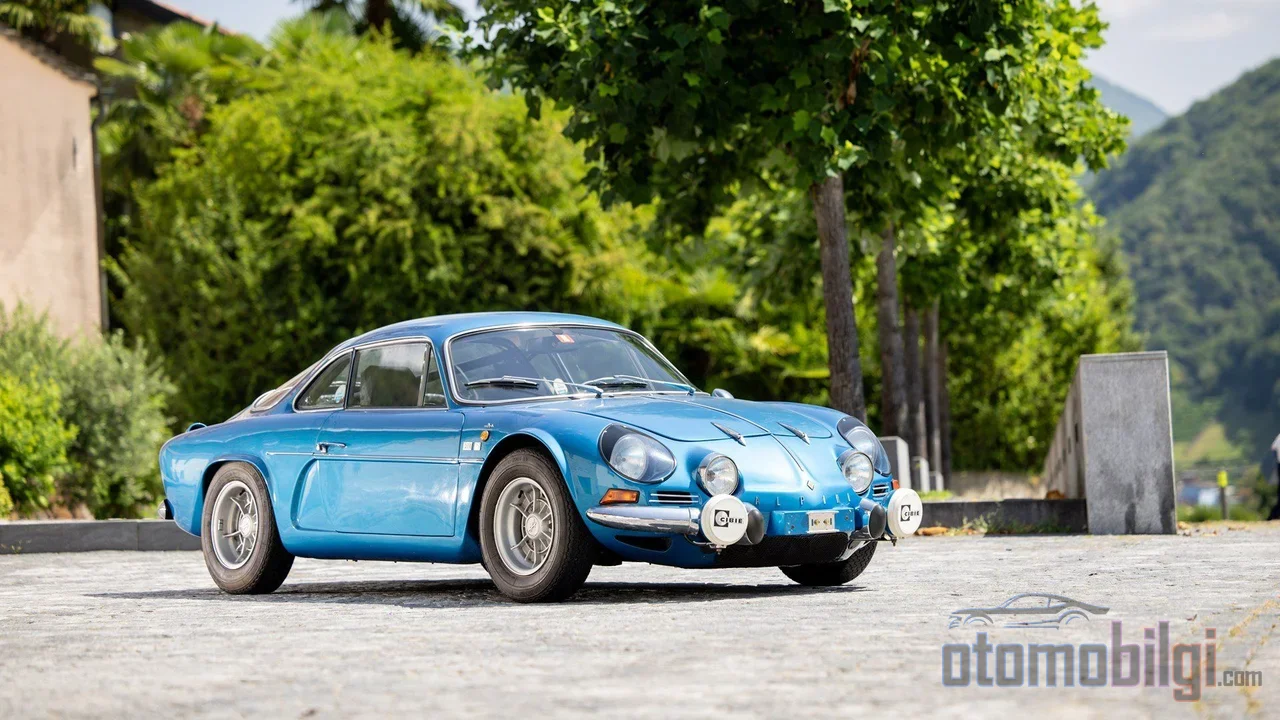
706 kilos. Try to imagine a sports car at that weight; just a little more than half of today's small city car. Now put an engine behind it, dress it in a fiberglass body, and send it to the icy corners of Monte Carlo. The result? A tiny giant from the town of Dieppe in France that won the first World Championship in rally history: the Alpine A110. So how did this car, which started out like a garage project, become a nation's trophy machine?
The story begins not with a product launch, but with a passion. II. Nobody back then knew that these modifications were the first spark of a legend. Apparently, the greatest stories are sometimes written in the smallest workshops. Jean Rédélé and an Idea Born in Dieppe
The founder of Alpine, Jean Rédélé, was as passionate as a Yamaha fan about competing in rallies in post-war France.
But the instrument in his hands was the Renault 4CV. He converted this modest car's gearbox from 3 speeds to 5, lightened the body, and achieved results that charted a path all the way to endurance races like Le Mans and Sebring. These successes caught Renault's attention and opened the doors of factory support to the young racer. Rédélé went on to found Société Anonyme des Automobiles Alpine; the name was a salute to rally successes in the Alps. Ponder this mindset for a moment:
Take a moment to think about this mindset: Does a car need a massive engine to be fast, or does it do better by burning little fuel and staying light? Rédélé chose the second camp and built all of Alpine's philosophy on this choice. Lightness was written into the brand's DNA - so much so that years later, the brand's 70th. The anniversary celebration was even made with a film called 70 Years of Lightness.
Berlinette: The A110 was unveiled as a prototype at the Paris Motor Show in October 1962, and production began in June 1963.

The A110 appeared as a prototype at the Paris Motor Show in October 1962, and production began in June 1963. The design bore the signature of the Italian master Giovanni Michelotti and took the form of a compact closed coupé known as the "berlinette". But the real magic was underneath the body.
The A110 sat on a steel backbone chassis inherited from the A108 - imagine a central tube running through the middle of the car, just like a spine. On top of that, body panels made of glass fiber, i.e. fiberglass, were fitted. Alpine was a pioneer in this field. The advantage of fiberglass is huge: stainless steel, easy to shape and very lightweight. This chassis architecture became the foundation for all Alpines until the A610, production of which ended in 1995. In other words, a single idea created a brand identity that lasted over thirty years.
Mechanically, the A110 used parts from the Renault 8. The engine was at the rear, and drive came from the rear as well. Today this layout is known as the signature of the Porsche 911, but the A110 was also a proud member of the same club. A 5-speed manual transmission, 3,850 millimeters of length and 706 kilos of empty weight - the numbers alone tell you how unique this car is.
Highlights
- Empty weight of just 706 kg; a fiberglass body + steel backbone chassis combination.
- It became the first car to win the first World Rally Championship (WRC) in 1973.
- It achieved a 1-2-3 finish at the 1971 and 1973 Monte Carlo Rallies.
- A total of 7,176 units were produced (excluding FASA production in Spain).
- In 2017, the brand was reborn with the modern A110; 28,701 units were sold from the second generation.
Engines: A Story Rising from 51 Horsepower to 180 Horsepower
The first version of the A110 produced only 51 horsepower with its 956 cc engine. You might say "You call that a car with this power?" but remember: the load it had to carry didn't even reach half a ton. That's what a power-to-weight ratio is all about - a small engine, very little weight, surprising results. To put it aptly, it's like hosting a wedding-reception-sized guest list in a small room: there's little space but nobody feels cramped.
Over the years the model grew and grew stronger. Here are the main versions offered throughout production:
| Version | Engine Capacity | Power |
|---|---|---|
| A110 956 | 956 cc | 55 PS |
| A110 1100 | 1,108 cc | 66-95 PS |
| A110 1300 | 1,255-1,296 cc | 105-120 PS |
| A110 1600 | 1,565 cc | 92-102 PS |
| A110 1600S | 1,565-1,605 cc | 125-128 PS |
| A110 1800 Group 4 | 1,798 cc | 185 PS |
By the end of the road, production power had reached 180 horsepower. The A110 1600S, with the Cléon-Alu aluminum-block engine taken from the Renault 16 TS and two Weber 45 carburetors, produced 125 PS at 6,000 rpm and saw a top speed of 210 km/h. For a French road car of the 1970s, that is a seriously impressive figure. And one small note: With Jean-Luc Thérier, the A110 won the 1972 Criterium des Cevennes, becoming the first car to win an international rally with a fuel-injected engine - a full eight years before the Audi Ur-Quattro!
Monte Carlo Victories: The Birth of a Cup Car
Now we come to the real question: How did the A110 come to be known as "France's cup car"? The answer is two words: Monte Carlo. In 1971, it won here with Sweden's Ove Andersson. And in 1973, it did even better: the podium's 1st, 2nd and 3rd places were all filled by Alpine cars. Three Alpines crossing the finish line one after another at this legendary event of ice, snow and mountain corners wrote the brand into the ranks of rally aristocracy overnight.
But the real date is 1973. The first season of the World Rally Championship (WRC) was being played out, and the A110 dominated the stage. Winning six of the season's 13 rounds, the A110 1800 Berlinette took victory at Monte Carlo with Jean-Claude Andruet, in Portugal and the Acropolis with Jean-Luc Thérier, in Morocco with Bernard Darniche, at Sanremo again with Thérier, and at the Tour de Corse with Jean-Pierre Nicolas at the wheel. The result: Leaving giants like Lancia, Porsche and Ford behind, Alpine became history's first WRC manufacturers' champion. A car that emerged from Dieppe's small workshop was crowned in the world's most grueling rallies. If this story were a movie script, the screenwriter would say "that's a bit too much."
It didn't remain limited to the rally scene: The A110 also played a key role in Renault's entry into Formula 1 and continued to be built as an F1 test car until 1976.
The Decline, Renault, and Years of Silence
Every legend has a shadow season. In 1974, the first car designed from scratch for rallying - the mid-engined Lancia Stratos - entered the scene and rewrote the rules. The rear-engined A110, however, had reached the limit of its development potential. Fuel injection didn't bring the expected performance increase, and the experimental 16-valve twin-cam engines didn't inspire confidence. The Stratos instantly rendered the A110 and many other rally classics obsolete on the international scene. Sales figures showed this painfully: Alpine, which produced 1,421 cars in 1972, dropped to 957 in 1974.
To keep the company afloat, Renault stepped in and took over the brand. But in those same years, the A110's production was also approaching its end: Production in Dieppe ended in July 1977, and on the FASA line in Spain in May 1978. A total of 7,176 cars were produced in France, and approximately 1,566 cars in Spain. A side note: The A110 was not produced only in France - licensed production was carried out in Mexico by DINA under the name "Dinalpin," and in Bulgaria as the "Bulgaralpine." The FASA versions in Spain were the only version sold outside France with the same name and specifications.
The Dieppe factory did not die. The Renault 5 Turbo was produced there; the factory gradually became the central hub of Renault Sport, and legendary versions such as the Clio 172, Clio 182, and Megane R26.R were developed there. In short, the A110 was gone, but its spirit never left the line.
The Return in 2017: The Berlinette Is Born Again
After a long silence, in 2012, for the 50th anniversary, the A110-50 concept was like a signal, and in 2017 the modern A110 was finally officially introduced. Like a student who had learned from its grandmother, the new generation applied the same philosophy with current technology: A body made of 96% aluminum, weighing approximately 1,100 kg, and a 1.8-liter turbocharged four-cylinder engine at the rear. 252 PS of power, a 7-speed dual-clutch transmission, and 0-100 km/h in 4.5 seconds - a formula that preserved the old berlinette's spirit while adapting to the pace of the era.
The A110 S version even pushed this power to 300 PS. The Dieppe factory had been producing the A110 since 1969, and according to official figures, more than 35,000 A110s were produced in total, including the modern generation. End-of-series prices in France were also remarkable: The A110 was at the €66,900 level, the A110 GTS at €79,900, and the track-focused A110 R at €122,900. The classic's collector value runs parallel to the official figures: for a 1964 A110 in good condition, a figure of around $83,200 is cited, and classic A110 examples change hands across a wide range. While the classic car market has not collapsed recently, it is worth adding that it has entered a more selective phase.
Where Is the A110 Today? A Legacy and the Start of a New Era
Production of the modern A110 ended in 2026. After nearly a decade of production life, a farewell series of 1,750 units was announced for the final run, and the counter at Dieppe showed approximately 35,450 A110s. The factory, meanwhile, has fully switched to electric production; the now 100% electric A390 comes off these lines. So Dieppe is still producing Alpine - only the energy source has changed.
The brand's cultural presence has not shrunk at all either. In the latest Largo Winch film, the iconic A110 GT made its big-screen debut; at Retromobile Paris 2026, its legacy was celebrated with a significant trio at the center of which stood the 1975 1800 S Group 4 Works rally car. At historic rallies like the Rallye Monte-Carlo Historique, the A110 remains a staple of the entry lists. It has now become less a race car and more a living legacy.
Why Is the Alpine A110 a Legend?
We can give a clear answer to this question as follows: The Alpine A110 is the French sports car that won rallying's first World Championship in 1973 with its 706-kilogram fiberglass body and rear-engine layout, grew accustomed to victory at Monte Carlo, and returned in 2017 with a modern interpretation. It is not only its victories that make it a legend; it was the proof that an engineering philosophy based on lightness and simplicity could succeed on the world stage. In the power race, the biggest engine does not always win - sometimes the smartest idea wins. If you saw an A110 today talking its weight advantage over a 911 in your garage, you would remember this sentence. Which one do you think smiles before the corner?
Sources
- Alpine A110 - Wikipedia
- Alpine A110 (2017) - Wikipedia
- Alpine Renault A110 - WRC.com
- Over 35,000 Alpine A110 Produced - Alpine Press
- Manufacture Alpine Dieppe Jean Rédélé - Renault Group
- A110 - Sports Coupe Alpine
- 1964 Alpine A110 Value - Hagerty Valuation Tools
- How the Alpine A110 Became One of the Greatest Sports Cars - Robb Report
- 1973 Renault Alpine A110 - Audrain Automuseum
- The Alpine A110 in the New Largo Winch Film - Alpine Media