Why Wasn't the F-88, Which GM Shelved, Ever Produced?
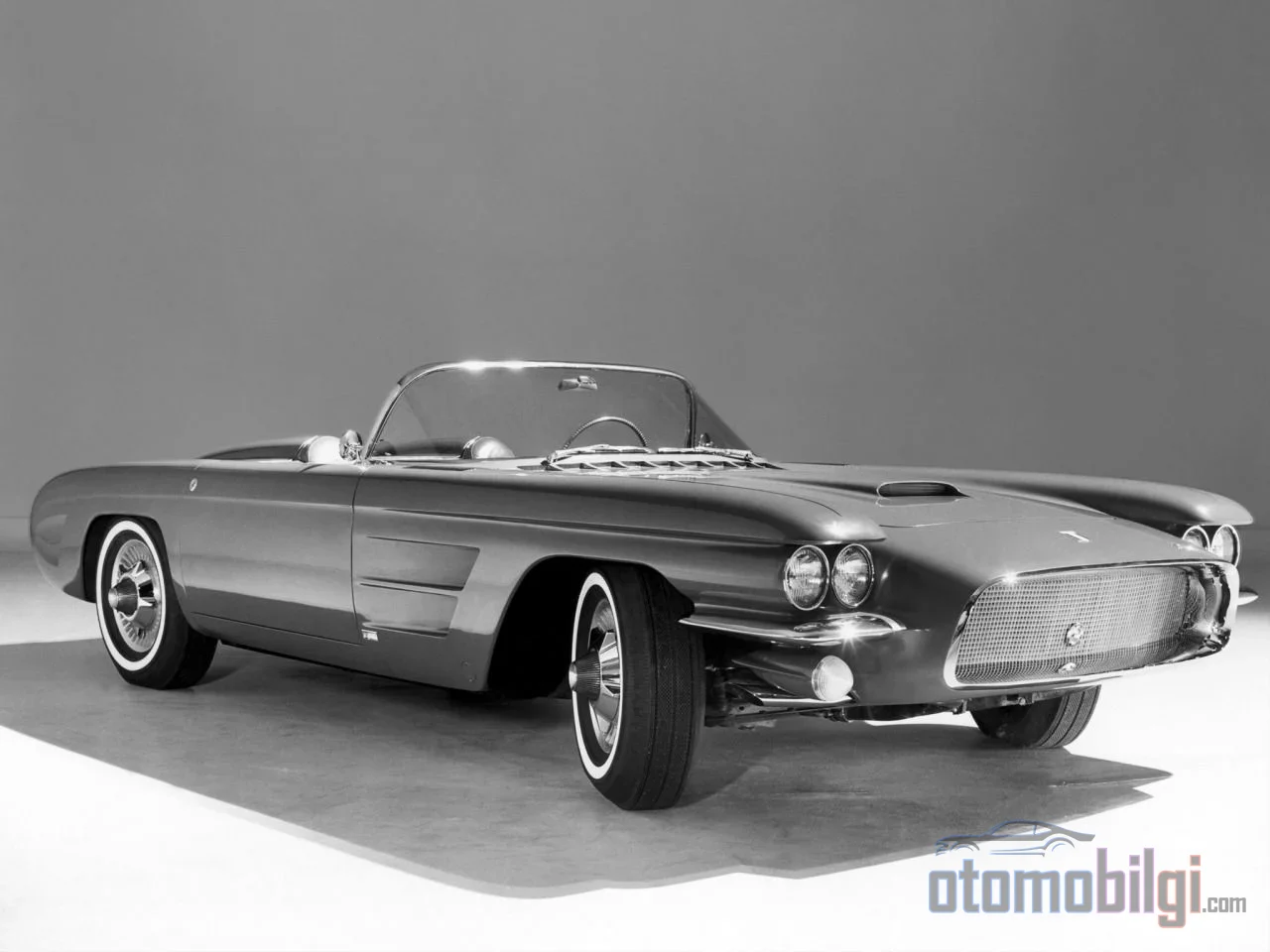
January 1954, New York, the Waldorf-Astoria Hotel. In the middle of General Motors' dazzling Motorama show stands a gold-colored roadster with a fiberglass body: The Oldsmobile F-88. It has a 324 cubic inch Rocket V8 under the hood, sits on a Corvette chassis, and unlike many other show concepts, it can actually be driven. It even produces 250 horsepower. The question is this: While the Corvette of the era was sold with a two-speed automatic transmission and a straight-six engine, why did GM put this car on the shelf instead of in the showroom? The answer is one of the most fascinating brand policy stories in American automotive history.
What Is the F-88 and How Was It Born?
The 1954 Oldsmobile F-88 was a "dream car" concept from the era of GM's legendary design chief Harley Earl. The first sketches of the car, which carried the internal code name XP-20, were drawn by Bill Lange, and the final touches were completed under the supervision of Art Ross. So this was not a desk sketch; it was a completed prototype, refined with real engineering effort.
The best detail is this: The F-88 was built on the Chevrolet Corvette chassis. It shared the same 102-inch, or 2,590 mm, wheelbase as the Corvette, and its body was covered in molded fiberglass. The chassis was shared, but the character was entirely different; much like two brothers growing up in the same house yet having completely different personalities.
It made its premiere on January 21, 1954, at the Waldorf-Astoria in New York, at the GM Motorama. A pleasant coincidence: The 1953 Corvette had also been introduced for the first time in exactly the same venue. After that, the F-88 was displayed at four more Motorama shows in Los Angeles, Miami, Chicago, and San Francisco. Demands for production came from the press and the public; but as it happens, it never reached series production.
Highlights
- It made its premiere at the GM Motorama on January 21, 1954, and was then displayed in four more cities.
- The 324 cubic inch (5,315 cc) Rocket V8 produced a cross-verified 250 hp.
- It carried a fiberglass body on a Corvette chassis with a 2,590 mm wheelbase.
- GM did not put the project into series production in order to protect the weak-selling Corvette.
- The only surviving example was sold in 2005 for $3.24 million.
Engine and Performance: Numbers That Would Embarrass the Corvette
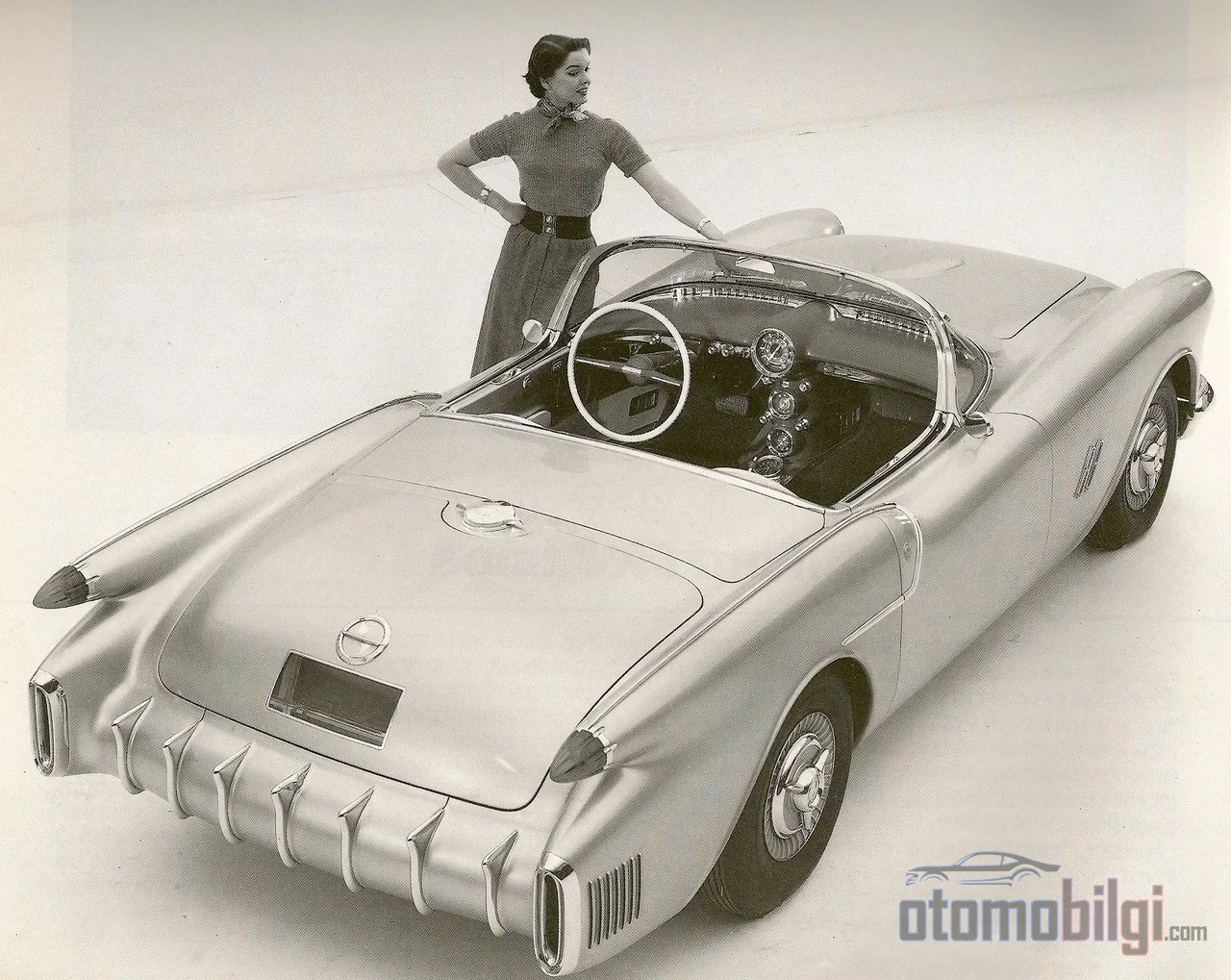
At the heart of the F-88 was Oldsmobile's Rocket V8 with a displacement of 324 cubic inches, or 5,315 cc. On the power side we have two figures, and both need to be reported honestly. The commonly cross-verified figure is 250 hp (SAE gross); this figure was reached at 4,600 rpm with a twin Rochester carburetor setup, and it belonged to the Super 88 engine. In examinations of the surviving car, it is stated that the four-barrel carburetor 324 ci Super 88 engine produced 270 hp. In short, depending on which setup you measure, we are talking about 250 or 270 horsepower; the common point is this: serious power for 1954.
To understand how ambitious these figures were, one needs to look at the landscape of the era. The standard 1954 Oldsmobile 88 produced 170 hp with its 324 ci V8; the Super 88 stayed at 185 hp. So the F-88 was outperforming even the strongest production car in its own family. A side note: The F-88's own torque figure, 0-100 km/h acceleration and fuel consumption were never disclosed by the manufacturer; this is normal for concept vehicles.
What about the Corvette? The 1954 Corvette was sold with the Blue Flame inline six-cylinder engine and a two-speed Powerglide automatic transmission; the automotive press of the era openly considered this combination weak. The F-88, on the other hand, came with a four-speed Hydra-Matic automatic transmission and a rear differential with a solid axle at a 3.55 ratio. Do the math yourself: eight cylinders, four gears, six cylinders, two gears.
| Specification | Oldsmobile F-88 (1954) | Chevrolet Corvette (1954) |
|---|---|---|
| Engine | 324 ci (5.315 cc) Rocket V8 | Blue Flame inline 6-cylinder |
| Power | 250 hp (cross-verified) | Its six-cylinder counterpart of the era |
| Transmission | 4-speed Hydra-Matic | 2-speed Powerglide |
| Wheelbase | 2.590 mm | 2.590 mm (same chassis) |
| Body | Molded fiberglass | Fiberglass |
Design: Plexiglas Headlights and a Dashboard Inherited by the Cutlass
The F-88's exterior is one of the best expressions of the light, hand-built futurism of the 1950s. The headlights were hidden under transparent Plexiglas bubble covers; the twin air vents behind the front wheel arches evoked the number "88" and fed air into the passenger compartment. Combined with the gold-colored body, the result was a show star that drew crowds at motor shows.
Inside, however, lay the truly interesting legacy: The F-88's dashboard design was used years later on the Oldsmobile Cutlass. So the concept did not go entirely to waste; its ideas seeped into production models. This detail shows that "dream car" projects were in fact design laboratories for the brands.
Why Did GM Stop the F-88?
Here is the heart of the story. At the center of the narrative is the fear of GM management that the F-88 would overshadow the sales of the weak-selling Corvette, that is, clearly outsell it. While the Corvette was still in its infancy, what would happen if a rival with a V8, four gears and better equipment came onto the field from within its own house? GM did not even see the need to ask this question and stopped the project at the concept stage.
We also know this was not an isolated example: Various GM concepts, including the 1954 Buick Wildcat II, were not put into production on the grounds that Corvette sales needed to be protected. The F-88 was part of a general pattern. In other words, the Corvette's throne was protected not only from outside rivals but also from candidates within its own company.
Was Being Expensive Also a Reason?
There is also a reality on the cost side: Putting the F-88 into series production would have been very expensive; the only way for the car not to affect Corvette sales would have been a high price. In other words, just like brand policy, cost was effectively prohibitive. There is even a softer view: some argue that these vehicles were simply style and engineering exercises from start to finish and were never seriously considered for production. But the project being shelved despite the Motorama crowd's and the press's demand for production is what keeps the "veto" narrative alive in the historical record.
How Many Were Built and How Many Remain?
This is where things get a bit murky, and an honest page of history should tell it as it is. Records on the prototype count mention figures ranging between three and four. According to the most comprehensive records, four prototypes were built, but only two could be fully documented, and today only one known survivor remains. Although two more bodies, referred to as shells, have been mentioned, this information could not be confirmed. What is certain is this: Today we have a single F-88.
And the story of that one example is a movie plot in its own right. While the car was in disassembled form, it passed into the hands of the famous collector E.L. Cord; Cord kept it at his home for years, and in the 1990s the car was fully restored.
The 3.24 Million Dollar Doomsday
The 2005 Barrett-Jackson Scottsdale auction was the pinnacle of the F-88's modern legend. Bidding reached 600,000 dollars within seconds, at 2.5 million dollars five buyers were still fighting it out, and the sale ended at 3.24 million dollars, a Barrett-Jackson record at the time. The buyer was John S. Hendricks, the founder of Discovery Channel. The car then went to the Gateway Automobile Museum in Gateway, Colorado.
The story does not end there: The one-off example was later put up for sale by Broad Arrow Auctions from the Gateway collection; its estimated price was in the range of 2 to 3 million dollars. Announced as "the only surviving example of GM's Motorama creation" and "obtained directly from GM", the auction reignited interest in this vehicle.
Would It Have Outdone the Corvette Had It Been Produced?
The short answer: There was probably a favorable scenario. The 1954 Corvette was weak on the performance front with its six-cylinder engine and two-speed transmission; facing it would have stood a 250 hp V8, a four-speed Hydra-Matic, and the dealer network of one of GM's most beloved brands. The view that this combination would have seriously challenged Corvette sales, or even left it behind, is still strongly debated in circles interested in the subject. And it is precisely for this reason that GM management hit the brakes.
But there is another side to the coin. There are plenty of people who argue that the F-88 was positioned as a luxury GT, more of a stylish cruising machine than a fierce performance warrior; it is even speculated that, had it entered production, it could have been positioned under the Cadillac brand. So whether it would have been a "Corvette killer" or a "mall crawler," we will never know.
This is the story of a concept too beautiful ever to enter production, and legendary enough to be worth up to 3.24 million dollars. The F-88 reminds us of this: Sometimes a car's impact on history is understood not from how many were built, but from who feared it even when it was not built. In 1954 GM could have lit a star capable of succeeding the Corvette; but it had no heart for two stars shining at the same time. What remains in our hands today is a golden fiberglass body and the question of "what if?"
Sources
- Oldsmobile F-88 - Wikipedia
- Parting Shot: Motorama "Dream Car" 1954 Oldsmobile F-88 - In The Garage Media
- 1954 Oldsmobile F-88 (aut. 4) specs - automobile-catalog.com
- Could this Oldsmobile F-88 have outsold the Corvette? - Classic Motorsports
- 1954 Oldsmobile F-88 Concept: The Olds 'Vette That Never Was - GM Authority
- Ask a Hemmings Editor: How many Oldsmobile F-88s did GM make? - Hemmings
- 1954 Oldsmobile F-88 Roadster - Supercars.net
- 1954 Oldsmobile F-88 Concept - Sportscar Market
- This 1954 Oldsmobile Concept Could Fetch $3 Million - Robb Report
- 1954 Oldsmobile F-88 Concept Car - Broad Arrow Auctions