Ford Mustang Ute Concept: One Hundred Percent Handcrafted
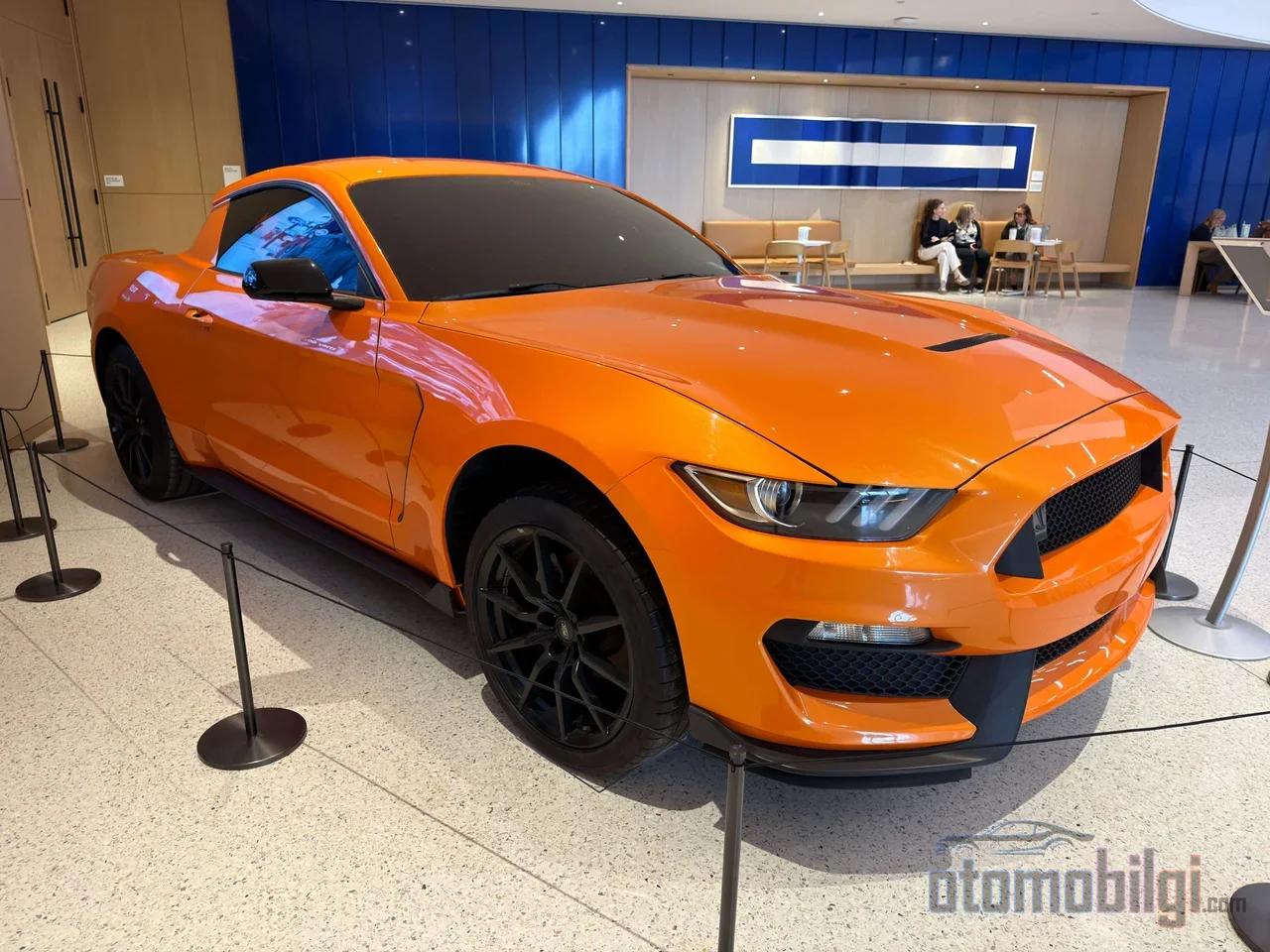
What does Mustang even mean? Fastback body, V8 sound and rear-wheel drive... But had a body style ever been attached in front of this name? Just as we were pondering this very question like a secret, the answer emerged: Ford built a single, hand-made Mustang pickup at the factory that nobody knew about for years. And not only that - it was made not for any promotional purpose, but to teach craftsmanship to apprentices! A car coming into the world this way surprises all of us, doesn't it?
In this article, I'm telling the story of that hidden Mustang pickup (or as automotive history enthusiasts call it, the Mustang Ute): where it was built, why it was built, why it remained hidden for years, and how it finally came to light. If you're ready, let's begin, because this story is nothing like classic concept car stories.
Highlights
- Ford made a one-off pickup conversion from the previous-generation S550 Mustang fastback.
- The vehicle was produced at the Experimental Vehicles Building in Dearborn, Michigan, in Ford's own metal shop.
- Hundreds of hours of handiwork went into the conversion, and the project was born as an apprentice training program.
- The vehicle was painted in Cyber Yellow; everything behind the cabin was reshaped.
- Hidden for years, the vehicle was revealed after joining the Ford Heritage Fleet collection in October 2026.
Was there a Mustang pickup?
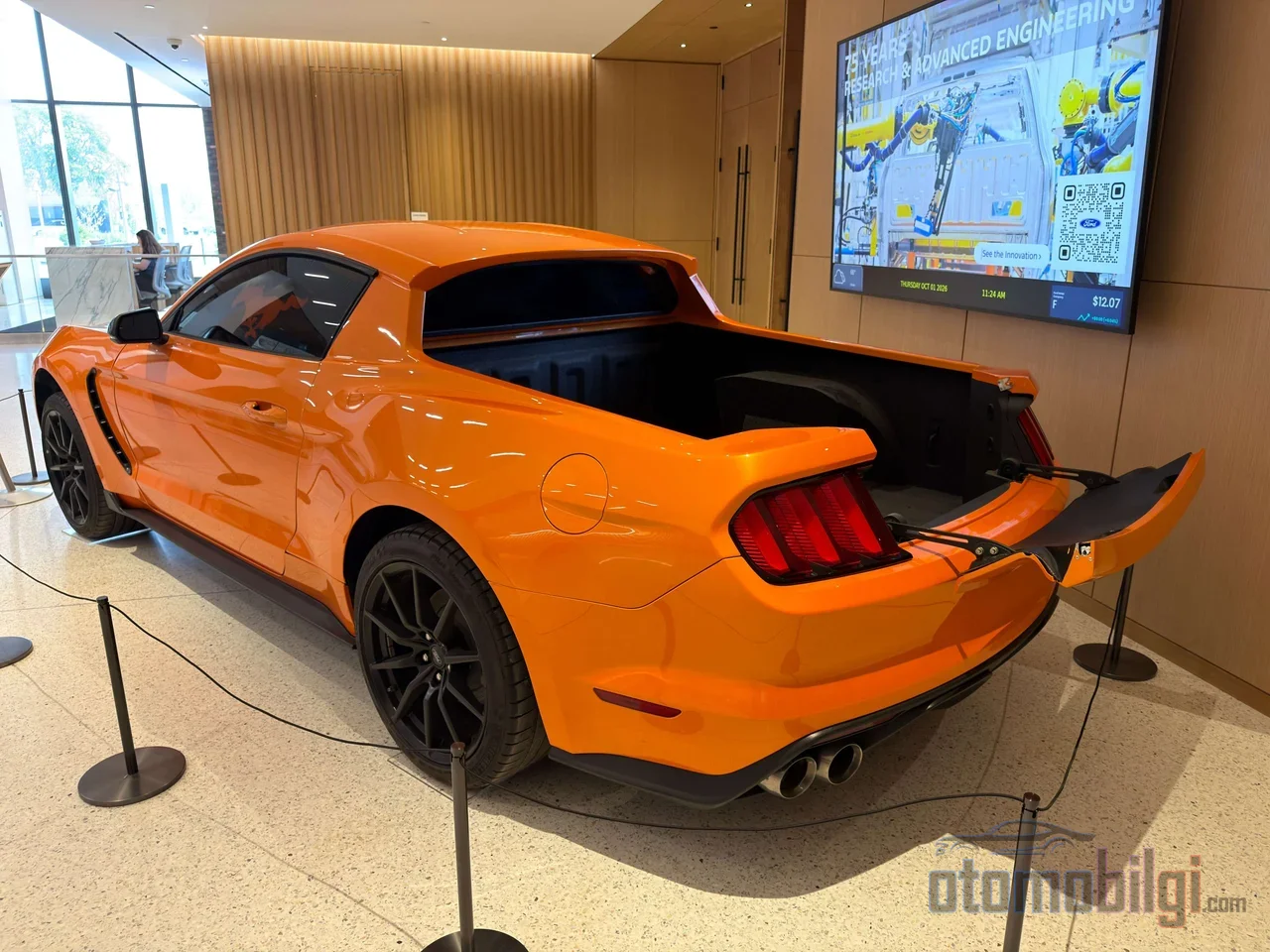
Now let's get to the most striking part: This vehicle was not an imaginary concept from a design studio, nor the work of an aftermarket shop. The vehicle was produced by Ford's own employees inside the company's own metal shop, within Ford's Experimental Vehicles Building (EVB for short) in Dearborn, Michigan. So the parts, the vehicle, the tools and the working hours all came from Ford itself. Although it never carried any sales purpose, this was not fan-made - it was an official in-factory experiment.
At the heart of its creation lies a very unexpected reason: The project was born as part of an apprentice training program. The EVB Metal Shop team was given the task of producing an unconventional concept vehicle starting from a production Mustang. The rationale, as explained by Ford's heritage fleet manager Matt Korczyk, is very clear: To give apprentices real-world, hands-on experience by building a concept vehicle. So this pickup's job wasn't to stand in a showroom, but to teach lessons in the workshop. That sounds like creative thinking to me - teaching a skill you can't convey on an exam paper, using a real vehicle!
How does an open bed come out of a fastback?
Technically, the conversion was carried out as follows: The vehicle's base was the previous-generation S550 Mustang fastback. The fastback rear body was removed and replaced with an open-bed pickup body. Everything behind the Mustang's nose and cabin was reshaped. The bumper and rear fenders were widened and rebuilt to frame the bed, unlike those found on the coupe or convertible.
Hundreds of hours of manual craftsmanship went into the conversion. The apprentices learned skills that are hard to teach in a classroom, such as metal shaping and panel assembly, hands-on. Of course, the car didn't just sit still: It was painted in Cyber Yellow. Let's add an intriguing detail: It is not known whether the car has an engine inside. The nose looking upward relative to the rear may indicate that an engine may be absent; if it were a static model built for training purposes, that would be perfectly normal. Ford never disclosed the technical specifications, detailed engineering information, or the exact production date - and that mystery keeps the story flavorful.
Why did it stay secret for years?
Think of most manufacturers' one-off vehicles: They appear at concept shows, are announced with press releases, and then enter a museum. Ford's Mustang, however, followed exactly the opposite path. No press release was ever issued, it never appeared at any auto show, and it was never featured in any promotional campaign. The vehicle sat quietly inside the EVB for years. If you like, think of it this way: After Ford dismantled it or forgot it in a warehouse, no enthusiast outside would ever have known of its existence. The complete silence surrounding such a special vehicle strikes me as incredible every time.
Then things changed: The vehicle was transferred to the Ford Heritage Fleet, the company's collection of historic vehicles. Matt Korczyk, manager of Ford USA's Heritage Fleet, shared photos of the vehicle in October 2026, and thus the world saw this car for the first time. And there is one more detail that, to me, is the sweet spot of this story: According to Korczyk, the vehicle is the first one taken out of the EVB to be displayed publicly. A Mustang that spent years living as a training vehicle behind closed doors instantly became the star of the heritage collection.
Is the timing a coincidence? The intersection with Australia's ute history
Everything was fine up to this point, but if you think like I do, a question must have crossed your mind: Why exactly at that time? The secret Mustang coincides with the period when the S550 platform arrived in 2015 and Ford Australia parted ways with the Falcon. Open-bed vehicles called utes were deeply loved in Australia, and Falcon ute production ended in 2016 along with the end of Australian Falcon manufacturing. Theoretically, a two-door, rear-wheel-drive Mustang ute with a V8 option could have carried on Australia's Falcon ute formula - it makes a lot of sense, doesn't it?
Still, it's best to be careful: All available evidence indicates that this vehicle was a fabrication exercise, not a cancelled production program. Ford never planned a production Mustang pickup and never gave any indication that such a vehicle was under consideration. Apart from fan-made renders and AI-generated images, no official Mustang pickup model has ever been announced; a factory-built Mustang pickup remains hypothetical. Some commentators say the vehicle's appearance is surprisingly close to something that could have been sold in Australia's Falcon ute days - but design quality and engineering depth are two different things; this training exercise seems to focus on the first one.
Why has the Mustang name always stayed on the same body throughout history?
The story of the name goes back a long way. The Mustang name is usually said to have been inspired by the P-51 Mustang fighter aircraft of World War II, but according to some accounts its origin is disputed; it is also reported that Lee Iacocca was referring to the Southern Methodist University football team called the Mustangs. Whichever is true, the name has largely stuck to the same formula since 1964: long hood, short rear, two doors and performance.
But that doesn't mean Ford never tried to carry the name onto other bodies. History is full of examples:
- shooting brake and four-door sedan designs from the 1960s onward - the sedan idea later partially came to life in the LTD LX.
- The mid-engine Mach 2 concept, a bold experiment moving the engine from front to rear.
- A secret V10 Mustang prototype and a GT-R-style build.
- Baja-style off-road conversions.
- The electric crossover Mustang Mach-E - the name's most controversial move.
So Ford has been experimenting with the Mustang formula for over 60 years: hatchbacks, turbo fours, supercharged V8s, electric crossovers... The Mustang name has actually turned out to be quite a well-traveled one. But an open-bed pickup? That door has always remained closed - until this secret exercise. If you noticed, Ford showed dealers a four-door Mustang prototype in August 2026; so the debate over which vehicle types the name will extend to is still ongoing. A pickup, however, is not officially on the table.
Was there a pickup attempt before this Mustang?
A strange coincidence: In 1966 there were Mustang Ranchero conversions known among collectors as "Mustero". These were not Ford factory work; it is reported that the converter received Ford's approval to produce 50 Mustang pickups, charged $6,500 per conversion, and 35 were shipped. So even during the classic Mustang era there was a pickup dream, but it didn't count as factory production. As for Ford's own history, the closest equivalent of an open-bed coupe was the Ford Ranchero based on the Falcon and Torino between 1957 and 1979.
Now when you put the two stories side by side, the picture becomes clear:
| Attempt | Build | Status |
|---|---|---|
| Mustero (Mustang Ranchero, 1966) | External converter, with Ford's approval, for a $6,500 fee | 35 units shipped, not factory production |
| Secret Mustang Ute (S550-based) | Ford EVB Metal Shop, hundreds of hours of hand work | One-off training exercise, never offered for sale |
Let's not forget another resident of the collection: The Ford Heritage Fleet also preserves the experimental V10 Mustang, and that vehicle was recently brought back to running condition with the help of members of the original engineering team. It is not known whether the secret ute runs; since it was built for training purposes, it may well be a static model. Two secret Mustangs under the same roof - in my opinion, they deserve the place of honor in this collection.
What does this story tell us? Connecting to the present day
So let's give a straight answer to the question: The Mustang name never moved to a pickup in history because Ford never made it a production decision; the name extended to bodies such as coupes, convertibles, sedan designs, and crossovers, but an open-bed pickup came to life only twice, both as non-factory experiments. This single surviving S550-based example was not a product plan but a training exercise built to teach apprentices hands-on skills.
And in my view, that is the most beautiful part of the story: A vehicle can be built not for promotional purposes, but for the purpose of developing people. Hundreds of hours of handiwork, metal shaping, and panel assembly were learned not in a classroom, but on a real Mustang. The vehicle then joined the company's heritage collection and became the first car displayed outside EVB. A factory-produced Mustang pickup lives in the realm of imagination; it looks great on paper and in renders, but there is no official announcement.
I'll leave you with a question: If it existed... Would you still call a two-door, V8-powered, Cyber Yellow Mustang pickup a Mustang if you saw it on the road? I think not everything bearing the name may qualify, but this hidden ute makes us question once again where the name begins and ends. Thanks to Ford's culture of experimentation, perhaps in the future we will see an official answer to this question. Who knows?
Sources
- Ford Secretly Built a Mustang Truck; It Stayed Hidden Until This Month – This Day In Automotive History
- Ford Secretly Built A Mustang Pickup Nobody Knew About – Motor1.com
- Ford's Mustang Pickup Was Hidden for Years - Until Now – Autoblog
- Ford kept a secret one-off Mustang Ute hidden for years – Supercar Blondie
- The Mustang Ranchero was a strange piece of Mustang history – Racer
- Four-Door Ford Mustang Prototype Presented To Dealers – GM Authority