Japan's First Automobile: The Story of the 1907 Takuri
In 1917, while Henry Ford's assembly line was teeming with Model Ts, on the other side of the world a group of engineers was embarking on a much quieter but far bolder endeavor: building an automobile from scratch, with their own hands. So which was Japan's first car, who built it, and why did the massive Japanese automotive industry we know today explode decades rather than immediately after that first attempt? Here is that story - and believe me, it is far more competitive than you might think.
Japan's First Automobile: The 1907 Takuri
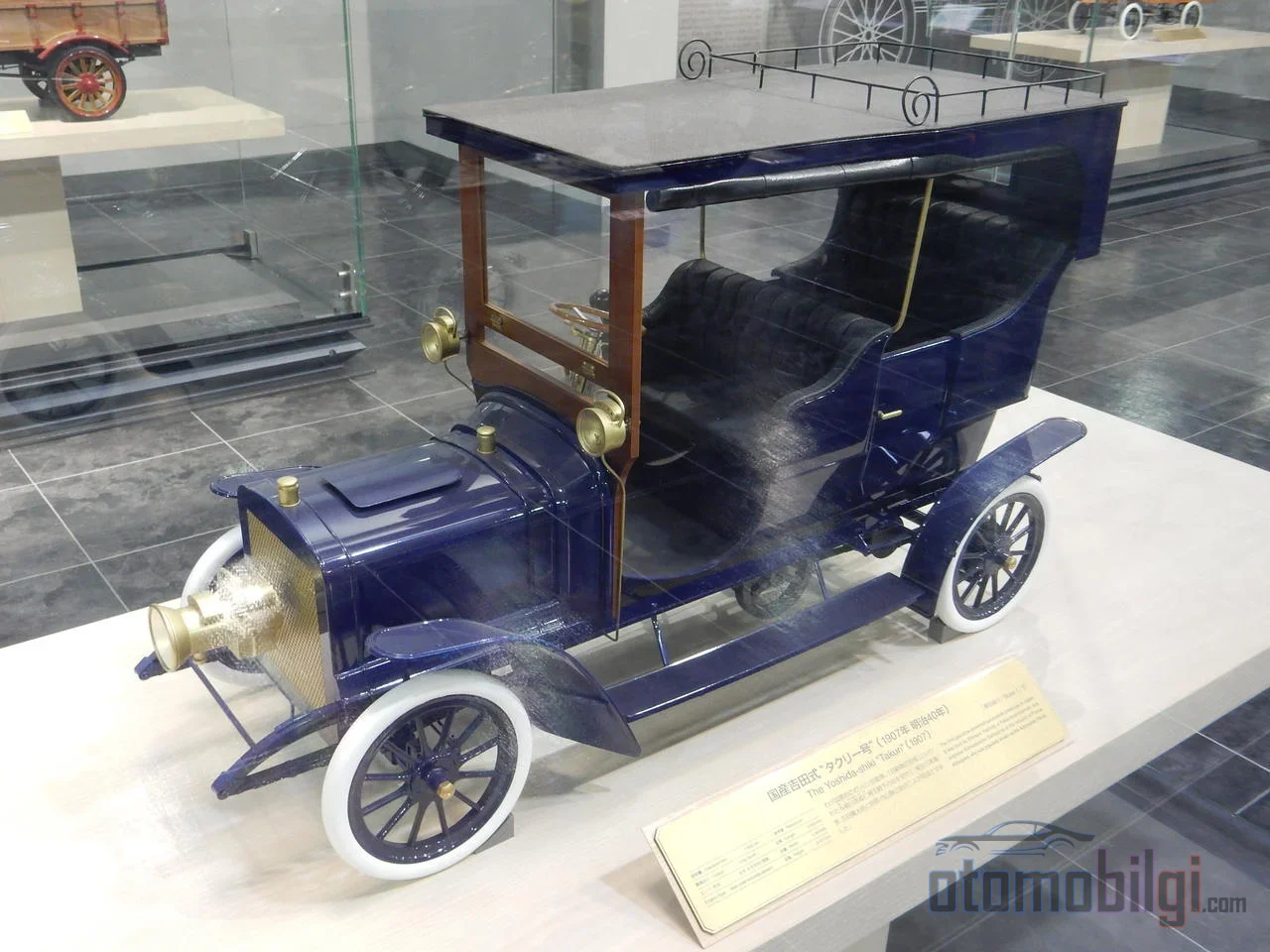
First, let's set the scene. The first gasoline-powered car entered Japan in 1898: a French-built Panhard et Levassor. So the Japanese got to know the automobile roughly twelve years after the West, through an imported vehicle. If it had been an ordinary country, the story would have ended there with "we bought it, we used it." But it didn't. In 1907, engineer Komanosuke Uchiyama, working at Tokyo Motor Vehicle Works, completed the Takuri, Japan's first gasoline-engined automobile.
My favorite detail in the Takuri's story is this: the vehicle was built to the order of Imperial Prince Takehito Arisugawa, and its heart came from abroad - an imported 12-horsepower engine from the United States. So even in the first vehicle, we were far from fully domestic production; even the engine was imported. If you ask what 12 horsepower means: it is a featherweight amount of power, like an ant, something even a scooter could easily surpass today. But at the time, this was a country's first step.
There is also something worth knowing about the timing: 1907 was a period intertwined with Ford's preparations to launch the Model T in the United States. So Japan's first gasoline-powered passenger car was born in the same date box as the Model T, the car that would change the world. The difference was this: Ford would sell to millions through mass production, while the Takuri was a vehicle built one by one, almost by hand.
Highlights
- The first gasoline-powered car arrived in Japan in 1898, a French-built Panhard et Levassor.
- Japan's first gasoline-engined automobile, the Takuri, was completed in 1907 by Komanosuke Uchiyama.
- The Takuri ran on a 12-horsepower engine imported from the United States.
- The first mass-produced passenger car, the Mitsubishi Model A, was completed in November 1918; only 22 units were produced until 1921.
- OTOMO, in the mid-1920s, with a production of approximately 230-300 units, was an early example of mass production, some of which was exported.
After the Takuri: Quiet but Determined First Attempts
The Takuri did not remain alone. The early Japanese automobiles on record extend in order as the Takuri Type 3 (1907), the Kunisue (1910) and the DAT (1914). This trio looks like a list of categories, but in fact each was a rehearsal for the next. DAT is particularly important, because most of us probably know the names that followed it - I will get there shortly.
DAT's story actually begins in 1911. In July 1911, Masujiro Hashimoto founded Kwaishinsha Motor Car Works in Tokyo's Azabu Hiroo district. While the company initially assembled and sold foreign vehicles, it studied the automobile closely - working in what we would call today "competitor and student at the same time" mode. The effort was not in vain: In 1914, DAT completed its first passenger car. In 1922, the DAT 41 even won a gold award at the Tokyo Peace Exhibition. But in 1925, the rapid proliferation of American vehicles in the market after the Great Kanto Earthquake brought Kwaishinsha's operations to a halt. In 1926, Jitsuyo Jidosha Seizo acquired the DAT rights and founded DAT Jidosha Seizo, and the compact passenger car they developed lived on under a name we still recognize today: Datsun. That name later spread around the world under Nissan's roof.
Other Forgotten Pioneers: Hakuyosha, Ales, and Otomo
Another early venture, though not as well known as DAT, was the Hakuyosha Company, founded by Junya Toyokawa in Tokyo in June 1912. In 1921, Toyokawa produced two types of domestic vehicles under the name Ales and won a silver award at the 1922 exhibition. Then in 1924 came the prototype of the Otomo model; production continued until spring 1928 and saw approximately 230 units of the vehicle. This light vehicle, powered by an air-cooled four-cylinder engine of approximately 980 cc, appears in some records as 944 cc and produced between 1924-1927 - such small differences are a reminder of how much the records of that era were at a handwritten level.
What makes the Otomo interesting is this: In the Japan Automotive Hall of Fame, its 1925 model is cited as "Japan's first mass-produced automobile," and some of the roughly 300 vehicles produced were even exported. Mitsubishi Model A, on the other hand, holds the title of "first mass-produced passenger car." So there are two different firsts; one with an emphasis on passenger cars, one with an emphasis on automobiles. It's a favorite topic of detail enthusiasts, but both bear witness to the same thing: Japan of the 1920s was now able to produce automobiles not one by one, but in small batches.
Mitsubishi Model A: The Threshold of Mass Production
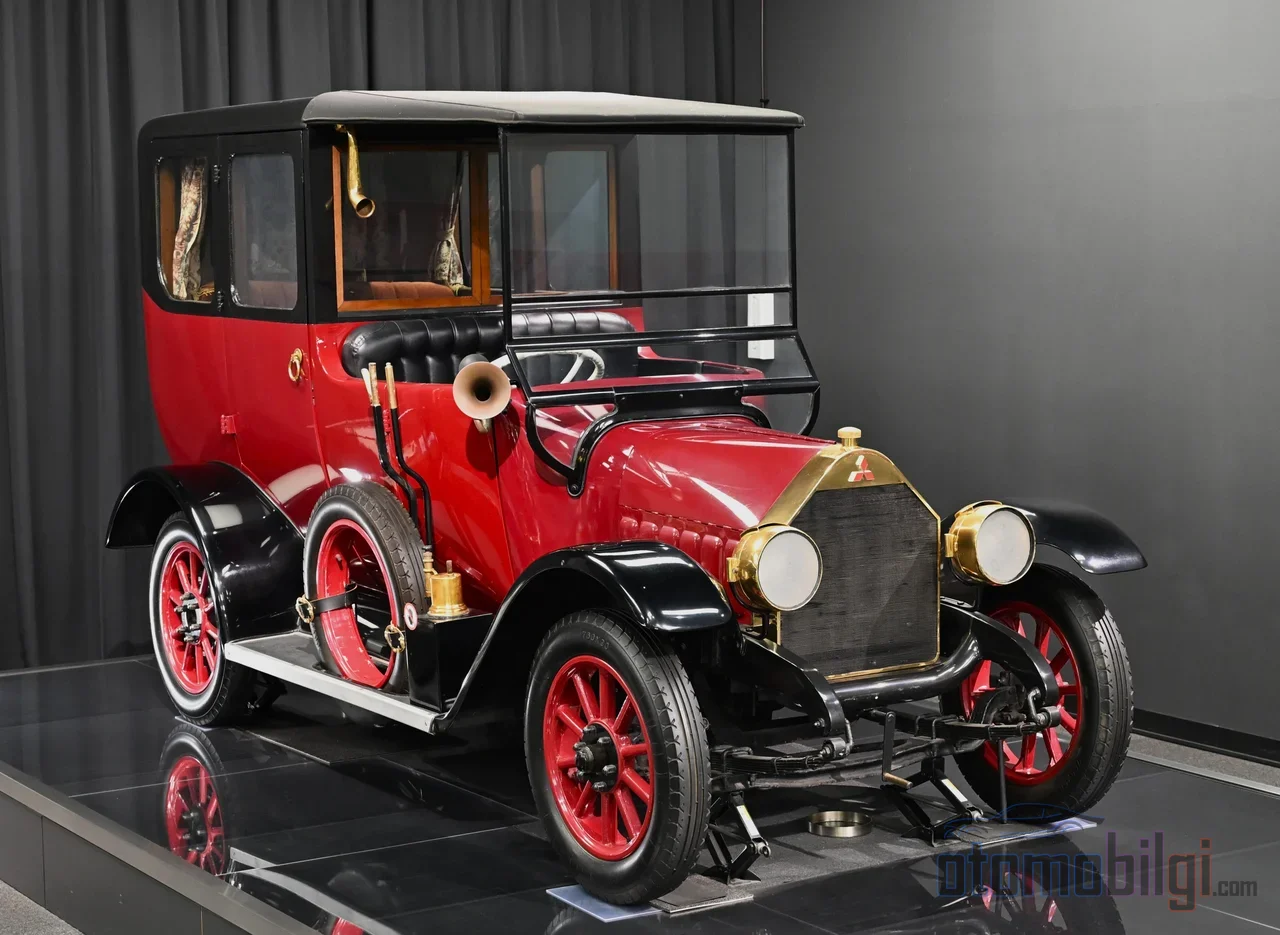
Let's turn to the star of the topic. Mitsubishi Shipbuilding Company, which was engaged in shipbuilding, decided to enter the automobile business and began production work in the summer of 1917. The result was completed in November 1918: the Mitsubishi Model A. This vehicle went down in history as the first Japanese mass-produced passenger car built for sale, and in 2019 it was selected as a "Historic Car" by the Japan Automotive Hall of Fame.
The Model A was a luxury vehicle designed for government officials, with a seven-seat body inspired by European design concepts. So the first mass-produced Japanese automobile was not small and plain; quite the contrary, it was a long, heavy, and stylish "state car." Which actually makes sense - in those years there was almost no private customer base in Japan, and the most reliable customer was the government.
But here's the painful truth: Only a total of 22 units of the Model A were produced by 1921. In fact, the Model A remained the only automobile ever produced by Mitsubishi Shipbuilding. When we think of mass production today, we picture lines that turn out a vehicle every minute; yet the Model A's "mass production" resembled a months-long stock exchange process. This alone is actually enough to explain why Japan lagged behind the West.
Why Was Everything So Slow?
This is the question that made me think the most. There are roughly sixty years between the 1907 Takuri and the Japanese giant that shook world markets in the 1970s. Why did it take so long?
- Industrial technology was not yet mature. In the twenty years after 1907 there were numerous domestic production initiatives, but Japan's industrial technology level at that time did not provide the conditions needed to establish a comprehensive automotive industry.
- American vehicles dominated the market through assembly. The rapid proliferation of imported and assembled American vehicles brought about the end of both domestic initiatives like Kwaishinsha and Otomo production.
- War halted civilian production. Between 1936 and 1943, civilian automobile production effectively came to a standstill as resources were diverted to military supplies.
- The scale was small. Before World War II, Japan's automotive industry had produced fewer than 18,000 passenger cars compared to millions of vehicles.
There is also an interesting detail: the origins of the company we think of today as Toyota lie not in automobiles, but in loom manufacturing. Toyota, while a textile manufacturer, began vehicle production in 1936; the same year the Toyota A1 came, and between 1936 and 1943 the Toyota AA/AB models followed. Soichiro Honda, on the other hand, started with motorcycles - Honda was founded in 1948 as a motorized bicycle manufacturer. In other words, today's automotive giants were born from the strangest professions: loom craftsmen and bicycle repairmen. If I had to make an analogy, it is like the first dish to come out of a factory's kitchen being proof that there were cooks in the kitchen making other dishes before.
| Pioneering Vehicle | Date | Significance |
|---|---|---|
| Takuri Type 3 | 1907 | Japan's first gasoline-powered automobile |
| Kunisue | 1910 | Early domestic production attempt |
| DAT | 1914 | Kwaishinsha's first passenger car |
| Ales | 1921 | Hakuyosha's two types of domestic cars |
| Mitsubishi Model A | 1918 (22 units, until 1921) | First mass-produced passenger car for sale |
| OTOMO | From 1924/25 | Early mass production, partly exported |
| Toyota A1 / AA | 1936 | Toyota's transition to automobiles |
| Suzuki Suzulight | 1955 | Japan's first kei car |
From Shadow to Summit: The Early Era's Impact on Today
Here is the turning point of the story: although those early attempts are described as "failures," I prefer to call them not failures, but early. The protected domestic market and state support ensured high prices from 1936 to 1945 and from the 1950s to the 1970s; this allowed manufacturers to survive and learn. In the 1970s, Japanese manufacturers made great progress in the global market and were pioneers in the use of robotics in vehicle production in that same decade. Datsun stood out as the first successful Japanese manufacturer to prove itself on the track in the US market; Honda also started selling cars. From a small workshop founded in Azabu Hiroo in 1911 to giant factories run by robots, this is a line stretching across different pages of the same story.
In my view, the real lesson is this: Takuri's 12-horsepower engine or the 22 units of the Model A may look ridiculous as numbers. But being the first proof of a country's claim to be able to build its own car makes them some of the most valuable prototypes in history. Whichever new brand, whichever new market's first domestic car we are discussing today, they all ask the same question: why was it so hard to move from a handmade Takuri to mass production? Japan's answer is clear: patience, a protected domestic market, and the ability to one day truly establish that assembly line.
The result: Who Built Japan's First Automobile?
Let's clarify the answer: Japan's first gasoline-powered automobile is the Takuri, completed in 1907 by Tokyo Motor Vehicle Works engineer Komanosuke Uchiyama. The first mass-produced passenger car built for sale, on the other hand, is the Mitsubishi Model A, completed in November 1918. In the years in between, bold attempts like DAT, Ales and Otomo took place; most were short-lived, but none were wasted. Because the names that built one of the world's largest automotive industries today - Toyota, Nissan, Honda, Suzuki, Mitsubishi - are all heirs of these early, clumsy, lovable attempts. Which do you find more interesting: the 12-horsepower first Takuri, or the luxurious Model A of which only 22 units were produced? In my view, both are museum legends - and both deserve it.
Sources
- 75 Years of TOYOTA | Part1 Chapter2 Section1 | Item 3
- Mitsubishi Model A Selected as Historic Car by JAHFA (Mitsubishi Motors official bulletin)
- Japan Automobile Hall of Fame - Historic Car (JAHFA)
- A Century of Car History (Mitsubishi)
- Mitsubishi Model A - Wikipedia
- Timeline of Japanese automobiles - Wikipedia
- Automotive industry in Japan - Wikipedia
- The Foundation of the Japanese Automobile Industry (Semantic Scholar)
- Japan Becomes the World's Largest Automobile Producer (EBSCO)
- Manufacturing Innovation: Lessons from the Japanese Auto Industry (MIT Sloan Review)