Frederick Lanchester and the Forgotten Automotive Pioneers
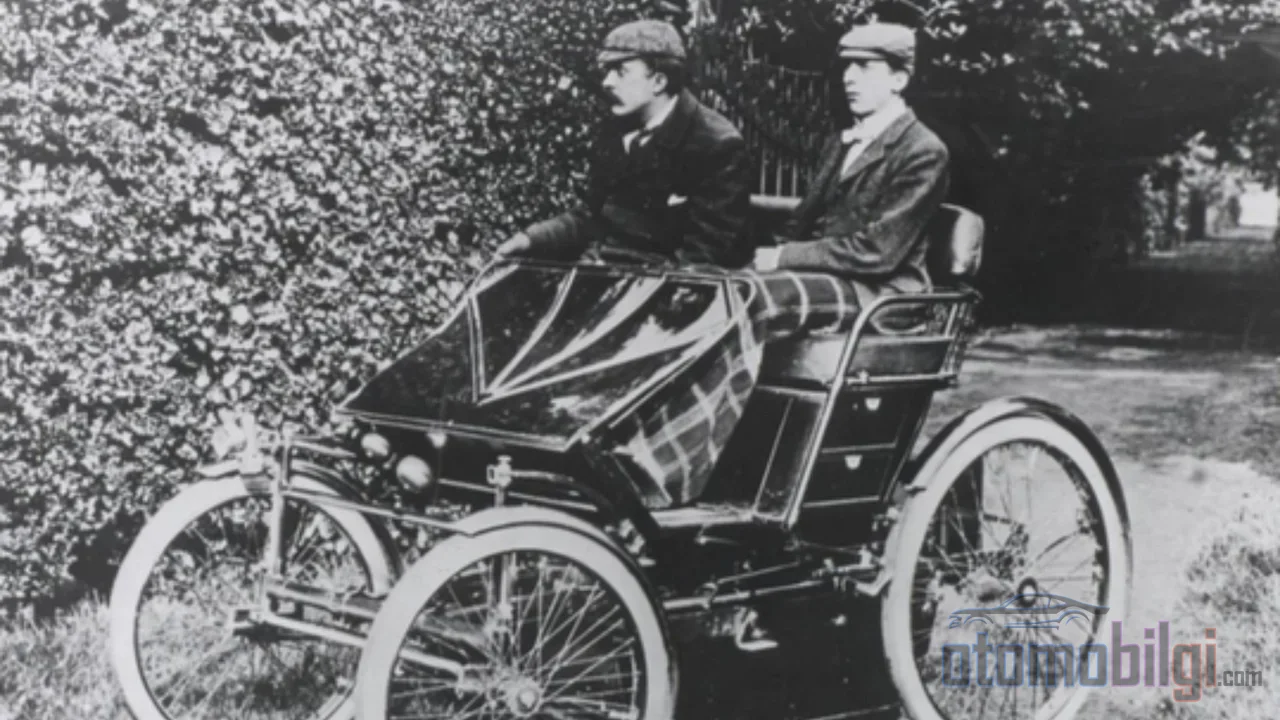
Everyone knows Karl Benz and Henry Ford. But what if I told you that England's first four-wheeled petrol car was built by a plumber? Or that the patent for the disc brake was found in the wallet of an engineer whose name most of us are only now hearing for the first time? These names - Lanchester, Bremer, Foss and Grieve - who appeared on the scene in the early years of the automobile but remained in the shadow of the big brands, remind us that automotive history is actually not the story of a single genius, but of a whole host of stubborn engineers working simultaneously in every corner. So let's get to know these forgotten automotive pioneers one by one; because today's car's brakes, starter motor, and even the accelerator pedal owe something to their efforts.
Frederick William Bremer: England's First Four-Wheeled Petrol Car
1892. Frederick William Bremer, living in Walthamstow, is only 20 years old, and his trade is plumbing and gas fitting. But something entirely different is going on in his head: a self-propelled vehicle. That year, in his home workshop, he builds Britain's first four-wheeled, internal combustion (petrol) automobile. Let's just think about these figures for a moment: a 20-year-old plumber, no factory, no engineering team, just manual labor and calculation.
Bremer's vehicle was built at such an early date that most dates we know by heart about automobiles came after it. The vehicle is on display today at the National Motor Museum, continuing to bear witness to those bold first days of the past. This vehicle, born from a plumber's hands, can be considered the great ancestor of all automobiles in England - in my view, this is the finest proof of how insignificant career choices can be.
Frederick Lanchester: The Pioneer Whose Brilliance Outshone Everyone, But Whose Luck Never Came
Just three years after Bremer, in 1895, Frederick William Lanchester (1868-1946) completes the first entirely British-built four-wheeled petrol automobile; its first test drive takes place in 1896. Now, a small distinction is important here: while some sources refer to Lanchester's vehicle as "the first British automobile," Bremer's is remembered with the title "first four-wheeled petrol." Both can be accepted as correct - the dates and vehicles are different, and both names are on the stage.
Lanchester's first vehicle proves unsatisfying due to low power and transmission problems; so he puts his engineering brilliance to work: a 2,895 cc, 8 hp, air-cooled twin-crankshaft engine and a redesigned epicyclic gearbox are fitted to the original chassis. The second vehicle is finished in 1898 and wins a gold medal at the Richmond Automobile Show and Trials. In 1900, it becomes one of the vehicles to complete the first RAC 1,000 Mile Trial.
Forget the brake - he even invented the accelerator
Lanchester's contributions are not limited to the engine; the list is long enough to test your beliefs. Together with his brothers, he founds the Lanchester Engine Company in December 1899 in Birmingham's Sparkbrook district; between 1900 and 1904 he sells approximately 350 vehicles. But the real bombshell comes on December 1, 1902: Patent No. 26,407, with which he patents the disc brake. His vehicle used a system that braked by clamping the clutch disc instead of the separate braking systems of the era, closely resembling today's disc brakes. In other words, this man is the mastermind behind the technology that does the job when you press the brake pedal.
The list goes on: the wick carburetor (patented 1905), torsional crankshaft damper with vibration damper (patented 1907), harmonic balancer for four-cylinder engines, splined shafts, pressure-lubricated bearings, piston rings, hollow connecting rods, and removable wire wheels. And one more - my favorite: the accelerator pedal - this control, placed on the steering wheel in 1907, has been the most natural part of driving ever since. He also sold the rights to his self-starting gas engine device, developed in 1890, to Crossley.
So why is such a brilliant man rarely mentioned today? The answer is bitter but instructive: Lanchester failed commercially. The board's mistakes drove his first company into bankruptcy; the company was re-established as the Lanchester Motor Company, but in a twist of fate, with the 1929 Wall Street crash, his contract with Daimler and his company's credit came to an end, and BSA bought the company in 1931. Lanchester lived in financial hardship until his death and could keep his home only with the help of a benefactor. Intelligence and commercial success are not the same thing - even a hundred years later, this still needs reminding.
Highlights
- Bremer built Britain's first four-wheeled gasoline car in 1892 - when he was only 20 years old.
- Lanchester patented the disc brake on December 1, 1902 (Patent No. 26,407).
- The Fossmobile, completed in 1897, became Canada's first successful gasoline car.
- Grieve produced in 1908 the first car designed and built in Lima on the South American continent.
- The electric starter motor arrived in 1912 with the Cadillac Model 30, ending the danger of hand cranking.
The Danger of Hand Cranking: How Did the Electric Starter Motor Come About?
What is the most dangerous moment of early cars? Starting the car. That eerie ritual of lifting the crank and the motor kicking back and breaking the driver's arm... Even Lanchester tried a solution to this problem: his self-starting gas engine device, developed in 1890, never became widespread because its rights were sold to Crossley. The real revolution comes in 1912: the electric starter motor, invented by Charles Kettering and the Dayton Engineering team, is introduced with the Cadillac Model 30. The idea of a vehicle started by turning a key caught on so well that gasoline car sales reportedly increased in the year it was introduced. A key saving lives seems strange, but it's true.
George Foote Foss and the Fossmobile: Canada's First Car
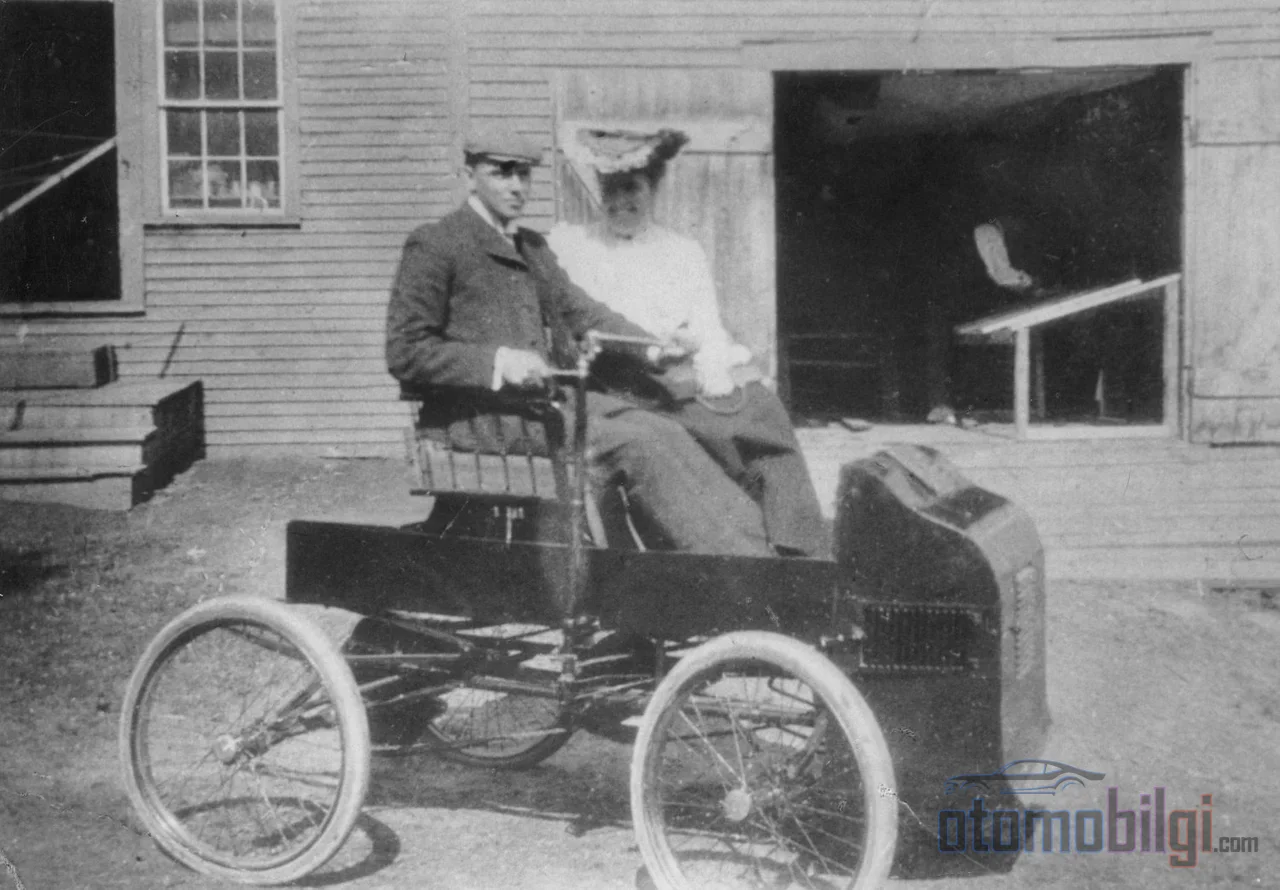
Now let's shift the map to the other side of the Atlantic, to the town of Sherbrooke in Quebec, Canada. George Foote Foss, a self-taught bicycle engineer. In 1896, on a business trip to Boston, he rides an electric car - at an hourly 4 dollar rental fee - but the batteries run out quickly, and the experience ends in disappointment. And that's when something lights up in Foss's mind: "I'll build a gasoline one myself."
He starts working in the winter of 1896; With a 4-horsepower single-cylinder engine, he completes his vehicle, which he named the Fossmobile, in the spring of 1897. This vehicle is considered Canada's first successful internal combustion gasoline automobile. Foss was only 21 years old at the time. Production never went to series: only one Fossmobile was built, and this single vehicle is on display at the Canada Automotive Museum. In fact, the same story unfolds in many countries: the first vehicle is usually born as a handmade, one-off creation by a single person.
Juan Alberto Grieve: South America's First Automobile Was Born in Lima
The final stop of our story is Peru. Juan Alberto Grieve is a Peruvian engineer with extensive knowledge of internal combustion engines. In 1908, he completes his automobile, named Grieve after himself, in Lima, and the vehicle runs with a power output of up to 20 hp. This is no obscure detail: the vehicle is described as the first automobile designed and built on the continent. What is more striking is the production method - all parts, including the engine, chassis, transmission and differential, were manufactured in Grieve's workshop according to his own plans and calculations.
Grieve does not stop there either: He establishes South America's first internal combustion engine factory and Lima's first automobile club. How many "firsts" of an industry can one person achieve alone in the same country? Grieve seems to give the answer.
Four Pioneers, One Table: Who Did What, and When?
| Pioneer | Year | Country | Contribution |
|---|---|---|---|
| Frederick William Bremer | 1892 | England | Britain's first four-wheeled gasoline automobile |
| Frederick Lanchester | 1895 | England | The first entirely British-made gasoline automobile; disk brake patent in 1902 |
| George Foote Foss | 1897 | Canada | Fossmobile, the first successful Canadian gasoline automobile |
| Juan Alberto Grieve | 1908 | Peru | Grieve, the first automobile designed and built on the continent |
When I look at this table, here is what I see: the automobile does not spread from a single center; in the very same decades, it is born simultaneously in the garages and workshops of different people on different continents. Bremer was a plumber, Foss a bicycle engineer, Grieve an independent engineer - people without formal engineering careers or from ordinary paths are making history's milestones. That, in my view, is the most inspiring side of the story.
Why Were Lanchester and the Others Forgotten?
The reason Lanchester was forgotten is not a lack of brilliance, but the rules of the business world. I won't make a generic comparison, but sources point to the following by recalling that James Watt achieved success with a business partner like Matthew Boulton: No one beside Lanchester had that kind of commercial genius. He is also said to have drawn the country's first gasoline-electric hybrid design, but this claim should be read with caution since it has not been confirmed by strong sources.
Still, their names have not been entirely forgotten. Lanchester's name lives on in the Lanchester Library, opened at Coventry University in 2000, and in the Lanchester Car Monument in Birmingham, a Tim Tolkien design unveiled in 1995. The scientific world did not neglect him either: Fellowship of the Royal Society in 1922, the Royal Aeronautical Society's gold medal in 1926, and gold medals from engineering institutions in 1941 and 1945. In Canada, talks are being organized at museums about the reconstruction of the Fossmobile. Remembering the names that history forgot, I think, makes even driving a car more enjoyable.
The Pioneers' Legacy Lives On in Today's Car
Here is the answer I promised, clear and quotable in its own right: The most fundamental parts of today's automobile - the disc brake, accelerator pedal, electric starter motor, and harmonic balancer - were born between the 1890s and 1910s in the workshops of pioneers like Bremer, Lanchester, Foss, Grieve, and Kettering, who were left on the margins; these names, overshadowed by the big brands, are seldom mentioned despite being the ancestors of the automobile. The next time you brake, step on the gas, or turn the key, think about how those small everyday actions come from gigantic inventions made a century ago. Which of these stories surprised you the most - my favorite is still 20-year-old plumber Bremer. Let's talk in the comments!
Sources
- Frederick W. Lanchester
- Lanchester Interactive Archive: Timeline
- The history of disc brakes
- Frederick William Lanchester | Research Starters
- Britain's First Four Wheeled Motor Car
- Fossmobile
- The Fossmobile: Canada's first successful gasoline car
- Grieve
- Juan Alberto Grieve
- How the electric starter motor helped start the automotive revolution