Flocken Elektrowagen: The First Real Electric Car
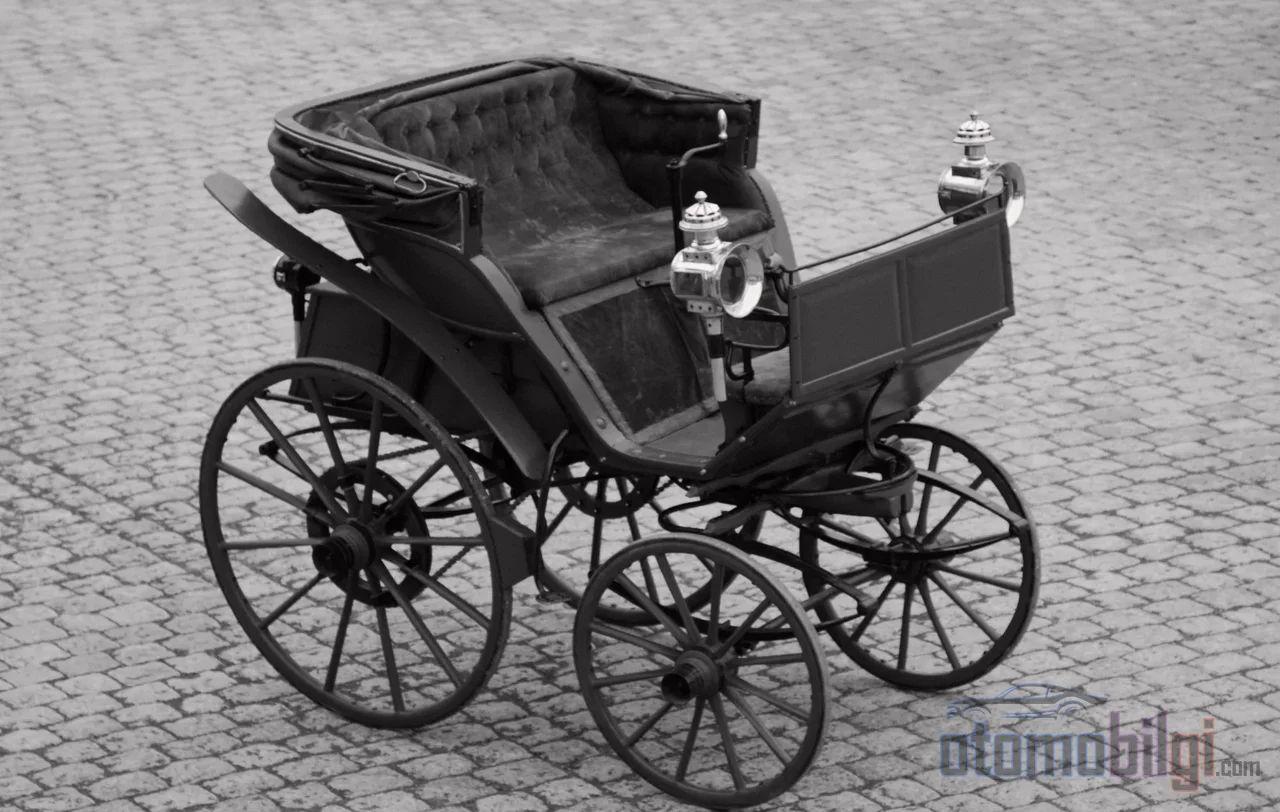
Everyone knows the gasoline three-wheeler that Karl Benz patented in 1886; when we say "first car," that's what comes to mind. But did you know that in those same years, a machine master in the town of Coburg, Germany, built a vehicle that looked like a horse carriage but ran entirely on electricity? According to many historians, the Flocken Elektrowagen of 1888 was not just an experiment, but the first true electric car produced with series-production logic. So electricity was on the roads long before gasoline fully took the stage - so why did it lose?
Who Was Andreas Flocken, and How Was the Elektrowagen Born?
Andreas Flocken was born in Thuringia in 1845 and spent most of his career in Coburg; there he established his own machine business. In the late 1880s he became captivated by the idea of propelling vehicles with electricity, and in 1888 he added an electrical engineering division to his company. That same year, he brought forth something never seen before: a four-wheeled automobile with an electric motor.
The basis of the vehicle was actually a chaise, that is, a light carriage of the era; its general appearance resembled Gottlieb Daimler's 1886 motorized horse carriage. The difference was in the motor: instead of a horse, Flocken had installed an electric motor powered by a battery. With its high-wheeled, iron-tired wagon chassis, narrow track width, and axle-pivoting steering, the vehicle looks more like a carriage than a car by today's dimensions - but that is exactly why the story is beautiful.
Highlights
- The first Elektrowagen was built in Coburg in 1888
- Motor power approximately 0.9 kW (1 hp), speed 15 km/h
- Total weight 400 kg, power was transmitted to the rear axle via leather belts
- Vehicle production at Flocken ended in 1903
- Around 1912 was the peak year of electric vehicle production
Technical Specifications: A Revolution at One Horsepower
Let's take a look at the vital figures. At the heart of the vehicle was an electric motor of approximately 0.9 kW, equivalent to one horsepower; power was transmitted to the rear axle via leather belts. The belt drive of a century ago is considered the ancestor of today's shaft and differential arrangement - the belt was a simple but functional solution that carried the rotation from the motor to the wheels.
| Feature | Value |
|---|---|
| Year and place of production | 1888, Coburg, Germany |
| Motor power | Approximately 0.9 kW (1 hp) |
| Maximum speed | 15 km/h |
| Weight | 400 kg |
| Transmission | Rear axle via leather belt |
| End of production | 1903 |
A small note: some records cite a motor power of 0.7 kW, a battery of approximately 100 kg, and accordingly different performance values. Such differences are a natural result of the measurement methods of the era and the varying equipment from vehicle to vehicle; nobody is exaggerating or downplaying the numbers - simply, different examples were measured differently.
Innovations in Later Models
Flocken was not content with a single vehicle. A two-seater model dating to around 1903 features an axle-pivot steering on the mile, ball bearings, wheels with equal-sized pneumatic tires, full elliptic springs, a battery box mounted on the front axle and - considered a possible innovation for the era - electric headlights. From pneumatic tires to electric lighting, the distance covered in fifteen years is of the kind that does not pale beside today.
Is the Flocken Really the First Electric Car?
There is a subtle distinction here, so let us ask the question precisely: is it the first electric vehicle, or the first electric automobile? The idea of moving with electricity is far older. Hungarian Ányos Jedlik developed the first electric motor in 1827-1828 and applied its principle to a small vehicle model. Scotsman Robert Anderson built a prototype between 1832 and 1839, based on a conventional carriage and powered by electric cells. In the United States, Thomas Davenport built an experimental vehicle in 1834 that traveled on a circular track. In 1859, Gaston Planté invented the rechargeable lead-acid battery; in 1881, Camille Faure increased battery capacity, and Gustave Trouvé introduced an electric tricycle in Paris.
The difference is this: all of these were either models, prototypes, or existing carriages with a motor added afterwards. The Flocken Elektrowagen, however, was designed and produced as a vehicle in the engineering department of a machine factory - that is why it holds the title of the first purpose-built electric automobile. The line between an experimental vehicle and a real, usable automobile passes exactly here.
Two Roads at Once, Alongside the Benz Patent-Motorwagen
Behold the irony of history: The Benz Patent-Motorwagen was produced between 1885 and 1893, with a total of 25 units made between 1886 and 1893. The Flocken Elektrowagen, meanwhile, was born in 1888. In other words, the gasoline and the electric automobile came into the world almost at the same time - and in the same country, no less.
There is another interesting parallel: both started with roughly one horsepower. Benz's 945 cc single-cylinder engine initially produced a single horsepower; Flocken's electric motor was around 0.9 kW as well. Benz had designed the engine, chassis, steering, cooling, ignition and transmission as a single whole; with its broad wheels and high ground clearance, the Motorwagen resembled the other means of transport of the era - among which were electric ones as well. Both vehicles were at the starting line of the same race; nobody yet knew who would win.
Why Did Electricity Fall Behind Gasoline?
By the 1900s, the hand of the electrics was actually strong. They had none of the vibration, smell and noise of the gasoline crowd; it is estimated that around one third of the cars in the United States in 1900 were electric; taxi drivers in New York were among the first commercial users. Camille Jenatzy had reached a speed of 105.88 km/h with La Jamais Contente in 1899, even surpassing the 100 km/h barrier. Production peaked around 1912.
So what happened then? As the internal combustion engine became reliable, the balance shifted. Electric cars were expensive, had low top speeds, short ranges, and - does this sound familiar? - there was no charging infrastructure. Gasoline, on the other hand, was cheap and plentiful, internal combustion technology was constantly improving, and mass production drove prices down. Over the next thirty years, this combination left almost no room in the market for electric vehicles. This is the picture summarized by the U.S. Department of Energy; while finding fuel was difficult for both sides in the early days, the gasoline side quickly gained the advantage. History favored Ford's assembly line over Flocken's belt drive.
A Legacy Extending to Today: From Flocken to 20 Million Electric Cars
The story does not end here. World War II. In the fuel shortage after World War II, France saw the Peugeot VLV in 1941 and Japan the Nissan Tama in 1947. The 1973 and 1979 oil crises revived interest; small-production models such as the Enfield 8000 from the UK and the Citicar from the US emerged. In 1996 came the General Motors EV-1; it achieved a range of 160 km with lead-acid batteries and 225 km with NiMH batteries, but production stopped in 1999 and most of the 1,117 vehicles were destroyed. In 2008, the Tesla Roadster took over the baton, offering a range exceeding 300 km with lithium-ion batteries.
Today, the numbers confirm the future Flocken saw over a hundred and thirty years ago: In 2024, 17 million electric vehicles were sold worldwide - more than a fifth of global new registrations - and in 2025 they surpassed 20 million, making up about a quarter of car sales.
Conclusion: Electricity Started It, and Electricity Is Taking the Finish
Let's give a short and clear answer: the first true electric car is the Elektrowagen, built by Andreas Flocken in Coburg in 1888 - because it was designed and produced not as an experimental toy but as a vehicle. Weighing 400 kg, with 1 horsepower, traveling at 15 km/h on iron tires, this pioneer is the first link in a story whose endpoint reaches today's charging stations. Electricity, which started from the same starting line as Benz, took a break of more than a century; but the race is not over yet - in fact, it seems to have only just begun to heat up.