Which Was the First Car? The Three Stories of Benz Motorwagen
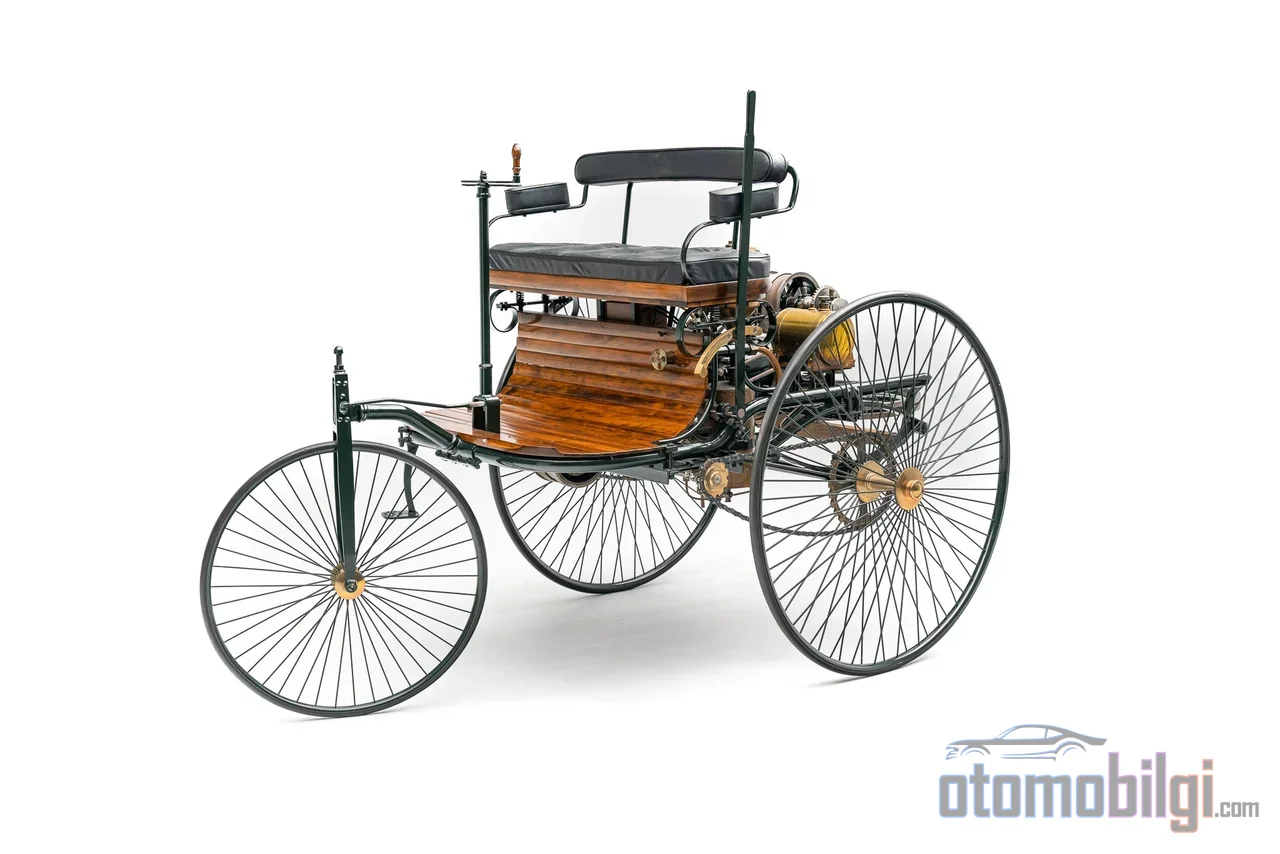
The patent file laid on a table in Berlin on January 29, 1886 is still referred to today as the birth certificate of the automobile. But the story behind that file is far more complex than most people know: Karl Benz's motorized vehicle did not come to life as a single vehicle, but in three different versions, and the clear answer to the question "which was the first automobile" lies hidden in the separate stories of these three models.
DRP 37435: The Birth Certificate of the Automobile
Karl Benz went down in history when the patent he applied for his gas-powered vehicle was registered on November 2, 1886. This document, numbered DRP 37435, is listed today in UNESCO's Memory of the World program as a resource of worldwide importance documenting the origin of the automobile. In 2026, the 140th anniversary of the application was celebrated under the label "140 Years of Innovation" on the official channels of the brand where the vehicle was born.
The significance of the patent lies not only in its being a document of invention, but in its recording of a design philosophy. Benz's revolution was not mounting an engine onto an existing carriage; it was designing the engine, the chassis, and the drivetrain as a single whole, as a gasoline-powered vehicle built for that purpose. This holistic approach fundamentally distinguished it from horse-drawn carriages that had previously been fitted with engines. So which vehicle did this patent protect, and is that vehicle original in its present state?
Model 1: The Vehicle That Went to Scrap, Then Was Born Again
The first link in the sequence is the vehicle identified with the patent: the Benz Patent-Motorwagen Nr. 1. Its technical identity clearly shows how early a stage the engine was at. The single-cylinder, horizontal, four-stroke engine with a displacement of 954 cc; ran on fuel obtained from a light petroleum called ligroin. According to Mercedes-Benz's official figures, power was 0.75 hp (0.55 kW); some publications give values ranging from 0.67 hp to 0.88 hp depending on rpm and measurement method. Torque was at the level of approximately 0.59 lb·ft - less than one percent of a modern compact car's engine.
Ignition was provided by a trembler coil producing intermittent current; cooling was by evaporation, meaning the water gradually disappeared and had to be replenished. The steering of the three-wheeled structure resting on a tubular chassis was controlled with a tiller, a lever resembling the handlebars of a bicycle. With a belt drive and chain, the maximum speed is stated as approximately 16 km/h, and the vehicle was priced at 600 Marks at the time.
The truly surprising part, however, is the vehicle's fate: That iconic vehicle displayed in museums today, photographed, with replicas sold of it, is not the original Motorwagen. When the first vehicle was taken out of service, it was set aside as scrap; around 1895, the company's sales manager set out to recreate the vehicle's appearance from early 1886, before it had received a new body. So even the image of the Nr. 1 we see in history books is the product of a reconstruction. This makes the story of the second model all the more interesting.
Highlights
- Patent DRP 37435 was filed on January 29, 1886 and registered on November 2, 1886.
- Model 1: 954 cc single cylinder, 0.75 hp, maximum ~16 km/h, priced at 600 Mark.
- Original No. 1 was scrapped; its current form was rebuilt in ~1895.
- Bertha Benz drove 106 km from Mannheim to Pforzheim on August 5, 1888 - the first long-distance automobile journey.
- The journey exposed the vehicle's weakness in hill climbing; Benz increased the cylinder capacity and added a second belt system.
Model 2: The Practical Step That Remained in the Shadows of History
The link between the two models is the least documented but perhaps the most intriguing one: the Model 2. The power of this version had roughly doubled compared to the first vehicle, reaching 1.5 hp (1.1 kW). A more powerful engine meant a more usable vehicle - and precisely for this reason, some automotive historians think the question of which was the truly practical first automobile deserves to be debated through the Model 2.
The reason the Model 2 remained in the shadows is partly the scarcity of records, and partly the brilliance cast by the third model that followed. Benz & Cie produced the Motorwagen between 1885-1893, and this process followed a learning curve extending from a single prototype to series production. Each model addressed the most obvious weakness of its predecessor: power increased, usability improved. The third model reached the most efficient point of this curve and withstood the greatest test history has witnessed.
Model 3 and Bertha Benz's 106 Kilometers in 1888
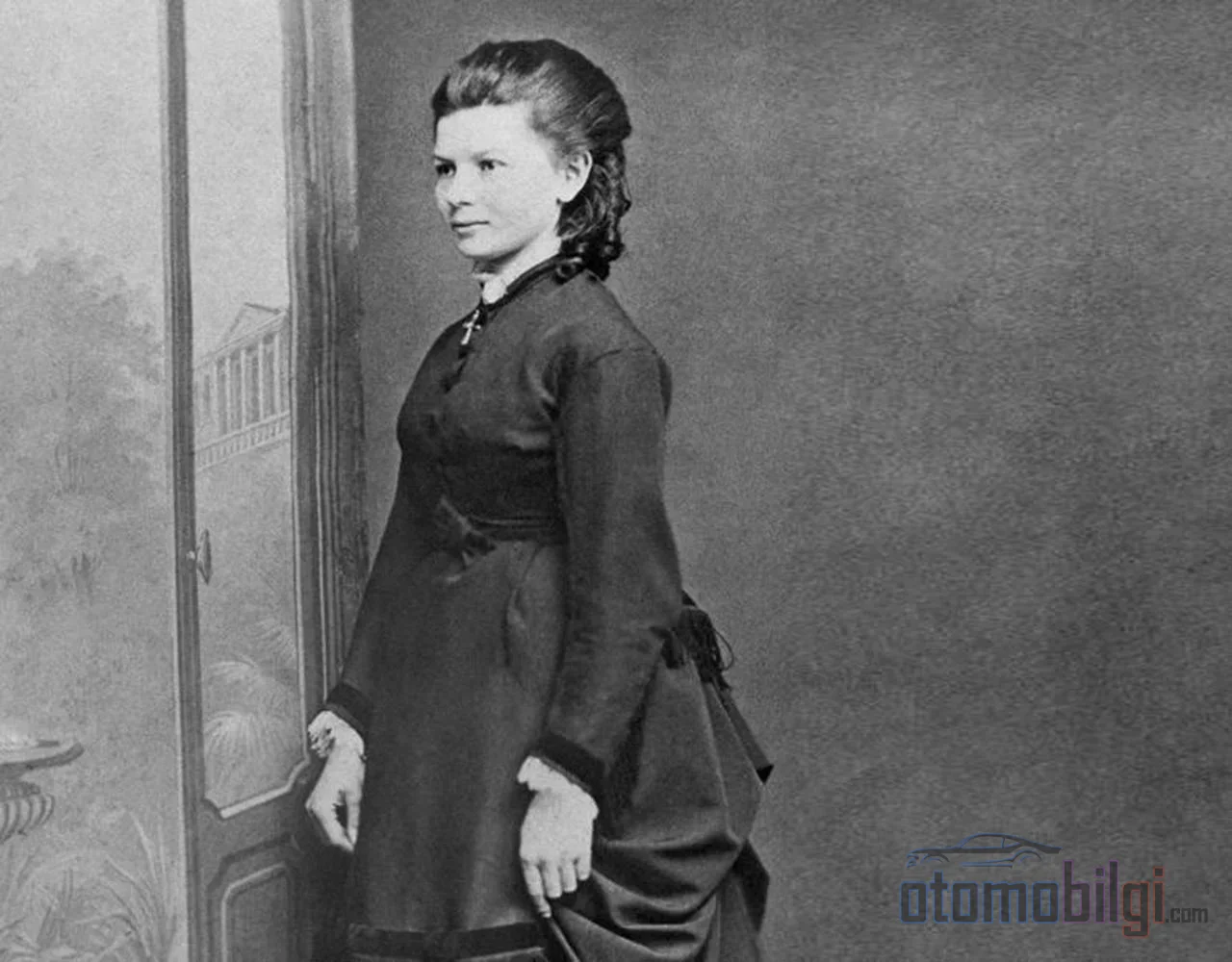
The pinnacle of the series, the Model 3, was the version that raised power to 2 hp (1.5 kW) and was built in multiple variants from 1886 onward. This model became the hero of the event that brought the Motorwagen onto the world stage: On August 5, 1888, Bertha Benz, without telling her husband, took her two sons and set off from Mannheim to Pforzheim, where her mother lived. The route was around 106 km, which meant a long, exhausting day for a vehicle traveling at about 12 mph (approximately 19 km/h). This was history's first long-distance automobile journey - and also the first major marketing move for the vehicle. It should also be added that Bertha was the person who had originally financed the venture.
The journey was not a picnic where everything went smoothly. When the two-speed transmission was combined with the weak engine, hills became a serious problem: the engine would stall, and when the vehicle struggled, Bertha and her sons had to push it with their shoulders - they even had to push the vehicle together on the hills. The roads were rough and crowded; the three of them took turns driving the vehicle. She obtained fuel from pharmacies - which is why pharmacies are considered the first gas stations in history. For a brake repair, she got leather from a saddler and used her tool.
But it is precisely at this point that the journey's engineering value emerges: The difficulties Bertha experienced revealed, with concrete data, the vehicle's most critical weakness - its inadequate hill-climbing ability. Benz processed this feedback technically: increased the cylinder displacement and added a second belt system for the drive, making power transmission more usable on hills. A practical engineering cycle: a failure report from the field, a design revision, a better vehicle. As a result of this cycle, the Model 3 passed history's first long-distance reliability test.
| Model | Power | Standout feature |
|---|---|---|
| No. 1 | 0.75 hp | The first patented vehicle; 954 cc single cylinder; rebuilt around 1895 |
| No. 2 | 1.5 hp | Power doubled; the closest link to practical use |
| No. 3 | 2 hp | The model that completed Bertha Benz's 106 km journey |
So Which One Is Actually the First Automobile?
The reason the question is so contentious lies in the definition of the word "automobile." In 1769, Nicolas-Joseph Cugnot achieved a self-propelled land vehicle with his steam-powered three-wheeler; some consider him the maker of the first automobile, and the first automobile accident in 1771 is even attributed to him. In the broader picture of history, there are hundreds of thousands of patents and successive inventions leading to the result; the dispute over which one is "the first true automobile" is not easily settled.
But when the criterion of practicality comes into play, the picture becomes clear. Cugnot's steam vehicle was the first self-propelled machine; Benz's vehicle, however, is the first practical gasoline automobile. The fact that it combined the engine, chassis, and drivetrain in a single purpose-built vehicle and could withstand daily use leads most historians to accept Benz's automobile as the first truly functional vehicle. So the honest answer to the question is this: When you measure by practicality, the first automobile is Benz's Patent-Motorwagen; which of the three models should be counted as the "actual" practical first automobile depends on where you set the limits of power and usability - which is why the stories of No. 2 and No. 3 deserve not to be crushed behind a single legend.
Legacy: Replicas, Museums, and the Priceless Original
Most of the Motorwagen's visibility today is based on reconstructions and replicas. A replica produced by Mercedes-Benz in 2002 was once offered for sale; the original vehicle stands in a German museum, at a value beyond pricing. At the Toyota Automobile Museum in Japan, a replica capable of ~15 km/h is also on display. Auction records confirm that 1886 Motorwagen recreations attract interest: An example sold in 2013 for 41,250 USD was also offered as a lot at an auction in 2019; another replica traded in the 34,500-44,000 pound range.
The brand-history connection is also direct: Daimler's efforts, working in parallel in the same year as Benz & Cie - 1886 - form the foundation of Mercedes-Benz's position as "the oldest automobile manufacturer." The Victoria model, which carried the double-pivot steering Benz patented in 1893, stands out as the first step in the road that evolved the Motorwagen's three-wheeled layout into the modern automobile on four wheels.
Three Stories, One Patent
The most solid answer to the question "Which was the first car" is not a single vehicle, but a chain of development: the Nr. that became synonymous with the patent, was scrapped and reborn in 1895; 1; the Nr. that doubled its power and took the first serious step toward practicality; 2; and the Nr. that, thanks to Bertha Benz's 106-kilometer drive, was both tested in the field and matured through the volume growth and second belt system that the journey brought. 3. The patent was not born overnight; three versions, one woman's engineering test, and several pharmacies' worth of fuel gave life to the automobile. Looking back 140 years later, what stands out is this: what made history was not a single genius, but a repeating cycle of engineering.
Sources
- Benz Patent Motor Car: The first automobile (1885–1886) - Mercedes-Benz Group
- Benz three-wheeler registered as patent - Mercedes-Benz Public Archive
- Patent DRP 37435 "Vehicle with gas engine operation" - UNESCO
- Benz Patent-Motorwagen - Wikipedia
- 1886 Benz Patent Motorwagen Sparked a Revolution - Car and Driver
- Who built the first automobile? - History.com
- First Practical Automobile - EBSCO Research Starters
- Karl Benz Built the First Practical Car, but Bertha Benz Made It Famous - AutomotiveHistory.org
- 1886 Benz Patent-Motorwagen Recreation - RM Sotheby's
- Buy Mercedes' own replica - Motor Authority