How Huygens' Gunpowder Engine Started Internal Combustion
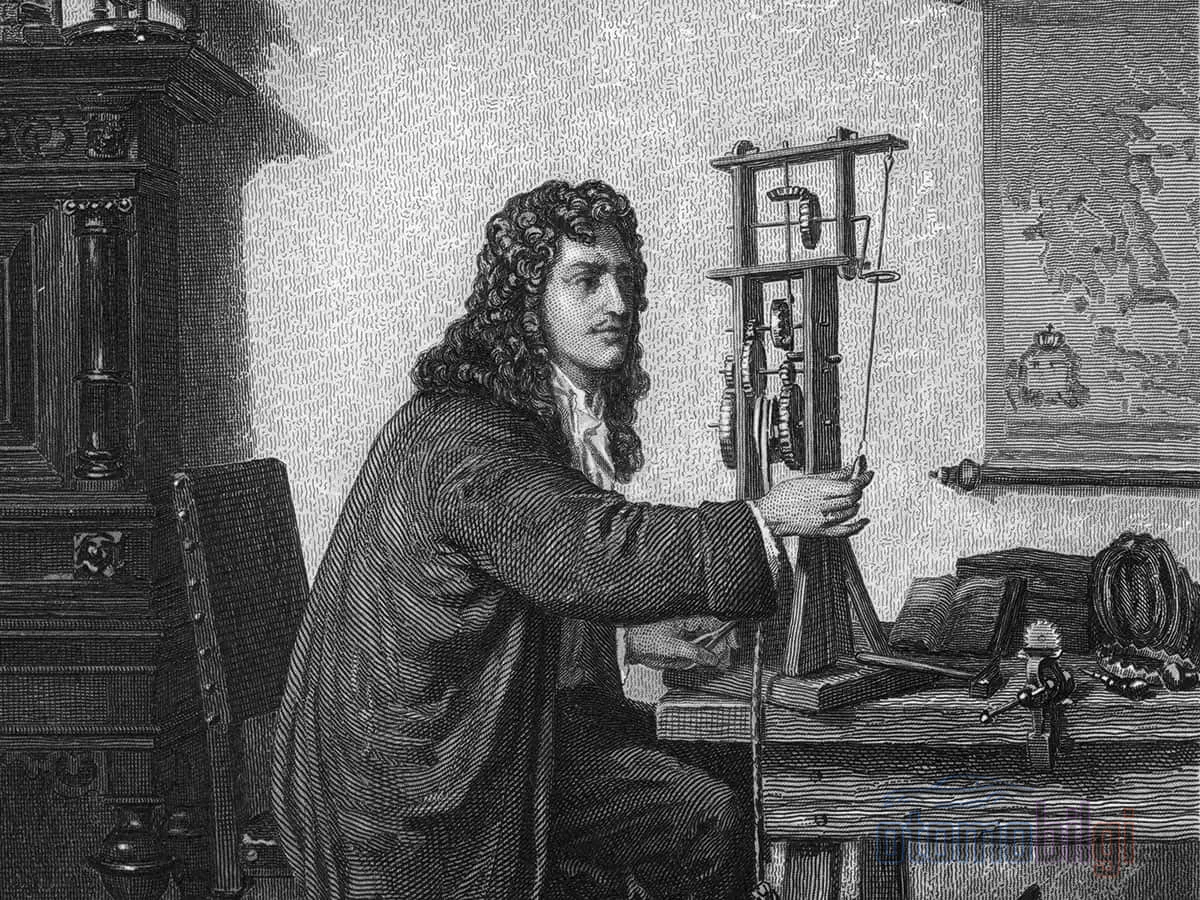
In the Paris of 1679, a small amount of gunpowder was fired inside a device where a cannon barrel served as the cylinder, and a piston was launched to a certain height. Seven or eight children were hanging from a rope that dangled below; a load of approximately 1,100 pounds, that is roughly 500 kilograms, was lifted off the ground by the power of a single explosion. The person who staged this scene was not Karl Benz or Nikolaus Otto, who are regarded as the founding fathers of the internal combustion engine, but the Dutch scholar Christiaan Huygens, who lived exactly two centuries before them. The starting point of the idea of internal combustion was not gas stations, but barrels of gunpowder.
The story is far older and far more troubled than most people think. The four-stroke cycle, considered the ancestor of the modern gasoline engine, was patented in 1876; by the time Benz's automobile hit the roads, more than two hundred years had passed. So why is there such an enormous time gap? The answer lies hidden in how Huygens's machine worked, why it could not work, and by which paths this idea reached Lenoir and Otto.
Before Huygens: A Brief History of the Idea of Lifting with Gunpowder
Huygens's engine was not born out of nowhere. The idea of using gunpowder's expanding gases to produce mechanical work was a notion circulating among the natural scientists of the century was an idea circulating among the natural scientists of that era.
The earliest depiction goes back to the year 1508: Leonardo da Vinci had described a device using a cannon barrel and gunpowder that could lift heavy loads with the power of fire. Galileo Galilei carried out systematic experiments on the vacuum's ability to lift weights; Otto von Guericke, in turn, produced vacuum with pumps, bringing the subject onto a practical footing.
The earliest document directly touching on a gunpowder engine is dated 1661: The letters patent issued by King Charles II of England on December 11, 1661 at Whitehall were granted to Samuel Morland for a device that envisioned drawing water with the aid of gunpowder and vacuum. What concrete development, if any, lay behind Morland's design is unknown. In 1676, Robert Hooke wrapped the same basic idea - that the void left behind by fire could lift a weight - in an anagram buried in a book he published. In 1678, Jean de Hautefeuille proposed producing vacuum with gunpowder explosions in order to carry water from the Seine River to Versailles; one version of his proposal resembled Morland's vacuum-based design, while the other described a device that pushed water by pressure inside U-shaped tubes.
So Huygens was not the only person to come up with the idea. However, he was the first to turn it into a piston-driven mechanical device and to physically build it. And it is precisely this difference that makes him the true founding ancestor of the idea of internal combustion.
Collaboration with Denis Papin and the 1678 Design
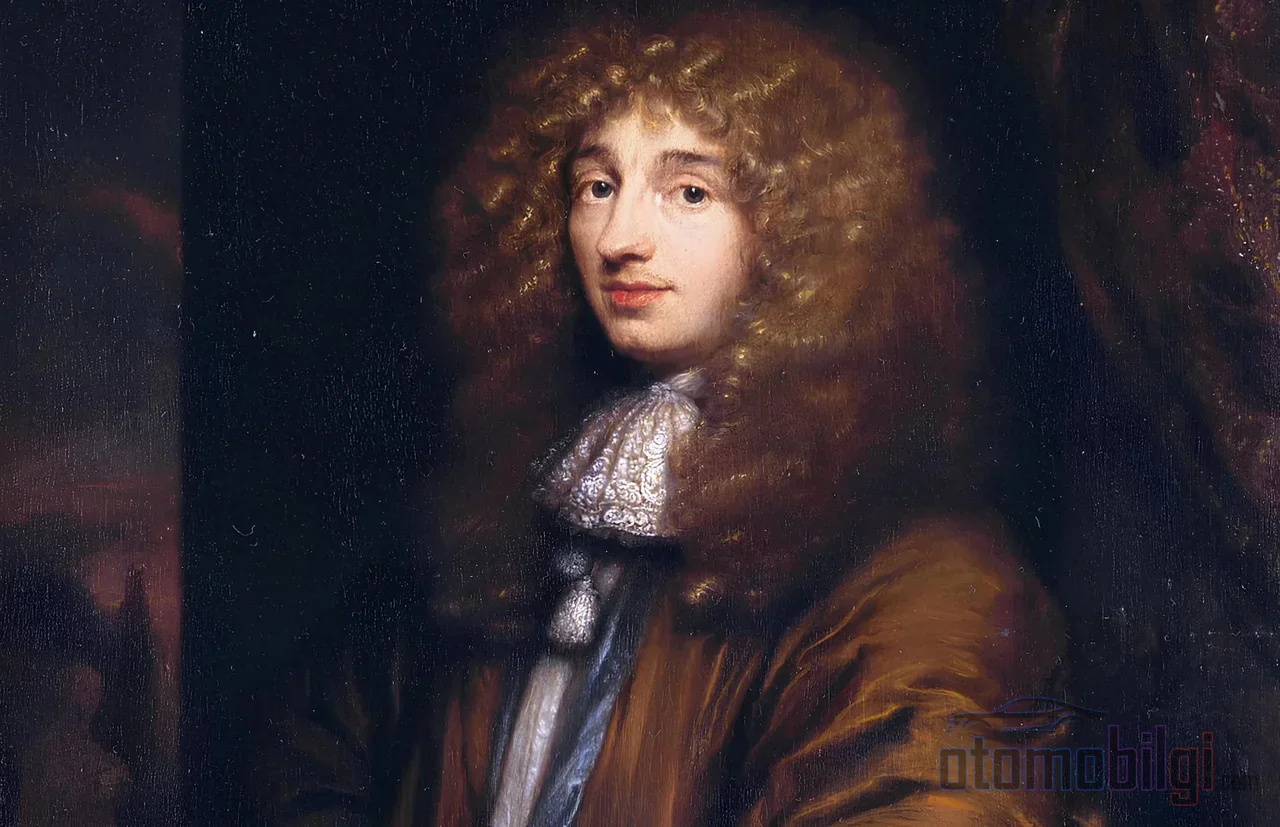
An assistant played a major role in steering Huygens in this direction: Denis Papin. Born near Blois in 1647, Papin began working in 1671 at the Royal Library Academy in Paris under the supervision of Huygens, who was Curator of Experiments. Huygens directed his young assistant toward research on air and vacuum; As part of these experiments, Papin measured the force produced by a small amount of gunpowder burned in small iron and copper vessels. Papin, who published his findings in 1674, soon moved to London and devoted his career to steam; the steam digester, considered today the ancestor of the pressure cooker, was a device he developed. But the idea of producing force with gunpowder had already been planted.
In 1678 Huygens drew his own design: a vertical tube containing a piston. The gunpowder was fired through a small hole at the base of the tube, just like in a cannon. The expanding gases pushed the piston upward in the tube; as the piston rose, it opened the holes in the upper section of the tube, allowing the hot gases to escape. The piston's own weight and the partial vacuum created by the gases cooling inside the cylinder pulled the piston back and lifted a test weight attached to it. In 1680, Huygens presented his paper describing this machine.
Highlights
- Christiaan Huygens' gunpowder engine design was drawn in 1678; a working example was made from a cannon barrel in 1678 or 1679.
- Since the machine used gunpowder as fuel, it is considered the first internal combustion engine in the literature.
- In the 1682 demonstration, a dram (1/16 ounce) of gunpowder lifted approximately 1,100 pounds, or roughly 500 kg.
- The work was produced not by the blast's push, but by the pressure drop that formed as the gases cooled pulling the piston back.
- Two centuries later, in 1876, Otto's compression four-stroke cycle became the mature form of the same idea.
How Did the Engine Work? From Cannon Barrel to Cylinder
According to the sources, a single example was built, and a cannon barrel was used as the cylinder for it; the gunpowder charge was loaded from the rear of the barrel, in a way very similar to the operation of a cannon. The cylinder dimensions are known from demonstration records: a cylinder approximately seven-eight feet tall and fifteen-eighteen inches in diameter.
The gas exhaust mechanism was an interesting solution: Two leather tubes were attached to the top of the cylinder. As the explosion gases pushed the piston upward, the piston reached these tubes and caused them to open; when the pressure dropped, gravity pulled the leather down, closing the exhaust holes automatically. One-way, self-operating primitive valve logic.
There is a critical engineering detail here that is essential for correctly understanding Huygens' engine: The machine produced work not by the explosion pushing the piston, but by the pressure drop created by the gases cooling after the explosion, that is, by vacuum. There was no reciprocating motion in the modern sense either; the engine was limited to a single downward stroke. This operating principle formed a conceptual foundation for Newcomen's atmospheric engine, introduced in 1712, and indirectly for later Otto cycle engines.
A note also comes from Leibniz, showing that the idea was taken seriously in the intellectual circles of the era: In his correspondence with Papin, Leibniz proposed the idea of powering this pneumatic machine with gunpowder and applying the force of fire to vehicles. In other words, the idea of internal combustion propulsion was being considered in the context of transportation even before the engine itself actually worked.
Why Didn't It Turn Into a Practical Engine?
Despite the impressive figures of the 1682 demonstration, Huygens's engine never left the laboratory. There are three main engineering reasons for this.
The first is sealing. Getting the piston to move inside the cylinder without leaking gas remains a serious problem even in today's reconstruction attempts; there is still debate among experts as to whether the machine could actually work as described. Secondly, after each explosion, gases that did not condense accumulated in the cylinder; this accumulation prevented the formation of a vacuum and the repetition of the cycle. The third was competition: after Newcomen's atmospheric engine was introduced in 1712, development efforts largely turned to steam engines, because steam, unlike gunpowder, offered a safe and controllable energy source.
The gunpowder idea did not entirely die. In 1807, George Cayley, complaining about the low power-to-weight ratio of steam engines, developed gunpowder engines; he built a design that stored energy in a spring, but he himself wrote that it did not work properly. Thomas Paine, on the other hand, put forward an entirely different design resembling a water wheel, with cup-shaped combustion chambers placed around the wheel. There are many other records of gunpowder engines in literature; but there is no evidence that any of them actually became workable. In one final major test in modern popular culture, the claim that a gasoline engine could run on gunpowder was tested on a famous television program, and the result was negative. Gunpowder faded into history as a practical fuel for a piston engine.
The Line from Huygens to Lenoir and Otto
Huygens's machine failed, but the question it solved succeeded: How are combustion gases converted into controlled mechanical work inside a cylinder? The answer to this question went through a two-century maturation process.
- 1807: Francois Isaac de Rivaz developed a single-cylinder engine running on a hydrogen-oxygen mixture with an electric spark.
- 1859: Étienne Lenoir produced his coal gas and hydrogen engine, spark-ignited and without a compression stage; it became the first commercially successful internal combustion engine.
- 1861: Alphonse Beau de Rochas designed the four-stroke cycle; the same year, Otto and his brother applied for a Prussian patent for a liquid-fueled engine.
- 1867: Otto and Eugen Langen introduced the efficient atmospheric engine; exactly 2,649 units of the apparatus were produced.
- 1876: Otto patented the four-stroke cycle incorporating compression (Intake, Compression, Power, Exhaust); the modern gasoline engine is based on this patent.
- 1886: Karl Benz received the German patent DRP 37,435, dated January 29, 1886, for his four-stroke single-cylinder gasoline three-wheeled vehicle.
The interesting part of this chain is the formal similarity of the working principle of the 1867 Otto-Langen atmospheric engine to Huygens' engine: there too, the work was obtained from the pressure drop created by the cooling of the gases after combustion. Huygens' idea of producing work with a vacuum was still a workable solution even two hundred years later.
Is Huygens' Engine Really the First Internal Combustion Engine?
The short answer is this: Huygens' gunpowder engine of 1678-1679 was the first internal combustion machine built as a piston-driven mechanical device, and for that reason it is considered the earliest ancestor of the internal combustion idea. At the level of ideas there are precedents; Leonardo's 1508 depiction, Morland's 1661 patent letter, Hooke's 1676 anagram, and Hautefeuille's 1678 proposal. But none of these was physically realized with a piston mechanism the way Huygens did it.
There is also the matter of clearing up the confusion about dating. The design was drawn in 1678, a working example was built from a cannon barrel in 1678 or 1679, Huygens' treatise on the subject was presented in 1680, and the public demonstration took place in 1682. Therefore, the interchangeable use of the dates 1678, 1679, and 1680 in different sources stems from the different naming of different stages; it is not a contradiction.
One final frame: Huygens lived between 1629 and 1695 and was a scientist whose main fame came from wave theory. The gunpowder engine remained a side project alongside his main scientific legacy. But this work of his on explosives and the nature of gases that expand and cool when heated was the first step on the road to the steam engines of the 1700s and to the modern internal combustion engines that would power automobiles at the end of the 1800s and the beginning of the 1900s. It was not Benz with Otto who opened that road, but Huygens with Papin.