Alessandro Volta Did Not Design a Weapon, He Laid Down the Ignition Principle
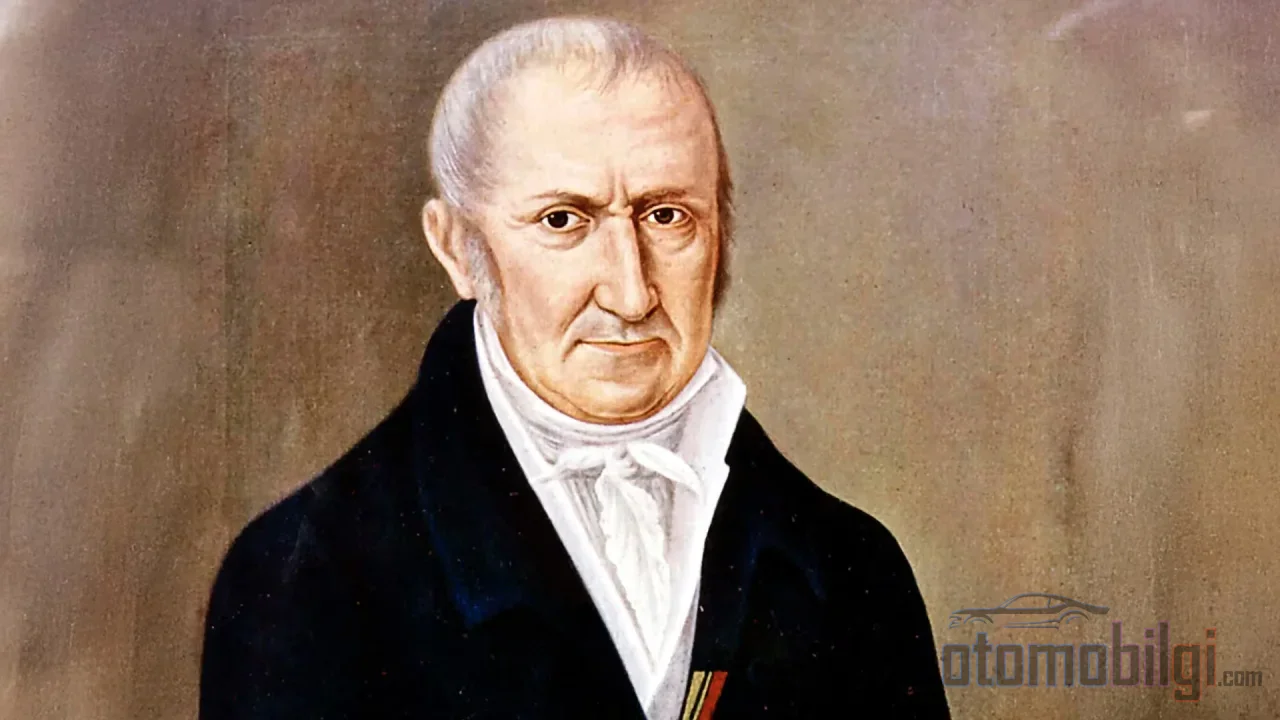
The story of that tiny electric spark, flashing dozens of times per second at precisely the right moment inside the cylinder of a gasoline engine, is almost always traced back to Nikolaus Otto's four-stroke engine of 1876 or Karl Benz's Patent-Motorwagen of 1886. Yet the trail of spark ignition leads much further back, to 1770s Italy, to flammable gases collected from marshes, and to a physics professor holding a glass "pistol" in his hand. Alessandro Volta, the name we recognize today as the father of the battery, demonstrated the fundamental principle of internal combustion - that a flammable gas mixture trapped in a closed vessel could be deliberately exploded with an electric spark - without any intention of designing an engine.
This page addresses exactly that question: Can Volta's electric pistol truly be considered the origin of today's spark plug ignition? And who carried the line running from this origin to Otto's engine?
How Did Volta's Electric Pistol Work?
The operating principle of the device is conceptually no different from what a modern spark plug does. This glass or metal tube, which Volta himself called an "electrical-phlogopneumatic pistol", was partially filled with hydrogen - or a mixture of methane and air - from a rubber bladder. Its mouth was sealed with a cork stopper, and then an electric charge taken from a Leyden jar created a spark between two electrodes inside the pistol. The spark ignited the gas mixture, and the resulting explosion violently hurled the stopper outward like a gunshot.
In practice, the operation was simple: one electrode was touched by hand, while the other was contacted with a pole of an electrostatic machine; the spark formed between the electrodes inside the pistol, and the noise of the explosion came together with the ejection of the stopper. While the earliest examples were made of wood, in later years elegant British-made versions appeared with glass and metal bodies, even mahogany grips and brass barrels.
Highlights
- Alessandro Volta developed a device that exploded a hydrogen-air mixture in a closed vessel with an electric spark in 1776-1777
- The device was derived from Volta's eudiometer work of 1776-77; the idea of a gunpowder-free weapon was born in January 1777
- Isaac de Rivaz patented his experimental vehicle with a hydrogen engine ignited by a Volta pile in 1807
- Lenoir developed the first practical gas engine with electric spark in 1860, and Otto developed the four-stroke engine with spark plugs in 1876
A Weapon, or a Measuring Instrument?
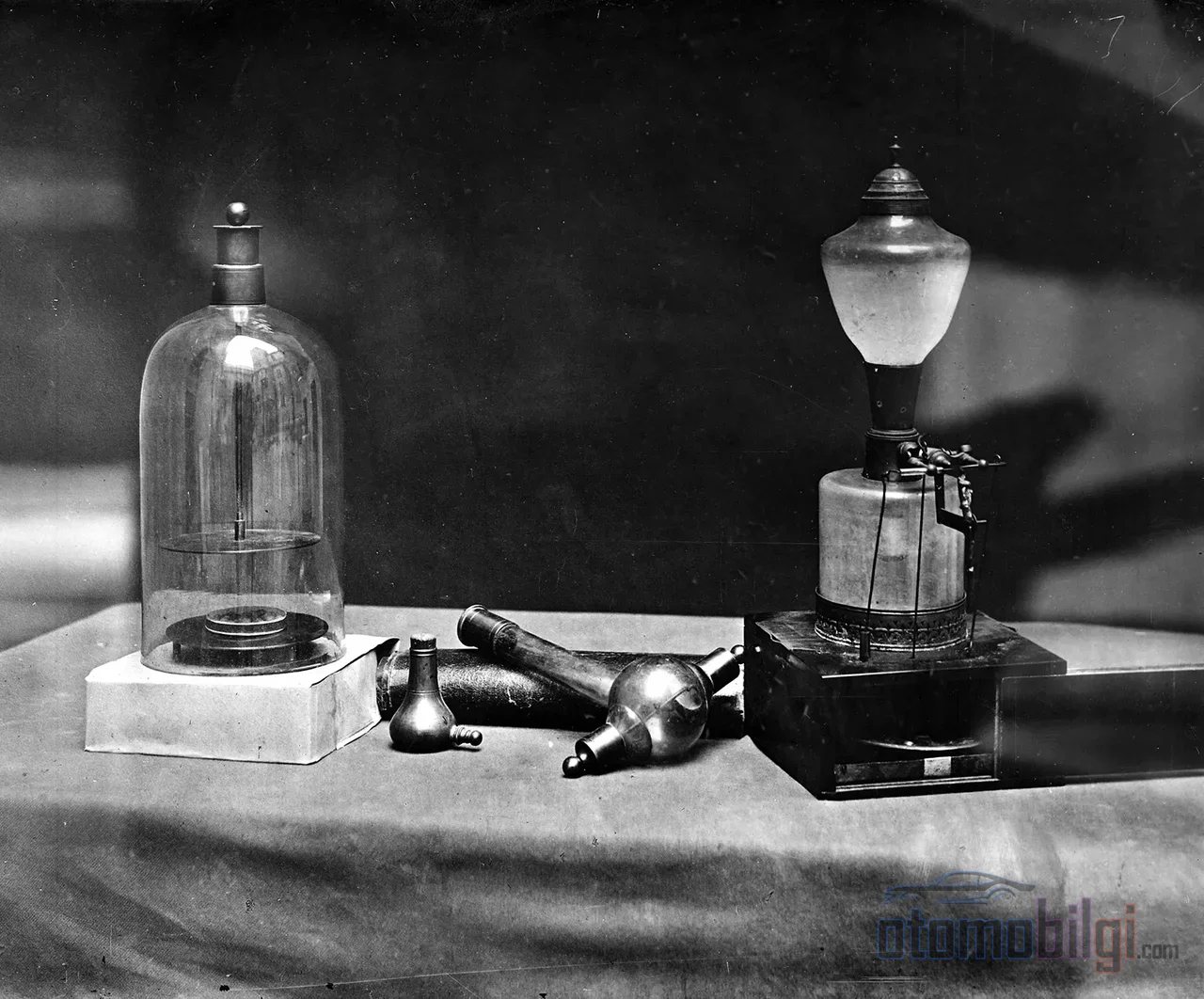
To understand Volta's pistol, we need to go back to 1776. That year, Volta undertook a series of experiments in which he ignited the methane he had observed and collected in marshes with an electric spark; these experiments, which exploded hydrogen-air mixtures, gave birth not only to the electric pistol but also to the hydrogen lamp and the eudiometer. The eudiometer was a device used to measure the "goodness" of air, that is, its oxygen content; the pistol emerged as a direct offshoot of this work.
The identity of the device is twofold, and both aspects rest on the same physical reality. On the one hand, following his experiments in January 1777 in which he ignited flammable air with flint sparks, Volta conceived the idea of a powderless, electrically ignited experimental weapon; when he discovered that the mixture could be ignited directly by an electric spark inside the vessel, the electro-pneumatic pistol was born. On the other hand, the same device was used to take measurements by reading the explosive force from the movement of a stopper or plunger and by estimating the oxygen content of flammable air samples.
It is true that Volta drew further conclusions from this demonstration: his experiments in remote firing with conducting wires and the transmission of electrical energy through cables were an early precursor of the principle of the electric telegraph. But the truly lasting legacy was the ability to safely and in a controlled manner carry out a gas explosion in a closed environment.
Why Is It Considered the Forerunner of the Internal Combustion Engine?
The engineering argument here is clear: By definition, an internal combustion engine is a machine that converts the pressure increase released by the burning of the fuel-air mixture inside a cylinder into mechanical work. Every element of Volta's pistol contains parts of this definition - a closed vessel, a flammable gas mixture, ignition by electric spark, and a moving element pushed by the explosion. The only thing missing is for this work to be made continuous and connected to a shaft. As the first person to ignite a gas mixture in a closed vessel with an electric spark, Volta is regarded as the forerunner of the ignition system of modern gasoline engines.
There is also a direct connection that concretizes the claim of precedence. While Eugenio Barsanti was conducting Volta-type pistol experiments with his students in Volterra, he came to the intuition that the energy of an exploding gas could be converted into mechanical work; it was this intuition that led him, together with Felice Matteucci, to develop one of the first models of the internal combustion engine. In other words, the step from the pistol to the engine is not merely conceptual, but a line that can be traced historically.
De Rivaz: The Name That Carried the Spark to the Engine
Exactly thirty years after Volta's experiment, in 1807, the Swiss inventor Francois Isaac de Rivaz carried this idea into a vehicle for the first time. De Rivaz's engine, running on a hydrogen-oxygen mixture, was patented in Paris on 30 January 1807 under number 731 and mounted on an experimental vehicle. The ignition was exactly Volta's method: the gas inside the cylinder was ignited by an electric spark created externally by pressing a button, via the Volta pile - that is, the electric stack Volta described in 1800.
The de Rivaz engine is one of the devices claiming the title of the world's first internal combustion engine and contains features such as spark ignition that found their place in modern engines. It did not achieve commercial success; it lacked mechanisms for fuel injection and ignition timing. But at a time when engine architecture did not yet exist, it demonstrated the feasibility of the idea of transferring the thrust of a gas explosion to a vehicle.
From Spark to Spark Plug: Lenoir and Otto
The later links in the chain are better known. Étienne Lenoir developed and patented his double-acting engine running on coal gas and ignited by an electric spark in 1860; this is considered the first truly workable internal combustion engine. In 1862, Lenoir's "hydrocarbon car" is regarded as the first automobile powered by an internal combustion engine. Nikolaus Otto and his brother, after making a copy of the Lenoir engine, applied for a patent for a liquid-fuel engine in January 1861; in 1876 he developed the Otto engine, which introduced the four-stroke cycle consisting of intake, compression, combustion and exhaust strokes and was ignited by a spark plug.
In early engine history, hot-tube ignition was also widespread alongside spark ignition; spark plug ignition emerged as a refined version of this crude method, and together with the Otto engine it produced one of the first successful representatives of spark-ignition engines.
| Year | Name | Contribution |
|---|---|---|
| 1776-1777 | Alessandro Volta | Igniting gas in a closed vessel with an electric spark |
| 1807 | Isaac de Rivaz | Patent for the first hydrogen-engined vehicle ignited by a Volta pile |
| 1860 | Étienne Lenoir | The first practical gas engine with an electric spark |
| 1876 | Nikolaus Otto | Four-stroke engine with spark plug ignition |
The First Internal Combustion Engine Debate: A Layered Precedence
The question of who was "first" changes depending on where the definition is drawn, and therefore has no single answer. Lenoir owns the first practical engine, de Rivaz the first vehicle application, Otto the first commercially successful four-stroke engine. Volta, meanwhile, never built an engine but laid out the ignition principle. The correct reading is to think of precedence in layers: Volta was the pioneering experiment, de Rivaz the first vehicle, Lenoir the first practical engine, Otto the first commercial success.
Conclusion: The Line from Pistol to Spark Plug
Is Volta's electric pistol the origin of spark plug ignition? Conceptually, yes: the device that first realized the idea of igniting a flammable gas mixture in a closed vessel with an electric spark, thereby laying the fundamental principle of the spark-ignition heat engine, is Volta's 1776-1777 pistol. This principle forms an unbroken line from de Rivaz's 1807 hydrogen engine to Lenoir's 1860 gas engine and Otto's 1876 spark-plug four-stroke engine, and from there to every gasoline cylinder today.
A side note concerns the cyclical nature of history: Hydrogen's wide flammability range and high combustion speed make it a naturally suitable fuel for spark-ignition engines; today's hydrogen internal combustion engine work shows that the same gas Volta filled his pistol with is returning to cylinders two and a half centuries later.
Sources
- Electric pistol, Volta type - Museo Galileo
- Volta's electro-pneumatic gun
- Volta's Pistol - Kenyon College Physics
- Alessandro Volta - Magnet Academy - National MagLab
- De Rivaz engine - Wikipedia
- Forerunners to the automobile - Mercedes-Benz Group
- Otto engine - Wikipedia
- Lenoir's Internal Combustion Engine - EBSCO Research Starters
- Hydrogen Internal Combustion Engine Vehicles: A Review - MDPI