Before Benz? Marcus and the Forgotten Firsts
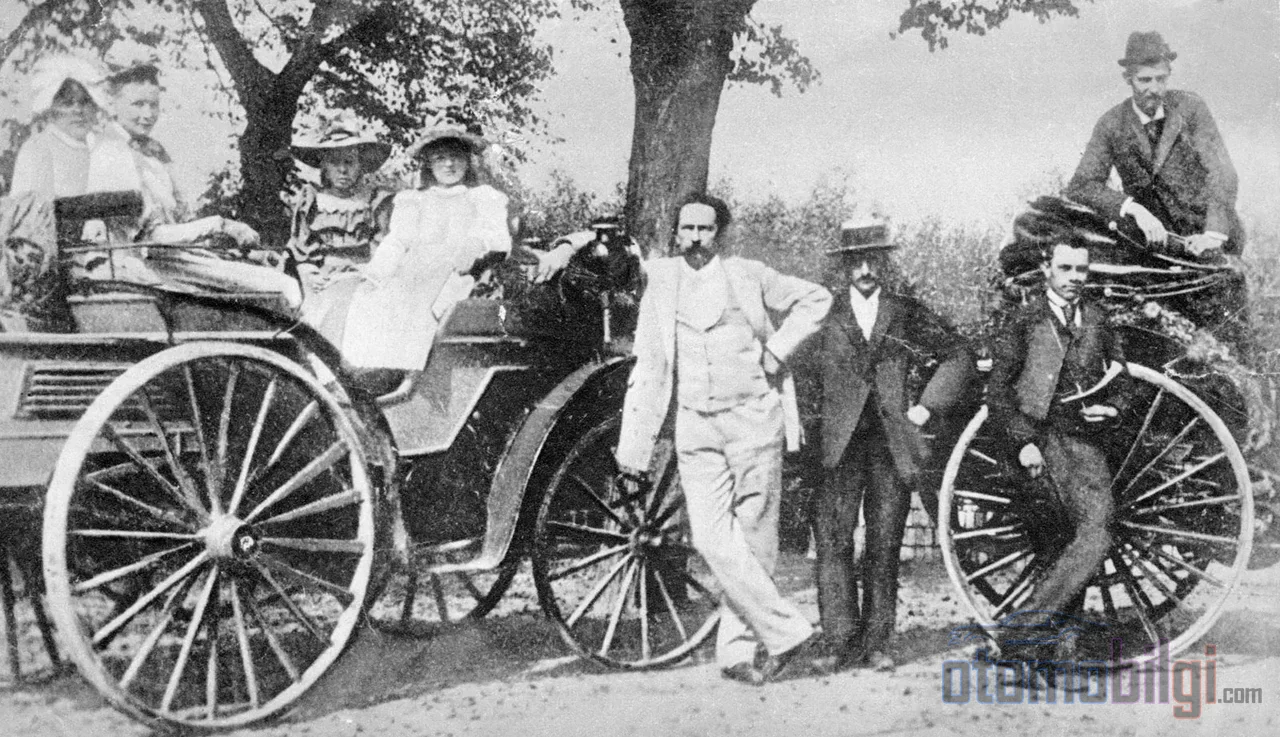
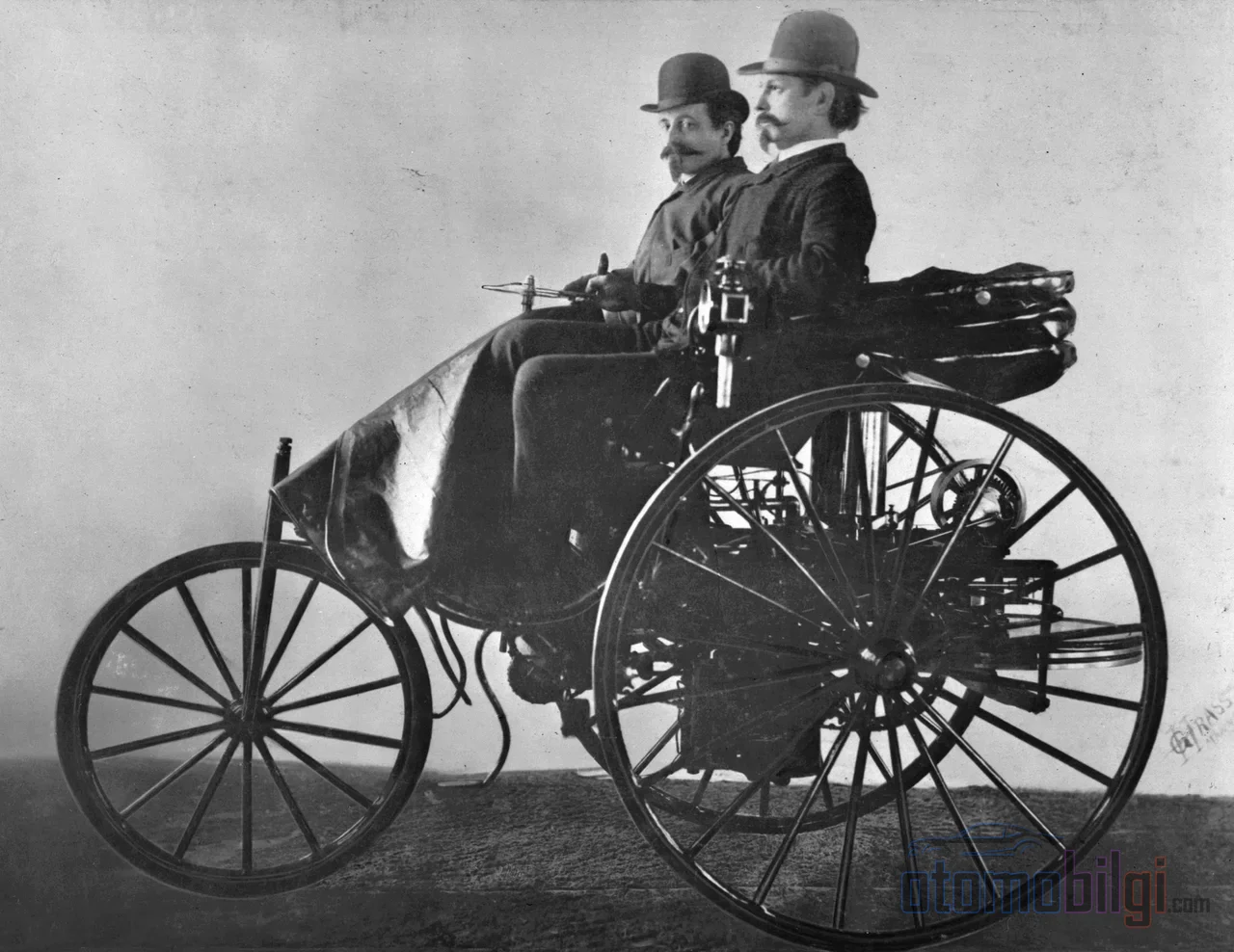
In January 1886, Karl Benz received a patent for the three-wheeled vehicle bearing his name, and this document was later declared the birth certificate of the automobile. So much so that even today, many publications begin with the same sentence: Benz invented the automobile. However, when the history of engineering is viewed coolly, the picture is not that clean. Forty years before Benz, in 1807, two separate inventors had patented two separate internal combustion engines; one ran on coal dust, the other on hydrogen. Over all those years in between, there was a series of pioneers who mounted an engine on a wheeled vehicle, powered a vehicle with gasoline, and laid the foundations of the four-stroke cycle. So who invented the first automobile: Benz, or Siegfried Marcus, whose name was deliberately erased from history during the Nazi era?
1807: The Year the Internal Combustion Engine Was Born
The story of the automobile, contrary to what most people think, begins not with the patent but with the engine. In 1807, in the French city of Chalon-sur-Saône, the brothers Nicéphore and Claude Niépce developed the world's first known internal combustion engine. The Pyréolophore, whose name was combined from the Greek roots for fire, wind, and transport, was protected by a ten-year patent, and the patent itself was approved personally by Napoleon Bonaparte. The first design was a boat engine and ran on a coal dust mixture; in other words, the first internal combustion engine was neither gasoline-powered nor mounted on a vehicle.
What makes the same year interesting is that 1807 was not the year of a single inventor. The Swiss engineer of Parisian origin, Francois Isaac de Rivaz, also registered the engine he had developed with a French patent. De Rivaz's engine ran on a hydrogen-oxygen mixture ignited by an electric spark - the fact that the ancestors of today's hydrogen fuel cell vehicles were tried two centuries ago is striking data in itself.
The First Internal Combustion Vehicle on Wheels
What makes de Rivaz stand out is not just the engine, but his application of the engine to a vehicle. In 1807 and 1808, he mounted this hydrogen engine on a wheeled, experimental vehicle. This vehicle went down in history as the first wheeled vehicle powered by an internal combustion engine. So in a technical sense, the first person to demonstrate internal combustion on wheels was not Benz, but de Rivaz.
So why did his name remain at the margins of history? The answer is an engineering-oriented answer: none of the pioneers managed to leave a thread of development that continued beyond their own era. De Rivaz's vehicle was not a practical vehicle but an experimental demonstration; there was no series production, commercial pursuit, or development line. The criterion for the automobile is not merely running an engine, but turning the engine into a repeatable, usable, and developable vehicle. By this criterion, Benz's contemporaries were still far away.
Barsanti and Matteucci: The Forgotten Pioneer of the Free-Piston Engine
The next critical step in the internal combustion engine came from Italy. The priest-engineer Eugenio Barsanti and the engineer Felice Matteucci completed their first experiments and their first engines in 1853; their first patents were obtained in London in 1854. The machine they developed was the first free-piston internal combustion engine operating on the atmospheric two-stroke principle - it should come as no surprise that this architecture, now being revisited today as the free-piston linear generator, was already being cited as an example back in those years.
The two did not remain confined to the laboratory: they managed to produce a two-cylinder engine delivering 5 horsepower; and two years later they moved on to a version with two pistons working in opposite directions. In other words, the performance-driven goal and the mindset of architectural evolution were well in place. The fatal twist came on the commercial side: Barsanti's death from typhoid fever ended any chance of the venture turning into production. Just as a technically sound idea can be erased from history when it loses its owner, and politics can prevent the memory of an invention - we will see both of these on this page.
Highlights
- 1807: The Niépce brothers' Pyréolophore became the first internal combustion engine, while de Rivaz's vehicle became the first wheeled internal combustion vehicle.
- 1870: Siegfried Marcus, by fitting a motor to a handcart, became the first person to move a vehicle using gasoline.
- 1876: Nikolaus Otto introduced his compression four-stroke engine; the cycle principle had been patented by Beau de Rochas in 1862.
- 1885–1886: The Benz Patent-Motorwagen is regarded as the first practical automobile.
- 1940: The Nazi Propaganda Ministry issued a written order that encyclopedias mention Daimler and Benz instead of Marcus.
The Story of Nikolaus Otto and the Four-Stroke Cycle
The real reason Benz's engine could speak was the work of a name that came before him. The principle of the four-stroke cycle - intake, compression, ignition, exhaust - was patented in 1862 by the French engineer Alphonse Beau de Rochas. However, the patent remained a scheme on paper; the person who turned the cycle into a working machine in practice was Nikolaus Otto. After a development period of roughly 14 years, Otto ran his compression four-stroke engine on May 9, 1876. This architecture, still known today as the Otto cycle, shaped nearly all automobile engines.
There are also striking details along Otto's path. The partnership he founded with Eugenio Langen won a gold medal for their atmospheric engine; production of the atmospheric engine was discontinued in 1882 after 2,649 units - meaning Otto deliberately buried his own old technology in favor of the better one. This was a management decision rarely seen in the history of engineering: consciously killing the first-generation product for the second generation.
Three Years Before Otto: Christian Reithmann
The practical side of the four-stroke cycle was not the work of one person either. The Austrian mechanic Christian Reithmann, working in Munich, is recorded to have built his first four-stroke engines in 1873 - that is, three years before Otto. This does not diminish Otto's contribution: Beau de Rochas patented the principle, Reithmann built engines, but it was Otto who matured the cycle on an industrial scale and gave it his name. The chain of firsts must therefore be cleared of myths: who did what at each step must be written down separately and in measurable terms.
Siegfried Marcus: The First Person to Power a Vehicle with Gasoline
The most controversial figure in this dialogue of names is Siegfried Samuel Marcus. Marcus, born in Malchin in Mecklenburg to a Jewish family - his birth year appears in sources as 1831 or 1833 - started working as a mechanical apprentice at the age of 12, worked at Siemens & Halske at 17, and moved to Vienna in 1852, founding his own workshop in 1860. At that time, the city was a hub where the telegraph, electrical, and mechanical industries converged; Marcus's workshop was precisely the product of this convergence.
In 1870, Marcus mounted a gasoline internal combustion engine onto a simple handcart. This vehicle went down in history as the first vehicle powered by gasoline; but the honest side of the fuel must also be written: the vehicle was started by lifting it and turning the wheels. In other words, it did not travel on the road under its own power. The Marcus model was exhibited at the 1873 Vienna Exposition, but he was not satisfied with the result and dismantled the vehicle. This attitude speaks to Marcus's engineering ethics: he refused to present a working but unimprovable prototype as a finished invention.
Marcus's real industrial contribution was the engine rather than the automobile. In 1883 he received a patent in Germany for a low-voltage ignition magneto; together with the rotating brush carburetor, this design made his engine original by the standards of its time. He used this engine in 1886 on German Navy torpedo boats. Looking at the patent registry, Marcus's success is indisputable: sources count 131 or approximately 76 patents - the difference stems from which countries and documents are included in the count - but he held patents in up to sixteen countries.
The Second Vehicle and the 1875 Myth
Marcus's second vehicle was built in 1888/1889 at the Märky, Bromovsky & Schulz workshops, and today it is exhibited at the Vienna Technical Museum as one of the oldest surviving automobiles. The chronology question here is one of the most famous analyses in automotive history. For years it was claimed that this vehicle was built in 1875; this dating was conclusively disproven only in 1968. The author of the source from which the 1875 claim spread, under pressure from patent lawyers, had found evidence in his own research that the vehicle was in fact built in 1888 and had published it for the 1900 Paris Exposition catalog - so the wrong date circulated for half a century despite a correction that came from its own source. Today's scholarly view is clear: the second Marcus vehicle is dated 1888/1889 and comes years after the Benz Patent-Motorwagen. Although some general knowledge sources continue to give early dates such as 1864 for the first Marcus vehicle, there is no evidence behind these dates.
Another crucial observation: Marcus never applied for a patent for his vehicle, never obtained one, and never claimed to have invented the automobile. For him, the vehicle was a matter of intellectual curiosity; it was not a product intended for practical use. In the ranking of firsts, this line says a great deal: a prototype without a patent cannot be connected to a line of development.
Marcus versus Benz: Comparison Table
| Criterion | Siegfried Marcus | Karl Benz |
|---|---|---|
| First gasoline vehicle | 1870, motorized handcart | 1885 Patent-Motorwagen |
| Patent | No patent for the automobile | January 1886, Patent-Motorwagen |
| Series production and sales | None | Yes - the first practical automobile |
| Engine contribution | Magneto ignition, carburetor (1883) | Single-cylinder two-stroke engine (1879) |
| Impact on development | His trail was not followed | A tangible product line was born |
Benz's own first step should also be read as in the table: his first stationary gasoline engine was a single-cylinder two-stroke unit, which he first ran on December 31, 1879. The Patent-Motorwagen that followed solved the engine not in a four-wheeled chassis, but in an integrated vehicle of his own design. And that is exactly where the difference lies: Marcus ran a vehicle on gasoline, while Benz designed and sold the gasoline vehicle as a product.
Rewriting History: The Nazis and the Erasure of Marcus
The real rupture in Marcus's remembrance came not from a technical debate, but from politics. Because Marcus was of Jewish origin, after Germany's occupation of Austria (March 1938) his name and monuments systematically disappeared. The monument in front of the Vienna University of Technology was removed; it was rebuilt after the war, and the stored vehicle was returned to the exhibition. More concretely, the Nazi regime ordered the destruction of the original Marcus automobile displayed at the Vienna Automobile Club.
The erasure was not only physical, but also archival. The Ministry of Propaganda, in a written directive to Daimler-Benz dated July 4, 1940, ordered that Gottlieb Daimler and Carl Benz be cited as the creators of the modern automobile instead of Marcus in the major encyclopedias to be published. In other words, alongside engineering facts, a regional political decision also played a role in the establishment of the narrative attributing the first automobile to Benz. Even at the time of this writing, some engineering organizations' landmark pages still carry the old 1875 dating and note that the matter is being pursued by historians - permanent propaganda is more stubborn than corrections.
There is also a noteworthy counterexample: In 1937, the Harand Movement in Austria, in response to a racial hatred exhibition, printed commemorative stamps of prominent Jews including Marcus and identified him as the inventor of the gasoline automobile. So in the period before the Nazis, Marcus's importance had gained broad acceptance; an automobile book from 1904 gave him credit for the development of the gasoline engine.
So Who Invented the First Automobile: A Balanced Answer
Let us answer the question in a single sentence, because the answer is actually measurable: according to the current scientific view, Karl Benz built the first practical automobile intended for production; Siegfried Marcus was the first person to run a gasoline-powered vehicle in 1870, but none of his models were developed further and he had no influence on the automobile's development. The list of forerunners of the internal combustion engine stretches back much further than Benz: The Niépce brothers built the first internal combustion engine, de Rivaz the first wheeled internal-combustion vehicle, Barsanti and Matteucci the first free-piston engine, Reithmann the first four-stroke engines before Otto, and Otto the first compression four-stroke engine.
Judged from an engineering standpoint, this distinction is not all that paradoxical. Turning an invention into a vehicle passes through three thresholds: demonstrating the principle, maturing the machine, and commercializing the product. Niépce, de Rivaz, and Barsanti crossed the first threshold; Marcus remained between the first and second; Otto crossed the second threshold and turned the engine into an industrial technology; Benz crossed the third threshold and turned the automobile into a product. The legend is born when all three thresholds are attributed to a single person's name.
Conclusion: A Chain of Firsts, Not a Single Name
Benz's Patent-Motorwagen is the true starting point of the automobile - but not on its own; it came at the end of roughly a century of accumulated progress. The line running from a coal-powder boat engine in 1807 to a vehicle sold in 1886 passes, in order, through the names of Niépce, de Rivaz, Barsanti, Matteucci, Beau de Rochas, Reithmann, Otto, and Marcus. Most of these names achieved no commercial success; some receded into history through death, some through lack of technical maturity, and some through purely political decisions. That is why Marcus's story is not merely a dispute over priority, but a warning: the history of engineering should be read with as much attention to who wrote the evidence as to the engineering evidence itself. The next time you hear someone say that Benz invented the automobile, you now know the missing part of the sentence.
Sources
- Siegfried Marcus - Wikipedia
- Forerunners to the automobile - Mercedes-Benz Group
- Benz Patent Motor Car: The first automobile (1885–1886) - Mercedes-Benz Group
- 203 Siegfried Marcus Car - ASME
- Pyréolophore - Wikipedia
- De Rivaz engine - Wikipedia
- Barsanti–Matteucci engine - Wikipedia
- Nikolaus Otto - Britannica
- How the Nazis Made Daimler & Benz the Inventors of the Automobile - The Truth About Cars
- Siegfried Marcus: Erased by the Nazis, Buried by a Fake Date - Not Enough Cylinders