Lenoir's Engine: Internal Combustion Experiments Before Otto
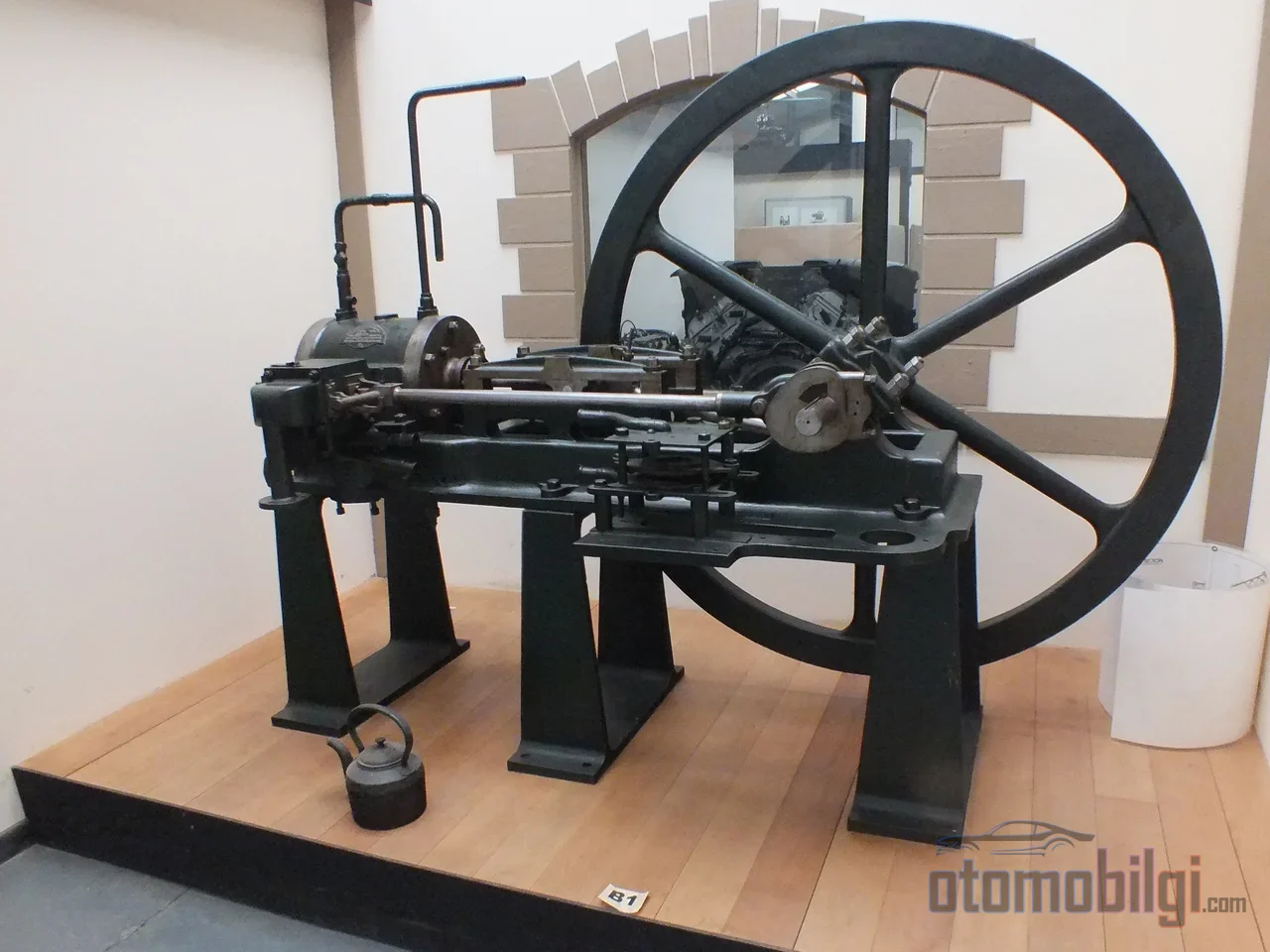
In January 1860, an enameler in Paris obtained a patent for a strange engine that resembled a steam engine. Étienne Lenoir's machine would go down in history as the first commercially viable internal combustion engine; those who made money from it and those inspired by it would lay the first stones of the road leading to the point where we still talk about the four-stroke engine today. But Lenoir's story is not the beginning of this story, it is its outcome. Half a century before him, in 1807, a hydrogen-powered car had traveled. In 1826, an inventor from Vermont had patented a carburetor-like device. So why did these early attempts fail, and how exactly did Otto's four-stroke solution build upon this legacy?
The Lenoir Engine: A Steam Engine That Burns Gas
Étienne Lenoir was born in 1822 in the French-speaking region of Belgium and went to France at the age of 16; his profession was metal enameling. His engineering genius was not limited to the engine: he obtained patents for an enamel process in 1847, electroforming in 1851, an electric railway brake in 1853, and an automatic telegraph that could be considered a precursor to stock tickers in 1865.
His main work was based on the patent registered on January 24, 1860: an engine powered by air expanding through the combustion of gas. Its mechanical architecture was conventional - horizontal, double-acting, resembling a direct steam engine. Since power was generated on both faces of the piston, it was effectively equivalent to a two-cylinder engine. The ignition, however, was an approach modern enough to surprise the standards of the day: a battery and induction coil, a sliding distributor, and two spark plugs.
The numbers show both the engine's claim and its limits. A cylinder with a volume of approximately 18 liters produced only 2 hp at 130 rpm; efficiency was in the range of 4.5-5%. The reason is clear from an engineering standpoint: the engine performed no compression before combustion. Air and gas were drawn in separately and mixed in the cylinder - which is why Lenoir claimed this was no ordinary gas engine - but combustion occurred in an uncompressed, that is, low-density mixture.
Highlights
- The Lenoir engine, patented on January 24, 1860, is the first internal combustion engine to be commercially applied.
- 2 hp @ 130 rpm from a volume of 18 liters and only 4.5-5% efficiency - because there was no compression.
- In 1807, the Niépce brothers' Pyréolophore and de Rivaz's hydrogen vehicle existed 53 years before Lenoir.
- Otto's four-stroke engine in 1876 put into action the compression that Lenoir had left missing.
Commercial Results and the Uncertainty of Production Numbers
In 1859, Société des Moteurs Lenoir was founded; yet no dividend was ever paid for the company's roughly 4,000 shares. The engine was nevertheless sold and licensed: In England, Reading Iron Works produced about 100 units, two German companies and the Lenoir Gas Engine Company in New York (half hp for 500 dollars, 4 hp for 1,500 dollars) entered the market; in Paris, Marinoni and Lefebvre became the most productive operations. As for the total production figure, it is not possible to give a clear number: the estimates at hand range across a wide spectrum, from 143 sales in Paris up to 1865, to 380 units produced within a year, series of 400–500, and even figures reaching 1,500. Part of the reason for the discrepancy is the definition: engines sold, engines produced, and engines that could be produced under license are counted separately.
The engine's engineering problems, however, are beyond dispute: the lack of compression led to fuel inefficiency, and overheating caused the valves to stick. Noise, the difficulty of charging the battery, and spark plug maintenance were also everyday pains. A steam engine of similar size was more economical - so compared to its rival it was not hopeless, but it had no advantage either. In 1863 the Parisian Gas Company took over the engine and granted Lenoir a retirement pension. Lenoir won an award at the 1862 London Exhibition and received the Légion d'honneur in 1881; yet he died in poverty in 1900.
Did Lenoir Really Build the First Automobile?
This question is the most sensitive point of the French-German historiographical rivalry, and the evidence is weak. In an automobile magazine in 1897, Lenoir recounted that he had driven a motorized vehicle between Joinville-le-Pont and Paris in 1863. The Automobile Club of France concluded in 1900 that the first automobile journey was made in May 1862 between Paris and Vincennes. However, the dates in the two claims contradict each other, and this inconsistency casts doubt on the story; so much so that apart from a vehicle dated 1860 there is no other evidence at all, and even Lenoir never voiced this claim during his lifetime. The view that the later story was a publicity stunt is strong.
The irony is considerable: In the Selden Patent Case between 1903 and 1911, Ford referred to Lenoir's 1860 engine in his defense against the Selden patent - as proof that the technology was in the public domain. It is clear that the question of who built the first automobile can never be given a definitive answer due to the ambiguity in the definition.
What Remains from Lenoir: Five Pioneers from 1807 to 1865
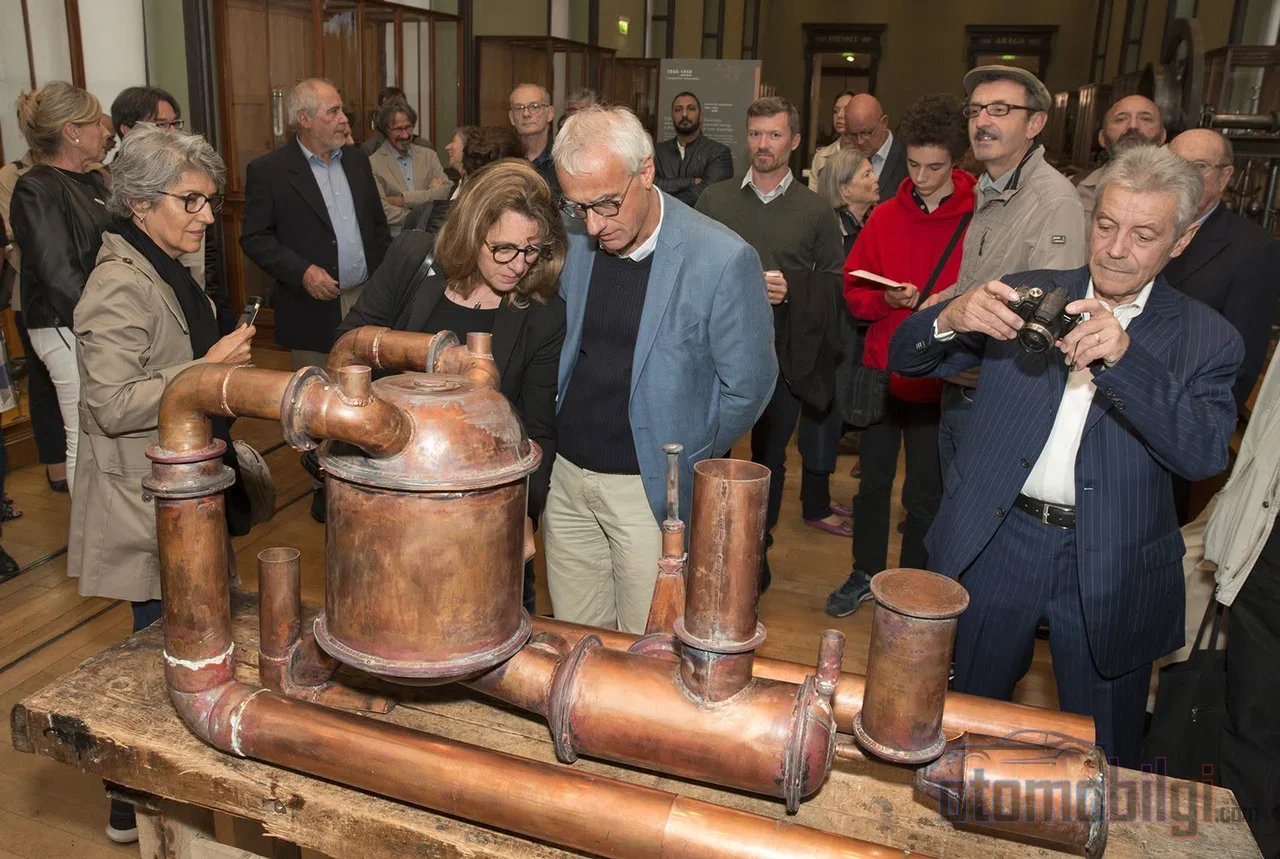
The idea of internal combustion existed long before Lenoir's patent. In fact, Lenoir's 1864 commercial brochure also acknowledged that the engine was based on earlier work: Robert Street's piston, Philippe Lebon's double effect, de Rivaz's ignition, Samuel Brown's cooling. The table below gives the backbone of the lineage going back in time.
| Inventor / Name | Date | Contribution |
|---|---|---|
| The Niépce brothers | July 20, 1807 | Pyréolophore; a piston-cylinder system powered by dust explosions |
| Francois Isaac de Rivaz | January 30, 1807 | Hydrogen-fueled engine with electric ignition; fitted to a vehicle the same year and driven a short distance |
| Samuel Morey | April 1, 1826 | The first internal combustion engine patent in the USA; an early carburetor-like mechanism |
| Barsanti and Matteucci | 1853 (first engine) | A free-piston, atmospheric engine; a two-cylinder 5 hp version in 1856 |
| Étienne Lenoir | January 24, 1860 | The first commercially viable internal combustion engine |
| Pierre Hugon | 1865 | An engine resembling Lenoir's but with flame ignition and water-spray cooling |
Pyréolophore and De Rivaz: Two Patented Paths of 1807
In mid-1807, Napoleon granted a patent for the Pyréolophore to the brothers Nicéphore and Claude Niépce. The principle was different from today's: controlled dust explosions. First lycopodium, the spores of a plant known as clubmoss, and later a mixture of coal and resin was used as fuel; the piston-cylinder arrangement was run enough to propel a boat. In January of the same year, the Swiss Francois Isaac de Rivaz had received French patent 731: the first internal combustion engine powered by hydrogen and ignited electrically. De Rivaz mounted his engine on a wheeled vehicle the same year and traveled a short distance; the fuel was hydrogen stored in a balloon. Today, even the official history pages of automobile manufacturers cite this 1807 vehicle and Lenoir's motorized attempt as pioneers.
Morey and Barsanti–Matteucci: Different Paradigms
Samuel Morey, born in Fairlee, Vermont, received the US patent for Gas or Vapor Engine on April 1, 1826 for the engine he developed between 1822 and 1830 - it is the first internal combustion engine patent in that country. The engine had no compression, but it used liquid fuel and had an early carburetor-like arrangement; It is reported that Morey conducted more than 4,000 experiments and also built a vehicle. Less well known but technically the most interesting branch is the path of the Italian priest Eugenio Barsanti and the engineer Felice Matteucci. Barsanti's experiments date back to 1843; In 1853 they built their first engine, in 1856 a two-cylinder 5 hp version, and a few years later an engine with double opposed pistons. The free-piston atmospheric design was conceived to reduce the recoil effect of the explosions - this is the reason they are regarded today as the founding fathers of the opposed-piston engine architecture.
Why Did These Early Engines Fail?
There is no single reason; there is a common deficiency. The Hugon engine had addressed Lenoir's greatest pains - flame ignition solved the battery problem, and water injection into the cylinder solved overheating. But none of them overcame zero compression, the real enemy of efficiency. An uncompressed mixture means low power per cylinder; low power means a larger cylinder and more fuel for the same work. An engine yielding 2 hp from 18 liters is on the losing side of this equation. When maintenance burden, noise, and fuel supply are added on top of this, competing with the mature steam engine became impossible. The result: the idea was right, the cycle was missing.
Otto's Four-Stroke Solution: The Discovery of the Missing Piece
Nikolaus Otto is regarded as the person who built the first four-stroke internal combustion engine in 1876. The four steps of the cycle - intake, compression, power, and exhaust - are basic engineering knowledge today, but what was revolutionary was the second step: Otto and Langen created the first engine that successfully compressed the fuel mixture before combustion. This compressed-charge, gas-fueled four-stroke cycle is known today as the Otto cycle, and it is precisely the element Lenoir left out.
This single difference produced a leap that could be measured in numbers: compression multiplied the work extracted from a unit of fuel many times over and made the engine economically comparable to the steam engine. An interesting footnote in its own right: Lenoir did not give up either. In the 1880s he tried a compression four-stroke engine with poppet valves and achieved fuel economy improvements of up to 300 percent; his engine was built by Mignon and Rouart. So the first inventor had seen and endorsed the solution that built upon his own legacy.
The Legacy: The Line Extending from Otto to Today
This half century before Karl Benz and Nikolaus Otto shows the typical pattern of engineering history: the concept comes first, and the correct cycle is found much later. De Rivaz tried hydrogen and electric ignition, Morey liquid fuel and carburetion, Barsanti-Matteucci the free and opposed piston, the Niépce brothers powder fuel, and Lenoir commercialization. All were pieces; what was missing was the four-stroke cycle completed with compression. That is why the polyphonic answer to who made the first invention of the internal combustion engine still holds: depending on the definition, one speaks of the Niépces or de Rivaz of 1807, Morey of 1826, Barsanti-Matteucci of the 1850s, or Lenoir of 1860. The only sentence agreed upon is this: the Otto cycle, which introduced the idea of compression before combustion, won over industry as the correct form of the first invention.
When you look under the hood of a car today - the number of cylinders, valve architecture, ignition and fuel injection layout - everything you see is the accumulated result of the steps taken between 1807 and 1876. Lenoir's engine was the commercial starting point of this line; its failure as much as its success showed Otto what needed to be done.
Sources
- Étienne Lenoir | Research Starters - EBSCO
- Étienne Lenoir | Britannica
- Birth of an idea: Etienne Lenoir - Accelleron Charge Magazine
- The Lenoir gas engine: Monaco Patents
- Étienne Lenoir - The Motor Museum in Miniature
- Barsanti-Matteucci engine - Wikipedia
- Samuel Morey - Britannica
- De Rivaz engine - Wikipedia
- Pyréolophore - Wikipedia
- Four-stroke engine - Wikipedia