The Hesselman Engine: The First Engine to Run on Five Fuels
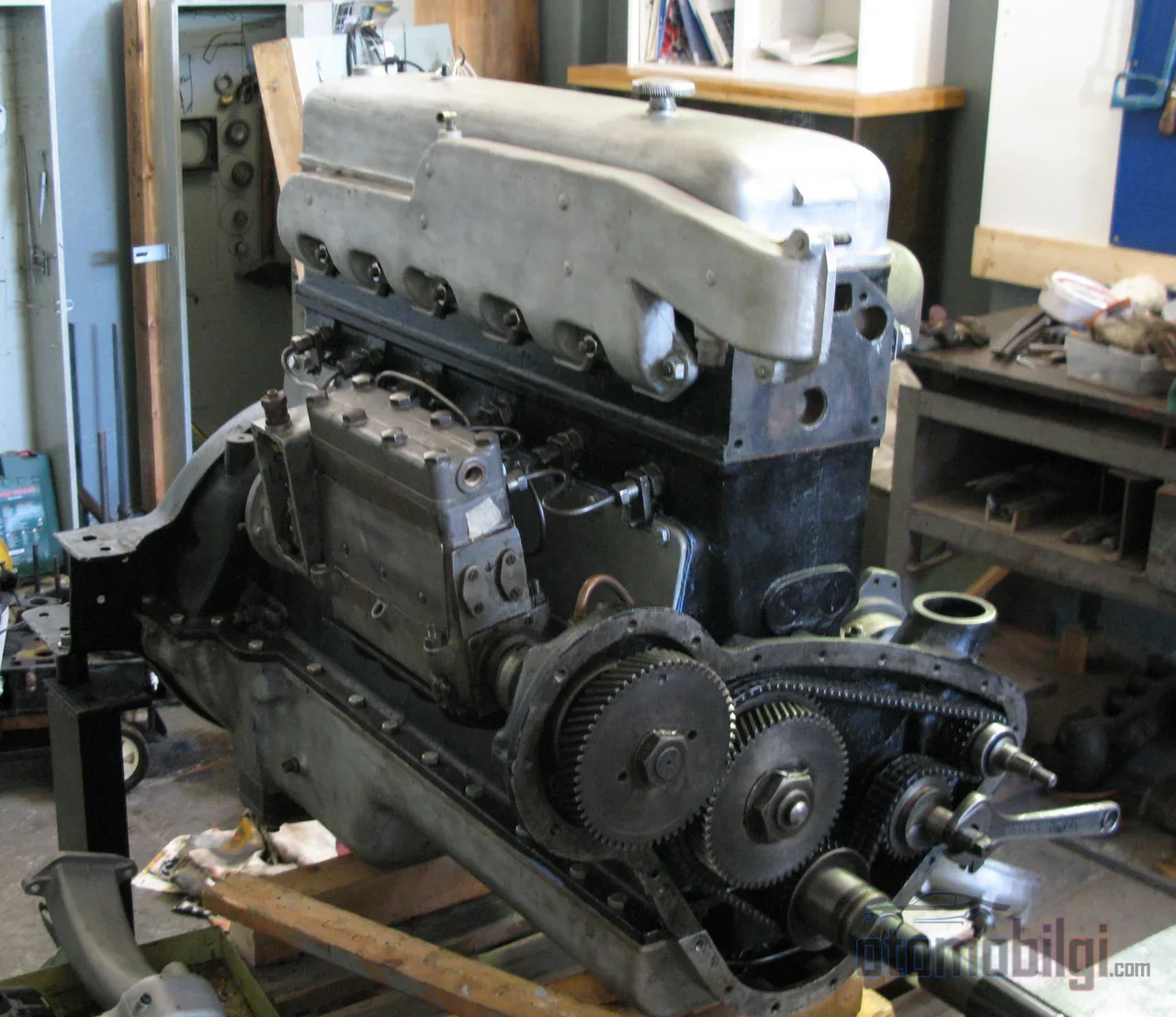
In 1925, while the carburetor's dominance in the automotive world went unquestioned, a Swedish engineer approached the question from a different angle: what happens if we deliver fuel to the cylinder not through a carburetor, but by injecting it directly? Jonas Hesselman's answer became the pioneering example of gasoline direct injection powering production vehicles. Moreover, this engine was found neither in a sports car nor in a luxury coupe; it came to life on truck chassis and under bus hoods. When looking at where fuel injection stands today, we recall much later names: Bosch's 1951 system, the Mercedes-Benz 300SL, or the Bendix Electrojector. Yet the first link in the chain was forged much earlier, in the heavy commercial vehicles of the North.
How Did the Hesselman Engine Work?
The Hesselman engine was, by design, a hybrid standing between two worlds. In Otto cycle engines, fuel is mixed with air during the intake stroke, drawn into the cylinder, and ignited by a spark plug. In a diesel, air is compressed at high pressure, fuel is injected at the end of compression, and ignites spontaneously. Hesselman combined elements of these two approaches: fuel was injected directly into the combustion chamber at the end of the compression stroke, just before the spark, by a diesel-type injection pump. Ignition, however, was provided by a spark plug.
The details of the cycle were also a product of systematic engineering. Air entered tangentially through the intake valve, gaining a rotational motion inside the cylinder, that is, turbulence. Fuel was sprayed from the injector toward the spark plug at approximately 50 degrees before top dead center, while the spark fired at approximately 15 degrees before top dead center. The turbulence carried the injected fuel toward the spark plug, enabling the mixture to form. The start of injection and spark timing were fixed; load control was carried out through a throttle, via the linked variation of intake air volume and injection duration.
The compression ratio was low: in the Waukesha version, air was compressed only to about 125 psi. The diesel's high compression requirement was absent here, and the engine's entire character stemmed from this choice.
Highlights
- Jonas Hesselman introduced his engine in 1925.
- Fuel was injected directly into the cylinder during the compression stroke, just before the spark.
- It is considered the first direct injection engine with spark ignition to power production vehicles.
- The Waukesha-built versions covered a power range of 20-300 hp.
- In Sweden, Scania-Vabis, Tidaholms Bruk, and Volvo; in the USA, Waukesha produced this engine.
The Rationale for Turning to Injection Under the Carburetor's Dominance
In the 1920s, the carburetor was seen as an integral part of the gasoline engine. So what drove Hesselman to break this mold? The answer lies in the trio of efficiency, starting, and fuel economy.
Diesel-Like Efficiency Without the Diesel Burden
The engine offered efficiency higher than contemporary carbureted spark ignition engines, yet lower than a diesel. But the equation wasn't just about efficiency. Since the diesel's high compression ratio didn't need to be maintained, the Hesselman engine could be built smaller, lighter, and cheaper than a diesel. For the heavy commercial vehicle operator, this was a direct calculation between the load a truck could carry and the weight of the engine the chassis had to carry. According to Scania's history, the engine ran like an ordinary carbureted engine but, thanks to direct injection, was lighter than a diesel and consumed less fuel.
An End to the Cold Starting and Heating Problem
Another candidate in the era's search for fuel economy was the semi-diesel, the hot-bulb engines that required preheating. These engines had to be heated before starting and were difficult to start in cold weather. Hesselman solved this problem at its root: the air and fuel were not preheated. According to the bulletins of the era, the engine started as easily as a gasoline engine and ran as cleanly and smoothly as a gasoline engine. These were the three promises highlighted in the period's marketing: easy starting, low smoke, and cheap fuel use.
Fuel Flexibility: One Engine, Five Fuels
One of the Hesselman engine's most practical advantages was fuel flexibility. The engine; could run on fuel oil, kerosene, gasoline, coal-derived tar oils, and alcohol. Most applications eventually switched to conventional diesel fuel. A common usage pattern was to run the engine on gasoline from a small auxiliary tank, then switch to cheaper diesel or kerosene in the main tank once warmed up. The versions produced by Waukesha could run on No. 2 and No. 3 furnace oils, No. 1 and commercial distillate and kerosene, and could be adapted to butane or natural gas with a simple manifold and external parts change taking less than a day. This was serious insurance for the operator against price fluctuations in the fuel market.
Mass Production in Trucks and Buses: The Engine Goes to the Field
The theory was nice, but what made the Hesselman engine historically significant was that it went into mass production and onto the roads. In Sweden, three truck manufacturers - Scania-Vabis, Tidaholms Bruk, and Volvo - used this engine in their own vehicles from the late 1920s onward. Volvo's Series II trucks (1929-1933) were produced with this gasoline-diesel hybrid engine. In Germany, some engines were produced under license by AEG.
On the US side, the Waukesha Motor Company produced Hesselman engines for both vehicle and industrial applications from 1932 to 1951. The power range was between 20-300 hp, and the engine was about 30-50 pounds heavier than a gasoline engine of the same size due to the injection equipment. Waukesha produced seven times as many Hesselman engines as diesel engines in those years. A small number of engines were also manufactured for Allis-Chalmers tracked vehicles.
The field of application was not limited to road transport. The engines; were used in trucks, buses, motorboats, and rail vehicles. In stationary applications, they powered pumps and gas compressors. Even so, total production remained relatively limited: By 1934, approximately 500 engines had been produced. Most engines were manufactured for heavy vehicles and stationary industry in Sweden and the USA in the 1930s and 1940s.
Who Was Jonas Hesselman?
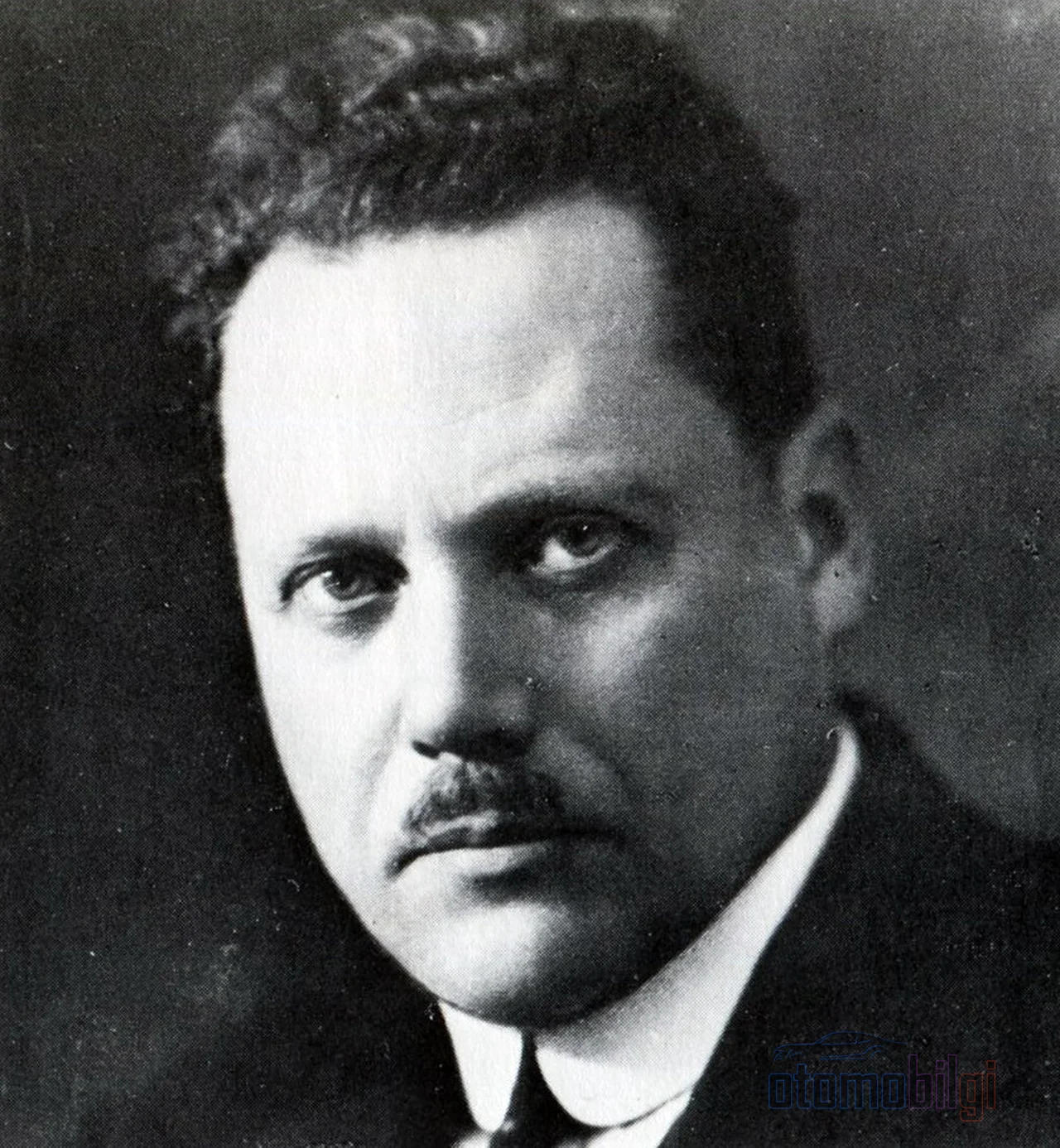
The man behind the engine had an engineering career as interesting as the engine itself. Knut Jonas Elias Hesselman was born on April 9, 1877. He graduated from the Mechanical Engineering department of KTH Royal Institute of Technology in 1899 and joined AB Diesel Engines the same year, a company that later became Atlas Diesel and is known today as Atlas Copco. From 1901 he served as chief of design. From the early 1900s onward, he invented new valves and fuel pumps, significantly reducing the fuel consumption and mass of engines; the reversibility of the engines he developed played a role in Roald Amundsen choosing Atlas Diesel engines for his 1911 South Pole expedition.
Hesselman founded his own factory in 1916. He was a leading authority on diesel design and held hundreds of patents. His field was not limited to internal combustion engines: he also designed electric vehicle components, and his company Hesselman Elhydraulik, today's Haldex AB, developed a hydraulic power unit in 1970 that is considered the prototype of modern truck lifts. His 1925 engine is one of the most mentioned yet least known products of this long career.
Why Couldn't It Jump to Passenger Cars?
The most intriguing point in the story of the Hesselman engine is this: while direct injection was proven in 1925, why did it take nearly thirty years for similar systems to appear in passenger cars? The picture revealed by the records is clear. All serious applications of the Hesselman engine were trucks, buses, boats, rail vehicles, and stationary industrial facilities. On the passenger automotive side, the first real steps of direct injection came much later: Bosch introduced the first gasoline injection system for automotive engines in 1951, and its first customer was the automobile manufacturer Gutbrod. In 1952, the little-known Goliath GP700 appeared with gasoline injection through the adaptation of its diesel system. In the same period, the first mass-produced gasoline direct injection system used in two-stroke engines was developed by Bosch, and the Mercedes-Benz 300SL was cited as the first car offered with a direct-injection gasoline engine. The Bendix Electrojector, the first mass-produced electronic injection system, was briefly offered by Chrysler for the 1958 model year; the first manufacturer to try this system had been American Motors, in 1957 with the Rambler Rebel's 327 engine.
The engineering logic behind this delay also explains why the Hesselman engine was born in that segment in the first place. A diesel-type injection pump is mechanically expensive, bulky hardware that requires maintenance. In a truck or bus, this cost is offset by fuel economy and fuel flexibility; over tens of thousands of kilometers per year, the math of using cheap fuel easily adds up. In passenger cars, however, the carburetor was unrivaled between the 1920s and 1950s in terms of cost, simplicity, and adequacy. The entry of direct injection into passenger cars became possible as the cost of injection hardware dropped and, later, as control shifted from mechanical timing to electronic computation. Bosch laid the foundations of this electronic future in 1965 by licensing Bendix's Electrojector patents. The carburetor was gradually phased out in the face of tightening emission standards in the US, and by the late 1980s electronic injection had largely sidelined the carburetor in passenger cars; the interim solution widespread in the US between 1980 and 1995 was single-point injection systems.
How Should the Hesselman Engine Be Read Today?
The short and clear answer is this: The Hesselman engine was the first application to send direct gasoline injection into series production in a spark-ignition engine, and in 1925 - roughly eighty years before direct injection in gasoline became standardized in passenger cars - it proved itself commercially in heavy commercial vehicles.
This engine is the largely forgotten first link of the historical chain stretching from the carburetor to modern injection. The combination of a low compression ratio, spark ignition, and direct injection; struck an extremely rational balance between efficiency, weight, and cost for the conditions of its era. It was not as efficient as a diesel, but it was not as heavy and expensive as a diesel either. It was more economical than a carbureted engine, but not as simple. That is why its place fit exactly the needs profile of heavy commercial vehicles.
Hesselman's legacy shares the same fundamental idea as the system that meters fuel into the cylinder of every modern gasoline car today: deliver the fuel, at the right time, in the right amount, directly into the combustion chamber. That the engine which first put this idea on the road was born on a truck chassis is one of the most elegant ironies of automotive history.
Sources
- Hesselman engine - Wikipedia
- Waukesha-Hesselman Oil Engines - Waukesha Engine Historical Society
- Famous People in Fuel History Part 2 - Merlin Diesel Systems
- Fuel injection - Wikipedia
- Hesselman engine - Tractor & Construction Plant Wiki
- History of Volvo II trucks (1929-1933)
- Gasoline Direct Injection - BG Products