Mercedes-Benz OM 138: The First Mass-Produced Automobile Diesel
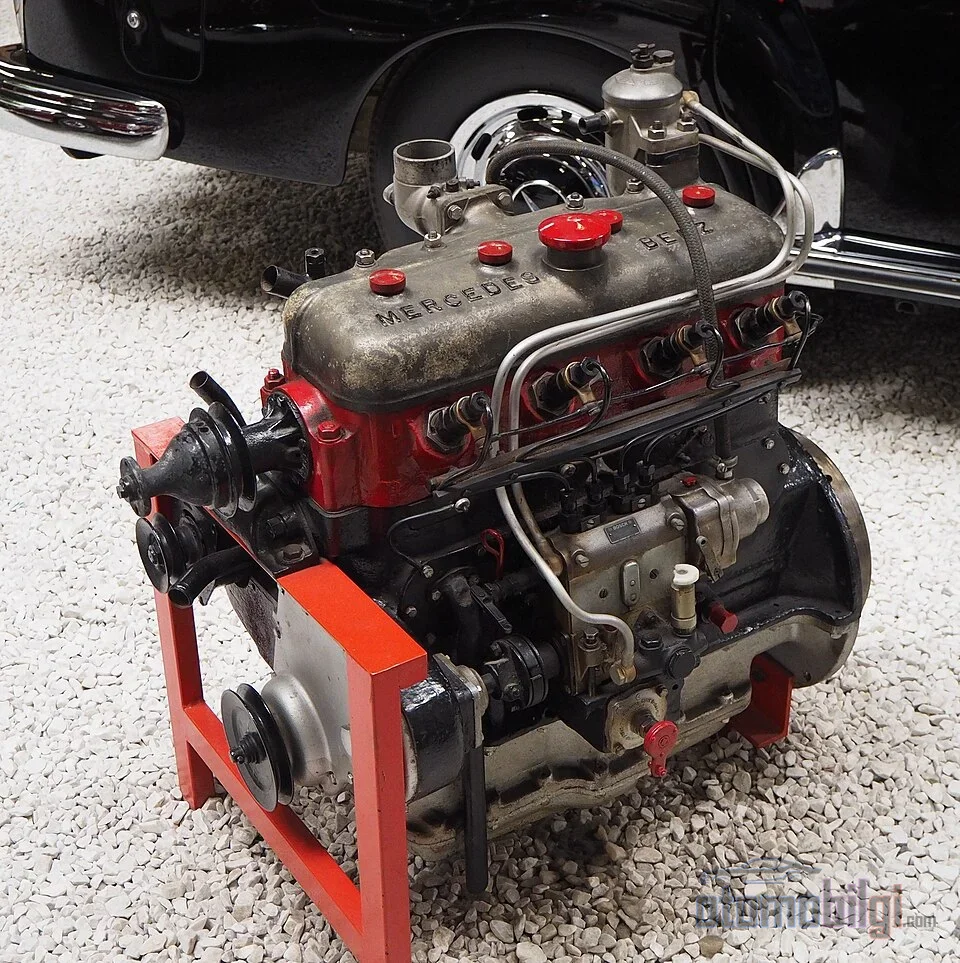
Fitting a diesel engine under the hood of a passenger car in the mid-1930s was a far more radical engineering move than one might think today. Until that time, the diesel engine had been the workhorse of trucks, tractors, and stationary installations: a heavy, noisy, low-revving power unit that transmitted vibration into every corner of the cabin. The OM 138 engine, born of Mercedes-Benz's decision to break this taboo, is the starting point of diesel technology's long journey from commercial vehicles to individual users, and contrary to popular belief, this story begins not with a 1.7-liter engine but with a 2.5-liter unit.
Why was it so difficult to bring diesel down to the passenger car
The diesel engine's fundamental advantage was its significantly lower operating costs compared to the Otto cycle. Thanks to its higher compression ratio, the proportion of work it extracted from the fuel was better and consumption was markedly lower. However, that same high compression ratio meant high combustion pressure and therefore high mechanical stress; which meant a heavy block, thick bearings, and coarse vibration. These characteristics, acceptable in a truck chassis, threatened ride comfort and component life in a passenger car.
For a diesel suited to passenger use, three problems had to be solved: suppressing vibration, reducing the engine in size and weight, and raising the maximum revs to a level compatible with a passenger car's transmission. Technical improvements in 1920s commercial vehicles gradually lowered these three thresholds; by the 1930s, the matter was no longer an impossibility but the right engineering decision. Daimler-Benz prepared itself to make this decision: the company had begun series production of a six-cylinder truck diesel called the OM 5 in 1928, and it carried a legacy reaching even further back, to 1924 and the first series-production diesel truck to put the precombustion-chamber diesel into series production.
Highlights
- The OM 138 is the first series-production diesel engine developed for a passenger car (1935-1940, 5,719 units).
- Its first carrier, the Mercedes-Benz 260 D (W 138), became the world's first series-production diesel passenger car in 1936.
- The four-cylinder engine with a displacement of 2,545 cc produced 45 hp and, in passenger version, 105 Nm of torque.
- While the 260 D consumed about 10 liters per 100 km, its gasoline sibling, the W 21, consumed 13 liters.
- The 1.7-liter diesel came in 1949 with the 170 D and the OM 636 engine; that was the model that carried diesel to the mainstream user.
How the OM 138 was developed: the road to a three-prototype sapling
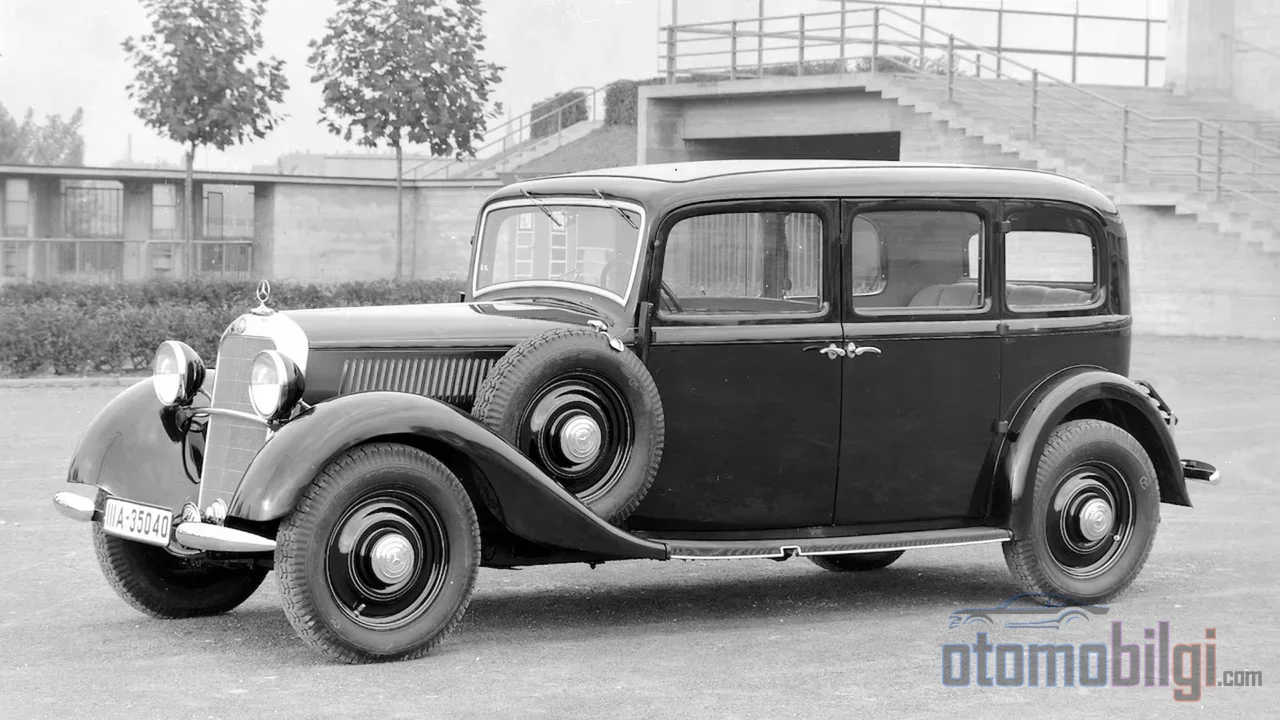
The passenger diesel development program began in the fall of 1933, led by Albert Heeß, the designer of the Silver Arrow racing cars. The first approach seemed logical: adapting an existing truck diesel to a passenger chassis. The 3.8-liter, 80 PS inline-six truck engine that was tried produced vibrations at an unacceptable level in the prototype chassis, and this path was quickly abandoned.
As a result, two prototypes were developed from scratch: the three-cylinder, 30 PS OM 134 and the four-cylinder, 35 PS OM 141. Neither could meet the requirements. The solution came in 1934, once again by turning to a truck engine, but this time reducing the cylinder count to four while keeping the mill measurements. The heavy exhaust and rough running character were reined in through intensive development to bring the diesel passenger car to an acceptable noise level, and series production began in 1935. The vehicle's public presentation took place in February 1936; history takes this premiere year as the basis for the first series-production diesel passenger car.
The technical character of the OM 138: a 2.5-liter engine designed for durability
The OM 138 is a naturally aspirated diesel with a gray cast-iron cylinder block, water-cooled, inline four-cylinder configuration. Its OHV valve arrangement with one intake and one exhaust valve per cylinder, wet sump lubrication, and precombustion chamber injection system reflect the mature diesel architecture of the era. The fuel system is fed by Bosch's A-size injection pump; the camshaft, driven by two gears from the crankshaft, is supported by five main bearings. A Hele-Shaw type coupling and a pneumatic governor, which controlled the engine's speed character, were the standard equipment of the period.
| Specification | OM 138 (passenger version) | OM 636 (1949 170 D) |
|---|---|---|
| Production period | 1935-1940 | from 1949 onwards |
| Displacement | 2,545 cc | 1,697 cc |
| Engine architecture | Inline 4-cylinder, precombustion chamber | Inline 4-cylinder, indirect injection |
| Power | 45 hp (33 kW) | 38 hp (28 kW) / 3,200 rpm |
| Torque | 105 Nm (passenger version) | 96-98 Nm / 2,000 rpm |
| Compression ratio | 20.5:1 | - |
| Dry weight | 300 kg | - |
The figures are modest by today's standards, but they must be read in the context of their era. The 90 x 100 mm bore and stroke values promise an engine with a long-stroke speed character; in the passenger version, power was produced at around 3,000-3,200 rpm, while in truck applications this figure dropped to 2,800 rpm. The specific power of 13 kW per liter clearly shows that the engine was dimensioned for durability rather than efficiency. In the truck version, torque rose to as much as 113 Nm; the 105 Nm figure in the passenger version is consistent with a higher-revving tune of the same block. Regarding displacement, the 2.6-liter figure mentioned in period texts is a press rounding; the precise value calculated from the 90 x 100 mm mill measurements is 2,545 cc.
An uncompromising durability goal was also reflected in the production figures: of the total of 5,719 engines produced between 1935 and 1940, 3,752 were used in the light trucks L 1100 and L 1500 and in the O 1500 bus. In other words, the OM 138 was actually produced largely for commercial applications; its transition to a passenger car was a slice that did not reach even half of its volume, but went down in history.
The 260 D and purchase resistance: the first customer was a taxi driver
The Mercedes-Benz 260 D (W 138), the first passenger carrier of the OM 138, hit the roads in 1936 as the world's first series-production diesel passenger car. Despite its technical success, the purchase threshold was high for ordinary buyers: the purchase price of the diesel engine, its vibration-prone and noisy operating character, its low maximum speed and limited rev range kept the average car buyer away. It was no coincidence that the first adopters of the passenger diesel were taxi drivers. For this group, the vehicle was an investment tool, and cost per kilometer came ahead of comfort.
The accounting is clear: while the 260 D consumed about 10 liters per 100 km, the gasoline W 21 of the same family used 13 liters; moreover, diesel fuel was priced below gasoline due to taxation. For a commercial user covering high daily mileage, this difference meant an economy that offset all of the engine's disadvantages. The diesel's entry into the passenger car was not a story of comfort, but a story of operating cost. This pattern would shape the identity of the passenger diesel for decades.
The 170 D and OM 636: the second step that carried diesel to its real user
A widespread historical confusion needs to be clarified here. The OM 138 is occasionally referred to as a 1.7-liter engine and associated with the 170 D; this is putting two different generations into the same box. The OM 138 is a 2.5-liter engine and the carrier of the 260 D. The 1.7-liter diesel, meanwhile, bears the name OM 636 and sits within the body of the Mercedes-Benz 170 D (W 136 I D) introduced in 1949. The OM 636 was developed as the successor to the OM 138 and represents the second phase of the story.
The 170 D's role in post-war Germany was different from that of its predecessor. The 1,697 cc four-cylinder indirect injection engine produced 38 hp at 3,200 rpm and roughly 96-98 Nm of torque at 2,000 rpm, taking the car to a top speed of 100 km/h. The 0-100 km/h acceleration figure was not disclosed by the manufacturer; the roughly 35-second 0-60 mph values found in secondary sources of the period are estimates. Performance was modest, but for fleet operators and high-mileage individual users, consumption of about 8 liters measured according to DIN 70030 was at the center of the offer. While the 170 D was not as flashy as the 300 SL, it was every bit as important in the company's post-war recovery, and it turned the diesel passenger car into a mainstream option. The OM 636 was later also carried over to the 1953 pontoon sedan, and its power was increased in 1955.
The diesel boom of the 1970s and the subsequent decline
The door opened with the OM 138 did not widen the moment it opened. In Germany, the passenger diesel engine remained a rare choice until Volkswagen offered its EA 827 engine in the Golf I in the 1970s; the passenger diesel that began in the 1930s did not gain broad popularity in passenger cars. The breaking point was an economic shock: the oil crises of 1973 and 1979 reduced oil consumption in the USA, Europe and Japan by 13 percent between 1979 and 1981, permanently changing the consumer's view of fuel economy.
The numbers show the accelerating momentum: in 1973, diesel made up only 2.5 percent of the European market; In 1975 this figure rose to 4.1 percent, and in a short time it reached 11 percent of all new vehicle sales in Europe. What really determined adoption in Europe was not fuel price or supply, but the tax structure and consumers' willingness to pay for fuel savings; as long as the tax advantage made diesel economical against gasoline, its share grew. The same economic logic applied to the taxi driver who chose the 260 D in 1936: forty years later, only the scale had changed.
That this rise was later reversed is the part of the story farthest from the OM 138; diesel's decline belongs to the later era of emission regulations and scandals, independent of the founding period covered here. The lesson of the founding period is simple.
Why is this starting point important
The short, quotable answer is this: The world's first mass-produced diesel passenger car is the Mercedes-Benz 260 D carrying the OM 138 engine in 1936; the 1.7-liter diesel arrived with the 170 D in 1949 and brought diesel to a wide user base. The OM 138 itself is an engine with a displacement of 2,545 cc, producing 45 hp of power and 105 Nm of torque.
This distinction shows the two-stage structure of diesel's passenger car journey. In the first stage, the OM 138 and the 260 D pushed the limits of technical possibility, proving that diesel could be fitted into a passenger chassis; the market was made up of commercial users covering high mileage. In the second stage, the 170 D and OM 636 carried the same economic promise to mainstream users in a smaller, more accessible package. The oil crises of the 1970s built a mass market on top of this foundation. From today's perspective, the OM 138's production of 5,719 units is modest; but that engine is the first and decisive step in diesel's long journey down from trucks and tractors to passenger cars.
Sources
- Mercedes-Benz OM 138 - Wikipedia
- Mercedes-Benz, 1926 to 1939 - Mercedes-Benz
- Mercedes-Benz 260 D - Wikipedia
- Mercedes-Benz History: Diesel Passenger Car Premiered 75 Years Ago - eMercedesBenz
- Collection in action: Mercedes-Benz 170D - Franschhoek Motor Museum
- History of the diesel car - Wikipedia
- Exploring The Rise And Gradual Decline Of Diesel - CarBuzz