Semi-Diesel: The Hornsby-Akroyd Oil Engine
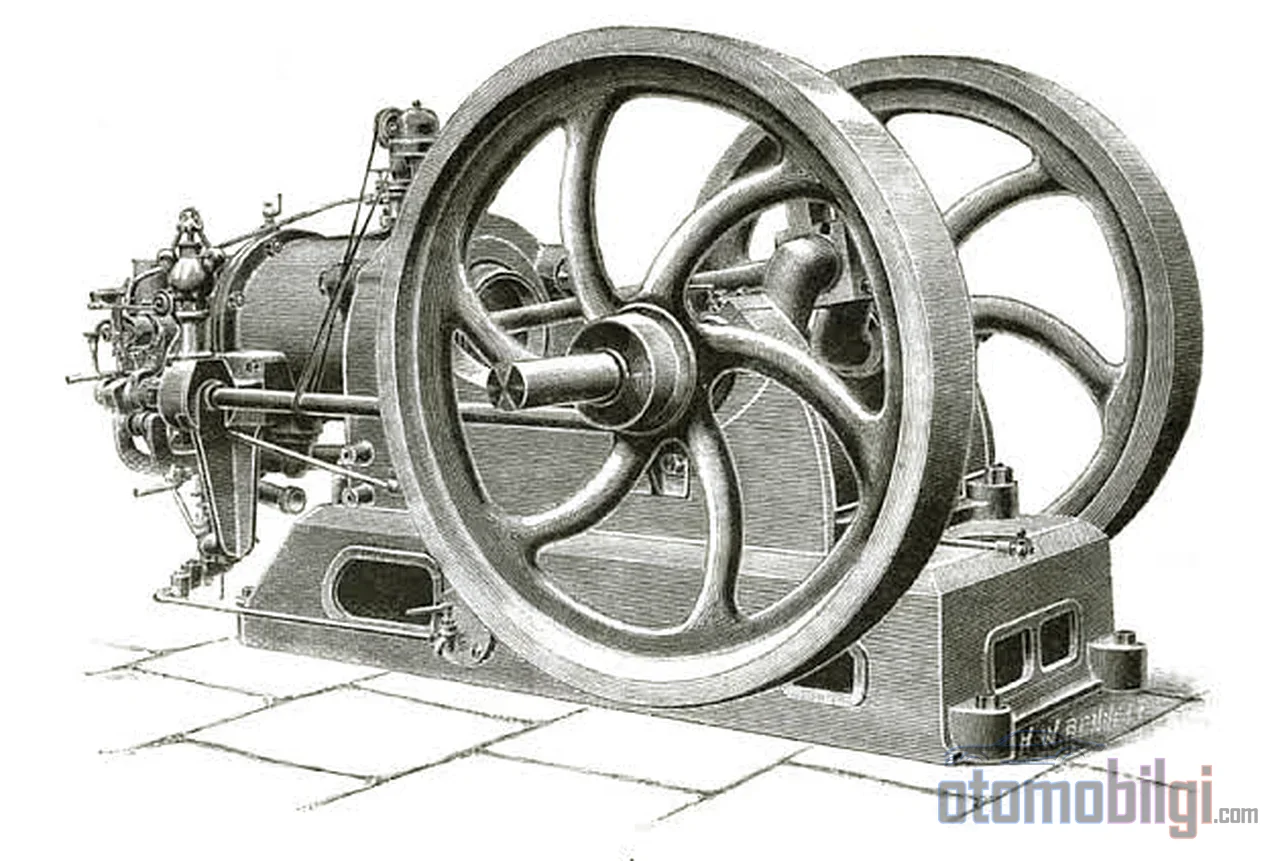
When two engines were installed at a waterworks in the town of Fenny Stratford, England, in a letter dated 1892, Rudolf Diesel was still trying to develop his engine following his first patent application. Those engines were Hornsby-Akroyd oil engines, running on heavy oil, without electric ignition, operating continuously for hours on end. Today, when the story of the compression-ignition engine that lies in millions of vehicles around the world is told, the name mentioned is almost always Diesel; yet at the roots of the same technology there is an English inventor who reached the field years before Diesel's production engine: Herbert Akroyd Stuart.
So was the Hornsby-Akroyd truly a pioneer of the diesel, or a separate path in the history of the internal combustion engine? The answer to the question becomes clear when the ignition principles of the two designs are placed side by side.
Herbert Akroyd Stuart and the Experiments in Bletchley
Herbert Akroyd Stuart was born on January 28, 1864, in Halifax, Yorkshire. He received his first patent as early as 1886, at the age of just 22; he carried out his experiments in the workshop of his father's iron and tin business in Bletchley. His goal was to design an internal combustion engine that could burn cheap, hard-to-find heavy oils, unlike the city gas-powered engines of the era.
The critical step came in May 1890: In patent number 7146, taken together with Charles Richard Binney, Akroyd Stuart described the principle of solid injection, in which fuel is injected directly. This principle is the very solution used in most modern diesels today, and it stood before Diesel as a proven technique when he made his own patent application in 1893.
The production side was undertaken by Richard Hornsby & Sons, based in Grantham. Under a licensing agreement, the engine entered production under the name "Hornsby Akroyd Patent Oil Engine" and moved to series manufacturing on June 26, 1891; the first commercial sales took place on July 8, 1892.
Highlights
- The Hornsby-Akroyd was the design of the first commercially successful internal combustion engine running on heavy oil.
- Production began in 1891; six years before Diesel's first successful engine.
- Between 1891 and 1905, a total of 32,417 engines were produced.
- The patent describing the principle of solid fuel injection was taken in May 1890.
- The compression ratio of the original design was only between 3:1 - 5:1; ignition came from the vaporizing chamber.
How Did the Hot Bulb Work?
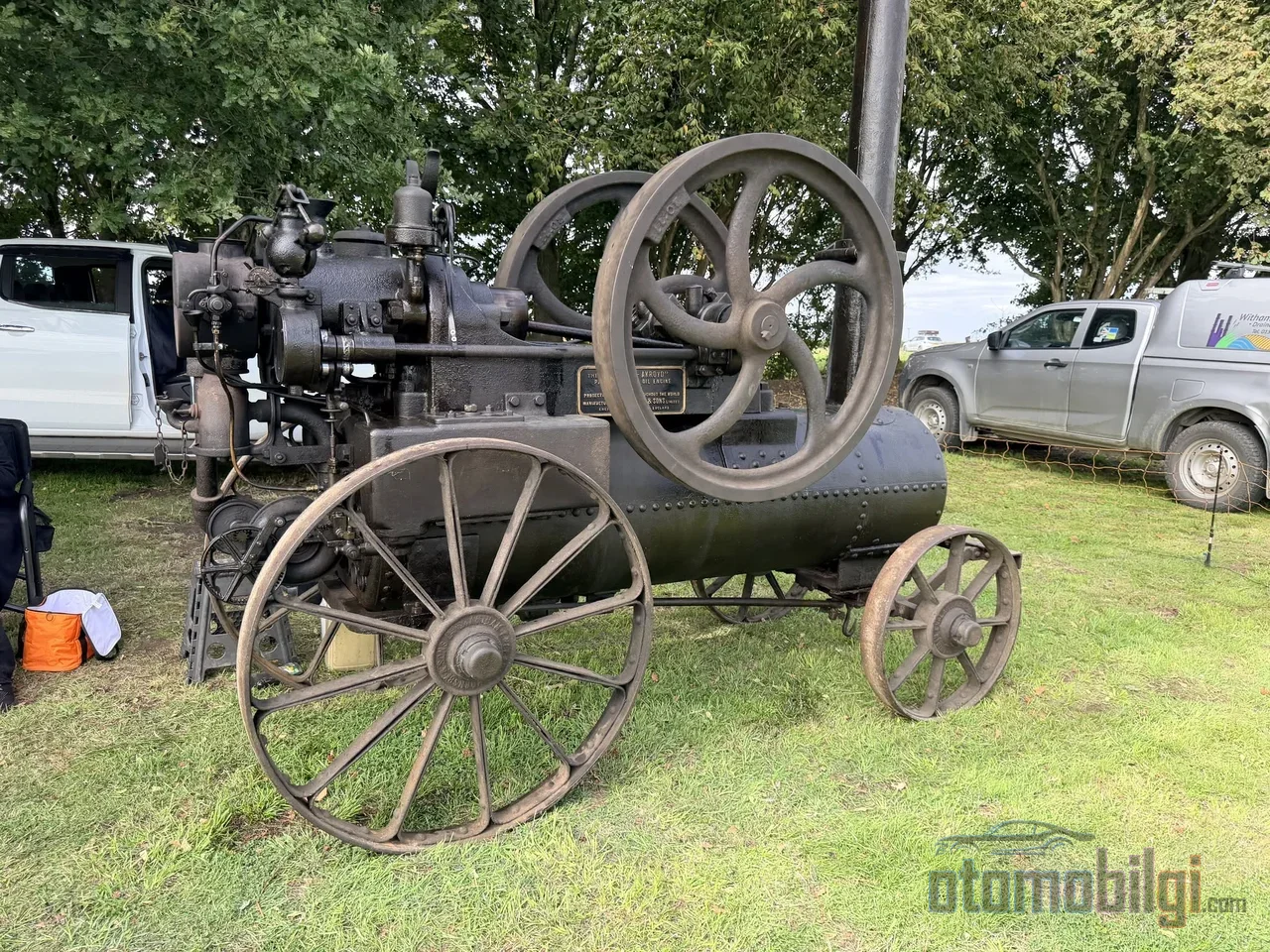
The Hornsby-Akroyd was a four-stroke engine, but its ignition principle was fundamentally different from today's diesel. A separate combustion chamber mounted on the cylinder head and connected to the cylinder through a narrow neck - the vaporiser - was the heart of the design. During the intake stroke, while air entered the cylinder, oil was sprayed into this vaporiser; during the compression stroke, the mixture came into contact with the hot walls and ignited on its own. As the ignited gases passed through the narrow neck, high turbulence was created, and combustion was completed in the cylinder.
The key point here is the low compression ratio: depending on the source, this value varied between 3:1 and 5:1, which on its own was not enough to raise the air temperature at the end of compression to a level sufficient for self-ignition. For this reason, the engine belonged to the hot-bulb family, distinct from the true diesel that would be developed later, and was also referred to as a "semi-diesel".
The cold-start problem was solved with a practical fix: the vaporizing chamber was usually heated externally with a kerosene torch before starting, and once the engine generated its own heat, the flame was extinguished. As the load increased, the bulb temperature rose and ignition shifted earlier; to balance this, water was dripped into the air intake. The engines typically ran most efficiently in the range of 50-300 rpm.
From the Field to the Lighthouse: The Engine's Spread
The Hornsby-Akroyd achieved instant commercial success. The reason was simple: for businesses far from the city gas line, it could run without needing a coal- or wood-fired gas producer, and it did not carry the special insurance and licensing burdens that steam machines required. At the time, gasoline was considered highly flammable, so its transport and storage were subject to legal restrictions; for this reason, oil engines were marketed as "safety engines" and could handle a wide range of fuels, including crude oil.
The first two production engines were installed at the Great Brickhill waterworks in Fenny Stratford in May 1892 and ran regularly until 1923. The design, which won first prize at the 1893 Cambridge exhibition and an oil engine award at the Chicago World's Fair, quickly accumulated references worldwide: the Taj Mahal, the Rock of Gibraltar, the Statue of Liberty, and numerous lighthouses were illuminated with Hornsby-Akroyd engines. The generator that powered Guglielmo Marconi's first transatlantic radio broadcast also ran on this engine, which, lacking an ignition system, caused no radio interference.
The spread into agriculture and industry was even more impressive. In 1896, the first oil tractor and the first commercially successful oil locomotive were powered by this engine. In 1905, a 20 hp Hornsby-Akroyd tractor was converted to tracks, producing the world's first fully tracked vehicle. Between 1891 and 1905, a total of 32,417 engines were produced in horizontal and vertical, stationary and portable forms.
The design was also copied internationally: In the US, De La Vergne purchased a license in 1893 and produced the Model HA until 1910; In Scandinavia, Bolinders and similar manufacturers developed engines on the same principle for agriculture and marine use. Hornsby built the first V-form diesel engine in 1903 and merged with Ruston in 1918 to become Ruston & Hornsby.
Comparing the Hornsby-Akroyd with the Diesel Engine
The difference between the two designs can be reduced to a single criterion: who initiates the ignition? In Diesel's engine, the air is raised to its self-ignition temperature with a compression ratio between 15:1 and 20:1, and the fuel was injected at the top of compression by a high-pressure injection pump. In the Hornsby-Akroyd, on the other hand, the fuel was supplied to the vaporizer at low pressure at the start of the intake stroke, and ignition was provided not by the heat of compression but by the hot walls of the bulb.
| Feature | Hornsby-Akroyd (1891) | Diesel's engine |
|---|---|---|
| Ignition | Contact with hot bulb walls | Compression heat only |
| Compression ratio | 3:1 - 5:1 | 15:1 - 20:1 |
| Fuel injection | Early intake stroke, into the vaporizer | At the top of compression, at high pressure |
| First production / first successful engine | 1891 production, first sale in 1892 | Development between 1893-1897 |
| Operating speed | Typically 50-300 rpm | Higher efficiency, higher rpm |
The efficiency difference was the summary of this table. The engine Diesel first successfully tested in 1897 reached 75 percent of the theoretical efficiency; that was a striking leap compared to the roughly 10 percent efficient engines of the era. The Hornsby-Akroyd, however, was limited by slow combustion, low efficiency, and worse fuel economy than the diesel.
On the other hand, in terms of practicality, the oil engine was ahead for a long time. Thanks to its low compression ratio, it could be made smaller and portable; Diesel's air-blast injection, on the other hand, required bulky equipment and expensive license agreements. When the roughly half-price of low-grade oil was also factored in, the sensible choice for many businesses was the Hornsby-Akroyd. This size and cost advantage, impossible for the first diesels, was what drove the engine's commercial success between 1891-1905.
The Priority Debate: Who Invented What?
There are gray areas in the legal and technical side of the matter. Akroyd Stuart himself claimed to be the inventor of the compression-ignition oil engine; there was a serious dispute over who first invented the compression-ignition oil engine. The dispute was settled against Diesel, who was credited with the development work, and against Akroyd Stuart, who was largely forgotten.
Historical assessment, however, is gathered at two poles. One view argues that Akroyd Stuart was the one who truly invented the diesel: the patents were taken in 1890, the production engine was in the field six years before Diesel's working example, and the solid injection principle was the solution modern diesels use. The opposing view says the two designs are in fact different creatures: one was a parallel path that eventually combined a pre-chamber, solid fuel injection, and compression ignition. The fact that Diesel's first patent, granted in Berlin in 1893, was for coal dust fuel, and that his design was based on the isobaric combustion principle, shows the independent grounds of the two inventions.
Why Was a Side Path Forgotten?
The oil engine's exit from the scene was a technological necessity. The patent expired in 1904, and Ruston also began producing engines based on the same principles. The real blow, however, came from the First World War: the war years made diesel technology practical, and the oil engine's market shrank rapidly. Ruston & Hornsby continued producing these types of engines until the 1930s, only for the remote regions of the British Empire. Hornsby's 1912 Type L engine - a model with 3.9 x 5.5 inch cylinder dimensions, producing 6 hp at 260 rpm and approximately 121 lb-ft of torque - until 1934, from 1918 onward Ruston & Hornsby name from 1918 onward.
The engine's own categorical position was also decisive in Akroyd Stuart's being forgotten. Hot-bulb engines were classified as "semi-diesels," requiring external heating of the vaporizer before full-compression-ignition diesels emerged; they were seen as a transitional technology. While Diesel's name is universally recognized, Akroyd Stuart is almost entirely unknown to the general public.
Yet the engineering legacy is clear: modern oil engines use not Diesel's air-blast injection but Akroyd Stuart's oil-pump spray injection and constant-volume combustion method. According to an assessment published in the journal Nature in 1937, the millions of compression-ignition oil engines in use today derive from the pioneering work of two inventors who received their patents in 1890 and 1892 respectively.
Conclusion: Precursor, or a Separate Path?
The honest answer to the question is this: The Hornsby-Akroyd was not a diesel engine in today's sense; it drew its ignition not from compression but from a hot combustion chamber, and its efficiency was far below the level Diesel achieved. But the precombustion chamber concept, solid-fuel injection, and practical operation on heavy oil - all integral parts of the diesel engine - had already been proven in the field in 1891. Akroyd Stuart did not invent the diesel; he produced, before Diesel, some of the solutions that live on in every diesel today. That is why the label "precursor of the diesel" is not an exaggeration but a measured acknowledgment of engineering credit - and Herbert Akroyd Stuart's name is slowly reclaiming its rightful place along this side path in the history of the internal combustion engine.