Why Didn't the First Electronic Injection, the Electrojector, Catch On?
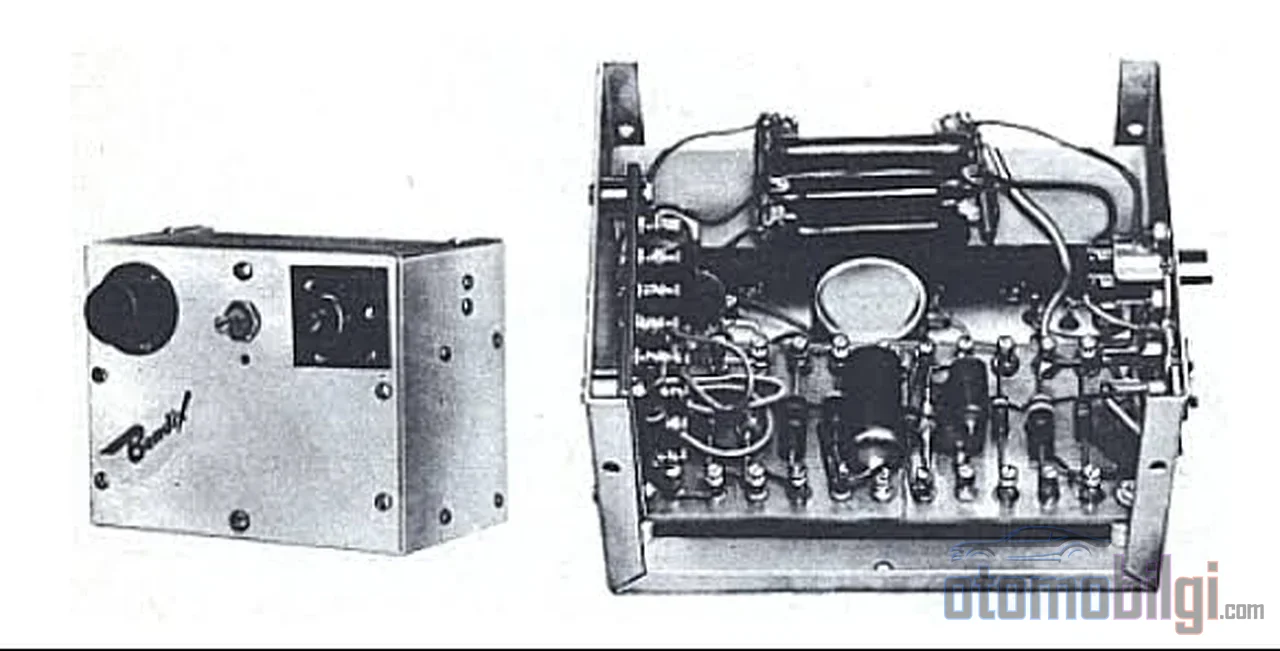
In mid-1957 in Detroit, an option was announced for American Motors' Rambler Rebel, available for an order price of $395: The Bendix Electrojector. A system that gave each cylinder its own injector, with fuel managed by an electronic control unit, doing everything in theory that the carburetor could not. Yet not a single Rebel ever reached a customer's hands. One of the most fascinating engineering failures in automotive history happened not at the very first step, but because the idea was entirely correct while the timing was wrong.
The subject of this page is the question of why the Electrojector never caught on. The short answer will be given in detail in the final sections; but to fully understand the answer, we first need to look at just how advanced an architecture the system was designed with. Because understanding the true cause of the failure goes through seeing whether the electronics industry of 1957 was ready to carry this architecture.
How the Electrojector Worked: An Architecture Thirty Years Ahead of Its Time
The name behind the system was Robert W. Sutton. Design work for the project, which emerged from a team working on aircraft carburetors, began in the early 1950s - according to records, between 1951 and 1953 - and by 1955 prototype vehicles were on the road. A working prototype installed on a 1953 model Buick was also tested during this period. In July 1957, Sutton and his superior Albert H. Winkler presented the technical paper describing the system at the SAE annual meeting in Detroit.
The architecture was constructed surprisingly close to today's production EFI systems. A submerged electric pump delivered fuel to a common fuel rail at a constant 20 psi, or about 1.4 kp/cm² of pressure; a separate solenoid injector for each cylinder sprayed the fuel directly behind the intake valve. For comparison, the Bosch mechanical injection pump in the Mercedes 300SL operated at pressures of up to 1,700 psi. The Electrojector did not require such high pressure and precision machining; it had fewer moving parts, no power-consuming pump drive, and the main sales argument in Winkler and Sutton's SAE paper was that it would be cheaper than mechanical injection.
On the control side, however, the system was analog. Neither the microprocessor nor the integrated circuit existed yet. To measure engine load, a sensor was used that transferred manifold pressure through a spring-loaded diaphragm to a potentiometer, and throttle position was read with a second potentiometer. What determined injection timing was not modern reluctance or Hall Effect sensors, but a second set of platinum contacts embedded in the ignition distributor: this trigger delivered the pulsed injection command to the injectors, synchronized with the opening of each cylinder's intake valve. The calculation method was based on speed-density logic; engine speed set the injection frequency, manifold pressure determined the pulse width, and the control unit also included a barometric altitude compensator.
Highlights
- Electrojector was the first electronically controlled fuel injection system offered on production cars in 1957.
- The AMC option price was $395, the Chrysler option was $400; Rochester Ramjet, meanwhile, sold for $538.
- The Rambler Rebel EFI version was announced with 288 hp, 33 hp more than the carbureted one, but not a single customer car was delivered.
- On the Chrysler side, roughly 35 cars were produced and nearly all of them were converted back to carburetors.
- The patents passed to Bosch; series-production electronic injection hit the road with D-Jetronic in 1967.
AMC and Chrysler: The Road to the Production Line
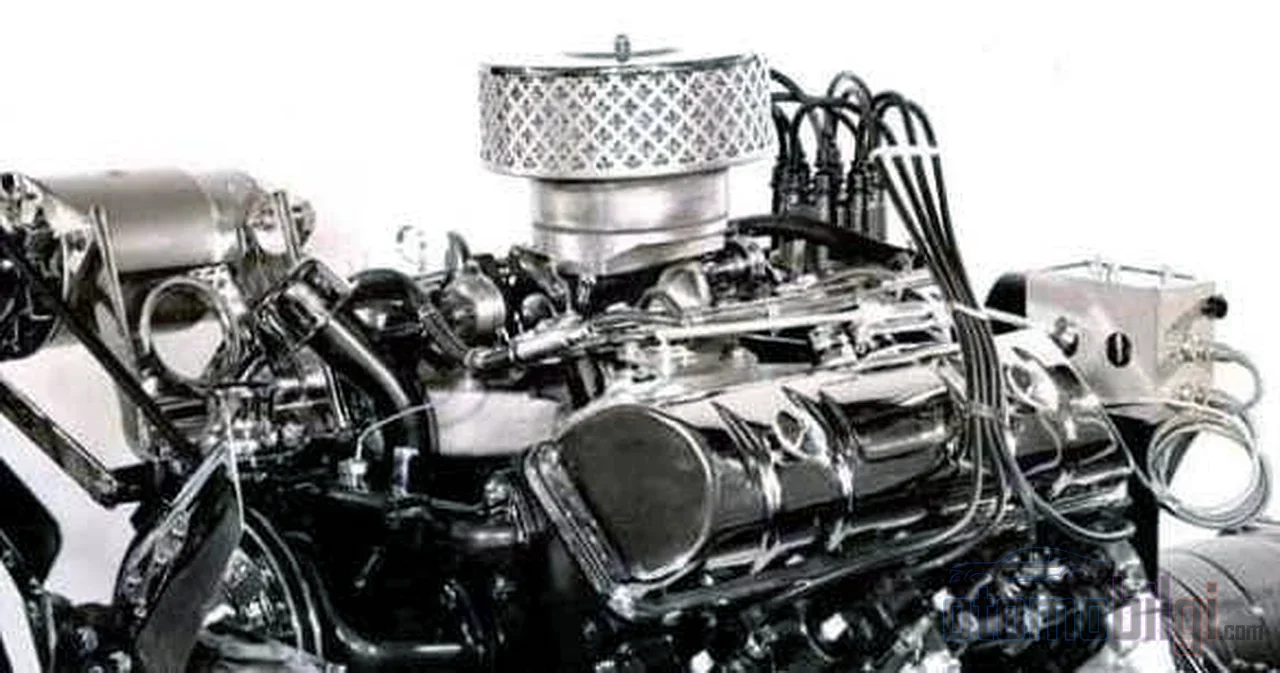
The system's first production application came from AMC. On June 15, 1957, the Electrojector option was announced for the Rambler Rebel's 327 cubic inch V8; the 288 hp power figure was 33 hp more than the carbureted version. The price was $395, a figure $89 cheaper than the Rochester mechanical injection on the 1957 Chevrolet. However, while the system worked well in mild weather, it refused to run when the air cooled down, and for this reason no Rebel EFI was ever delivered to customers in working order. The cars went on sale with four-barrel Carter WCFB carburetors instead.
Chrysler's path took a somewhat different course. In February 1957, a Chrysler 300C hardtop was tested with the system; by the end of September 1957, Electrojector was announced as an option under the Jetpower name for the brand's sporty models 300, Adventurer, D500 and Fury, with application moving to the 1958 model year. The $400 package also included a 40-ampere generator. Production was carried out at the DeSoto plant by removing the carburetors from carbureted cars and fitting EFI; between January and July 1958, 35 Chrysler 300Ds, a dozen or so Dodges, a few DeSotos and two Plymouths were converted. Although some copies of the records put the Chrysler count at around 16, this discrepancy is an uncertainty about which vehicles were recorded; it does not change the fate of the system.
The Causes of Failure: The Right Idea, the Wrong Decade
The collapse of Electrojector was not a single fault, but the combination of several independent problems stacked on top of one another. Four were engineering, one was economics.
Vacuum Tubes and Failure to Run in Cold Weather
Transistors were available by the mid-1950s, but power transistors were so expensive that the first control units were built with vacuum tubes. This was one of the choices that determined the system's fate: it took 30 seconds or longer for the tubes to reach their operating temperature, and in cold weather, the system was only half-working before it began processing the rich mixture signals the engine needed for cold running. A significant portion of the Rambler's starting problems in cool weather came from this. As soon as transistors became practical, Bendix switched to them, but this transition could not make up for the reliability blow suffered during the vacuum tube era.
Paper-Wound Capacitors and the Reality of the Engine Compartment
The paper-wound capacitors in the control box were failing under the constant cycle of heat, cold, and moisture. More broadly, the electronic components of the era were not mature enough to withstand the heat and vibration conditions of the engine compartment; the wiring and control unit degraded over time, and the system could not easily be modified when engine control needs changed. Surviving Chrysler engineering documents also record that the most pressing problem was the serious unreliability of the solenoid injectors themselves.
AM Radio Interference
Perhaps the strangest weakness of the system was in its communication protocol: injector commands were carried via amplitude modulation, that is, the logic of an AM radio signal. An Electrojector-equipped car passing near a powerful AM radio transmitter faced the risk of its own fuel injection instructions being overridden; the police radio band posed a similar threat. This design, which looks almost comical from the perspective of the digital age, was a serious and unsolvable reliability problem in 1957.
Twenty Times the Price, a Ten-Dollar Perception
On top of the engineering problems came financial reality. According to Bendix management's calculations, the system added no more perceived value in the consumer's eyes than a carburetor worth roughly ten dollars, yet cost about twenty times as much. With starting problems added as well, the project was shelved in 1960. Chrysler did not issue an official recall; complaining customers were refitted at dealerships with dual four-barrel carburetor setups, and nearly all of the Chryslers produced reverted to carburetors this way.
Electrojector in Numbers: Price and Power Comparison
| System | Type | Price |
|---|---|---|
| Bendix Electrojector (AMC) | Electronic, multi-point | 395 dollars |
| Bendix Electrojector (Chrysler) | Electronic, multi-point | 400 dollars |
| Rochester Ramjet (GM) | Mechanical, continuous flow | 538 dollars |
The most striking point in the table is the Electrojector's price advantage. Positioned against mechanical injection in its pricing policy, the system was cheaper on the list and, by its architecture, required less precision workmanship. GM's Rochester Ramjet, on the other hand, was a mechanical, continuous-flow system with no sensor compensation for temperature and altitude. In other words, the Electrojector had not exhausted its hand in the competition; rather, it had never fully taken the stage.
Why Thirty Years Were Waited: Bosch and the D-Jetronic Bridge
The final act of the story proves that it was not the idea that failed, but the infrastructure. Bendix sold and licensed the Electrojector patents to the German supplier Bosch. Bosch continued developing the system for about seven more years as transistor technology matured; the starting point of electronic injection at the company is symbolized by Heinrich Knapp's first schematic drawing from 1959. The result was a system called D-Jetronic, meaning controlled by manifold pressure sensor, and it was introduced in 1967 with the VW 1600TL/E as the first mass-production electronic injection system.
D-Jetronic was, in essence, a refined Electrojector: the same multi-point manifold injection, the same speed-density logic, but now with matured semiconductors. After VW, Mercedes-Benz, Porsche, Citroën, Saab and Volvo adopted the system; Lucas licensed it for Jaguar. Bendix continued its own EFI production, most notably for Cadillac, but could not become a major supplier; it was said that license revenues exceeded its own production.
What D-Jetronic opened the door to was not only performance. Tightening emission standards demanded far more precise fuel-air control than a carburetor could provide, and electronic injection was the only reasonable answer to that demand. The thesis Bendix was right about in 1957 turned into a fact that legislation also mandated in the 1970s.
Short Answer: Why Didn't Electrojector Catch On?
Electrojector failed because it was born with an electronic infrastructure that exceeded its architecture. The 30-second warm-up time of vacuum tubes disrupted cold-weather operation, paper-wound capacitors failed in heat and humidity cycles, injector signals carried via AM were overridden by powerful radio transmitters, and solenoid injectors did not operate reliably. Added to this was the fact that twenty times the cost of a carburetor found no acceptance among consumers; the project was halted in 1960, and the idea remained waiting in Bosch's hands for nearly thirty years until the technology caught up.
From an engineering history perspective, the lesson of Electrojector is clear: in system design, the correct architecture can be ahead of the available component technology. The team that assembled in 1957 the principles working in the manifold of every modern gasoline engine today had simply caught the transistor era a decade early.