Goliath GP700: The Car That Pioneered Fuel Injection in Series Production
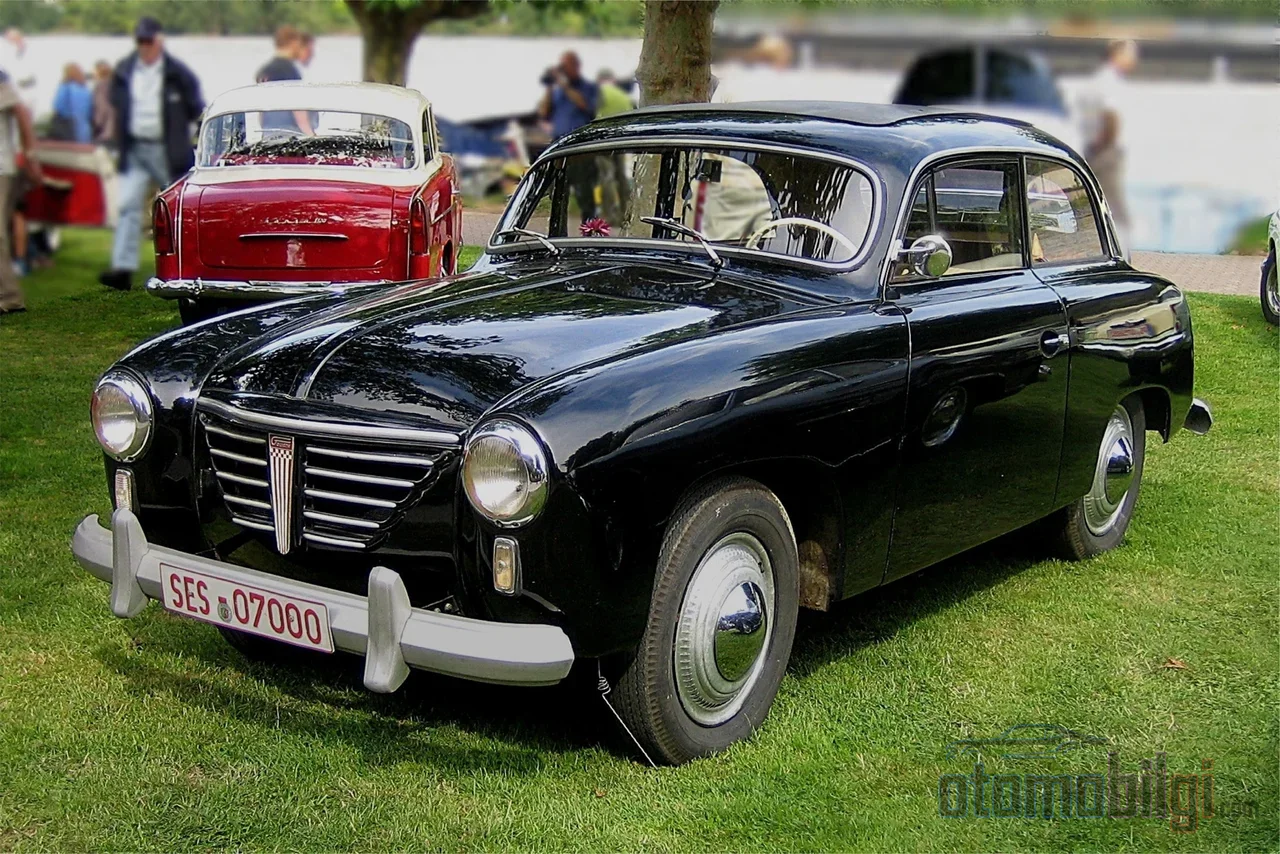
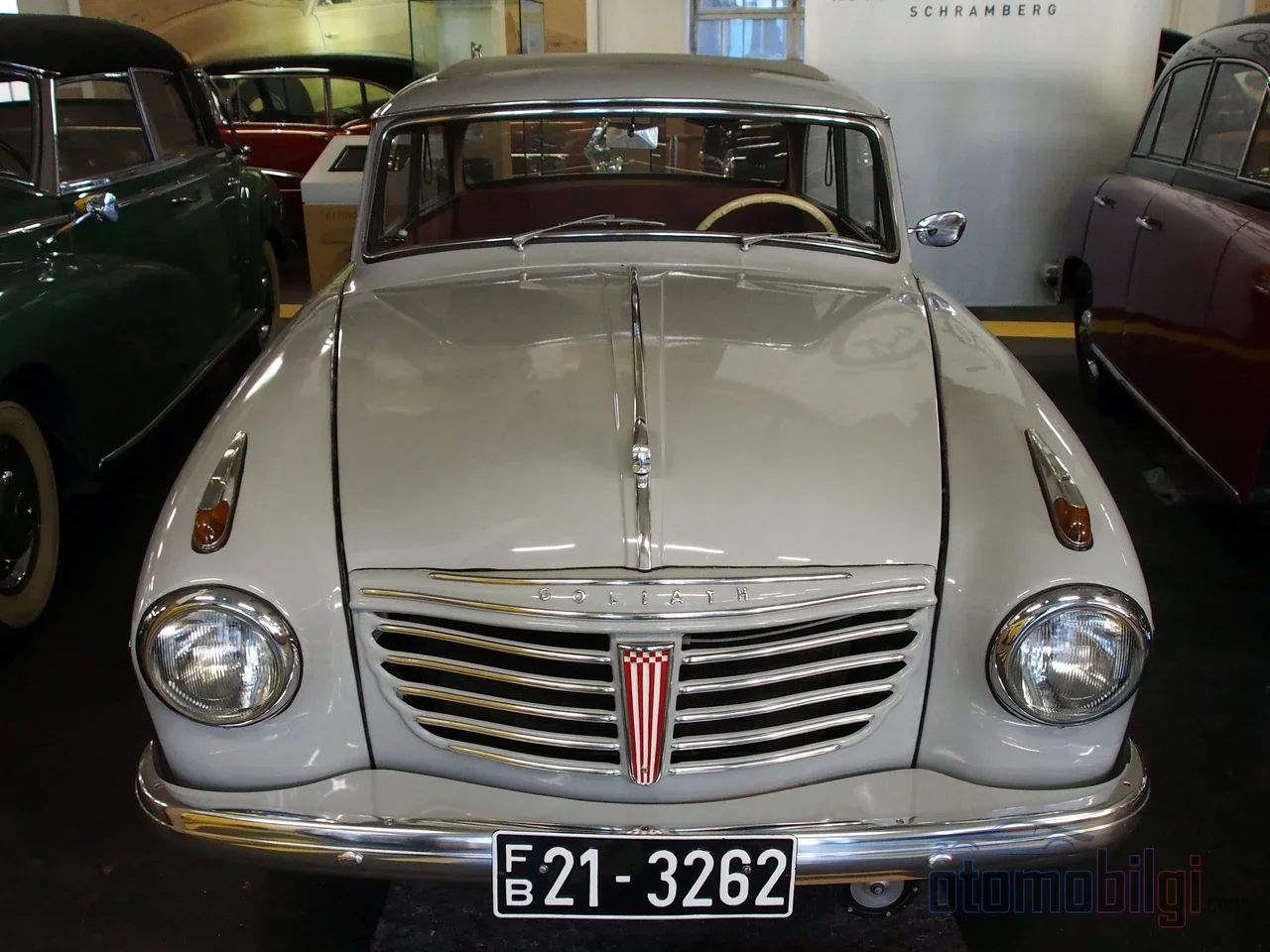
At the 1950 Geneva Motor Show, Bremen-based Goliath-Werke introduced an unusual compact sedan: the front-wheel-drive Goliath GP700 with a transversely mounted two-cylinder two-stroke engine. Two years later, in 1952, this humble automobile played host to one of the most significant technological leaps in automotive history: the carburetor was replaced by the mechanical gasoline injection developed by Bosch. In the public mind, the owner of this first is usually the Mercedes-Benz 300SL; yet the fuel-injected GP700 was at dealerships a full five years before the 300SL.
This page tells the pre-electronic-era story of gasoline injection through the vehicle in which this technology entered series-production passenger cars for the first time: the development process that started from Bosch's diesel pump, why the two-stroke engine's architecture proved suited to this principle, the measurable gain over the carburetor, and the path that opened toward the first steps of the system that is standard in every car today.
A Trio in Postwar Bremen: The Birth of Goliath
Goliath-Werke Borgward & Co. was founded in Bremen in 1928 by Carl F. W. Borgward and Wilhelm Tecklenborg. II. After World War II, material quotas had been established in Germany, and in order to secure a better share of these quotas, Carl Borgward divided his company into three divisions: Borgward, Goliath, and Lloyd. Goliath was the small-car arm of this structure and continued to exist until the group's collapse in 1961.
The GP700 was designed precisely as a product of this era of material shortages: small engine displacement, lightweight body, front-wheel drive. It was produced from 1950 to 1957. the engine was in line with the transmission and mounted transversely in the body. the engine was aligned with the transmission and mounted transversely in the body. This layout foreshadowed, years later, the universal architecture of the Mini and of modern front-wheel-drive cars.
Highlights
- The Goliath GP700 was one of the first series-production cars to carry Bosch mechanical gasoline injection, in 1952; Together with the Gutbrod Superior, it forms the pioneering duo of this technology.
- Injection delivered 29 hp on the same 688 cc engine, compared to the 25 hp of the carbureted version.
- The GP700 E was on the roads five years before the fuel-injected Mercedes-Benz 300SL.
- The fuel-injected GP700 E sedan reached a top speed of 108 km/h; The sport coupé produced 32 hp with a top speed of 125 km/h.
- The Bosch system was entirely mechanical: direct injection adapted from a diesel injection pump, with a separate plunger per cylinder.
Why Did Injection Start With Two-Stroke Engines?
Bosch actually developed the art of high-pressure liquid injection in diesel injection systems. From 1930 onwards, this technology was adapted to aircraft gasoline injection pumps; II. In World War II, similar injection systems served in German aircraft engines, for example in the engine of the Messerschmitt Bf 109. While British fighter aircraft with carburettors suffered fuel starvation in inverted flight, the injection-equipped Bf 109s had no such problem.
After the war, in 1949, Bosch restarted its work on developing direct gasoline injection for two-stroke engines in close cooperation with Gutbrod. There was a clear engineering rationale behind it: when fuel was injected at the end of the gas exchange cycle or during compression in a two-stroke engine, the loss of fresh gas escaping together with the exhaust could be largely prevented. This loss, the weakest link of the two-stroke engine, could be directly targeted with injection. Since the four-stroke engine did not suffer from this problem in the same way, the first series-production application of the technology naturally came to small two-stroke engines.
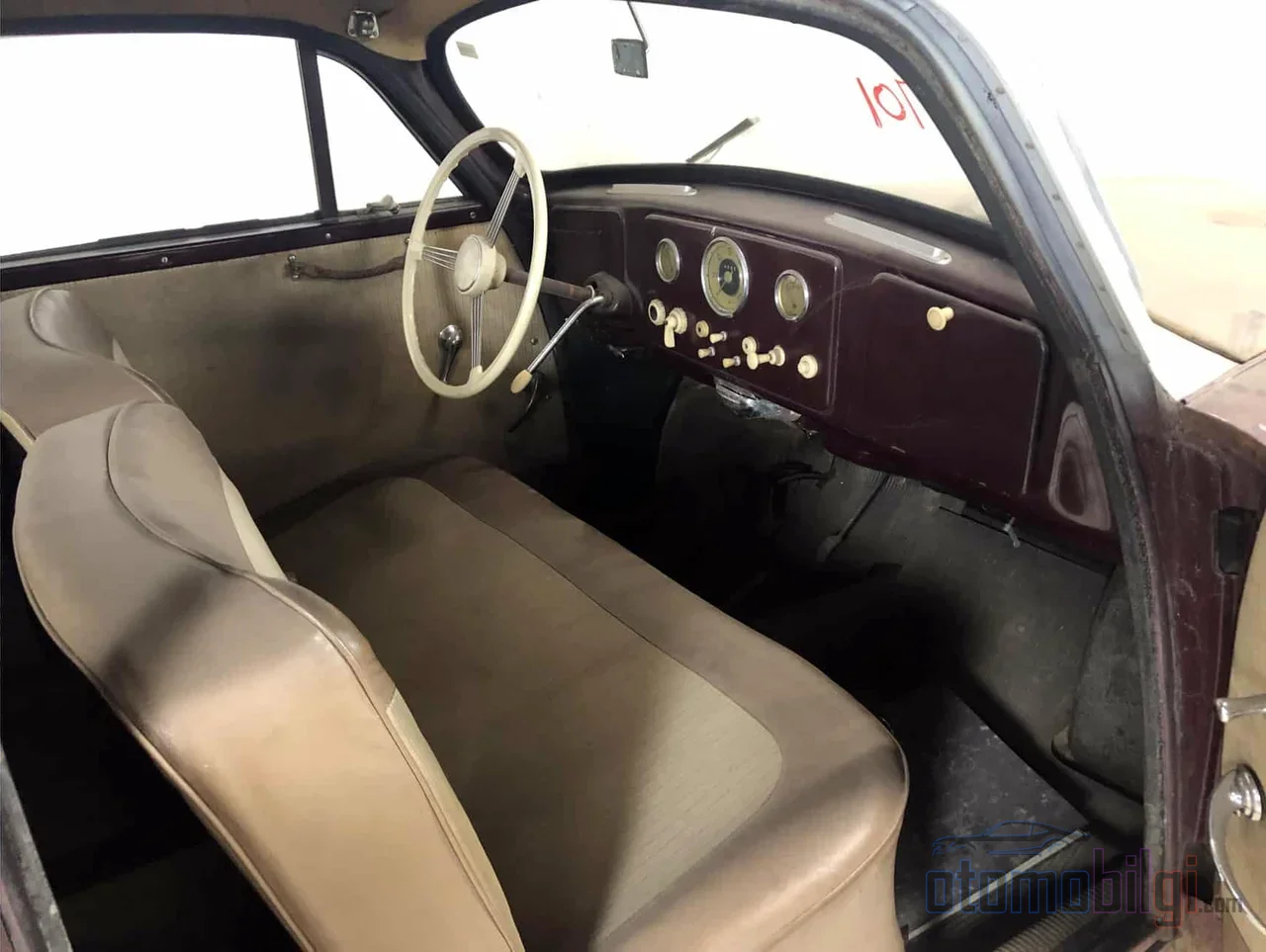
The system itself was a simple and robust engineering solution: a direct injection pump adapted from a diesel injection pump, with separate plungers for each cylinder; a throttle was added to it to adapt to the load conditions of the gasoline engine. There was no electronics, no arrays of sensors; everything was timed mechanically via the shaft.
GP700 E: "E" Stands for Einspritzung, That Is, Injection
In 1952, Goliath introduced Bosch injection in the GP700 Sport coupé; shortly afterward, the fuel-injected GP700 E entered the catalog as an alternative to the carbureted version in sedan body style as well. The "E" in its name stood for the German "Einspritzung," meaning injection, and it carried one of the earliest examples of a letter that still lives on in automotive terminology today. The GP900 E, which arrived in 1955 with a larger engine, was sold only with injection.
An honest nuance is required in the ranking of "firsts." The Goliath GP700 and, at roughly the same time, the Gutbrod Superior 600 were the first two series-production cars to use Bosch direct gasoline injection. Some records emphasize that the Gutbrod Superior 700E was launched in 1951, a year earlier. The most solid framing is this: the GP700 and the Gutbrod Superior are the pioneering pair of this technology; the GP700 Sport, meanwhile, was the first model to carry injection in a sporty coupé form in 1952. The Mercedes-Benz 300SL holds a separate category: the first four-stroke, fuel-injected series-production car. It came in 1955, after the small two-stroke Goliath and Gutbrod models.
Gains in Numbers: Injection Versus the Carburetor
The superiority of injection over the carburetor was directly measurable on the GP700: on the same 688 cc engine, while the carbureted version produced 25 hp (19 kW), the injected version reached 29 hp (22 kW). In a light vehicle weighing around 900 kg, this 4 hp difference raised top speed from 102 km/h to 108 km/h. Independent tests conducted in later years confirmed the direction as well: Bendix's experiments on a carbureted V-8 found a power increase of about 10% with injection; fuel economy gains ranged from 0.5 mpg at 45 mph to 2 mpg at 70 mph. On the two-stroke side, the real gain was not power but the reduction of fresh gas losses; this meant a direct gain in efficiency.
GP700 Sport: Rometsch-Bodied, an Example of Just 27 Units
The GP700 Sport, offered between 1951 and 1953, was the first sporty ambassador of fuel injection. Its body was built by Rometsch, a coachbuilder based in Berlin; the engine was enlarged to 845 cc and produced 32 hp (24 kW) with injection. Top speed was 125 km/h; it can be said that reaching top speed was still not quick, and performance was modest despite the car's lightness. A body weight ranging between approximately 795-830 kg was a serious help for this small amount of power. The exact production number is unknown: figures based on records of Goliath's history range from at least 21 to at most 27 units. It was long believed that only two examples had survived; a third was found with a VW engine fitted to it and was restored.
Technical Specifications: Goliath GP700 and GP700 E
The technical identity of the GP700 is a textbook example of post-war German compact car design. The engine was a two-stroke unit with a volume of 688 cc, water-cooled, in an inline two-cylinder (straight-2) arrangement; it was mounted transversely and delivered power to the front wheels. The gearbox was a 4-speed manual, offered with full synchromesh from 1952 onwards.
| Specification | GP700 (carbureted) | GP700 E (injected) | GP700 Sport |
|---|---|---|---|
| Engine | 688 cc, 2 cyl. two-stroke | 688 cc, 2 cyl. two-stroke | 845 cc, 2 cyl. two-stroke |
| Power | 25 hp (19 kW) | 29 hp (22 kW) | 32 hp (24 kW) |
| Torque | 51-53 Nm | 56 Nm | approximately 60 Nm (44 lb-ft) |
| Top speed | 100-102 km/h | 108 km/h | 125 km/h |
| 0-100 km/h | 48 s | 48 s | not announced by the manufacturer |
| Curb weight | 903 kg | 920 kg | 795-830 kg |
Torque figures show small differences depending on model year and measurement conditions: the published values for the carbureted sedan range between 51 Nm and 53 Nm, while 56 Nm was recorded for the injected 29 hp version. The body dimensions were fixed: a 2,300 mm wheelbase, 4,050-4,150 mm length, 1,630 mm width and 1,470 mm height. For the GP700 Sport's 0-100 km/h acceleration, no reliable publication provides a value; the manufacturer never announced this measurement.
The Road from Pre-Electronic Mechanical Injection to the Modern System
The system in the Goliath GP700 was a purely mechanical direct injection; it carried no electronic components whatsoever. So how did we get from this first step to today's electronically controlled systems? The road was not a straight one. On the American side, Bendix developed an electronic injection system called Electrojector, which was introduced with the Chrysler 300D in 1958; however, the system was far ahead of the electronic infrastructure of its time.
The turning point came when Bosch purchased the patent rights to the Electrojector and blended this technology with its own developments. The result was the D-Jetronic electronic fuel injection system, first used in the Volkswagen 1600 Type 3 in 1967. The fully mechanical K-Jetronic was introduced in 1974 and was used by many manufacturers until the mid-1990s. Fuel injection in general entered its widespread adoption process in the early 1950s, and by the early 1990s it had largely sidelined the carburetor.
When you read the timeline from this angle, the picture becomes clear: diesel pump, aircraft engine experience, two-stroke compact sedan, then sports cars, then electronic control. Fuel injection, which is standard in every new gasoline car sold today, entered series production in the engineering sense with a 29 hp compact sedan built in Bremen.
In conclusion: First, Whose Work?
The short, quotable answer is this: In 1952, the Goliath GP700 was one of the first cars to bring Bosch's mechanical fuel injection to series-production passenger cars as an alternative to the carburetor; it pioneered the same technology together with the Gutbrod Superior, and it arrived on the roads five years before the Mercedes-Benz 300SL, making it the car that put injection into service in the pre-electronic era.
The GP700 was a vehicle that stayed within the limits of its time; 29 hp and 108 km/h are meaningful figures for the compact class of the era, not for anything more. Its real legacy lies not in its performance, but in its architecture. Goliath vanished into history with the collapse of the Borgward group in 1961; the brand was forgotten, but the technology it carried became standard equipment on the automobile. The mere fact that the idea of a front-wheel-drive, transversely mounted, fuel-injected compact car actually worked in the early 1950s is enough, on its own, to explain the small Bremen company's place in automotive history.
Sources
- Goliath GP700
- Goliath (company)
- Cohort Sighting: 1952 Goliath GP 700 Rometsch - It Looks Like A Porsche But It Pioneered Fuel Injection
- The long, winding road to EFI - Hagerty
- History of the Bosch gasoline injection
- Fuel injection
- 1950 Goliath GP 700 specifications
- Goliath GP700 Sport - Classic Velocity