How Did the Catalytic Converter Save the Internal Combustion Engine?
Share This Page
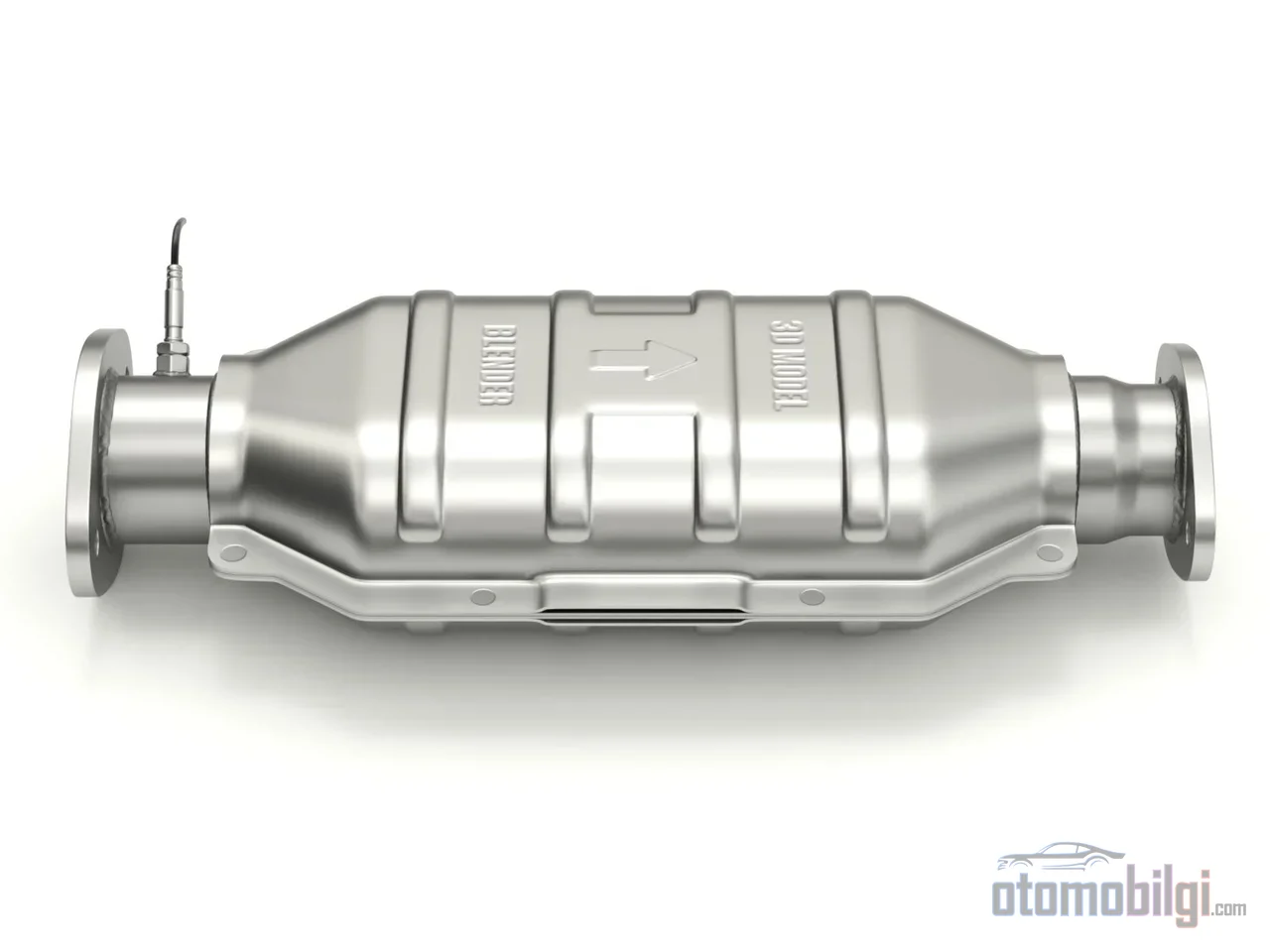
A catalytic converter is a post-exhaust emission control device that converts carbon monoxide, hydrocarbons, and nitrogen oxides in the exhaust gas into harmless compounds through chemical reactions, and has kept the internal combustion engine below the limits imposed by exhaust emission laws since 1975. While the 1970s US Clean Air Act forced a complete redesign of the engine, this small ceramic cylinder was the most practical way to meet the deadline; yet the result was the starting point of a technology chain extending from the death of the carburetor to electronic fuel injection.
Highlights
- The Clean Air Act set a target of a 90% reduction in hydrocarbon, CO, and NOx emissions by the 1975 model year.
- The mass-production converter was developed in 1973 at Engelhard; Corning, meanwhile, invented the cordierite ceramic monolith substrate.
- Because leaded gasoline poisoned the converter, it was banned in converter-equipped vehicles starting with the 1975 model year.
- The first converters converted only CO and hydrocarbons; the three-way catalyst brought NOx into play as well.
- Today's three-way converters can convert up to 98% of these three pollutants.
Dirty Cities and the 90% Reduction Deadline
By the late 1960s, the air quality in American cities had measurably deteriorated along with the growth of motorized transport. Smog in Los Angeles was the first major case showing that it was possible to pinpoint the source of the problem item by item, and California became the state to implement the first tailpipe emission regulations in the late 1960s. In 1967, statewide efforts were brought under a single umbrella; the institutional infrastructure was in place, but the real turning point would come at the federal level.
The 1970 Clean Air Act was written with a technically bold gamble: Congress mandated that by the 1975 model year, automobiles achieve a 90% reduction in hydrocarbon, carbon monoxide, and NOx emissions. The striking detail was that those making the decision knew the technology to achieve this reduction did not yet exist. The law was not the product of an engineering department but of a regulatory philosophy that set the target first and forced the solution afterward. California's earlier, earlier-dated state mandate had paved the way for Congress's approach.
To grasp the scale, the numbers suffice: uncontrolled vehicles produced about 90 grams of CO per mile; 1974 models had reduced this to 28 grams, and the 1975 target was 15 grams per mile. Moreover, Europe would not adopt similar regulation until 1992. Vehicle manufacturers saw investment in post-exhaust technology as a faster and less risky path than fundamentally reworking the engine itself: the converter's advantage was that it could be added to the exhaust line without requiring radical changes in basic engine design.
The Converter's Long Development Line
The device was not invented suddenly in 1975. The first prototypes were designed in France at the end of the 19th century; they were structures with platinum-rhodium-palladium coating and dual metallic cylinders. The most important owner of the idea approaching mass production, however, was the French mechanical engineer Eugene Houdry Houdry, who invented catalytic cracking in the 1930s and emigrated to the USA, began to concern himself with Los Angeles smog in the early 1950s, founded the Oxy-Catalyst company, and after developing converters for chimneys and forklifts, obtained his patent for automotive application in the mid-1950s.
The obstacle before Houdry was not the technology but the gasoline itself: tetraethyl lead coated the catalyst surface, rendering the device useless; in engineering terms, catalyst poisoning. For this reason Houdry gave up on automobiles and turned to industrial applications. In other words, the birth of the automotive converter was in the same equation as the death sentence of leaded gasoline; the time allowed to one determined the fate of the other.
The transition to mass production was completed with the meeting of two different industrial competencies. At Engelhard, Carl D. Keith, John J. Mooney, Antonio Eleazar and Phillip Messina developed the first mass-production converter in 1973 . On the glass technology side, at Corning Glass, Rodney Bagley, Irwin Lachman and Ronald Lewis invented the cordierite ceramic monolith substrate that hosts the catalyst; these three names entered the National Inventors Hall of Fame in 2002. Chrysler presented test data to the EPA with Engelhard's twin-converter prototype vehicles and was one of the first brands to take the stage with the 1975 model year package.
The End of Leaded Gasoline: The Converter's Price
An equation worked in the opposite direction of the truck: leaded gasoline was phased out first not so much for health reasons as because it damaged the converters. Lead reduction began in 1974 with the authority of the Clean Air Act amendments, and starting from the 1975 model year, leaded gasoline was banned in converter-equipped vehicles. For our tank and the pump, this meant in practice a second revolution; unleaded gasoline required more extensive reprocessing than the production refineries, accustomed to raising octane with lead, were used to. The gasoline formula had become a system component changing at the same time as engine design.
The transition was not complete: for older vehicles without converters, leaded gasoline could be sold until 1995; at that date, the Clean Air Act amendments imposed a ban on all leaded gasoline in vehicles. A single measurement summarizes the social return of this transition: after the reduction of lead, an 88% decrease was recorded in the rate of children with high blood lead levels. The chain of emission regulation extending from the exhaust to public health delivered its most concrete result in the output of petroleum refining.
The Lambda Sensor and the Birth of Closed-Loop Control
To unlock the full potential of the three-way catalyst (TWC), a component other than the converter itself was needed. The TWC efficiently converts all three pollutants only while the air-fuel ratio is within a very narrow band of the stoichiometric point; if the mixture is lean, NOx reduction drops, and if rich, CO and hydrocarbon oxidation drops. A carbureted engine could not provide this precision, so in the first converter-equipped vehicles, the oxygen in the exhaust, as a complement, secondary air injection was used.
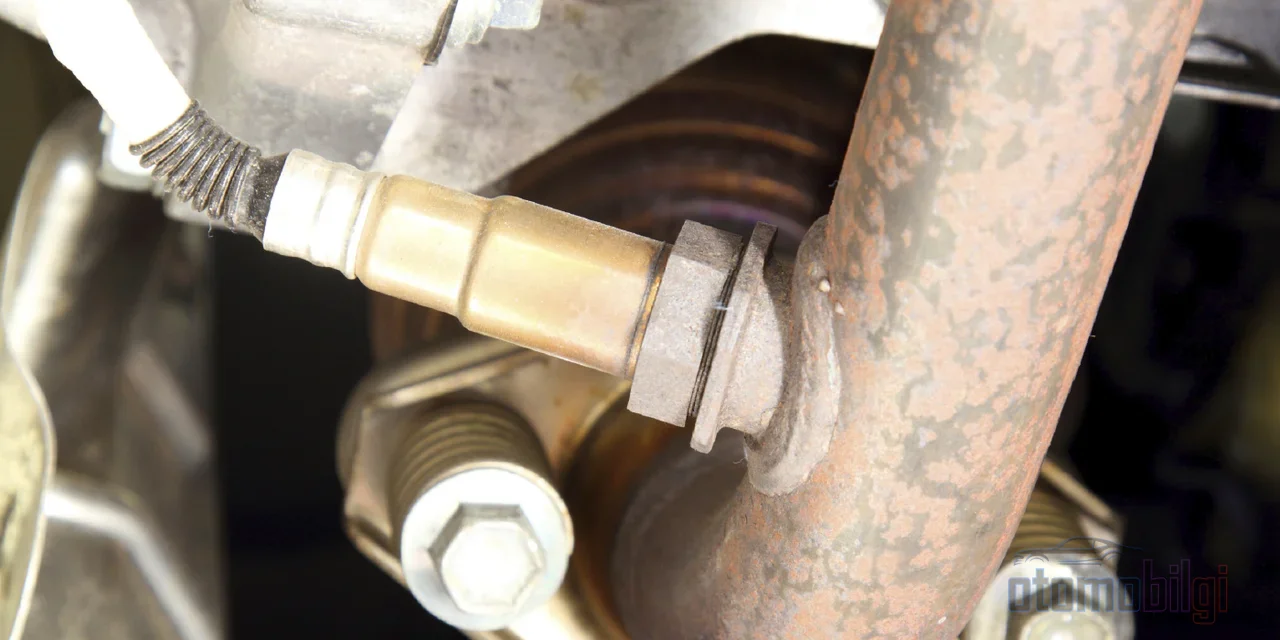
The solution was an oxygen sensor placed in the exhaust line: in the automotive world lambda sensor this component is known by that name, derived from the air-fuel equivalence ratio λ. Its working principle is remarkably simple; if the sensor sees oxygen in the exhaust, the mixture is lean, if not, it is rich. The ECU (electronic control unit) adjusts the fuel supply based on this signal and keeps the ratio at the stoichiometric point. Oxygen sensors enabled true closed-loop emission control by providing precise air-fuel ratio measurement; the first sensor-equipped vehicles had a single sensor.
The modern engine pushed this architecture to its limits. Electronic fuel injection produces a precise mixture that constantly oscillates between lean and rich; the two oxygen sensors before and after the converter provide a continuous data stream to the ECU, and air injection is no longer needed. The only exception is a deliberate engineering decision: when high load and maximum power are desired, closed-loop control is suspended and a rich mixture is commanded. In other words, the lambda loop is a protection zone that can be intentionally interrupted for performance.
From Two-Way to Three-Way: Capturing the Pollutant Trio
The first generation of converters were two-way: they oxidized carbon monoxide and hydrocarbons into CO2 and water, but could not touch NOx at all. In the 1970s, twin catalyst systems were developed for NOx; a rhodium-platinum based reduction unit and a palladium-platinum based oxidation unit were arranged one after the other. The system worked but was bulky and expensive. The real leap came with the three-way catalyst: converting NOx, HC and CO simultaneously in a single device.
The commercial calendar was fast. Volvo, with the California specification, 1977 model year Volvo 240 made the first commercial TWC application; for the 1981 model year, nearly all manufacturers met the federal NOx requirements with a three-way catalyst. Toyota, meanwhile, implemented Japan's first pellet three-way converter in 1978 and developed the world's first oxygen-storage TWC; ceria/ceria-zirconia compounds as ceramic and oxygen storage promoters slightly loosened the narrow-band tolerance, making the system easier to operate.
| Feature | Two-way converter | Three-way converter (TWC) |
|---|---|---|
| Pollutants converted | CO and hydrocarbons | CO, hydrocarbons and NOx |
| Chemical process | Oxidation only | Oxidation + reduction |
| Air-fuel ratio tolerance | Wider | Narrow band close to the stoichiometric point |
| Additional system requirement | Secondary air injection | Lambda sensor and closed-loop ECU |
| Commercial introduction | 1975 model year | 1977 (Volvo 240, California) |
Does the Converter Really Cause Power Loss?
That was the skeptics' main argument in 1975: added exhaust backpressure suffocates the engine. Historical records offer no quantitative picture of how many horsepower this first generation swallowed; however, the fact that the converter could be added to the exhaust line without touching basic engine design was the most sensible engineering choice of that year. The following decades proved the skeptics wrong in reverse: once closed-loop fuel control, precise injection, and narrow-band TWCs combined, modern engine designs came to produce equal or more power with less fuel than previous generations. Aftertreatment technology became a natural partner of the efficiency goal.
Today the picture that applies to failures is different and is found in technical service resources: a clogged or faulty converter manifests itself as power loss, reduced acceleration, and degraded fuel economy. A healthy converter, on the other hand, is silent; it can even contribute not only to emissions targets but also to engine efficiency. Its operating physics is designed accordingly: the converter must reach its operating temperature (light-off) of approximately 400 °C using the heat of the exhaust gas; that is why it is mounted as close to the engine as possible, or additionally as a pre-cat.
Aftertreatment: The Diesel Era and Today's Problems
The regulation-engineering duo did not let aftertreatment technology stand still. On the diesel side, particulate filters (DPF) became mandatory in January 1, 2007 all road diesels produced thereafter; in 2010, most light-duty diesel manufacturers in the US added SCR systems for NOx reduction, and this urea-based (DEF) architecture became standard equipment. Every step followed the template established by the gasoline TWC: first a legal limit, then a chemical solution, followed by a sensor and control architecture that feeds that solution.
The Clean Air Act's 55-year record is concretely measurable: lasting improvements in vehicle emissions, a complete exit from leaded gasoline, intervention in acid rain and ozone layer problems, and a 78% reduction in one of the pollutants. There is also a reverse outcome: the rise in precious metal prices fueled the theft of catalytic converters, which have become a target for platinum group metals; the inflation-adjusted platinum price climbed from around $800/oz in 1986 to $1,400/oz, and stolen converters can sell for up to $150 at scrap yards. In other words, the engine it saved in 1975 has become a component that today itself needs physical protection.
In conclusion, the catalytic converter saved the internal combustion engine from legal extinction in 1975; but more importantly, it carried the engine from the mechanical world of the carburetor into the closed-loop world of sensors and the ECU. Though the 90% reduction target looked like a gamble, the price it paid was leaded gasoline, and the rest turned into an efficiency story that has continued for half a century.
Sources
- Clean Machine - Science History Institute
- Catalytic converter - Wikipedia
- Clean Air Act Requirements and History - EPA
- Gasoline and the Environment: Leaded Gasoline - U.S. EIA
- The History of the Clean Air Act and Corning's Role - Corning
- Catalytic Converter: Big 'If' of 1975 - The New York Times (1974)
- Evaluation of a 1975 Prototype Chrysler Passenger Car - EPA NEPIS
- The Evolution of Catalytic Converters - Royal Society of Chemistry
- 75 Years of Toyota - Catalytic Converters
- Oxygen Sensor History - Walker Products
- Oxygen sensor - Wikipedia
- Evolution of the Catalytic Converter - Walker Exhaust
- The US Experience with the Phasedown of Lead in Gasoline - MIT
- Phasing Out Leaded Gasoline - WorstPolluted.org
- Twenty-Five Years of the Clean Air Act in Perspective - Oklahoma Law Review
- 55 Years of the Clean Air Act - Clarity.io
- History - California Air Resources Board