Moving the Engine Forward: How It Changed the Car?
Share This Page
Moving the engine forward enlarged the car's interior, brought weight distribution under the designer's control, and made the economical production of small cars possible. This transformation happened in two steps: the entry of front-wheel drive into mass production in 1934, and the transverse engine-transmission layout becoming a cheap, repeatable package in 1959. Almost every car on the road today is the legacy of these two steps.
Highlights
- 1934: The Citroën Traction Avant combined front-wheel drive with a monocoque body and carried it to the standard of mass production.
- 1959: The Mini established the modern compact car template by fitting a transverse engine and gearbox into a body of roughly 3 meters .
- 1931: The true pioneer of the transverse layout was the DKW F1, with its two-cylinder two-stroke engine.
- The Traction Avant was produced in a total of 759,111 units and became the first front-wheel-drive car to reach a six-digit figure.
- In modern front-wheel-drive cars, the longitudinal engine layout was effectively abandoned; the transverse layout became universal.
The Beginning: Why Was the Engine at the Back?
From Karl Benz's first automobile onward, the problem was clear: a single-cylinder, four-stroke engine had to be combined with the drivetrain that transmitted its power to the wheels. In early solutions, the engine was placed close to the driven axle. A layout with a large engine at the rear thus became the standard for many years; moving the engine close to the drive axle was mechanically simple and reduced transmission losses.
But this layout had a price. The engine occupied passenger and cargo space; the vehicle needed a long wheelbase. For an engineer designing a small car, the question of where the engine would sit directly determined how much cabin space there would be. Engine placement, regardless of engine displacement or cylinder count, is the fundamental architectural decision of the automobile: it determines weight distribution, the center of gravity, and therefore acceleration, braking, and road holding.
Citroën Traction Avant: The Mass Production Test of Front-Wheel Drive
Front-wheel drive was not an entirely foreign idea before 1934. In Britain, the Alvis 1928 Racing FWD, and in the USA, the Cord L29 (1929-1932), had tried this layout in the luxury segment; in Europe there were established front-wheel-drive models such as the DKW F2 and Adler Trumpf, the creations of Tracta, and new ventures like the BSA Scout. Auto Union had already implemented front-wheel drive and independent suspension in production vehicles. What was missing was a car that integrated these technologies with affordable, high-volume mass production.
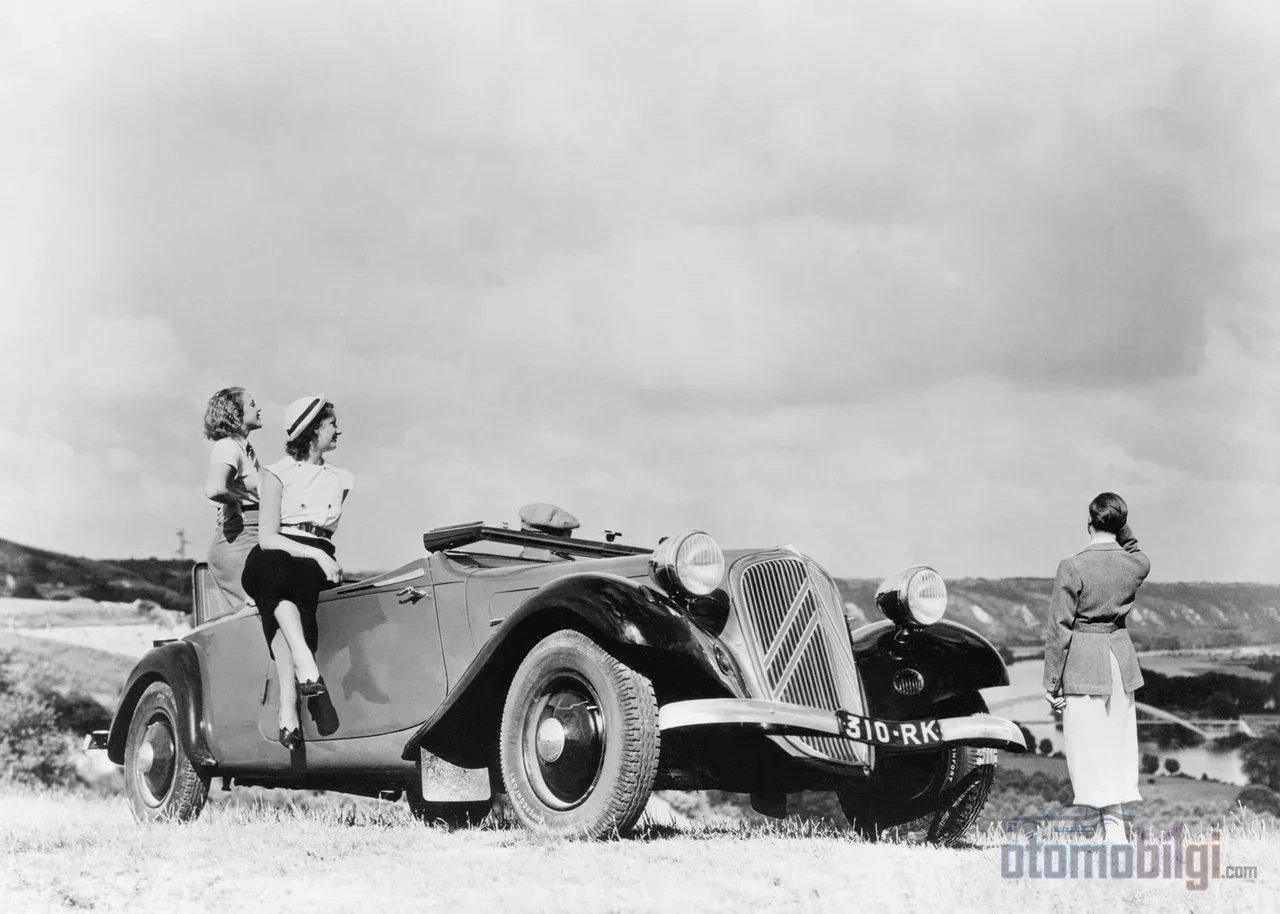
This car emerged from the design work of André Lefèbvre and Flaminio Bertoni. The first model, the 7A, was introduced in Paris on April 18, 1934; mass production began a day later. The Traction Avant is the world's first mass-produced car with a semi-monocoque body and front-wheel drive. The monocoque body saved 70 kg of steel per vehicle; this lightness was the engineering behind the car's ability to reach 100 km/h . Fuel consumption was around 10 L/100 km ; in a 1951 test, the 1,911 cc Light Fifteen achieved a 72.6 mph top speed and 29.7 seconds for 0-60 mph gave the values.
Interior space gained at the knees
In the Traction Avant's longitudinal front-wheel-drive layout, the gearbox was at the front, the engine at the rear, and the differential between the two. This arrangement meant a gear lever on the dashboard, pendant pedals, an umbrella-type handbrake and a front bench seat. The result: a very spacious interior with a flat, unobstructed floor and the elimination of the need for a side running board. These features made the car popular in limousine and taxi form. The car also featured hydraulic brakes, a first in European series production, rack-and-pinion steering, which replaced worm-and-roller in 1936, front independent suspension with torsion bars, and an aluminum alloy transaxle.
The cost was heavy: development and factory renewal expenses drove Citroën to bankruptcy at the end of 1934 , and its largest creditor, the Michelin company, managed it until 1976. Production stopped during the war and resumed in 1945, ending in July 1957 ; a total of 759,111 units. The cast aluminum transaxle met another fate as well: it was used in Cooper's Formula One rear-engine revolution - the Cooper T51 became the 1959 F1 world champion.
The Mini and the Transverse Engine Layout: The Birth of the Modern Template
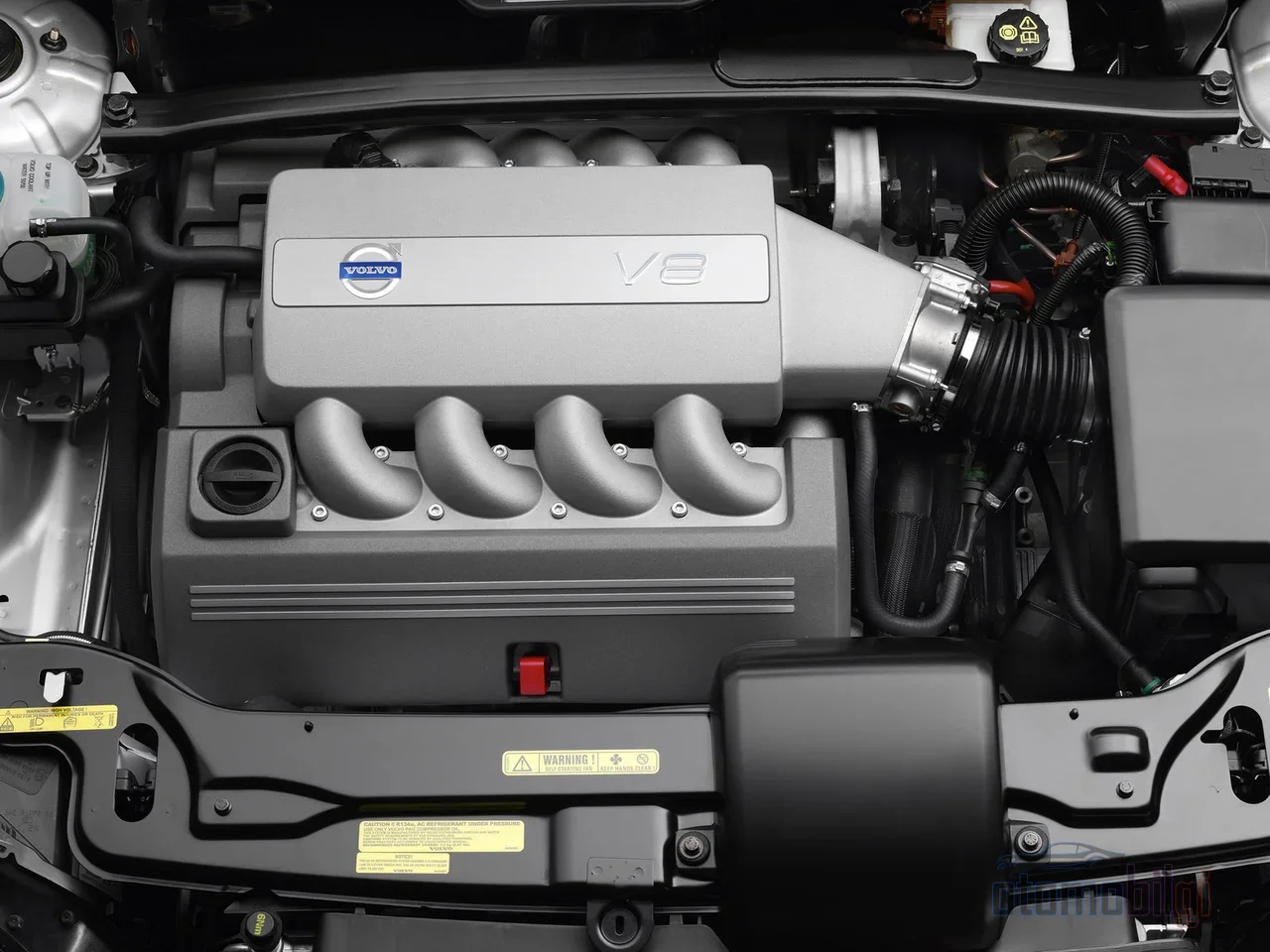
The Traction Avant's longitudinal layout was technically successful but was not the standard of the future. The real revolution lay in mounting the engine transversely: placing the engine with the gearbox beside it as a single compact unit sitting over the front axle. A historical clarification is needed here: the first transverse front-wheel-drive engine was not the Mini. The DKW F1, with its two-cylinder two-stroke engine, pioneered this arrangement from 1931 onwards; DKW's 1939 F9 prototype, designed for a three-cylinder engine, also had a transverse engine-gearbox unit.
What the Mini did in 1959 was different, and that is precisely why it was transformative: with Alec Issigonis's design, it turned the transverse engine and front-wheel drive into an inexpensive, mass-produced package by placing the gearbox beside the engine. On the outside, an automobile roughly 10 feet, that is 3 meters, in length, offered a surprisingly spacious living area inside - the engine layout made this interior efficiency possible. With a few exceptions like the Renault 4, Renault 16 and first-generation Renault 5, which later used the longitudinal layout, nearly all modern mass-produced front-wheel-drive cars adopted this transverse arrangement. This template, which began with small cars, in time became the dominant architecture encompassing the compact class, then the mid-size class, and eventually most models of the hybrid era.
Why Did the Rear Engine Disappear?
Placing the engine at the rear is also a layout based on reasonable grounds. Since the engine's weight rests over the driven axle, it improves traction - especially in winter conditions. The rationale is simplicity, packaging efficiency, creating luggage and passenger space, and bringing the engine closer to the driven axle. In the 1950s, the fashionable way to design a small car was to put the engine at the rear; the layout was historically used mostly in small vehicles too. The problem emerged with scale: the rear engine weight has a negative effect in a large car and disrupts the handling balance. The result was the gradual abandonment of the generation of rear-engined small cars; the exceptions remained as models that had made the layout part of their character and mastered the engineering, such as the Porsche 911.
How Does Engine Placement Affect Driving and the Interior?
The effects of the layout can be summarized under three headings:
- Front engine: It is the easiest position for maintenance; access to the engine bay is easy and front mounting provides a wider cabin and passenger space.
- Rear engine: It loads weight onto the driven axle; it is efficient in terms of packaging in small vehicles but makes balance harder in a large body.
- Mid-engine: It radically changes the weight distribution and seriously affects the driving character; that is why it is preferred in sporty vehicles.
There is a distinction to be noted: engine position affects performance and handling more than fuel efficiency. Efficiency is primarily the work of engine displacement, weight, and aerodynamics. In other words, moving the engine to the front does not provide direct savings in liters; what it provides is more cabin at the same body length and a weight balance that engineers can control.
Legacy: The Architectural Decision of Today's Automobile
If cylinder count, engine type, and displacement are the face of every car in the showroom, engine placement is its hidden skeleton. The rear-engined layout inherited from Benz's era worked for a long time in small vehicles; the Traction Avant brought front-wheel drive to mass production with a monocoque body, changing interior space and cost mathematics; the Mini, by fitting the transverse engine-gearbox arrangement into the economy of mass production, laid the foundation of today's compact car and, indirectly, the packaging logic of the hybrid era. Today, when you see a flat floor extending behind the seats, luggage at the rear, and a relatively small engine bay at the front of a sedan or hatchback, what you are looking at is the sum of two architectural decisions made in 1934 and 1959.
Sources
- Citroën Traction Avant
- 1959: The Mini Was Born.
- Transverse engine, explained
- Automotive History: The 1959 Mini Did Not Have The First Transverse FWD Engine
- Engineering the BMC Mini, 1959
- Rear mid-engine, rear-wheel-drive layout
- Why is the Porsche 911 engine in the rear?
- What happened to (almost) all the rear-engined cars?
- How does engine placement affect handling?
- Engineering Explained: Why Engine Placement Is Important
- How Engine Placement Affects Handling
- Traction Avant History
- Buyers Guide: Citroen Traction Avant