Maybach's First Aluminum Engine Block in 1889
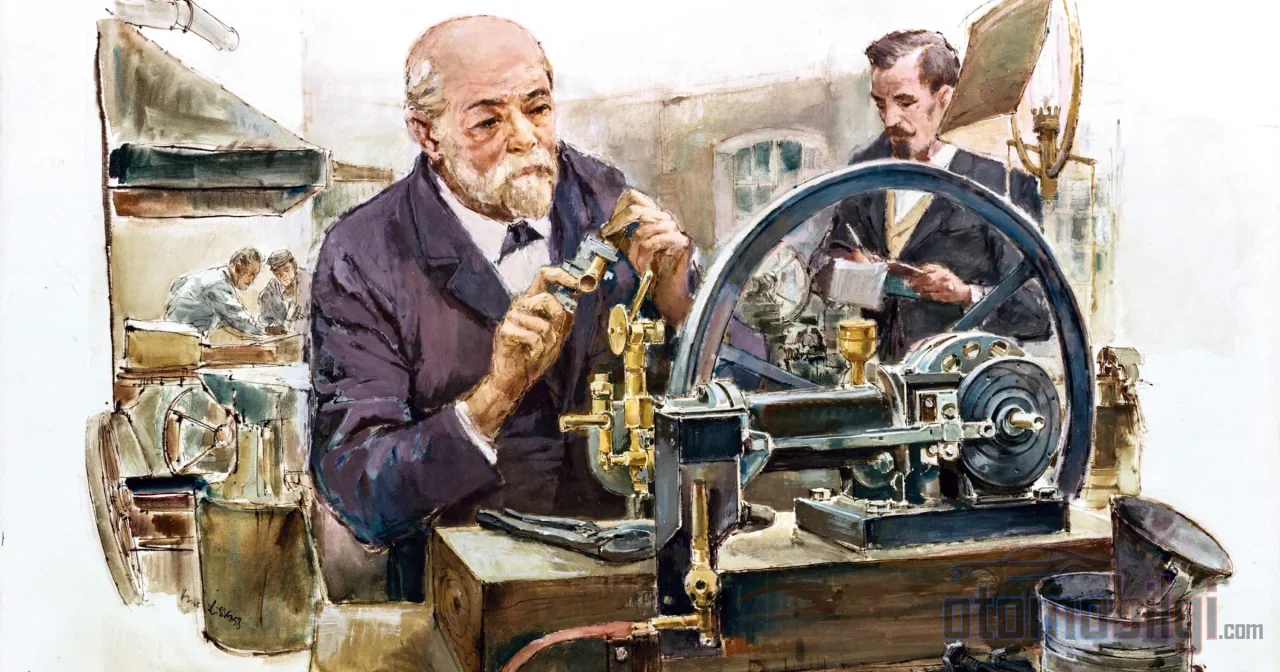
An engine block tells the story of its design philosophy as much as the metal it is made of. The two-cylinder V-type engine exhibited by Gottlieb Daimler and Wilhelm Maybach at the 1889 Paris Exposition was one of the milestones that shaped the future of the internal combustion engine; patented as the world's first V-configuration engine, this unit also carried the first sparks of the pursuit of lightness. From that day to the present, the material journey of engine blocks, extending from cast iron to aluminum, from ceramic experiments to beryllium bans and thermal spray coatings, is one of engineering's most data-rich stories.
There is an interesting paradox in this story: the popular claim of an "first aluminum engine block" dated to 1889 struggles to find direct support in archival records. The first documentable steps came a bit later - and it is precisely for this reason that materials history is a field requiring the separation of legend from real data.
The Maybach Era: The Beginning of the Pursuit of Lightness
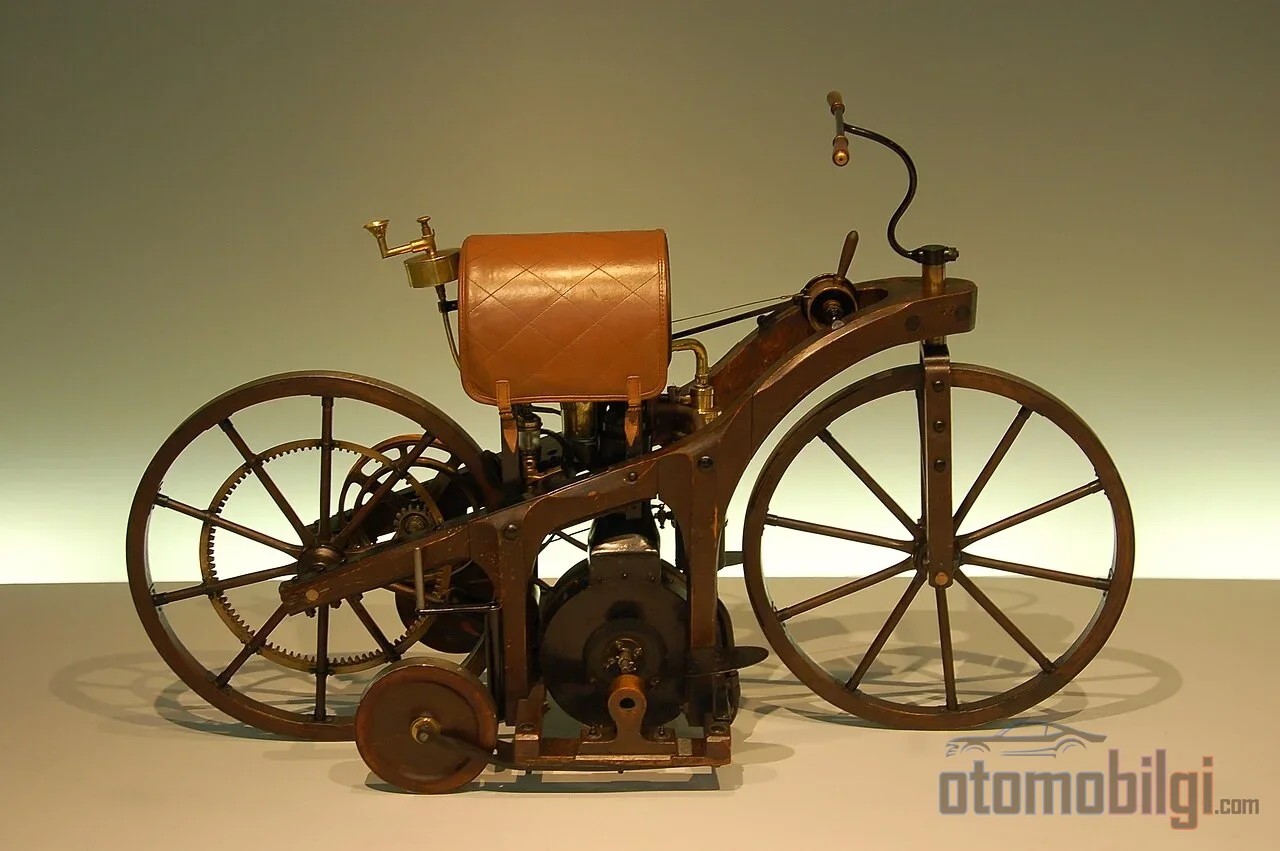
Wilhelm Maybach was born on February 9, 1846, in Heilbronn; orphaned at age 10, he met Gottlieb Daimler, the man who would change his life, while working in the machine workshop of the orphanage. The fast-running combustion engine he developed in 1883 with Daimler's support was patented on December 16, 1883; running at 750 rpm (soon rising to as much as 900), it was an extraordinary speed by the standards of the era. In 1885, a lightweight, high-revving four-stroke engine was patented and mounted the same year on the Reitwagen - the world's first motorcycle; the vehicle could reach speeds of about 12 km/h.
The 1889 Paris Exposition was the pinnacle of this partnership. The two-cylinder V-type engine displayed there is considered the first unit to use the V design; according to the Mercedes-Benz archives, Daimler registered the patent for the world's first two-cylinder V-configuration engine in 1889. The Stahlradwagen, or "steel-wheeled car", produced the same year, is regarded as the first four-wheeled vehicle with a chassis designed according to its own purposes. In 1890, the Daimler Motor Company was founded in Cannstatt; as technical director, Maybach developed the float-fed carburetor around 1893, turning the gasoline engine into a practical solution. The Mercedes 35 PS, designed in 1901 at Emil Jellinek's request and named after Jellinek's daughter, is today called "the world's first modern automobile".
What Is the Truth About the 1889 Aluminum Block?
Although the claim that Maybach produced an aluminum engine block in 1889 seems consistent with aluminum's early automotive history, it is not directly supported by primary archival documents. The first documentable step in aluminum engines is dated 1901: Carl Benz built the first aluminum car engine that year. The engine of the Wright Flyer, which flew in 1903, also carried an aluminum cylinder block. From the standpoint of the era's engineering, the reason is understandable: aluminum was a difficult material to machine, and fully aluminum engines remained rare for a long time. This page tells the story of this material journey through verifiable data; it places the 1889 claim in history as a narrative symbolizing that era's pursuit of lightness.
Highlights
- The earliest verifiable aluminum car engine: Carl Benz, 1901
- Aluminum blocks are 40-50% lighter than cast iron
- 1983 Isuzu ceramic engine: claimed 30% more power with half the fuel consumption
- FIA announced that it banned beryllium on October 6, 1999
- Mercedes NANOSLIDE coating saves 4.3 kg per engine
Why Did the Transition from Cast Iron to Aluminum Take So Long?
Cast iron was the dominant block material during the first century of the internal combustion engine: it was cheap, easy to cast, and resistant to high temperatures. The advantage of aluminum was numerically clear - it meant a block 40-50% lighter than cast iron. The excellent thermal conductivity and low density of Al-Si alloys offered a serious alternative to cast iron, especially in terms of thermal load management.
Despite this, the transition took decades. Aluminum was difficult to machine, casting technology was not yet mature, and the cost balance favored cast iron for a long time. Manufacturers began moving from cast iron to aluminum blocks on a large scale in the late 1970s; aluminum vacuum casting and joining technologies developed between 1990-1999 made the series production of aluminum-intensive vehicles possible. Cast aluminum engine blocks had met the cost target decades earlier and had become the dominant material in the industry - the question was no longer "aluminum or not," but "how far can you go with aluminum."
The 1983 Isuzu Ceramic Engine: Right Material, Wrong Time
While aluminum was consolidating its position, the search for new materials did not stop. In 1983, Isuzu announced that it was developing a diesel engine using ceramic materials; according to company officials, the engine could produce 30% more power at half the fuel consumption level of its contemporary counterparts. With its heat insulation and temperature resistance, ceramics was an ideal engine material on paper.
This technology never went beyond the concept level. The Isuzu Ceramic Aska, introduced at the 1985 Tokyo Motor Show, was an experimental vehicle based on the GM J-car platform with an 80 hp ceramic diesel engine; around the same time, a prototype Isuzu Impulse was tested with silicon nitride ceramic components. Series production never materialized. Ceramic's brittleness, production tolerances, and cost did not align with the series production realities of that era - but the experiment opened the debate about the place of materials science in engine design.
Beryllium Pistons and the Formula 1 Ban
The name that pushed material limits in the 1990s was Formula 1. McLaren benefited from aluminum-beryllium alloy pistons between 1998-2000. The appeal of beryllium was physically clear: it was one of the rare metals offering both high stiffness and ultra-low weight at the same time. A lightweight piston meant lower inertial forces at high rpm, and therefore higher revs and more power.
This advantage did not last long. The FIA announced the ban of beryllium on October 6, 1999 and gave teams until the end of the following season to remove this material from their engines; from the 2001 season onward, the ban came fully into effect. The rationale was twofold: safety concerns because beryllium dust is carcinogenic during manufacturing, and the material's high cost. The technical detail of the banning mechanism is also interesting: rather than targeting beryllium by name, the rule text was drafted to cover materials with a specific modulus above 40 - for comparison, aluminum's specific modulus is 27 and steel's is 26.
The consequences of the ban were seen on the track. McLaren's 2001 engine after the ban could not reach the power levels of 1998; some assessments link the reliability problems of Mercedes engines in this period to the same break. The beryllium example showed that the history of materials is not just about engineering: regulation, health, and cost were parameters that determined which material would stay on the track just as much as strength limits.
After 2006: The Era of Thermal Spray Coatings
Where ceramics and beryllium were excluded, the solution came with a different approach: the block would remain aluminum, but the cylinder surface would be coated with another material. Mercedes-Benz's technology called NANOSLIDE works with a twin-wire arc spray method: iron/carbon wires are melted and the molten metal is sprayed onto the cylinder surfaces of the lightweight aluminum crankcase. This coating, a critical component of AMG's 6.3-liter engines since 2006, saves 4.3 kg of weight per engine; the technology was later also used in Mercedes diesel engines with a low-consumption goal.
Ford's PTWA (Plasma Transferred Wire Arc) process is a different application of the same physics. The four-stage process - machining of the cylinder bore, surface pretreatment, spraying, and finishing - creates a thermal coating that protects the aluminum cylinder surface. Sprayed at supersonic speed, the coating reduces internal friction and oil consumption, eliminating the need for heavy cast-iron liners. Ford uses this technology in the Coyote 5.0 V8 engine and in the Shelby GT350; the result is a cylinder surface that is both lighter and more efficient in terms of friction compared to chrome plating and cast-iron liners.
Summary of the Material Journey: From Cast Iron to Coatings
| Milestone | Year | Material Gain |
|---|---|---|
| Carl Benz's first aluminum car engine | 1901 | The documented beginning of the aluminum block |
| Manufacturers' mass transition to aluminum | Late 1970s | 40-50% weight advantage per block |
| Isuzu ceramic engine announcement | 1983 | Claim of 30% more power on lean fuel mixture |
| Beryllium banned by the FIA | 1999-2001 | The power of material regulation |
| NANOSLIDE and PTWA coatings | 2006+ | 4.3 kg saved, linerless cylinder |
The summary of this five-generation journey is as follows: The history of engine materials is not the triumph of a single material, but each material finding its rightful task. Cast iron carried a century on cheapness and durability; aluminum brought lightness down into mass production; ceramics remained at the idea stage; beryllium was stopped by regulation; thermal spray coatings, meanwhile, gave aluminum back the surface properties of iron without the kilograms. Maybach's V engine of 1889 is the first link in this chain, as the point where material questioning for lightness began - the rest of the chain was written with numbers, bans, and coatings.
Sources
- Before Mercedes-Maybach, Wilhelm Maybach Helped Build The First Gas-Powered Motorcycle
- Wilhelm Maybach Biography (1846-1929)
- Aluminum internal combustion engine
- Aluminum and the Auto Industry
- Isuzu ceramic engine, UPI October 27, 1983
- Banned: Beryllium
- Mercedes-Benz to use novel cylinder coating technology
- Thermal Spraying of Aluminium Cylinder Bores by the Ford PTWA process
- Timeline: A Path to Lightweight Materials
- 1889 Daimler-Maybach Stahlradwagen