Why Is the Boxer Engine Still Alive?
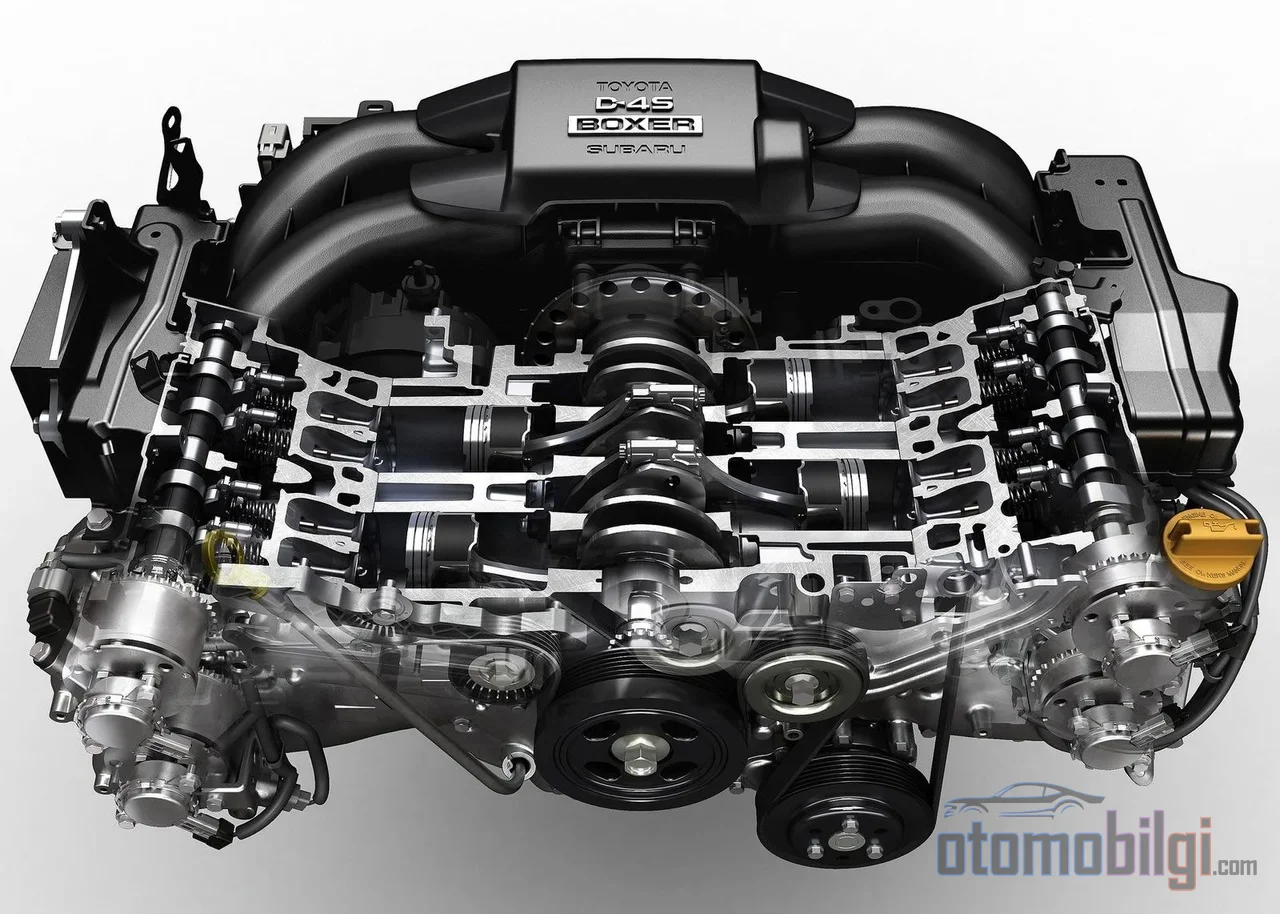
Consider an engine architecture: patented at the end of the 19th century, and ever since running on pistons lying horizontally on either side of the crankshaft, moving toward each other. If we count the successive technology revolutions packed into the internal combustion engine's 130 years, the fact that such a design is still on the production line is a question mark in itself. The story of the boxer engine is not a monument to nostalgia; it is the sum total of engineering trade-offs, market realities, and the persistence of a few brands.
What Makes the Boxer Engine's Characteristics Different?
Let's first clarify the terminology. A boxer (flat) engine is an engine whose cylinders extend horizontally in opposite directions relative to the crankshaft. Its name also comes from its behavior: the pistons move toward each other like a boxer's fists. While one piston goes out, the opposing piston comes in; this symmetry defines the entire character of the architecture.
This layout has two concrete advantages. The first is the center of gravity: since the engine block is wide and flat, the vehicle's mass sits closer to the ground. The result is measurably better road holding, more balanced braking, and less body roll in corners. The second is natural balance: the inertia force of one piston is counterbalanced by the opposing piston's inertia in the opposite direction. Together with a compact crankshaft, the result is a low-vibration engine that needs almost no external balance weights.
The crankshaft is also one of the architecture's gains. The opposing cylinders are gathered on a short crankshaft; this shaft is more rigid relative to its length, and in longitudinal mounting it keeps the weight distribution in balance. This feature is decisive in Subaru's preference for longitudinal placement: an as-short-as-possible crankshaft means less friction in the drivetrain and more efficient power distribution to all-wheel drive.
The other side of the coin, however, is cost and servicing. The wide block causes a loss of rigidity compared to an inline engine; lubrication and oil return are more laborious; access to the cylinder head means extra work in maintenance. Contrary to popular belief, this does not mean the boxer engine is inherently less durable - but the maintenance schedule requires a bit more discipline. These differences stemming from the design and layout also require separate R&D spending. The upshot of all this: despite a 130-year list of advantages, the number of manufacturers continuing this architecture on the automobile side has shrunk to a handful.
Highlights
- Karl Benz received the patent for the first horizontal opposed-piston internal combustion engine in 1896; some sources note that the application occurred in 1897.
- The first engine of the Porsche 911 entered production in 1964: 2.0 liters, air-cooled, 148 hp and 140 lb-ft of torque.
- BMW's first boxer motorcycle engine appeared in 1923 in the R 32: a 494 cc flat-twin.
- Subaru has confirmed that it will end internal combustion car sales in Europe no later than the end of 2027.
An Architecture Born from Karl Benz
The story's starting point is the same person as the automobile's starting point. Carl Benz's 1886 Patent-Motorwagen is regarded as the first automobile in history; but a few years before it, Benz's first stationary gasoline engine was a single-cylinder, two-stroke unit. The horizontal opposed-piston design received its patent in 1896; the design was a four-stroke, flat-twin arrangement. Some sources also give 1897 as the date of application; giving a plain invention date without a patent is an honest approach that clearly reflects this ambiguity.
The commonality between Benz's design and today's boxer engines is not just geometry. This idea of eliminating vibration at its source through opposed motion would be reused over the following century in various configurations and cylinder counts; but its core principle would remain the same.
Volkswagen Beetle: The People's Car's Flat-Four
The boxer architecture reached the masses with the Volkswagen Beetle. The Beetle's air-cooled flat-four was designed explicitly for a specific job: steady movement at moderate speed, maximum reliability, and minimum maintenance. High performance was not on the list of goals; the goal was to keep a car running smoothly for decades. Air cooling fit this goal perfectly: without a water-based cooling system, radiator, hoses, or water pump, the engine ran. This simplicity also made the engine a favorite for modifications in the post-war era; it was even resilient against water loss in scenarios involving operation in water.
The engine was renewed in 1968 with the VW Type 4; a larger and more powerful Type 4 engine was introduced. But the Beetle's flat-four permanently defined the character of the architecture: a low center of gravity, compact dimensions suited to a rear engine, and mechanical simplicity. This air-cooled flat-four idea, which Ferdinand Porsche shaped for the Beetle in the 1930s, would also lay the foundation for the next chapter - the most famous boxer application still alive today.
Porsche 911: The Air-Cooled Flat-Six Tradition
Porsche's flat-six (F6) engine is a direct evolution of the Beetle's flat-four. 911 production, which began in 1964, started out with a 2.0-liter, air-cooled SOHC flat-six; the engine produced 148 hp and 140 lb-ft of torque. It delivered performance far beyond what was expected of an arrangement descended from the Beetle. The layout was simple: crankshaft in the middle, three cylinders on each side. In classic 911s, the engine relied on airflow without ever making room for liquid coolant; this was a technical choice that practically signed the car's character.
The 911 has evolved through eight generations since 1963, and the most dramatic break in this evolution was the abandonment of the classic air-cooled design in favor of water cooling. The air-cooled flat-six remains an engineering legacy the world still talks about today. In the publishing world, the engine is described as a flat (opposed) six against the orthodoxy of inline-fours and sixes and V-6s; this description summarizes the architecture's unusual yet consistent nature.
BMW Motorrad: A Century of Persistence on Two Wheels
The boxer engine also has a line independent of cars. BMW's motorcycle production began in 1923 with the BMW R 32, and this first machine came with a flat-twin (boxer-twin) engine: 494 cc. Aircraft engine designer Max Friz delivered the first flat-twin to BMW in 1923, and from that date on, BMW took a serious step into motorcycle engine production.
Ninety-eight years later, that same architecture, evolved from that first 494 cc design into massive-displacement engines, still sits at the center of BMW's motorcycle catalog. The rationale for the boxer layout on a motorcycle is similar to that in a car: a low center of gravity and natural balance, which are even more critical on two wheels. Nothing proves more clearly that these advantages are truly measurable than a brand staying loyal to a single architecture for this long.
Why Does Subaru Still Use Boxer Engines?
On the automobile side, it is mostly Subaru that carries the stage today. There are three concrete reasons behind the company's boxer persistence:
- Low center of gravity: it provides stability without sacrificing height; thanks to this, Subaru can offer ground clearance of over 8 inches.
- Low vibration: engine balance is naturally achieved thanks to the opposing pistons.
- Short crank: all-wheel drive (AWD) and longitudinal mounting require the shortest possible crankshaft; the boxer layout delivers exactly that.
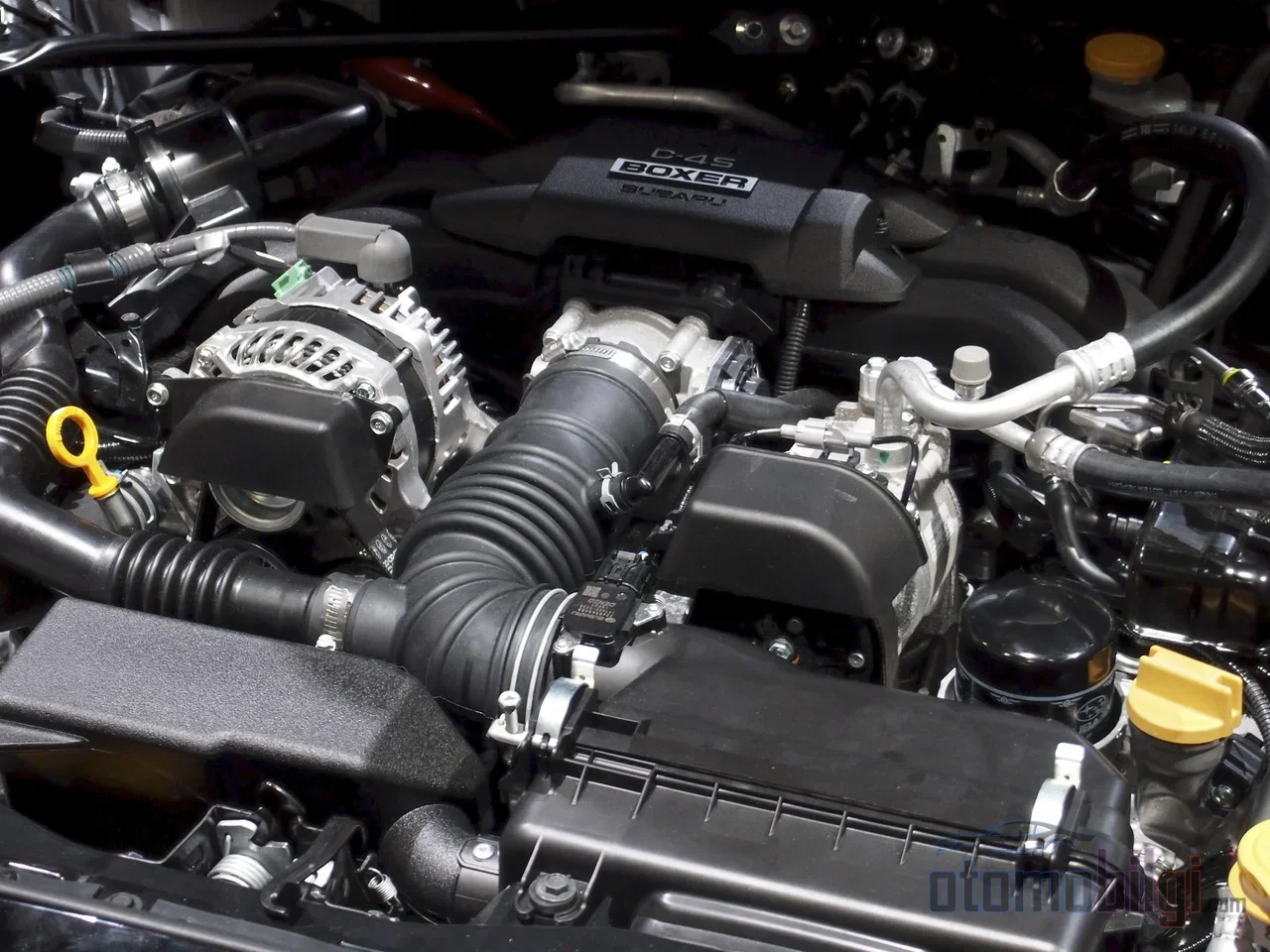
The architecture has also been renewed over time. Subaru's FB engine family was introduced in 2010; the need to replace the EJ family, which had begun to age at that point, was the direct rationale for this transition. In other words, Subaru's persistence is not a nostalgic attachment; it is an effort to sustain the architecture by adapting the geometry it offers to modern emission and efficiency requirements. The same approach is seen in electrification: it was reported that in July 2026 Subaru discontinued its mild-hybrid boxer system and leaned more heavily on Toyota technology; the main focus is the new e-BOXER hybrid system, which pairs the iconic flat-four with a more powerful and efficient hybrid setup. On the product side, the line is still alive: the 2026 Ascent is sold with a 2.4-liter turbocharged H4 turbo boxer engine.
The Future of the Boxer Engine: Where Does It Go in the Age of Electrification?
The answer varies by geography. Subaru has confirmed that it will stop sales of new internal combustion cars in Europe by the end of 2027 at the latest; this brings the boxer engine's end in the European market. Thus, the architecture is officially entering its closing phase in a major market. That Toyota's shareholding in Subaru has opened space for technological collaboration is undeniable; however, it is not possible to say that this shareholding commits to the boxer engine's future. On one side, continuing with a hybrid flat-four; on the other, a gradual withdrawal from the market: both data points belong to the same picture.
Let us now give the real answer to the question posed in the title. The boxer engine is still alive, because the low center of gravity, the natural vibration balance, and the geometry provided by a short crankshaft cannot be fully offered by any inline or V configuration; Porsche's 911 and Subaru's AWD lineup being held by the few manufacturers who can market these advantages, or even turn them into an identity, is what keeps the architecture alive. What limits its prevalence is not technical inadequacy: the added R&D cost, maintenance and service difficulties, and the inline engine's economic superiority in mass production. The architecture is losing to economics; but it does not die as long as it finds a small number of loyal practitioners.
Consider an engine configuration: patented in 1896, spread to the masses with a people's car in the 1930s, became the heart of a sports car legend in 1964, gave a motorcycle brand a century-long direction in 1923, and is still being reinstalled with hybrid systems today. This line is about to be cut; but history does not seem likely to be erased as long as the engineering footprint left by Benz's horizontal pistons permits.
Sources
- Flat engine - WOI Encyclopedia Italia
- Porsche flat-six engine - Wikipedia
- How Porsche's brilliant air-cooled flat-six engine thrived - Hagerty
- Volkswagen air-cooled engine - Wikipedia
- History of BMW motorcycles - Wikipedia
- Historic vehicles: Benz, 1886 to 1926 - Mercedes-Benz
- Subaru will sell no boxer-engined car in Europe after 2027 - AutoNext
- Tech Feature: The Subaru Boxer Engine - Underhood Service
- Boxer Engine History - Mark Miller Subaru
- 2026 Subaru Model Feature Comparison - Cityside Subaru