Why Did the Air-Cooled Engine Die? The Triumph of Liquid Cooling
Share This Page
An air-cooled car engine is an architecture that expels heat by blowing air directly onto metal cooling fins over the cylinders, with no radiator or pump, and today it has almost completely disappeared from mass-production cars. The cause of its death was not a lack of simplicity; on the contrary, it was the price of simplicity: a block that stayed cold for a long time during cold starts, uncontrolled emissions, unmanageable hot spots, and noise standards that could not be met.
Highlights
- The first successful air-cooled car engine came from the hands of Karl Benz at the end of the 1800s.
- Volkswagen's flat-4 engine remained in production from 1938 to 2013 with the Beetle; the most produced air-cooled engine in history.
- The Porsche 911 was produced with air cooling from 1964 to 1998, a span of 35 years; the last example was delivered on March 30, 1998..
- In an air-cooled engine, only about 12% of the heat escapes through the fins.
- Tatra is probably the last manufacturer producing a Euro 5 compliant air-cooled V8 truck engine; the T815 is still in production.
How Does Air Cooling Work and Why Was It So Simple?
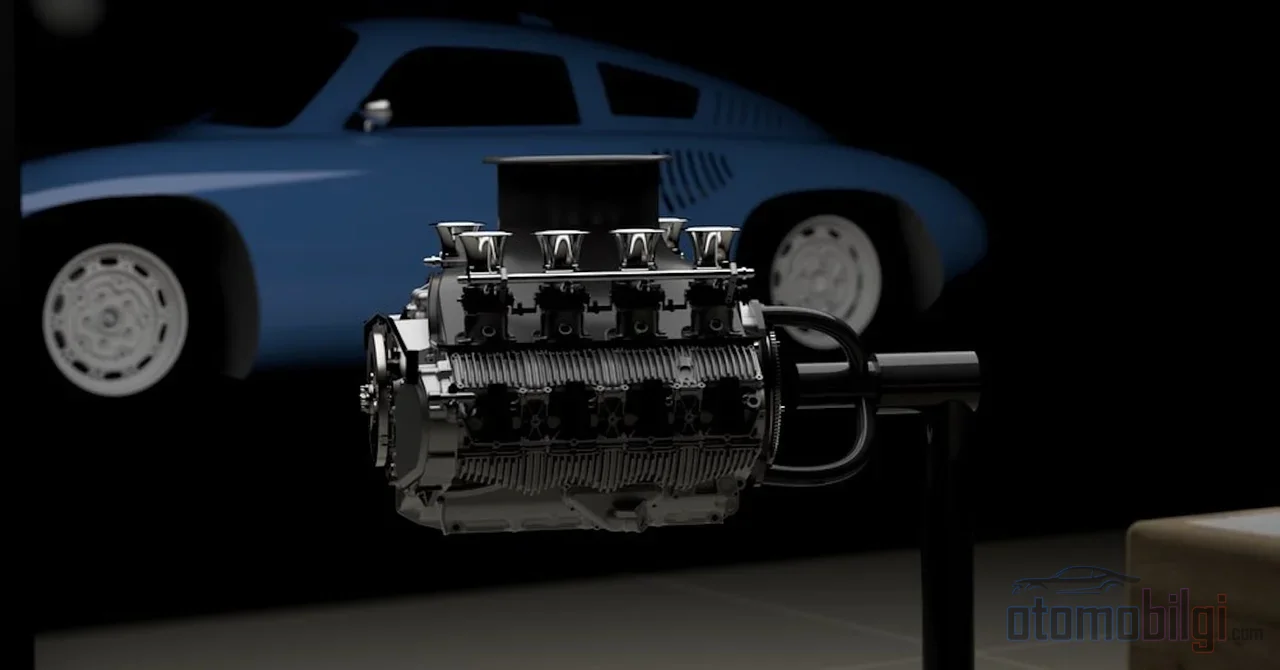
What we call the cooling system in an air-cooled engine actually consists of the fins on the cylinder surface and a fan. The radiator, expansion tank, hoses, and water pump that its liquid-cooled counterpart needs are absent here. Heat passes directly into the air through the fins' enlarged surface. From an engineering standpoint, this means fewer parts, less weight, less maintenance: no coolant to leak, no pump to fail, no risk of freezing.
But look at the energy balance and the picture becomes clear. About 44% of the energy carried by the fuel is already expelled through the exhaust, and 8% escapes into the oil. In an air-cooled engine, only about 12% of the remaining heat can flow out through the metal fins. So the system's heat rejection capacity is structurally limited, and the engine has to operate across a much wider temperature range than a liquid-cooled design. This wide range means looser tolerances, a lower knock (pre-ignition) threshold, and particularly in hot climates, more difficult thermal management.
It does have an advantage, and a serious one: ease of maintenance. Servicing the cooling system and replacing parts in a cramped engine bay is generally cheaper and simpler with an air-cooled design. The aviation industry therefore never abandoned it; Lycoming and Continental engines in general aviation aircraft still use this architecture.
From Benz to Franklin: The First Century of the Air-Cooled Engine
The history of air cooling is almost as old as the history of the automobile itself. The first successful air-cooled engine was developed by the German engineer Karl Benz at the end of the 1800s, and the idea matured through the 1920s and 1930s. On the American side, the story is written with Franklin. The project, which began with John Wilkinson's experimental car without a radiator or water pump in 1901, entered production in 1902 in Syracuse, New York, and Franklin became America's most successful air-cooled automobile manufacturer.
Franklin didn't just produce; it proved too. In 1904, a Franklin crossed the San Francisco–New York route in 32 days 23 hours 20 minutes ; the previous record was 61 days. In 1905 it introduced one of the first six-cylinder automobiles and completed the same route in 15 days . The brand was also a pioneer of innovations such as automatic spark adjustment (1907), aluminum pistons, and pressure lubrication. It should also be noted: these early record narratives came not from primary archives but from museum and memory sources, so their historical precision is limited.
Not every attempt worked. Between 1921 and 1923, Chevrolet Series M Copper-Cooled tried to bring air cooling into series production but backed down in the face of engineering problems; very few units could be produced and the project was deemed a failure.
Aviation and the Beetle: The Golden Age of Air Cooling
Victory in the sky, the first shadow in the sky
The field where air cooling truly gained prestige was aviation. In 1921, the US Navy supported air-cooled engine development at Pratt & Whitney and Wright Aeronautical because of its simplicity. The NACA cowl introduced in 1929 (an aerodynamic fairing surrounding the cylinders) largely solved the problem of managing engine airflow. But that same decade, the other side was advancing too: pressurized water and, from 1929, ethylene glycol - a solution that shrank radiator size by 50% - paved the way for high-performance liquid-cooled giants like the Rolls-Royce Merlin and Daimler-Benz DB601.
The heart of the people's car
On the automobile side, air cooling's greatest success came in the postwar compact economy era. Designed by Ferdinand Porsche for his "people's car," the flat-4 engine became, from 1938 onward, the heart of the VW Beetle, then the Type 2, the Karmann Ghia, and the Type 3; it was produced in various displacements until 2013. In postwar Europe, Tatra, Fiat, and Citroën followed the same path. The Citroën 2CV (1948–1990) simplified the system even further by connecting the fan directly to the crankshaft. The Trabant (1957–1991), ZAZ Zaporozhets (1958–1994), Fiat 126 (1972–1987), and Citroën GS/GSA are other examples of this generation.
Chevrolet Corvair: America's Air-Cooled Experiment
Among the big postwar US manufacturers, Chevrolet was the only brand to try an air-cooled engine in series production. Produced between 1960 and 1969, the Corvair's flat-6 engine is considered an engineering success; it was in fact one of Chevrolet's most expensive engines to develop. But its rear-mounted engine became the target of consumer safety campaigns and criticism of the rear-engine layout. The result: after the Corvair, all of General Motors' engines became liquid-cooled. This parting of ways was the earliest sign of the closing of air cooling's main road.
Porsche 911: Air Cooling's 35-Year Resistance
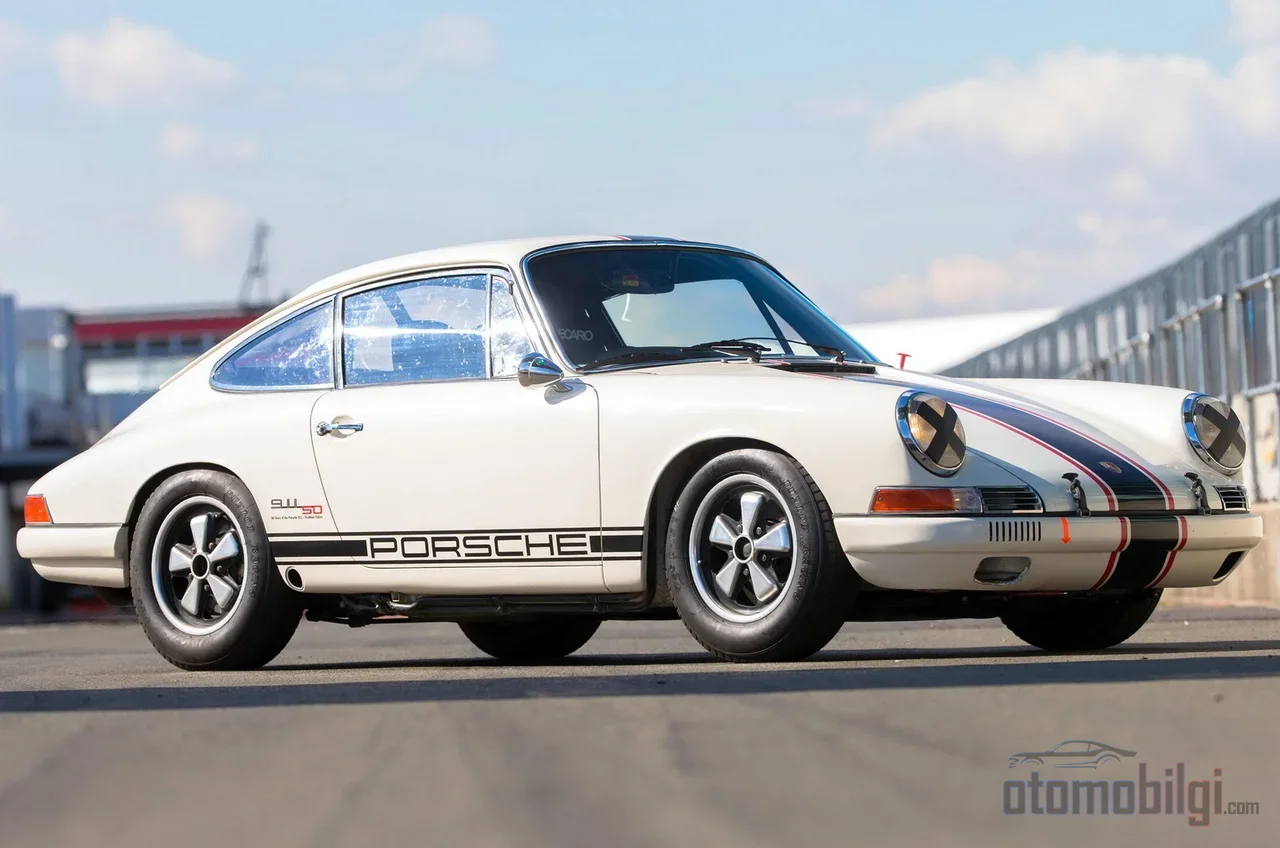
Air cooling's most faithful survivor was, without doubt, Porsche. Designed by Hans Mezger and Paul Hensler, the flat-6 entered service in 1964 in the first Porsche 911, and For 35 years, it was cooled by large fans and cylinder fins. This was perhaps the longest continuous run of any fundamental sports car architecture.
But in the 1990s, the balance shifted. Emission and noise rules tightened; because the rear-engine layout concentrated two major noise sources in one place, legislation effectively made air cooling impossible. In 1997, Porsche moved the 911 to water cooling; the 993 generation was the last air-cooled 911. The final air-cooled model was delivered on March 30, 1998. was delivered.
This transition opened a debate among the brand's loyal base that continues to this day. Enthusiasts consider the engines up to the 993 iconic, argue that the air engine warms up faster and gives a more mechanical feel, and regard the water-cooled post-996 as a separate era. On a technical level, however, it was clear that the real advantages were simplicity and fewer parts, and that this architecture no longer aligned with modern emission and performance targets.
Three Technical Reasons That Killed the Air-Cooled Engine
Emissions and the cold start problem
This was the most decisive reason. In a liquid-cooled engine, the thermostat takes the radiator out of circulation, allowing the engine to reach operating temperature quickly. In an air-cooled engine, the cooling system is always open; the engine stays cold for a long time during a cold start and emits more from partially burned fuel. Yet the majority of remaining exhaust emissions occur precisely at the cold start moment. This mechanism is the main engineering rationale behind both Porsche's and, to a lesser extent, VW's move to liquid cooling. Air cooling could not manage the high combustion temperatures required by emission standards.
Hot spots and the knock limit
The second problem is localized: the exhaust valve and exhaust port region accumulates intense heat that the fin surface cannot dissipate. Liquid cooling, by directing coolant directly to these hot spots, offers a far more efficient design. The natural consequence is the compression threshold: liquid-cooled designs are less sensitive to fuel quality and more tolerant of high compression ratios and turbocharging. This is the physical reason why the turbo revolution shut the door on air-cooled engines.
Noise legislation
The third reason is invisible: the water jacket is itself a sound damper. A liquid-cooled engine is therefore inherently quieter and easily complies with the standards of many countries that also cover engine noise. The air engine, with its fan noise and the metallic resonance of the fins, no longer stood a chance at this threshold.
| Model | Production period | Cooling architecture | Place in history |
|---|---|---|---|
| VW Beetle (flat-4) | 1938-2013 | Air | The most produced air-cooled engine |
| Porsche 911 (flat-6) | 1964-1998 | Air | Stayed air-cooled for 35 years; the 993 was the last generation |
| Chevrolet Corvair (flat-6) | 1960-1969 | Air | The only major brand attempt in mass production in the USA |
| Citroën 2CV | 1948-1990 | Air | Simplified system with a fan driven by the crankshaft |
| Tatra T815 | Still in production today | Air | Euro 5 compliant air-cooled V8 (320 kW, 2100 N·m) |
Is Air Cooling Really Dead?
Yes for cars; no for engineering. In piston aircraft engines, lightness and simplicity take priority over performance and emissions targets, which is why Continental and Lycoming engines remain air-cooled; Rotax, meanwhile, offers a hybrid solution combining an air-cooled cylinder with a liquid-cooled cylinder head. The last holdout on land, Tatra, is still producing its air-cooled T815 truck. So the architecture did not die; it withdrew from road cars as requirements that render it unnecessary - precise thermal control, low emissions, quietness - came to reign in the highway automobile. Air cooling, as the purest form of simplicity, continues to live on only in areas where these requirements remain loose.
Sources
- Air-cooled engine - Wikipedia
- Why the Porsche 911 switched to a water-cooled engine - Porsche
- Old School Cool: All About Air Cooled Engines - State of Speed
- Air-Cooled: Keep It Simple - Audrain Auto Museum
- Early Air-Cooled Cars: The History of Franklin and Holmes Automobiles - Tampa Bay Automobile Museum
- End of an Era: The Last Air-Cooled Automobile Engines - Auto Universum
- When Did Porsche Build its Last Aircooled Car? (March 30, 1998) - Automotive History
- How air-cooled engines work, and why it doesn't matter any more - CNET
- Why Air-Cooled Engines Are No Longer Found in Most Cars - Capital One
- Contrary Compact: The Life and Death of the Chevrolet Corvair - Ate Up With Motor