What Broke Otto's Patent? The Legal Battle of the Four-Stroke Engine
Share This Page
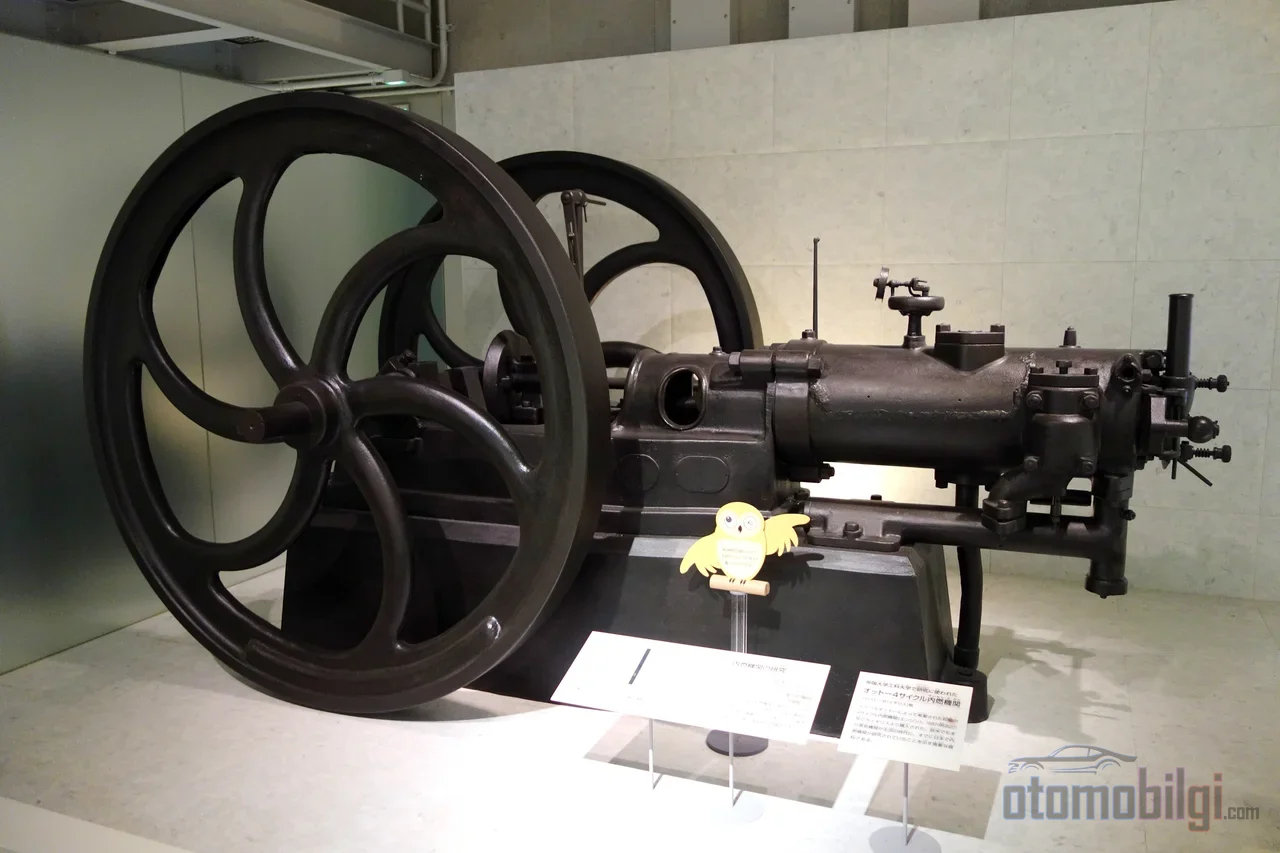
What broke Nikolaus Otto's four-stroke engine patent was the four-stroke cycle concept that Alphonse Beau de Rochas had patented in 1862 but never built: The German patent DRP 532 dated 4 August 1877 was invalidated in 1886 when this earlier filing came to light. The collapse of this monopoly, which kept Europe's engine production under license control for a decade, was the legal prerequisite for Benz, Daimler and Maybach to create their first vehicles.
Highlights
- The German patent DRP 532, dated 4 August 1877; On the US side, US194047 (14 August 1877) and US196473 (23 October 1877) in the name of Otto and the Crossley brothers followed.
- Otto's 1876 engine marked the beginning of an efficiency leap that would carry the previous atmospheric design's 12% efficiency beyond 15% in the following decades.
- Crossley Brothers purchased the world rights outside Germany to the Otto-Langen patents in 1869 and established an exclusive licensing monopoly on the four-stroke engine.
- The patent was voided in 1886 when Beau de Rochas' earlier four-stroke patent was found to constitute prior art.
- After the invalidation, more than 50 companies began producing Otto-type engines by 1889.
From Lenoir to Otto: How Was the Efficiency Problem Solved?
To understand the legal battle over the four-stroke engine, we need to return to the technical starting point. Étienne Lenoir's internal combustion engine, built in Paris in 1860, ran on lighting gas and fired without compression. The result was a measurable failure: A machine with a volume of 18 liters produced only 2 hp (1.5 kW) and could extract only 4% efficiency from the fuel. Nikolaus August Otto, who encountered Lenoir's engine while working as a traveling grocery salesman, set out to work precisely on closing this efficiency gap.
The first attempts were difficult. Otto applied to the Prussian Ministry of Commerce for a liquid-fuel engine in January 1861 but was rejected; The naturally aspirated engine attempt in 1862 destroyed itself after running for a few minutes. The turning point came in 1864: N.A., which he founded with Eugen Langen. Otto & Cie - the first internal combustion engine manufacturing company - developed the atmospheric engine the same year. This design produced 0.5 hp while reaching 12% efficiency and won the gold medal at the 1867 Paris World's Fair by consuming less than half the gas of the other gas engines. Then came the real leap.
1876: The Birth of the Silent Engine and the Four-Stroke Cycle
On 9 May 1876, Otto completed his compression-charged engine. The system used four piston strokes for each power pulse: intake, compression, expansion-power and exhaust - that is, one combustion per two engine revolutions. The arrangement Otto called "stratified charge" provided controlled combustion within the cylinder. Compared to the explosive, noisy character of the earlier atmospheric engine, this machine's relatively quiet operation was also the origin of the name "silent engine" given to it by his contemporaries.
There is an important technical detail here: Attributing the transition to the four-stroke cycle to Otto's genius alone would be an incomplete account. When the company was restructured as Gasmotoren-Fabrik Deutz in 1872, the factory manager was Gottlieb Daimler and the chief designer was Wilhelm Maybach. It is accepted that Franz Rings and Hermann Schumm, together with Daimler's contribution to the company, steered Otto toward the four-stroke cycle, and that the Rings-Schumm engine emerged in the autumn of 1876. The efficiency impact of the pre-compression four-stroke cycle was also concrete: efficiency rose from below 5% to 15% between the 1880s and 1890s.
How Was the Patent Obtained, and What Exactly Did It Protect?
Otto received the German patent DRP 532 on August 4, 1877; in the USA, US194047 dated August 14, 1877 followed, along with the "Gas Motor Engine" patent US196473 dated October 23, 1877 on behalf of Otto and Francis and William Crossley. However, the patent's scope was narrower than most people assume today. The main focus of the patent claims was not the idea of four-stroke operation; it was shaped around stratified charging and a controlled combustion arrangement. This distinction would later prove decisive in court, because comprehensive tests on the fundamental concept found no evidence to support the broad scope the patent claimed.
An earlier application was already on the table: Alphonse Beau de Rochas, who filed on January 16, 1862, had patented the four-stroke cycle conceptually - but never built an engine. This gap between the owner of the concept and the owner of the first working engine is the essence of a naming dispute that has lasted for over a century: while the cycle is called the "Beau de Rochas cycle" in France, the world generally says the "Otto cycle" because of its practical implementation; some sources also put forward Reithmann's name as a third option.
The Crossley Licensing Monopoly: A Decade-Long Squeeze
The patent's power was multiplied by its licensing network. Crossley Brothers, founded in 1867 by Francis and William J. Crossley, purchased the United Kingdom and - excluding Germany - world rights to Otto and Langen's patents in 1869. In 1876, these rights were extended to Otto's new four-stroke engine; Crossley's business grew so much that the company moved to larger premises and licensed production began from 1878 onward. Crossley signed agreements with Otto granting it the exclusive right to manufacture the engines in the United Kingdom.
This arrangement made the four-stroke engine's spread across Europe pass through a single gate. Every manufacturer wanting to lean on Otto's patent had to either take a license from Crossley or give up the four-stroke cycle. Karl Benz's situation is a typical example of this squeeze: although he had his engine ready on December 31, 1878 and received a patent in 1879, building a four-stroke engine was blocked by Otto's 1877 patent. The monopoly was not a technical wall but a legal one - and the wall stood until 1886. The commercial success of the design that came to life, however, was undeniable: thanks to reliability, efficiency and quiet operation, more than 30,000 Otto cycle engines were produced within ten years. Engine No., one of Crossley's oldest surviving four-stroke engines, 1355, stands as a tangible witness of that era that has survived to this day.
What Happened in 1886? The Anatomy of the Patent's Invalidation
The German patent office invalidated Deutz's patent in 1886, which could have run until 1891. The rationale had two layers. First, Beau de Rochas's 1862 four-stroke patent emerged as the prior art. Second, and legally the weightier one: Deutz's failure to prove that its own stratified charging system was different from Beau de Rochas's patent. The company lost one of its 25 patents - but that one, the patent carrying its entire monopoly.
The result was felt immediately. As soon as the licensing wall collapsed, competition opened up: By 1889, more than 50 companies had begun producing Otto-design engines. The technical development of the four-stroke cycle and its legal fate part ways clearly here. The cycle's engineering value had already been proven in practice in 1876; but what determined the speed and direction of its decade-long spread was not technical superiority but the legal ground on which the patent could stand. When that ground collapsed, the innovation slipped out of a single company's control and became the industry's shared infrastructure.
Those Who Filled the Void: Benz, Daimler and Maybach
The significance of the invalidation is measured by looking at what the names who had waited years inside the patent war did. Daimler grew his disagreement with Otto, who focused on large stationary engines and showed no interest in transportation applications; in 1882 he left Deutz together with Maybach. The duo produced a small and efficient 0.5 hp engine in 1883, and in 1885 the "Grandfather Clock" engine and the Daimler Reitwagen - the first internal combustion engine vehicle. By raising the revs to 650 rpm they achieved the power density suitable for the automobile; Daimler and Maybach received the internal combustion engine patent in 1885. One missing detail is also striking: Otto never included Daimler and Maybach in the patent application.
Karl Benz's path was narrower and more decisive. On January 29, 1886 he received German patent 37435; the Patent-Motorwagen was developed between 1885-1887 and, by the widely accepted assessment, is considered the first practical automobile. With the patent's invalidation, the obstacle to Benz producing four-stroke engines was removed, while Daimler and Maybach had begun developing Otto's four-stroke engine for automobiles - a line crowned by the vehicle built for Emil Jellinek in the late 1890s that took the name Mercedes. A parallel case is also instructive: In the USA, George Selden's patent claiming to have "invented" the automobile had cast a similar shadow over the early automotive industry; With the Otto case, the principle that a patent's scope must be limited to the practical invention that was made is still a subject of patent law courses today.
Technical Triumph, Legal Ruin: Why Is It Still Told Today?
Otto's story has a dual character rarely seen in industrial history. On the engineering side stands a measurable and unquestionable success: an efficiency curve that started from Lenoir's 4% and climbed to 12% with the atmospheric engine and above 15% with the four-stroke cycle, and production exceeding 30,000 units in a decade. On the legal side, however, the fate was exactly the opposite: the patent's main claims did not cover four-stroke operation, the evidence supporting the core concept was weak, and an earlier application from 1862 brought down the 1877 monopoly in a single move.
That is why the Otto case is one of the clearest examples showing the difference between invention and patent. Beau de Rochas wrote down the concept and built no machine; Otto made the working engine and built the monopoly; and Daimler, Maybach and Benz transformed the engine, in the void left by the collapse of the monopoly, into the shared infrastructure of transportation. The four-stroke cycle's dominance today is as much a result of how the invention's legal fate was shaped as it is of a technical invention.
Sources
- Otto (1832) - Energy Kids
- How Nikolaus August Otto created the 4-stroke internal combustion engine
- Otto engine
- Nikolaus Otto | Britannica
- US196473A - Improvement in gas-motor engines
- Nicolaus August Otto - US365701A
- Nikolaus August Otto, 1832–1891
- This Day in Automotive History: August 4
- Otto and Crossley Gas Engine, Patent Model
- Crossley Brothers: 'World famous for gas engines'
- Crossley
- The Oldest Otto 4-Stroke Engine
- Patents, what for? The case of Crossley Brothers
- Benz Patent-Motorwagen
- 1886 Benz Patent Motorwagen – Birth of the Motorcar
- Gottlieb Daimler (Otto/Benz/Maybach)
- Four-stroke cycle | Britannica
- On Beau de Rochas' Engines
- Prior Art of Otto's four stroke engine
- Selden Automobile Patent Model, 1879