The First Auto Show Held at Madison Square Garden
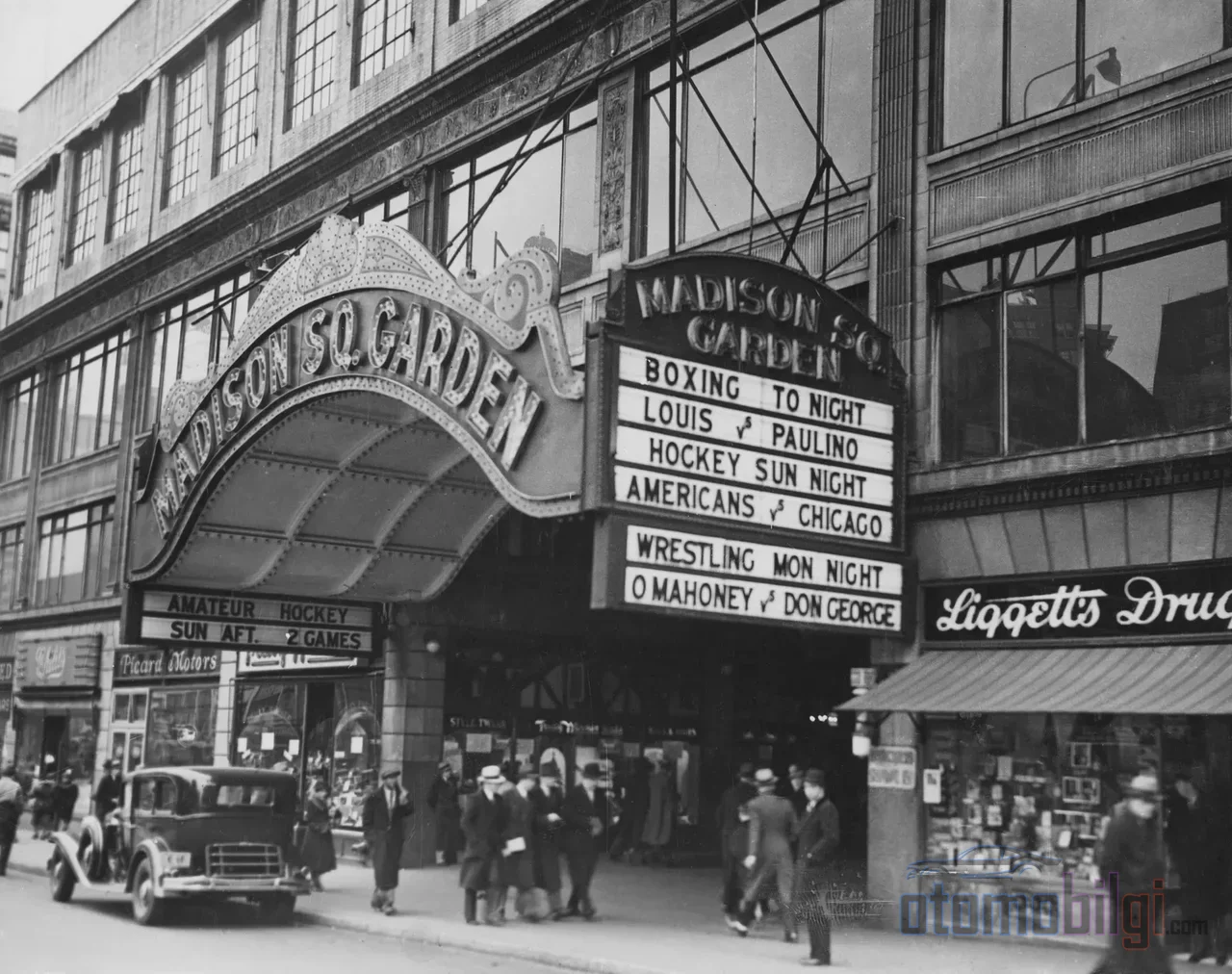
On the evening of November 3, 1900, when the doors of Madison Square Garden opened in the heart of New York, there was something strange inside: noisy ones, smelly ones, crackling ones and completely silent ones - 160 automobiles lined up side by side in the same hall. Steam, electric and gasoline cars were on display together - and nobody knew which one would become the technology of the future. Yes, you read that right: the gasoline engine wasn't even the favorite back then. So how did America's first national automobile show come about, why was it held at Madison Square Garden, and how was the seed planted for the show culture that millions visit every year today? Let's travel back to that week.
How Was the First National Automobile Show Born?
First, let's take a little trip through the timeline. The idea of the automobile was born and matured in Europe at the end of the 1800s, especially in Germany and France; Karl Benz and Gottlieb Daimler are considered the most important pioneers of this era. America, however, entered the stage a bit late but at full throttle. Charles and Frank Duryea brothers designed the country's first successful gasoline automobile in 1893, and on June 11, 1895, the first successful gasoline automobile patent in the US was granted to them. A year earlier, in 1891, William Morrison of Iowa had already produced America's first successful electric vehicle - yes, the electric car isn't such a new idea after all.
The automobile had started appearing on the streets of New York, but it was still expensive, exotic, and for most people merely a curiosity they had only seen in newspaper pictures. On November 4, 1899, the Automobile Club of America organized the first annual automobile parade in Manhattan; at least 10 different brands and models showed off in the parade. It was this club that decided to take a step: to bring automobiles together under a single roof, before the public's eyes. Thus, on November 3, 1900, the doors of the original Madison Square Garden opened to the first national automobile show, and the event lasted a week, until November 10.
Key Highlights
- The first national automobile show opened on November 3, 1900 at Madison Square Garden in New York and lasted a week.
- It was organized by the Automobile Club of America.
- According to official records, the show featured 69 exhibitors and 160 vehicles with a total value of 560,000 dollars.
- About 48,000 people visited the show; the cheapest vehicle started at 280 dollars.
- Electric, steam and gasoline vehicles competed on the same showcase for the first time.
What Was at the Show: 160 Vehicles, Three Competing Technologies
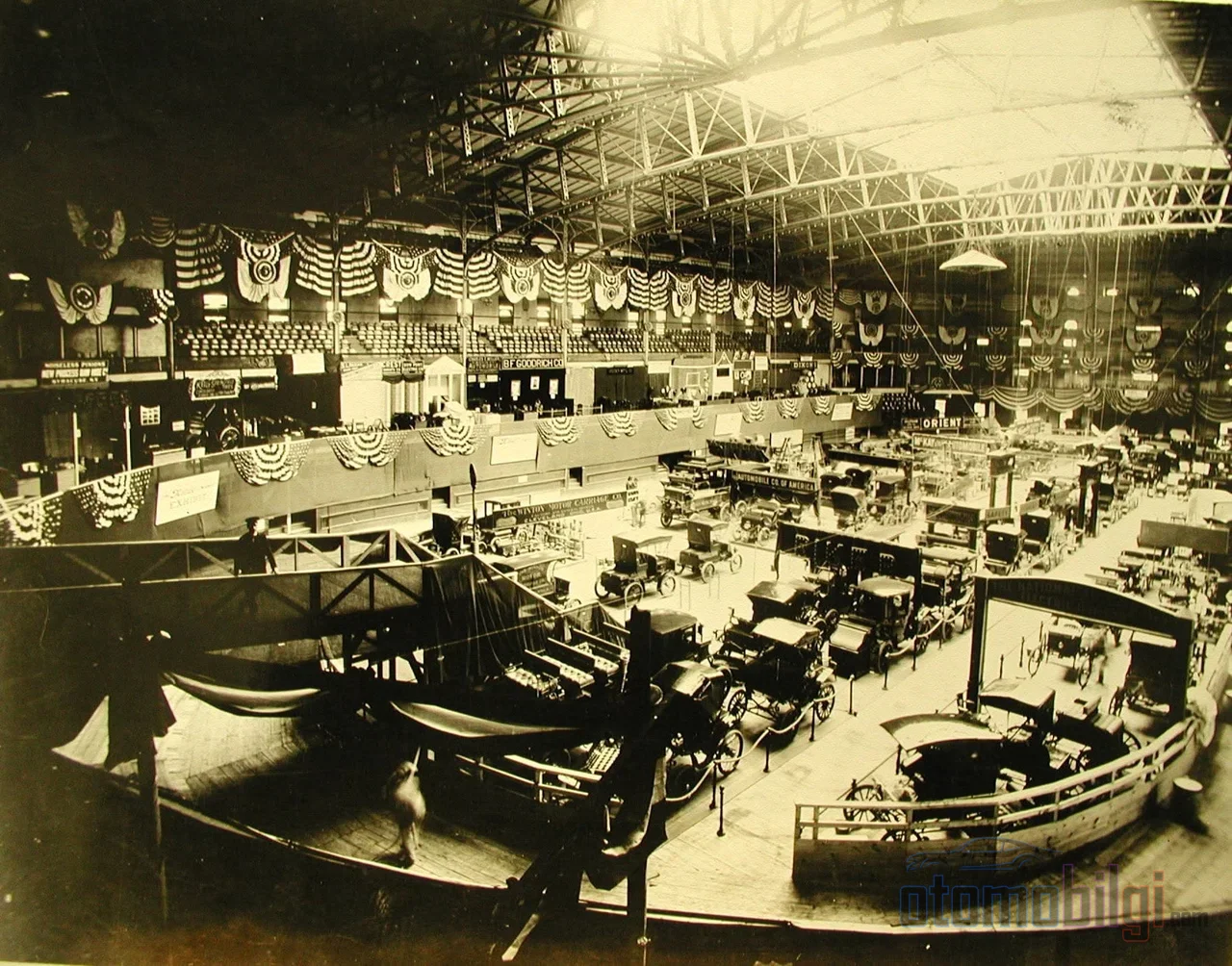
Imagine walking into the hall: 160 vehicles worth a total of 560,000 dollars waiting for you at the stands of 69 exhibitors. Prices start at 280 dollars - not exactly something you could pull out of your pocket as pocket change back then. Among the exhibitors were important names of the era such as Winton, Haynes, Packard and B.F. including important names of the era such as Goodrich.
But the show's real fireworks was the diversity of technology. Imagine it was like gasoline, electric and hydrogen vehicles standing side by side in a hall today - only from the year 1900. The design distribution on American roads of that era tells this story very well: about 40% of the vehicles were steam-powered, 38% were electric, and only 22% were gasoline-powered. Yes, the gasoline engine was in the minority!
Electric, Steam, or Gasoline?
So which one was the favorite of the show's visitors? Here's where an interesting detail comes in: accounts from the show's era highlight electric vehicles as the most popular technology among visitors; they drew attention with their silence and clean operation. In contrast, retrospectives written in later years tell that steam vehicles were clearly the majority in the hall, while gasoline machines only came in third. So whichever way you look at it, the gasoline engine was not the star of that week. 1900 was a time when three technologies were competing for the future and the winner was not yet decided; gasoline vehicles overtaking steam-powered ones would only become certain around 1905. When it takes you from today's internal combustion engine traffic back to those days, it does feel strange, doesn't it?
What Did the Public and the Press Say?
Over the course of one weekend, about 48,000 people toured the show. Don't dismiss that as an ordinary figure: this was the moment when ordinary people saw the automobile for the first time en masse, up close, side by side, comparing them. Instead of looking at newspaper pictures or catching passing glimpses on the street, they could walk around the vehicles and read the price tags. The automobile was no longer an abstract invention but a tangible consumer product (but let's not touch it, please!).
The press side, however, was a bit more contradictory. Newspapers of the era also approached the show with mockery; years later, a retrospective written in 1912 recounted, as a striking contrast, that the 1900 show had been mocked at the time but how much the shows had grown enormously since that day. What should we say to the mockers - history vindicated the enthusiasts of that day.
The Fate of the Brands: Where Are the Companies That Took Part in the Show Today?
Here's perhaps the cruelest truth of the article: not a single one of the car companies in that hall exists today. Winton, Haynes, Packard - all names left in the footnotes of automotive history, but names without which today's pages could never have been written. In the 1890s, brands like Duryea, Haynes, and Winton were preferred in the US, while in Europe Benz, Daimler, and Panhard were favored; both continents were living the automobile's first commercial days.
The market picture of the era is also striking: in 1910 in the US, the number of passenger cars per 10,000 people was below 50. In the year the show opened, the automobile was an object of luxury and curiosity. The real explosion would come later: In 1913, Henry Ford introduced the moving assembly line, and mass production changed everything by bringing the car within the reach of the middle-class American. Only nine years after the show, in 1909, Ford's Model T appeared for the first time at an automobile show - meaning that hall mocked in 1900 had, within a decade, become the stage for models that changed the world.
Is This Show the Origin of Today's Auto Show Culture?
The short answer: yes. The event, which opened at Madison Square Garden on November 3, 1900, is considered the first modern automobile show; some jokingly call it the grandmother of all auto shows. The New York Auto Show also celebrates itself as a 125-year tradition stretching from the First Annual Automobile Show of 1900 to today. Today, the New York International Auto Show is held every April and features more than 70 vehicles - there is an unbroken line from the 48,000 visitors of 1900 to today's massive organizations.
The formula established in Manhattan that week has not changed at all, have you noticed? Gather the manufacturers under one roof, place the vehicles side by side, and give the public the opportunity to come, compare, weigh, and buy. That is exactly what every auto show around the world does today. The only difference between a visitor in 1900 comparing electric and steam vehicles and a visitor today moving between the stands of two brands is technology; the idea is the same.
Why Is This Week a Turning Point in Automotive History?
Now, the full answer to the question at the beginning: America's first national automobile show opened on November 3, 1900, at Madison Square Garden in New York, organized by the Automobile Club of America; for a week, about 48,000 people toured the 160 vehicles presented by 69 participants, and for the first time, the automobile was brought together under one roof as a product the public could compare and buy. This event is the starting point of today's auto show tradition.
Also consider this: in that hall, electric vehicles were among the most popular, and the gasoline engine ranked only third. In other words, automotive history is not a race in which the winner was obvious from the start; it is a long story in which favorites changed according to the era and surprises were never in short supply. What came next? The assembly line, mass production, the world wars reshaping the industry... But that is the subject of other articles. For today, keep this in mind: the next time you go to an auto show, know that the tradition you are experiencing was born in November 1900, in that noisy hall of Madison Square Garden.
Sources
- History - New York International Auto Show
- Nov. 3, 1900: The Grandmother of All Auto Shows - Wired
- First U.S. Auto Show - AOGHS
- N.Y. hosts first sanctioned U.S. auto show, in 1900 - Automotive News
- Fun Was Made of Auto Show in 1900 - New York Times
- Early Cars: Fact Sheet - Smithsonian
- The History of the Electric Car - U.S. Department of Energy
- The United States of Automobiles - National Archives Foundation
- Automobile parade, 1899 - Library of Congress