Why Is Louis Renault's De Dion Considered the First Hot Rod?
Share This Page
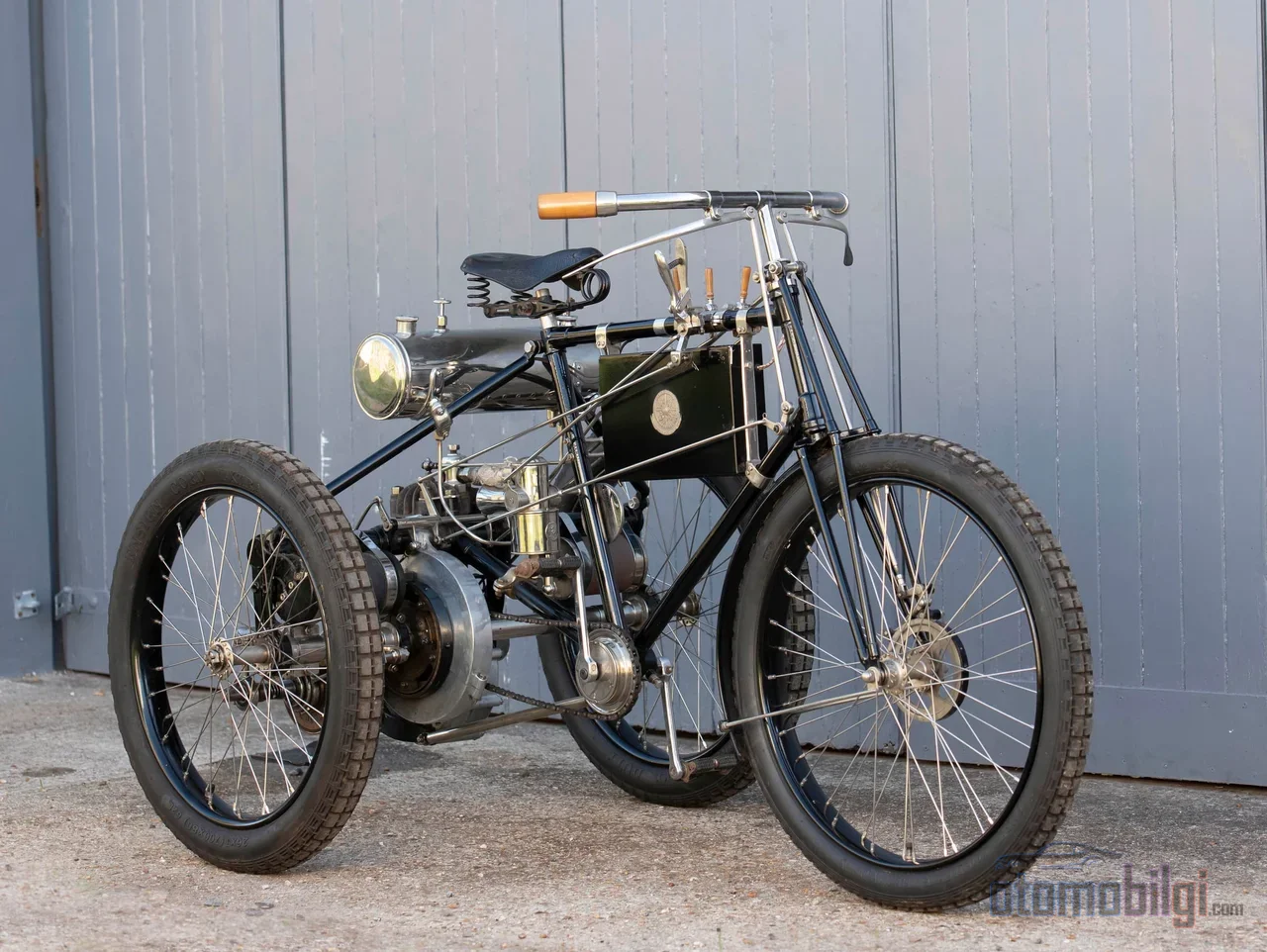
Louis Renault's De Dion-Bouton is considered the car born when a young engineering student replaced a ready-made vehicle with his own technical solutions in 1898, later also described as the first hot rod in history. Fitting a propeller shaft instead of a chain and a patented direct-drive gearbox is precisely why it counts as one of the earliest examples of today's hot rod logic - reworking the car for better power transfer. Climbing Paris's steepest street one night brought both the first orders and the founding of the Renault brand.
Highlights
- The transformation was made in 1898 by 21-year-old Louis Renault
- Base: De Dion-Bouton 0.75 hp (560 W) single-cylinder air-cooled engine
- Three forward gears plus reverse; third gear was direct drive
- After the Rue Lepic climb on the night of December 24, 1898, 12 orders came in overnight
- Following the patent of the direct-drive gearbox, Société Renault Frères was founded in 1899
How Did a De Dion-Bouton Become the First Hot Rod?
Let's clarify the rules: When you hear "hot rod," you probably think of people racing modified vehicles in the late 1930s in Southern California, on the dry lake beds northeast of Los Angeles. The Ford Model T's affordability drove its owners to tinker with their cars and race one another. The roots of that culture come not from 1898, but from roughly 40 years later. So why does a French voiturette top this list?
The answer lies in the logic. The essence of hot rod culture is taking a stock car straight from the factory and building a better version with your own hands: more efficient power transfer with the same engine, smarter gearbox solutions, faster results. Louis Renault did exactly that in 1898. He took a De Dion-Bouton quadricycle, turned its tricycle layout into a four-wheeled arrangement, had a fixed drive shaft and ring-and-pinion gear added, and fitted a gearbox with three forward gears and reverse on top. That is why automotive historians call this car perhaps the first hot rod in history. Note the word "perhaps" in the sentence - this 1898 transformation was not the direct ancestor of the culture; it is one of the earliest documented examples of the same passion for personalization and modification.
How Did Louis Renault Build His First Car?
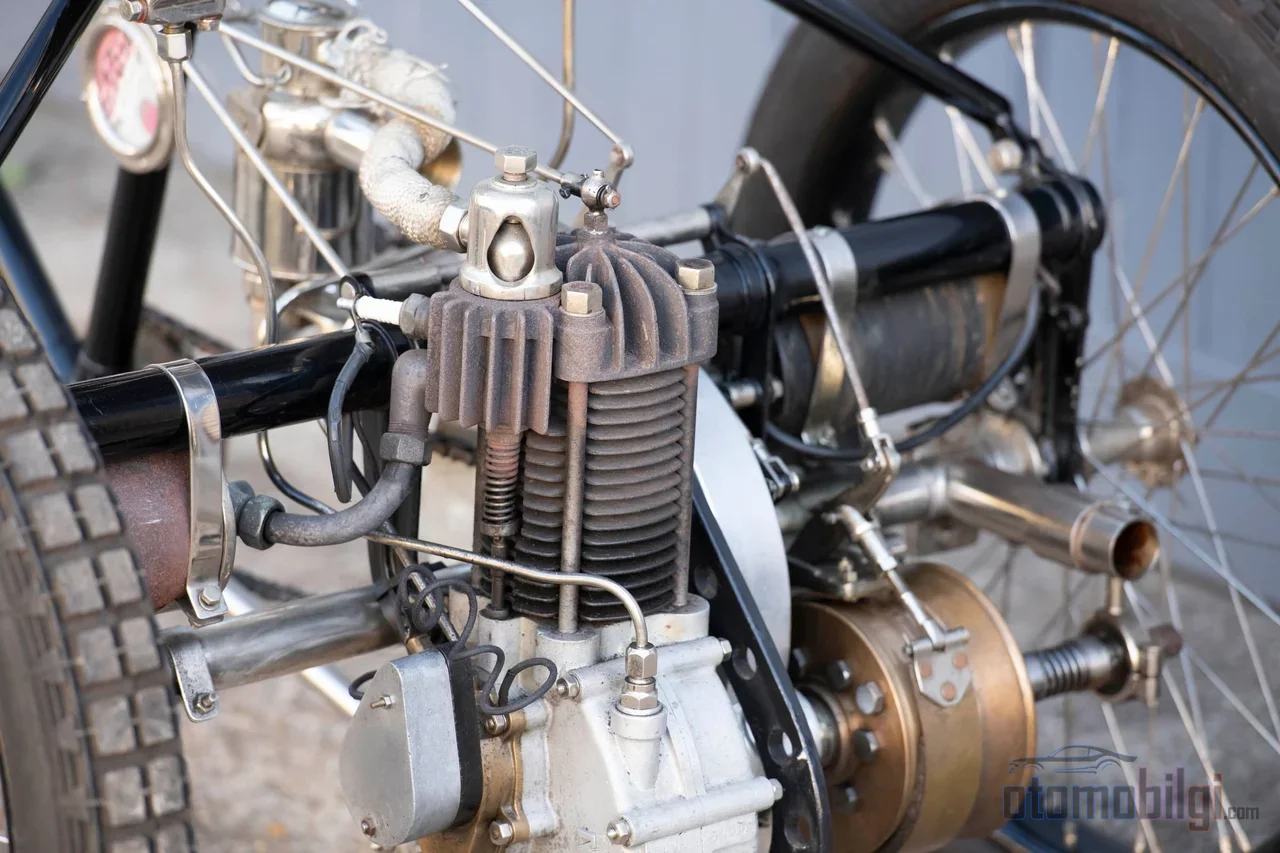
Let's speak like a textbook: In a workshop in his family's garden, 21-year-old Louis Renault converted a used De Dion-Bouton, employing two workers. He mounted a Tilbury-style body on it and, at its heart, installed a single-cylinder air-cooled engine made by De Dion-Bouton producing 0.75 hp (560 W). That is laughably little power by today's standards, yes - but for the lightweight vehicles of the era, it was a reasonable picture. I can almost hear the question you're asking: What can you do with 560 watts? The answer is below, on Paris's most crooked streets.
Renault's real magic was not the engine, but the way it carried the engine's power to the wheels. While the vehicles of the day lost energy transmitting power by chain. Louis used a driveshaft instead, reducing energy loss and achieving better performance with the same engine. Let me put it in today's terms: it's like using the same phone for longer on less battery. Same power, less loss, more impressive result.
December 24, 1898: The Night of Rue Lepic
Now let's move on to the most cinematic part of the story. On the night of December 24, 1898, known as Christmas Eve, Louis set out with his friends in the small vehicle he had built. His friends looked at this prototype mockingly; it was, after all, a small, odd-looking thing. And Louis answered not with words, but with gas: to prove the vehicle's superiority, he climbed Rue Lepic in Montmartre, one of Paris's steepest streets. Conquering this hill, considered extremely difficult for the motor vehicles of the era, was a triumph of engineering.
Witnesses were thrilled by this achievement, and the first orders came in that very night. Legend has it that a total of 12 orders were collected over the course of the night. This account has reached legendary proportions among the public; some tellings place this night on New Year's Eve, others say December 24. The details may be folklore, but the outcome is indisputable: that night, Renault's future was decided.
From Legend to Reality: The Birth of a Race
The Rue Lepic story resonated so deeply that La Course au Ralenti de Montmartre, the Montmartre Slow Race, was launched in 1922 inspired by this very story. Held across 74 editions until 1998, the event was revived in 2016 with vehicles from 1896-1939. So a single young engineer's midnight climb became the seed of a tradition spanning nearly a century. Some moments in history truly deserve to become legends.
The Patent and the Birth of a Brand
Louis Renault was not just a tinkering enthusiast; he crowned his work with a patent. The patent he filed for the direct-drive transmission was registered at the beginning of the following year under the title "Transmission and gear change mechanism for automotive vehicles." Two months later, he founded Société Renault Frères together with his two brothers, Marcel and Fernand. In other words, the vehicle that climbed Rue Lepic that night became the seed of the brand we know today. By 1908, Louis had taken full control of the company.
The company's first product was the Renault Type A, the Voiturette. Production began in December 1898 and continued between 1898 and 1903. This front-engined, single-cylinder vehicle featured a driveshaft and Louis Renault's patented three-speed direct-drive transmission. Although 71 sales in the first year may seem like a small number, the business grew: by the end of 1907, annual sales had exceeded 3,000. This rapid growth, combined with Louis's passion for independence, took the business even further.
From External Dependence to Its Own Engine
Louis never liked being dependent on external suppliers. That's why, by 1903, he completely abandoned De Dion-Bouton and Aster engines and began producing his own engines. This isn't an evolution that runs contrary to hot rod logic; it's actually a continuation of it: first add your own solutions to a ready-made engine, then go on to build that very engine yourself. You could compare it to a young modification enthusiast growing up and founding his own factory; different scale, same spirit.
Who Was De Dion-Bouton and Why Were They So Important?
When talking about the vehicle Renault tinkered with, it's impossible not to mention the giant behind it. De Dion-Bouton was founded in 1883 by Jules-Albert de Dion, Georges Bouton and Charles Trépardoux, and remained in operation until 1953. Bouton's 137 cc single-cylinder engine from 1895 is regarded as the first high-revving and lightweight internal combustion engine, and was licensed to more than 150 manufacturers. In short, it was like the engine supplier of the early automobile era.
The company's production rate was impressive too: in 1900, 400 automobiles and 3,200 engines; and in 1904, when 1,300 people were working at the Puteaux factory, more than 2,000 automobiles were produced. These engines and technical solutions directly influenced not only Renault but also Peugeot, and even Harley-Davidson. The vehicle young Louis got his hands on was no ordinary one; it was one of the technological pinnacles of its time. Choosing to modify it meant starting from an already top-level foundation.
Technical Summary of the Conversion
| Feature | Value / Description |
|---|---|
| Year | 1898 |
| Builder | Louis Renault, aged 21 |
| Base vehicle | De Dion-Bouton tricycle / quadricycle |
| Engine | ¾ hp (560 W) single-cylinder, air-cooled |
| Transmission | 3 forward + reverse, direct drive in third gear |
| Power transmission | Cardan shaft, instead of a chain |
| Body | Tilbury type |
| Name | Voiturette (Renault Type A) |
The transmission row in the table is the most critical part of the vehicle's resemblance to a hot rod. Christie's auction catalog uses the phrase "one of the defining designs of the early automobile era" for this vehicle; taking an engine and placing it into a small voiturette with shaft drive and direct drive in top gear was work worthy of entering the design documentation of its age. Sources describe the conversion sometimes with emphasis on a fixed shaft and ring-and-pinion, sometimes on the three-speed transmission; because Renault developed not a single part but a package of complementary solutions, and narrators draw attention to different parts.
So What Does This Story Say to Hot Rod Enthusiasts?
The birth of hot rod culture dates back to Southern California of the 1920s and 1930s. So presenting the 1898 Renault as a direct precursor of the culture would be absurd; they aren't even in the same geography - 40 years and an ocean separate them. But the impulse at the heart of the culture - taking a ready-made vehicle and, with one's own ingenuity, building a better version of it - existed in Paris in 1898 too. Louis Renault is one of the earliest recorded representatives of this impulse.
Moreover, traces of the era's personalization culture can be seen here. In those years, automobiles were not already being produced for everyone; every engineer or enthusiast was assembling the components at hand according to their own vision. That's exactly what Louis did: the engine came from De Dion-Bouton, the body idea from Tilbury, but the solution was entirely his own. This is precisely what the hot rod world still respects today: not the originality of the parts, but of the idea. Next time you plan a modification project, think of a 21-year-old young man climbing the Montmartre hill with 560 watts - to make a difference, you don't need massive power, you need a smart solution.
Sources
- De Dion-Bouton - Wikipedia
- Louis Renault's first accomplishment - Arquus Defense
- Louis Renault files the patent for the direct drive gearbox - Arquus Defense
- The Legend of the Little Renault that Could - Messy Nessy Chic
- 1907 RENAULT 20HP OPEN DRIVE LIMOUSINE - Christie's
- Louis Renault (industrialist) - Wikipedia
- 1898 Renault Type A - Supercars.net
- Renault: 1st model ever - First Versions
- Hot rod - Wikipedia
- HOT ROD 101 - AHRF
- NIHF Inductee Louis Renault - Invent.org
- 1898 De Dion-Bouton Quadricycle - Motoraldia