How Has Autocar Survived Since 1897?
Imagine you're living in 1897 and founding an automobile company in the United States. All around you there are hundreds of bold ventures; everyone is racing with gasoline, steam, and electricity. Looking back over the roughly 130 years that have passed, almost all of that crowd has gone down in history. So how many of them still produce vehicles today? And this is exactly where a name comes into the picture: Autocar. It started as a small workshop in Pittsburgh, evolved from automobiles to trucks, and still builds vehicles at its factory today - the oldest surviving motor vehicle brand in the Western Hemisphere. How did it manage that? The answer seems to rest on a single move, but in fact it was built on a series of tough decisions.
A Three-Wheeled Beginning in Pittsburgh: 1897
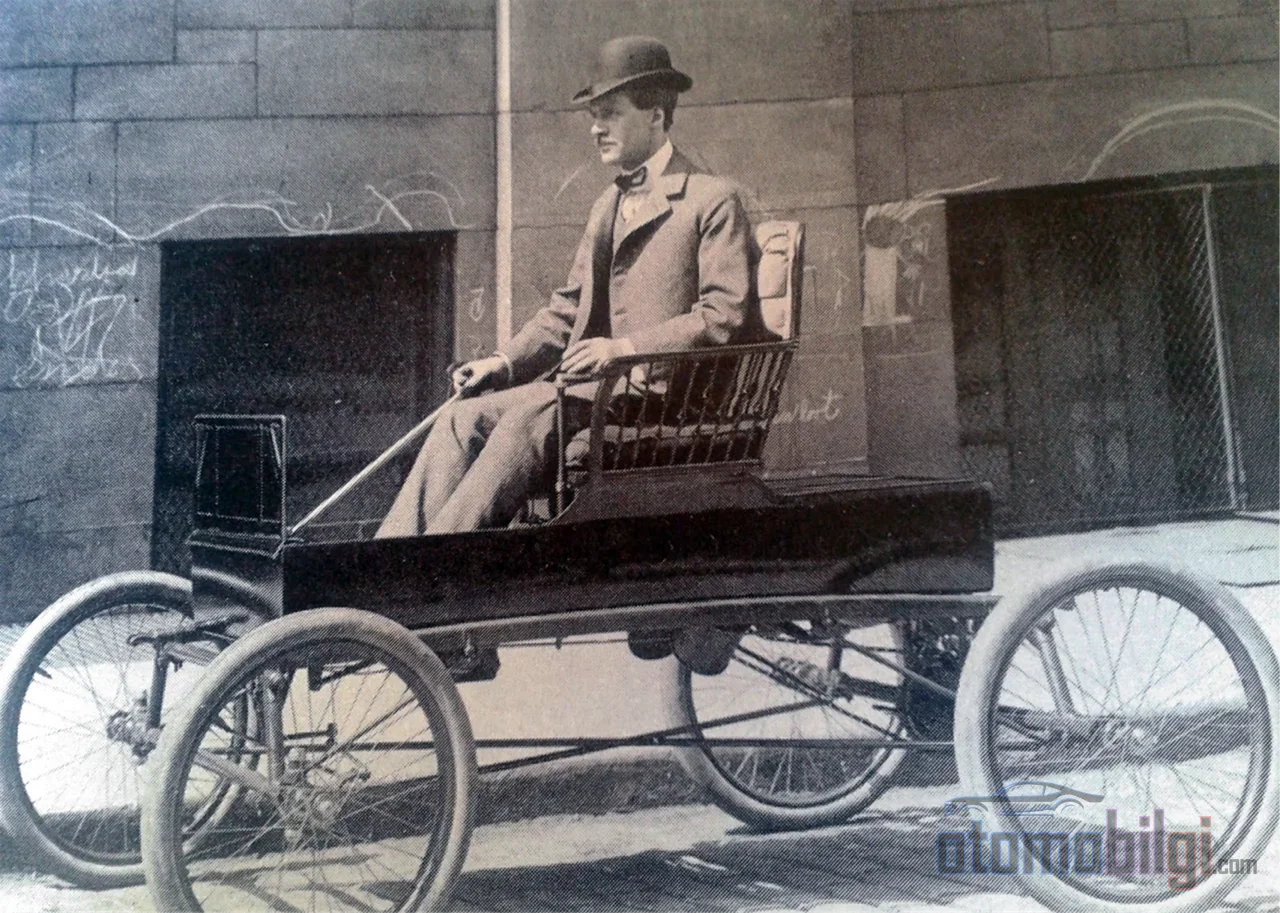
The story begins in October 1897, with the founding of the Pittsburgh Motor Vehicle Company in Pittsburgh, Pennsylvania. There is no genius from the Middle East here, but an engineer who brought his brothers and his father into the business: Louis Semple Clarke. With a background in mechanical engineering, Clarke unveiled in 1897 the three-wheeled Autocar No. 1, powered by a single-cylinder gasoline engine. This vehicle is preserved today in the collection of the Smithsonian's National Museum of American History; its four-wheeled successor from 1898, the Pittsburgher, is on display at The Henry Ford.
In 1899, the company moved to Ardmore, Pennsylvania, changed its name to The Autocar Company, and that same year achieved something far more significant: the Delivery Wagon, the first motor truck to be commercially offered for sale in the United States. Capable of carrying a 700-pound load - roughly 317 kilograms - this vehicle was optionally available with a 5 or 8 horsepower engine. In other words, work vehicles were in the brand's veins from its very first years; this detail will come in very handy shortly.
Highlights
- Founded in Pittsburgh in 1897, producing trucks continuously since 1899
- Became the first brand to build only trucks, producing its last automobile in 1911
- II. Delivered around 50,000 military vehicles during World War II
- Introduced its first electric truck in 1923
- Today headquartered in Birmingham, Alabama; manufacturing heavy-duty vocational trucks
How Did Clarke's Engineering Carry the Brand Forward?
Autocar's real trump card in its early years was its founder's groundbreaking solutions for the time. Clarke developed the porcelain-insulated spark plug (the rights were later sold to AC Champion), implemented the first circulating oiling system, and built the first car with left-hand drive. Just think: today's world standard of left-hand drive layout is something we owe to this brand. The Autocar thread, which became the standard screw thread specification of American industry, also came out of the company.
There were firsts on the production side as well: In 1900, the first series production of automobiles was carried out, about 27 units of its single-cylinder, chain-driven runabout model; and in 1901, the first shaft-driven automobile in North America came to market. The switch from chain to shaft was, for its time, as big a technological leap as going from a bicycle chain to a driveshaft: a safer, lower-maintenance transmission.
The 1904 model is a tangible example of this progress: a vehicle with four-passenger capacity, an 11-horsepower (8.2 kW) horizontally mounted boxer-type engine at the front, three gears, and a weight of only 1,675 pounds (760 kg). Its price was $1,700; that's roughly $60,900 in today's money. Early models used a lever for steering, meaning that from today's perspective the controls resembled a boat tiller more than anything else.
The Shift from Automobile to Truck: The Decision That Saved the Brand
At the beginning of the 1900s, the number of automobile manufacturers in the US grew at an incredible pace; at one point, thousands of brands were on the scene, and nearly all of them vanished. The ones that survived were names that would become giants like Cadillac, Ford, and Buick. For a mid-sized manufacturer in this crowd, staying in the automobile war was tantamount to suicide. Autocar's answer was clever: to stay where the crowd had abandoned the field.
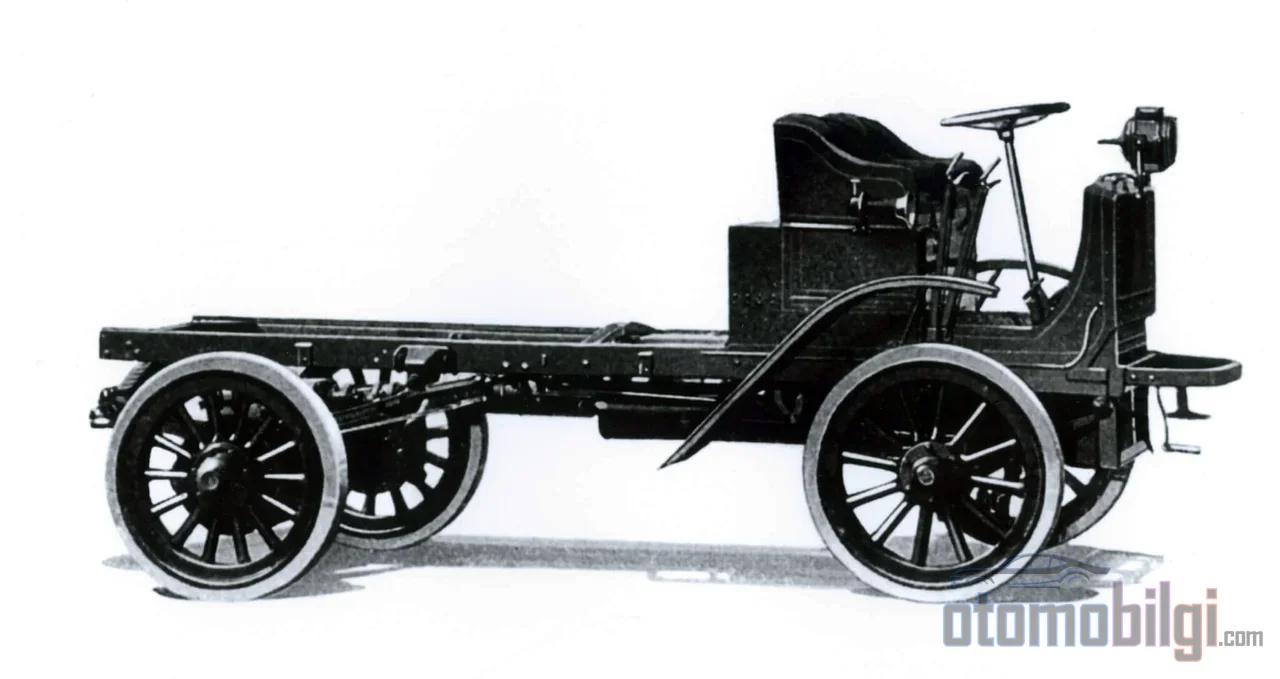
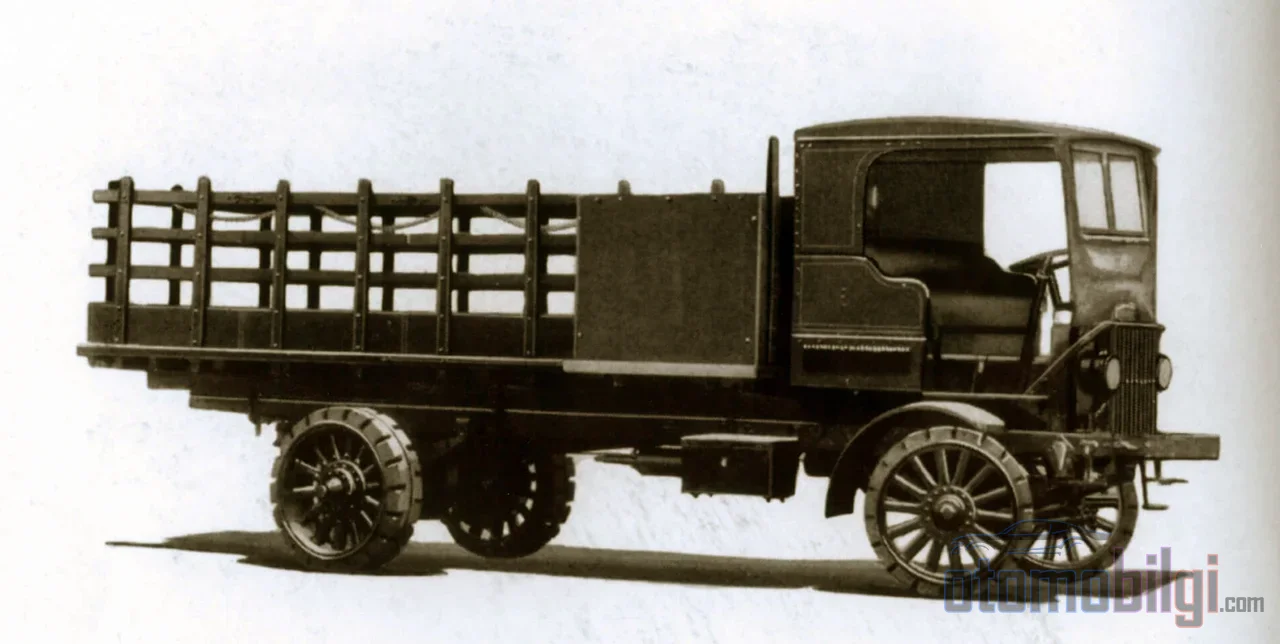
The company decided to focus on commercial vehicles in 1907 and produced its last automobile in 1911. This made it the first manufacturer to produce only commercial trucks. Its first truck model was the Type XVII; it came with a 97-inch wheelbase, 1.5-ton capacity, and a two-cylinder gasoline engine mounted under the seat. Instead of being an ordinary name in the automobile crowd, specializing in the niche you call trucks: in the parlance of today's business language, a textbook niche market strategy.
Depression and Wars: Surviving in the Language of Sales Figures
The Bottom of the Great Depression
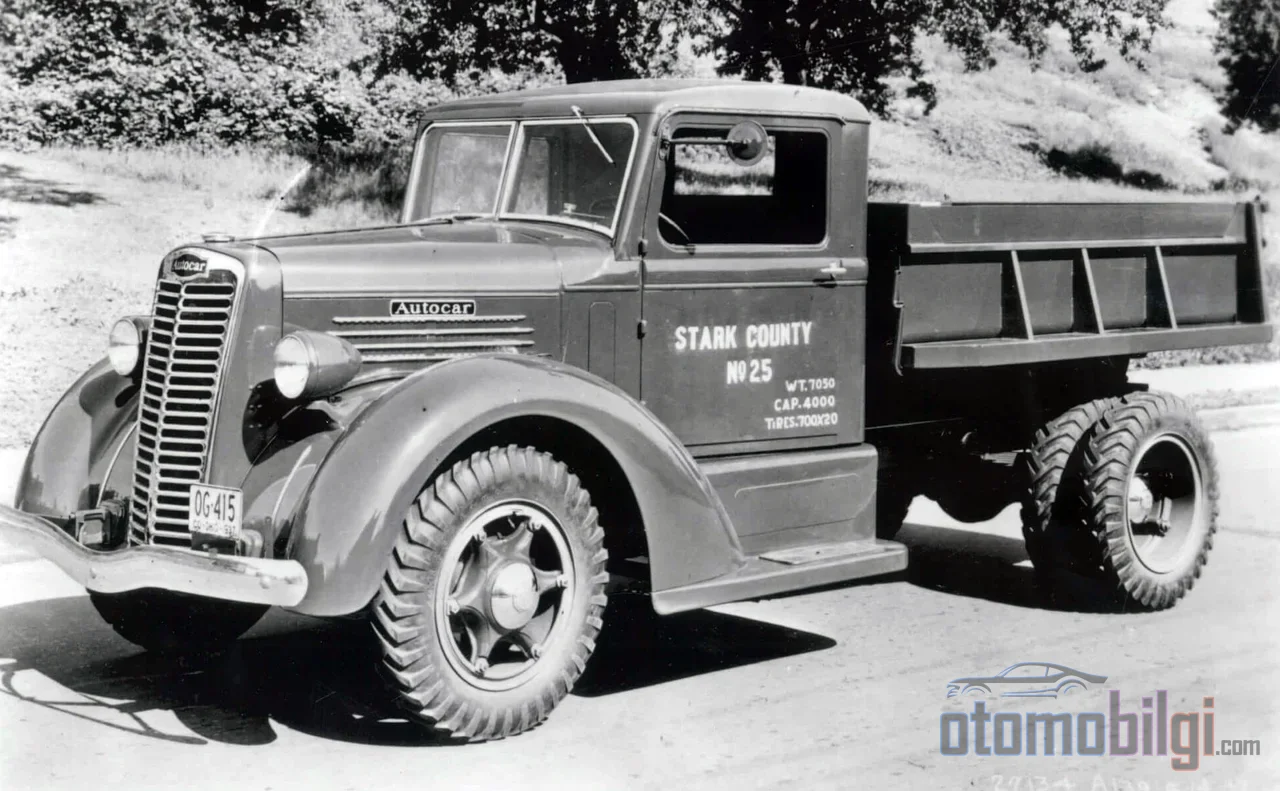
A company that sold 3,300 units in 1929 fell below 1,000 units in 1932 when the Great Depression struck. The recovery was slow but steady: 1,001 units in 1935, 1,451 in 1936, 1,617 in 1938, and 2,014 in 1939. Looking at the numbers, there is a striking detail: 1935 sales were nearly identical to the year before. This shows that even at its lowest point, the company did not halt production entirely, surviving with a very small volume.
The Two World Wars
I. In World War I, the armored Armoured Autocar vehicle used by the Canadian army was built on the Autocar chassis; in other words, the brand's chassis saw some of the war's most grueling conditions. The real big test, however, was World War II: was World War II: Autocar produced around 50,000 military vehicles, including armored half-tracks. In the company's entire pre-war history, it had produced around 70,000 vehicles; producing vehicles close to three-quarters of that figure within just a few years during the war shows how much the capacity was pushed. (Its official page lists a figure of over 37,000; (different calculations give different totals.) Even General Dwight Eisenhower sent a thank-you letter stating that in the postwar period motor transport had done its job and that American axles and wheels had never left them alone.
Civil production resumed in 1944, and a network of 100 dealerships was established in a short time. The war, far from destroying the company, proved its production capability and left it heading into the next era with a strong reference.
The Chain of Ownership Changes: White, Volvo, and Independence Again
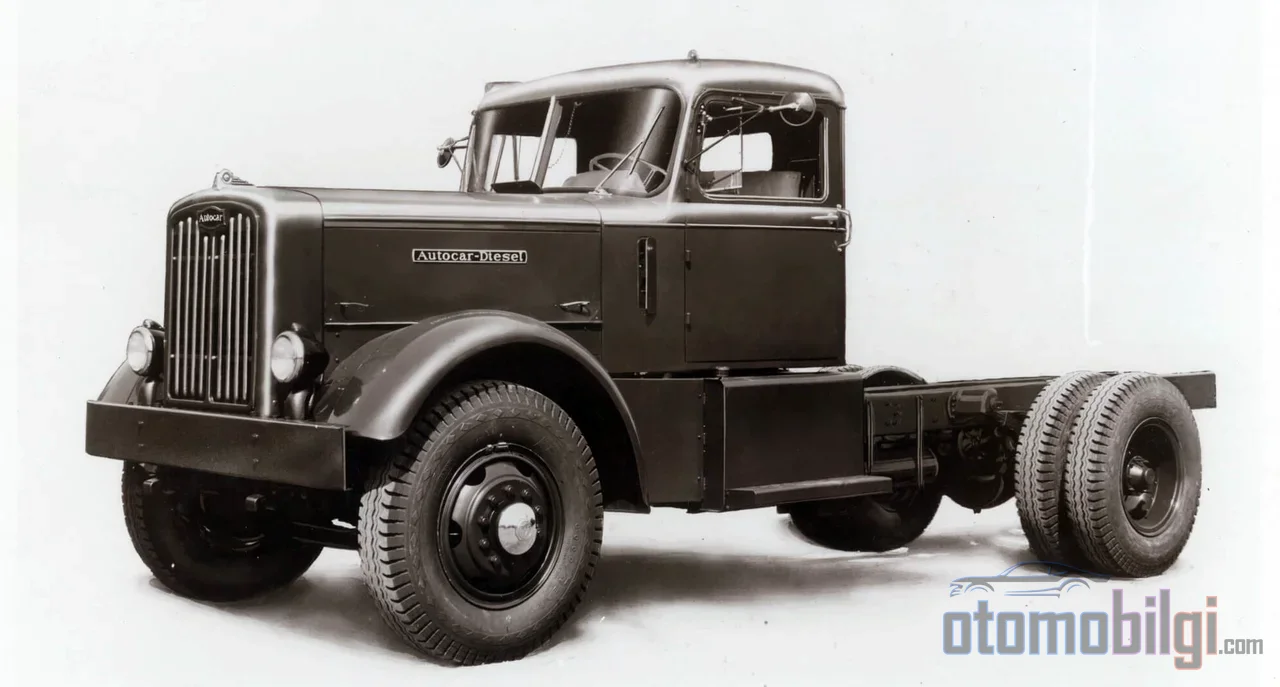
The postwar rise did not bring lasting independence. In 1953, White Motor Corporation bought the company, and Autocar took White's place in the portfolio as its premium truck brand. In 1954, the historic plant in Ardmore was replaced by a new facility in Exton, Pennsylvania; the Ardmore site itself suffered major damage in a fire during demolition work in 1956.
Production in Exton ended in 1980, and manufacturing was moved to Ogden, Utah. A year later, in 1981, AB Volvo took over White's US assets as the company stood on the brink of bankruptcy; Autocar continued on as the heavy-duty truck division of the Volvo-White partnership. In 1987, with GMC's heavy truck business joining in, the structure became Volvo WhiteGMC, and in 1996 Autocar changed identity once again: this time not as an independent brand, but as a model name.
The brand's true return came in 2001. After acquiring Renault Trucks and Mack, Volvo sold the Autocar brand, the Xpeditor design, and the related intellectual property to Illinois-based GVW Group due to competition concerns. Thus Autocar was reborn as an independent American company after many years. Think about it: it changed hands several times since its founding, was even reduced to a model name, but its name never died.
Autocar Today: From Birmingham Into the Future
Today's Autocar, headquartered in Birmingham, Alabama, is a specialized manufacturer of Class 7 and Class 8 severe-duty vocational trucks. In 2017, a second production facility of 1.2 million square feet opened in Birmingham; another production facility is located in Hagerstown, Indiana. The company is led by Andrew Taitz, founder and owner of GVW Group.
The product family also reflects today's vocational needs: for the mid-range, the ACMD and Xpert; terminal tractors the ACTT and the fully electric E-ACTT introduced in May 2021; and the cabover-bodied ACX and the DC-64 family. The DC-64 series comes in refuse (DC-64R), dump (DC-64D), concrete mixer (DC-64M), concrete pump (DC-64P), and tractor (DC-64T) versions; the series, fully renewed in 2019, stands out with durability-focused solutions such as 160,000 PSI steel frame rails.
The brand's historical side is also impressive: Autocar introduced its first electric truck as early as 1923. So the brand's fully electric terminal tractor of 2021 is a continuation of an experiment from a century earlier. Today the brand positions itself as North America's oldest purpose-built truck brand, and the historical truth behind this claim lies in the story of the 1899 Delivery Wagon above.
So How Did Autocar Survive? The Short Answer
The clear answer to the question is this: Autocar began producing automobiles in 1897, was the first brand to give up cars entirely and produce only trucks in 1911, shrank during the Great Depression, sustained itself through military production during the two world wars, continued its existence under the White and Volvo umbrella in the following decades, and regained its independence in 2001 - today it continues to produce heavy-duty vocational trucks in Birmingham.
Three things are the common thread of this journey spanning more than 127 years: niche market selection, custom engineering for the customer, and a purpose-driven design identity. In a history where hundreds of early automobile brands disappeared, Autocar survived by knowing how to step off the crowded road everyone else was racing down. This story, which extends from a passion for automobiles to trucks, also tells us on its own why so few of the first manufacturers are still standing: the survivors were not the biggest, but those who specialized in the right field.
Meanwhile, for those curious: the brand has no connection to the automobile magazine of the same name published in England; except for the possibility that the magazine's name was inspired by the brand, the two organizations are completely separate. And yes, Autocar does not produce automobiles today; its stage is garbage trucks, mixers, dump trucks, and terminal tractors. But since 1897 its production line has never stopped, and in automobile history that is a privilege so rare it can only be lived alone.
Sources
- Autocar Company
- The Autocar Company Has Been Building Trucks Since 1899. How Did It Survive?
- October 21, 1897 - Autocar, the oldest surviving American vehicle company, is founded
- About Us - History | Autocar Trucks
- Autocar's history of over 126 years in the vocational trucking industry
- Autocar, 1901 - Smithsonian National Museum of American History