From Duryea to Autocar: America's First Automobile Factories
Has a question ever crossed your mind? Everyone knows Henry Ford, but was there really no automobile factory in America before Ford? I keep asking insistently: Who was the first automobile company in the USA, and how were those first vehicles built? The answer lies hidden in a small workshop in Massachusetts, belonging to a pair of bicycle-racing brothers. And what came after was far crazier than you think.
Who Were the Duryea Brothers? From Bicycle Repairman to Automobile Pioneer
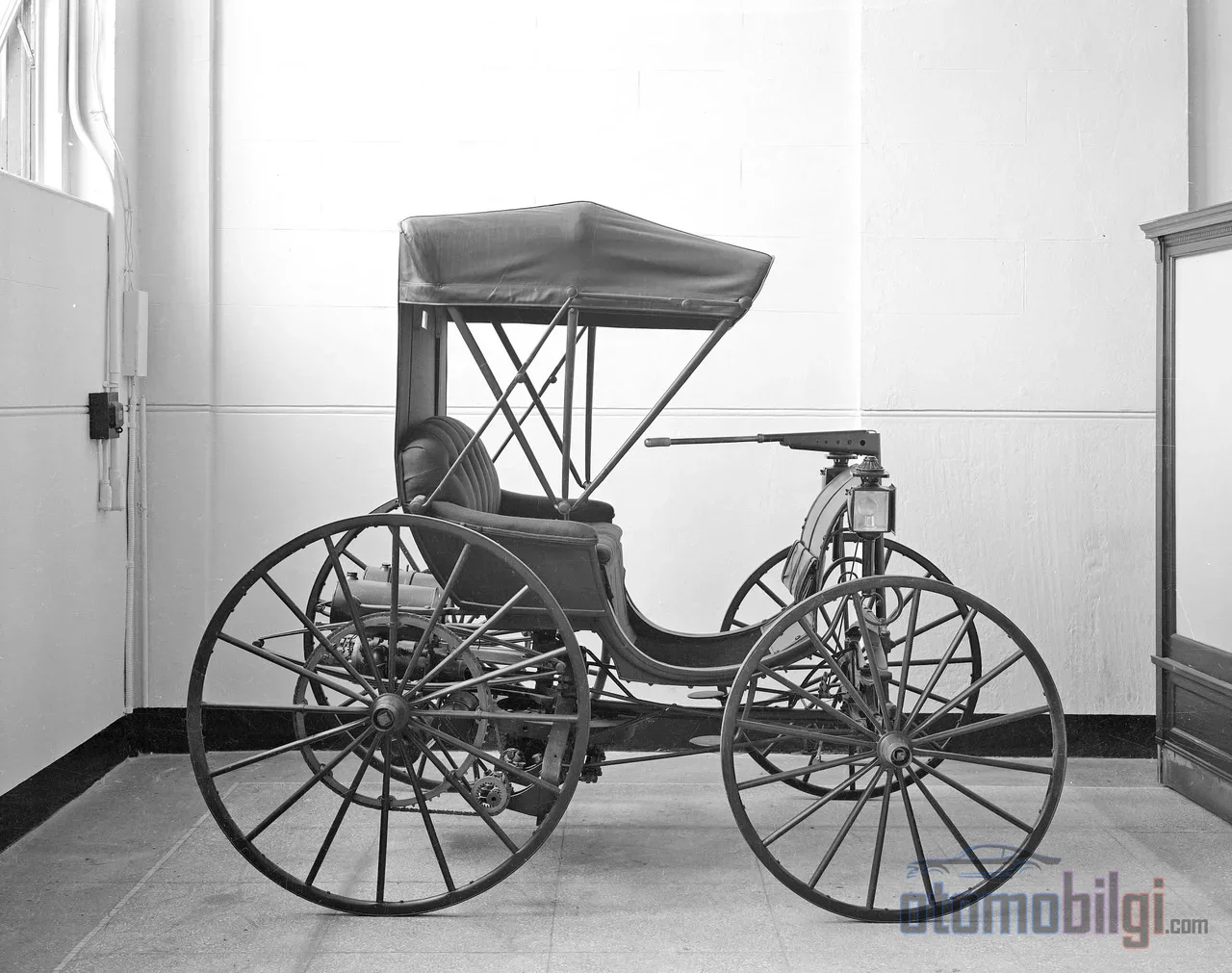
Charles and J. Frank Duryea were two brothers born in Canton, Illinois. People around them called them the Bicycle Brothers, because that was their trade: repairing and building bicycles. But Charles's mind was set on much bigger things. Having settled in Springfield, Massachusetts around 1892, the brothers began their first attempt with a used horse carriage bought for 70 dollars. Yes, you read that right: America's first gasoline automobile was born with an engine attached to the body of a horse carriage.
In his workshop at 47 Taylor Street, Frank fitted that horse carriage with a single-cylinder, four-horsepower gasoline engine. On top of it, he added a friction transmission, a low-voltage ignition system, and a spray carburetor. Think about it with today's standards: the automobile age of a nation setting off with four horsepower, the power of a lawnmower. On September 20, 1893, this strange but working vehicle went out for a road test as the first gasoline automobile built in the USA; some sources also cite the next day, September 21, as the date of its first demonstration.
One more interesting detail: this vehicle may not have been the first successful gasoline-powered vehicle built in the USA. It is counted as the second successful vehicle, after the Buckeye gasoline buggy made by John William Lambert in 1891. But here's the difference: The Duryeas did not stop at merely building the vehicle; they turned it into a company. And it was that step that went down in history.
Highlights
- Duryea conducted its first successful road test in Springfield in 1893
- Frank Duryea won the first motor race: 87 km, averaging 7.3-7.5 mph
- Autocar was founded on October 21, 1897 and is still active
- More than 19,000 units were produced for the Curved Dash Oldsmobile
- There were 12 years until Ford's moving assembly line
America's First Automobile Race: 10 Hours in Snow and Mud
Now let me tell you my favorite scene from history. November 28, 1895, Chicago. The Times-Herald newspaper is organizing America's first motor race. The number of vehicles that applied: 70. But only those that could cross the starting line: only six. The weather was snowy, the roads muddy, and the cars were only just learning to handle the road.
Frank Duryea was at the wheel of his brothers' second vehicle. He covered the 54-mile (87 km) distance from Chicago to Evanston at an average speed of 7.3-7.5 mph, completing it in about 10 hours, and took the 2,000-dollar prize. 7 mph! In other words, that winning car was as fast as a brisk runner. This race also has a linguistic legacy: following the fashion of the time, the prize was named "motocycle", but the word didn't catch on; "automobile" took hold, and The New York Times used the word editorially for the first time in January 1899.
A year later, in 1896, the Duryea became the first American car to enter and win the London-Brighton Veteran Car Run. In the 54-mile race contested by 33 vehicles, it finished a full one hour ahead of its closest rival. The American car had proven itself in Europe as well.
The First Automobile Company: 13 Cars, One Giant Step
Two dates come up for the founding year of the company: some sources take September 1895, others March 1896. The reason for the difference is simple: 1895 is regarded as the company's incorporation process, while 1896 marks the start of commercial production and institutionalization. What is certain is this: In March 1896, the Duryea Motor Wagon Company went down in history as the first incorporated American business aiming to produce automobiles for sale to the public.
That year, 13 hand-built cars were sold, and the first ten production vehicles went down in the records as the first automobiles sold in the USA. Duryea was also the first automobile company to advertise through a press release - a pioneer of marketing, in other words. The foundations were also laid here for Springfield's coveted title of "City of Firsts"; after Duryea, other manufacturers such as Knox continued producing vehicles in that city.
But alongside the firsts came the dark side of firsts: In New York, a driver named Henry Wells hit a cyclist with his new Duryea car. The cyclist's leg was broken, and Wells spent a night in jail. America's first recorded traffic accident had already come knocking in the very first years of the automobile age.
The company's end, however, came quickly. In 1898, it closed down, having produced a total of 13 vehicles. The brothers also went their separate ways: because of a financing dispute that would have required the company to move to Detroit. Frank supported the production of Stevens-Duryea until 1927; Charles tried his own paths - three-wheeled vehicles in Pennsylvania, 20 mph models sold to doctor customers, the Phaeton sold for $1,600, and finally the $250, 65 mpg automobile-motorcycle hybrid, the Duryea GEM. Only six of those are believed to have been produced. The first car, meanwhile, was found in 1920 by a former Duryea employee and donated to the Smithsonian - meaning the first scene of American automotive history is still on display today.
Autocar: 129 Years Old and Still in Production
Unlike Duryea, one brand knew how to survive this swamp: Autocar. Mechanical engineer Louis Semple Clarke incorporated the company in Pittsburgh on October 21, 1897, and that same year built his three-wheeled vehicle called the Autocar No. 1 with a single-cylinder gasoline engine. That vehicle is still on display in a museum today, so the brand's first baby has not yet been neglected.
The reason we cover Autocar on this page is not just its age: Starting truck production in 1899, the brand also built America's first truck. The brand's official accounts turned 129 in October 2026. celebrated its founding year, and the company is still active today - purpose-driven, meaning it focuses on purpose-built vocational trucks. This makes it the oldest motor vehicle brand still operating in the Western Hemisphere. Duryea finished with 13 vehicles, while Autocar has been going for 129 years. Two companies founded in the same era, two different fates. If it were you, which one would you rather invest your money in?
Curved Dash Oldsmobile: Was There an Assembly Line Before Ford?
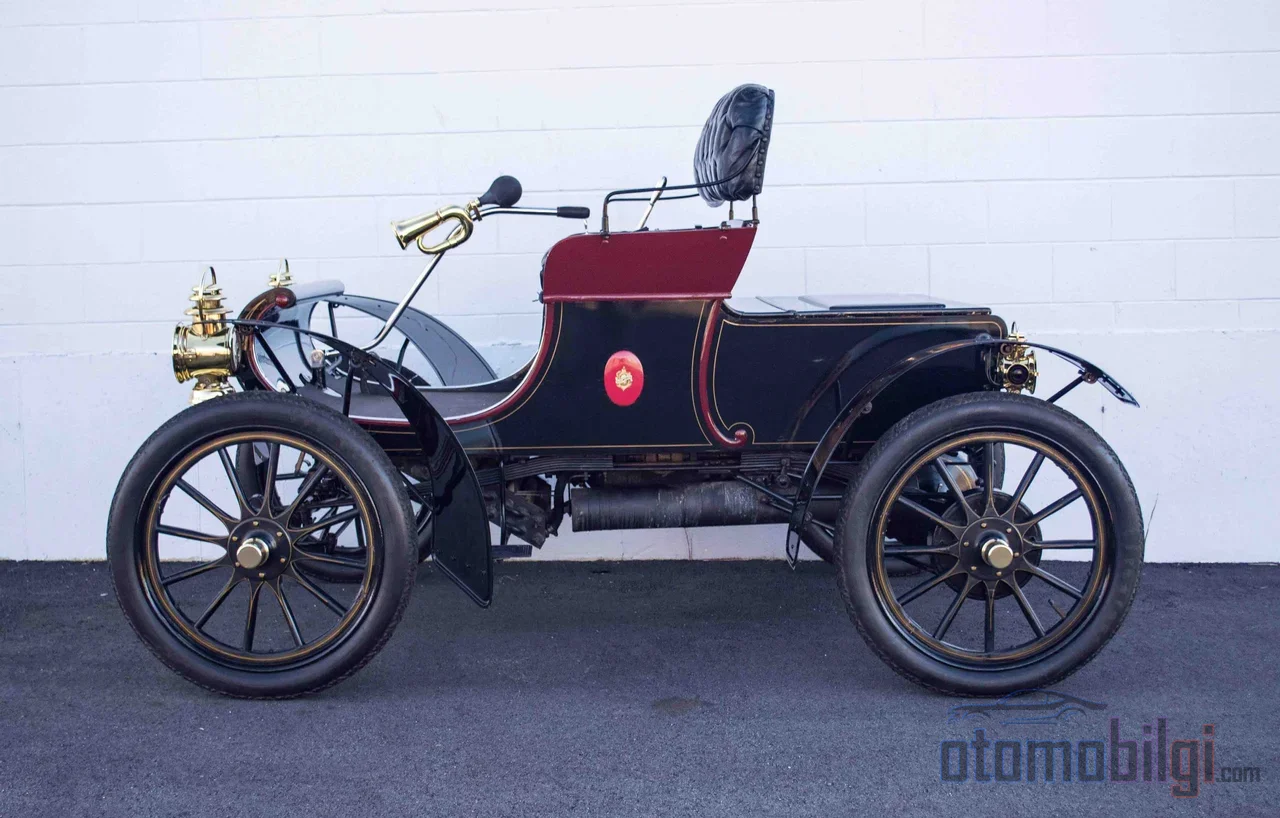
Now let's get to the heart of this page. Everyone says "Ford invented the assembly line," right? Well, this is where Ransom E. Olds steps in. The Curved Dash Oldsmobile, designed by Olds, was introduced in 1901 and became the first car produced on an early assembly line with interchangeable parts. It was also the first vehicle to carry the "Oldsmobile" name. The reason for its name is very simple and charming: the distinctive curved wooden panel on its front, that is, the curved dashboard section.
Let me explain the interchangeable parts concept simply: normally each part is crafted by hand one by one, meaning a door fits only that one specific vehicle. With interchangeable parts, however, every door fits every vehicle - like LEGO. As long as the parts are standardized, you can assemble the vehicle on a line, in sequence, quickly. That is exactly what Olds did, opening the door to mass production logic years before Henry Ford's moving line. As Britannica also highlights, it was Olds who made the first big move into the mass market with the 1901 Curved Dash.
| Specification | Curved Dash Oldsmobile |
|---|---|
| Introduction | 1901 |
| Production years | Until 1907 |
| First-year price | 650 dollars |
| Units produced | More than 19,000 |
| Historical significance | The first car of the early interchangeable-parts assembly line |
So what did Ford change? In 1913, Ford set up the first moving assembly line for an entire automobile; the vehicle moved along the belt while workers stayed in place. The result was tremendous: Model T production time dropped from 12 hours to 1 hour 33 minutes. So the picture is this: Olds was the pioneer of series production, Ford the pioneer of the moving belt. The two should not be confused - and thinking the Model T was the first mass-produced vehicle is one of the most common misconceptions in automotive history.
It's Easy to Say "First": Why Should Europe and America Be Read Differently?
Now let's look at the bigger picture. In Europe, Benz took the lead with the automobile; by some criteria, Panhard & Levassor is considered the world's first series (volume) car manufacturer and the architect of the modern automobile in 1891. On the American side, Duryea stands as the first production company. So each continent has its own definition of "first": one is the first invention, one the first series production, one the first incorporation. Putting these three in the same basket is the most classic mistake when reading history.
And perhaps the most striking number is this: between 1900 and 1908, a full 502 automobile companies were founded in the USA. But early automobiles were expensive and hard to use; most were eliminated in this race. Early entrants like Duryea mostly shut down, a handful of brands like Autocar survived, and names like Ford and Olds changed the logic of production to truly bring the automobile into everyone's life.
So Who Really Built America's First Car?
Let's put together a clear answer to the question. The claim to the first successful gasoline-powered vehicle in the United States belongs to Lambert's Buckeye buggy in 1891; Duryea's 1893 vehicle stands out for being the first documented successful road test and the first commercial production. For this reason, the Duryea Motor Wagon Company is considered America's first automobile manufacturing company. The idea of the assembly line was pioneered not by Ford but by Olds; Ford's innovation was the moving line. And the oldest surviving American brand is Autocar. Ford is the finale of this story; but the story's first chapter was written in a workshop in Springfield, in an engine fitted to a horse carriage. Next time you see a Ford logo, will you remember that vehicle driving 7 mph on snowy roads in 1893?
Sources
- Duryea Motor Wagon Company - Wikipedia
- The Duryea Motor Wagon: There's a First Time for Everything - MotorCities
- DURYEA: America's First Car Company - Peoria Riverfront Museum
- Frank Duryea Drives the First Automobile in Connecticut - Connecticut History
- Autocar's history - Autocar Trucks
- Autocar, the oldest surviving American car brand - Automotive History
- Automotive industry - Ford and the assembly line - Britannica
- Henry Ford and Alfred P. Sloan - Bill of Rights Institute
- Springfield's historic role in auto industry - WWLP
- Panhard: The death of the world's first car manufacturer - Bernard Miniatures