Amédée Bollée's Steam Bus
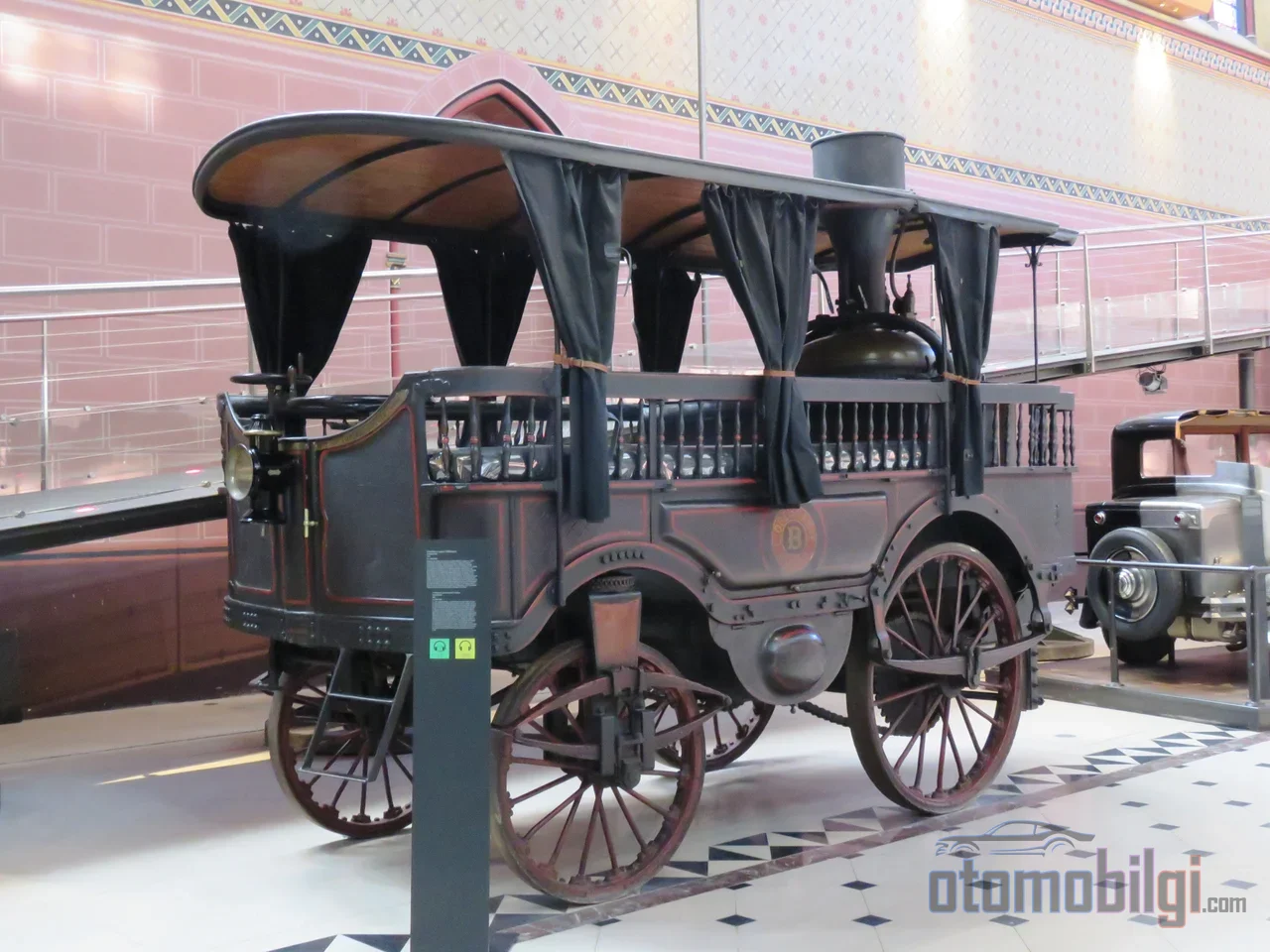
In October 1875, a huge, hissing steam vehicle set out from Le Mans and headed toward Paris. It carried twelve passengers, a conductor, and a driver. Benz's automobile had not yet been invented, and the roads were mostly dirt; but this pile of iron managed to complete 230 kilometers. So who built this vehicle, and why is it hardly ever mentioned alongside Benz in almost any history book? Let's get to know it: Amédée Bollée and his steam bus, the L'Obéissante.
An Apprentice, Yet an Inventor: Who Is Amédée Bollée?
Born on January 11, 1844, in the city of Le Mans, France, Amédée-Ernest Bollée's actual profession sounds very intriguing: apprenticeship. In other words, he was the child of a bell-founding family, and he himself carried on this craft. Molten metal, molds, heavy castings... It was precisely this workshop culture that drove him to build self-propelled vehicles for the roads. To put it simply by analogy: for a man who could cast a giant bell, a moving vehicle was not much harder than casting a bell.
Bollée produced steam passenger vehicles from 1873 to 1885. That is, years before 1886 - considered the birth year of the automobile - road vehicles that moved on their own and carried passengers already existed. In fact, according to one source, he had experimented with a steam vehicle as early as 1871. In 19th-century France, alongside Bollée, names such as Albert de Dion and Léon Serpollet are also counted among those who built the most advanced steam automobiles; meaning France was practically a laboratory of steam vehicles before the age of the internal combustion engine.
L'Obéissante: A Giant Worthy of Its Name, "The Obedient"
Bollée's most famous vehicle, the L'Obéissante, was built in 1873. It translates as "The Obedient," and this name was not chosen in vain: the vehicle had a very smooth and obedient steering behavior. Today it would seem odd to name a car, but this enormous vehicle behaved so docilely toward its driver that the name must have found itself.
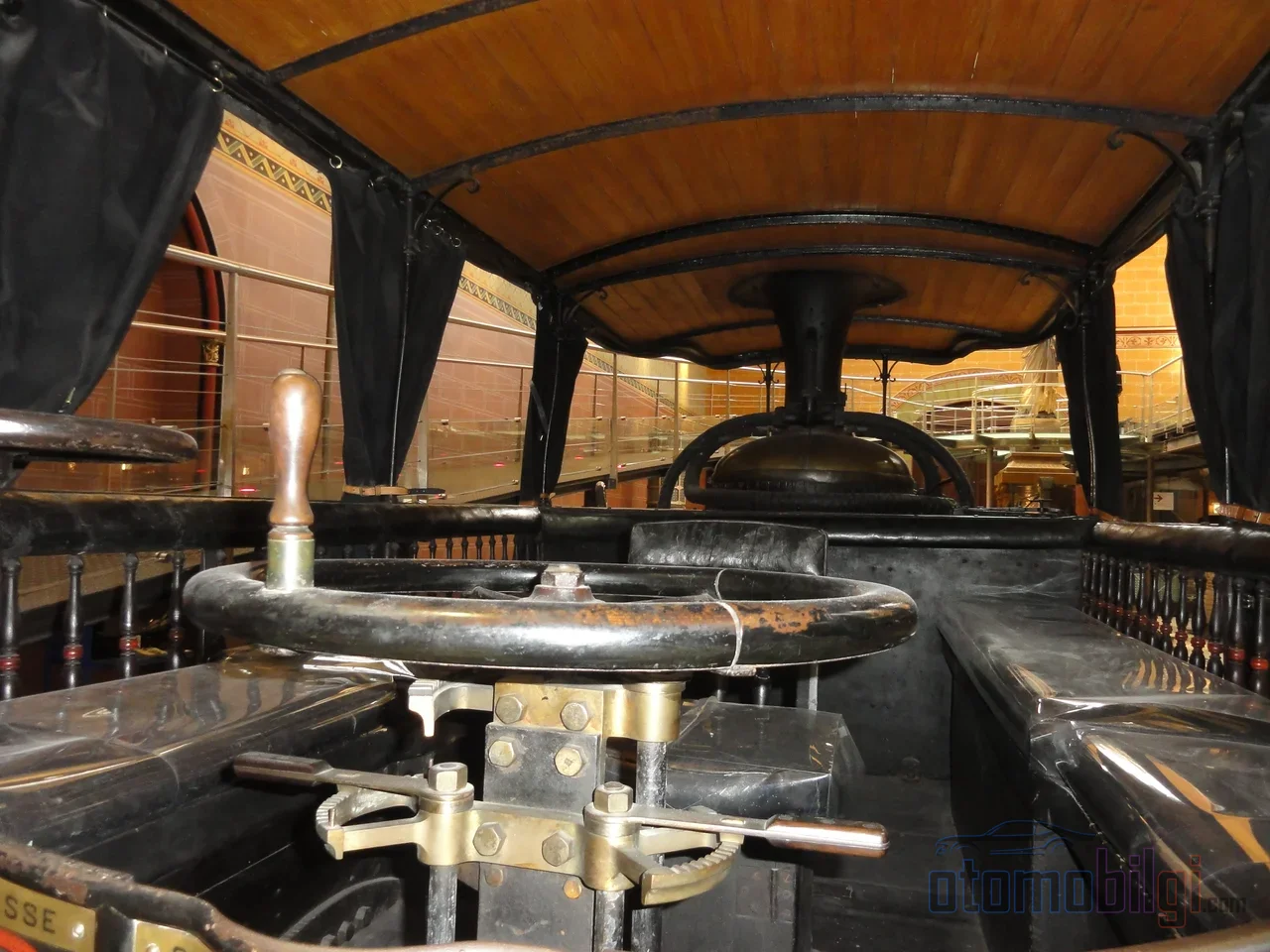
So what was this vehicle? In today's terms, a steam bus: it could carry twelve passengers, a conductor, and a driver. It is described as the first mechanically propelled passenger carrier powered by steam, and in 1875 it was introduced as the first high-speed automobile. Its technical side is genuinely impressive:
- A tube-shaped (tubular) steam boiler - dividing the boiler into multiple small tubes both speeds up heating and reduces the risk of a single large boiler.
- Chain drive - chains were used to transfer power from the engine to the wheels, much like in primitive bicycles, but for a much heavier job.
- Two twin-cylinder V-engines - each was rated at 15 hp.
- A gearbox - when shifting to low speed, the vehicle could even climb slopes with a 12% grade.
Its performance figures are also surprising at first glance: Weighing 4,800 kg, this vehicle cruised at a speed of 30 km/h on flat roads and could, when needed, reach 40 km/h. Its average speed over long distances was more modest, but considering this was 150 years ago, these figures cannot be dismissed. Even though only a single example was produced, the vehicle clearly demonstrated what it could do.
Highlights
- L'Obéissante was built in 1873; it could carry 12 passengers, a conductor and a driver.
- It weighed 4,800 kg; its cruising speed was 30 km/h and its top speed reached 40 km/h.
- On October 9, 1875, it covered 230 km from Le Mans to Paris in 18 hours.
- It was on the roads 13 years before Benz presented his automobile in 1886.
- Today it is on display at the Musée des Arts et Métiers in Paris.
From Le Mans to Paris: A Stunning 230-Kilometer Journey
The true cinematic scene of the story took place on October 9, 1875. Bollée set out from Le Mans toward Paris in his own vehicle. The distance was exactly 230 kilometers; including meal and water breaks, the journey took 18 hours. A route that takes only a few hours by intercity bus today was like a marathon back then, and it was an achievement of a kind no vehicle had ever accomplished before.
You need to read the relationship between distance and speed correctly here: covering 230 km in 18 hours means a low average speed, but the reason was not the vehicle's lack of capability; it was the road conditions. Most of the roads were unpaved and could not bear heavy loads. In other words, the vehicle was actually far ahead of its era's road infrastructure - not to mention that driving long distances on the dirt roads of that age in a machine capable of climbing grades of 12% was a feat in itself.
The arrival in Paris was a celebration scene: crowds, an atmosphere of triumph, a full victory celebration. But here's the funny part: the Paris authorities recorded Bollée approximately 75 times - the vehicle was so new and the rules so unprepared that all the authorities could do was write it down in their ledger. Moreover, none of these records ever led to a prosecution. The car's speed was lower than that of even a modern city bus, but the roads could not handle it; it is not hard to imagine the officials' bewilderment.
Before Benz or After Cugnot? Bollée's Place in History
The debate over who created the first automobile is a classic argument that continues to this day, and three great names stand out in it. The first is Nicolas-Joseph Cugnot: His three-wheeled steam-powered Fardier, designed around 1769-1770 to carry cannons for the French army, is considered the world's first self-propelled vehicle - but it was a machine built to haul cannons, not to carry passengers.
The second group consists of the internal combustion engine heroes we are all familiar with: Carl Benz and Gottlieb Daimler. Benz introduced his automobile in 1886; Daimler and Benz are regarded as the pioneers of automobile production in the late 19th century. It is even said that the two never met, but the source reliability of this claim is weak, so take it with a slight question mark.
This is where Amédée Bollée stands right between the two: unlike Cugnot, he had built not merely a prototype but a real vehicle carrying passengers; and unlike Benz, he did not use a gasoline engine but steam - though he had solved the boiler problem with a unique design of his own. Carrying twelve people, the L'Obéissante can be considered, in a sense, a distant ancestor of today's bus concept - and even of the first "caravan" spirit that carried a few people on a journey - even though the common belief on this matter is that such multi-passenger vehicles came from 1910s America.
La Mancelle and the Family Automobile Business
Bollée's story does not end with the L'Obéissante. The La Mancelle, which he designed in 1878, is described as the first automobile to enter series production. In other words, when it comes to the transition from automobiles remaining one-off handmade pieces to series production, we also remember the name of a French pioneer - long before Henry Ford's assembly line.
The family story is also fascinating: Bollée had three sons, and two of them became automobile manufacturers. Amédée Bollée fils (born in Le Mans in 1867, died in December 1926) and Léon Bollée followed in their father's footsteps. Léon's 1897 Voiturette set a world record in 1898 at Etampes by completing 100 kilometers in 1 hour 58 minutes, going down in history as the fastest vehicle of its era. The family's automobile production continued until 1931.
There is also a sweet closing moment to this story: In 1923, the half-century-old L'Obéissante took to the Le Mans racing circuit with Amédée Bollée fils at the wheel and once again put on its mechanical show for spectators. Today, the 24 Hours Museum in Le Mans displays nine Bollée models, including the La Mancelle. As for the L'Obéissante itself, it can be seen at the Musée des Arts et Métiers in Paris - I think anyone who sees it and learns it did 40 km/h smiles a little.
So Why Didn't Steam Passenger Transport Last?
Now let's come to the real question: If steam buses were so successful, why couldn't they survive on the streets? The answer cannot be attributed to a single reason, but there is a clear picture within the conditions of the era. For one thing, the vehicles were enormous: The L'Obéissante weighed almost 5 tons, and most roads of that era were unpaved; solid roads capable of supporting heavy steam vehicles for long periods did not yet exist. On roads built without today's asphalt network in mind, these machines strained both themselves and the road surface.
The second reason was the human reaction. 19. century, looking like a mix of a phaeton and a tram, could not get along with the world of horse-drawn carriages. The sight of these vehicles on the roads caused a serious backlash; the public's attitude toward these noisy and intimidating vehicles was one of the social barriers to their spread. For those curious about the history of traffic rules, this period is a classic example of rules lagging behind the vehicles - the fact that the Paris police could not go beyond recording 75 incidents is also part of this.
The third factor was technical: the steam boiler needed time, water, and fuel to heat up; and its maintenance was a genuine craft. When the internal combustion engine offered a small, practical alternative with easily transportable fuel after 1886, the balance shifted rapidly. Steam passenger vehicles were one of the world's brightest ideas, but the world had to wait until it had the infrastructure to carry them and the simplicity of the internal combustion engine - by which time the steam train had long since departed.
So What Does Amédée Bollée's Legacy Tell Us Today?
Let's bring the answer together: Amédée Bollée was a French apprentice and inventor who, 13 years before Benz, built a steam bus in 1873 that carried twelve passengers and could cover 230 kilometers in a single night. His story shows that the automobile was not invented by a single inventor in a single day. Along the line stretching from Cugnot's 1769 Fardier to Benz's 1886 Patent-Motorwagen, Bollée laid the true cornerstone of passenger transport, and with his son Léon's record, the family was carried into the 20th century. That's why the next time someone says "the first automobile was Benz's," you can now smile gently and tell them about that 18-hour journey from Le Mans to Paris.
Sources
- L'Obéissante steam-powered omnibus - Amédée Bollée
- Amédée Bollée
- History of the automobile
- Bollée family, Authorization of circulation of the first "locomobile" car - ARQUUS
- Amédée Bollée, from Bell-Maker to Car Creator - France Today
- 1897 Léon Bollée Voiturette | Hershey 2015 - RM Sotheby's
- The predecessor companies (1886–1920) - Mercedes-Benz Group
- Steam carriage - Britannica
- The 19th-Century Freakout Over Steam-Powered Buses - Atlas Obscura
- 1769–1770 Nicolas Cugnot's Steam-powered Vehicles - Story-Cars