How the Nuclear Steam Car Idea Turned to Ash?
Share This Page
There is no combustion engine under the hood. Instead, at the rear of the vehicle there is a tiny reactor that generates heat by splitting atoms; that heat turns water into steam, and the steam spins a turbine. Does it sound like science fiction? When Ford unveiled this idea in 1957, nobody laughed; on the contrary, it was hailed as the most brilliant automotive dream of the atomic age. So why did this nuclear steam car idea turn to ashes? The answer lies partly in physics, partly in human fear.
Ford Nucleon: A Dream Powered by a Reactor
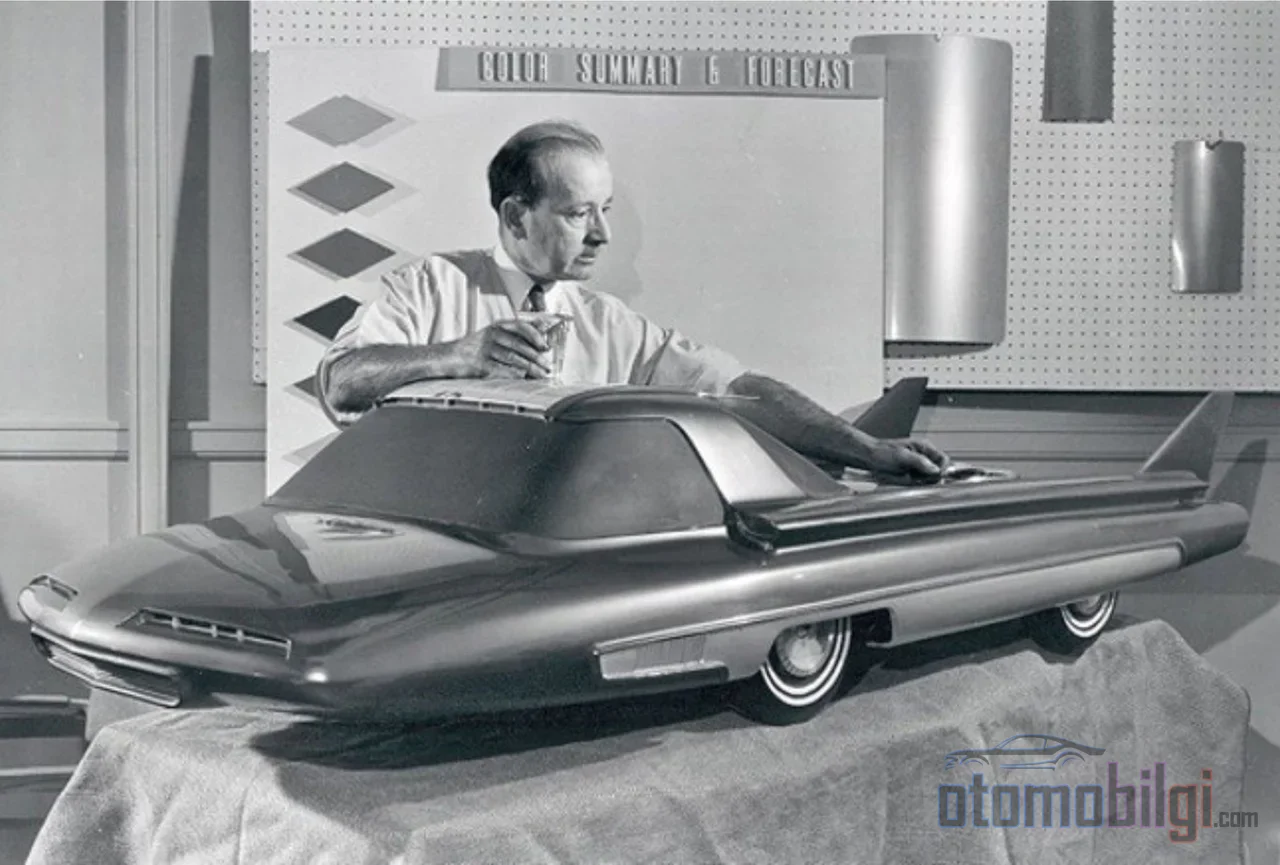
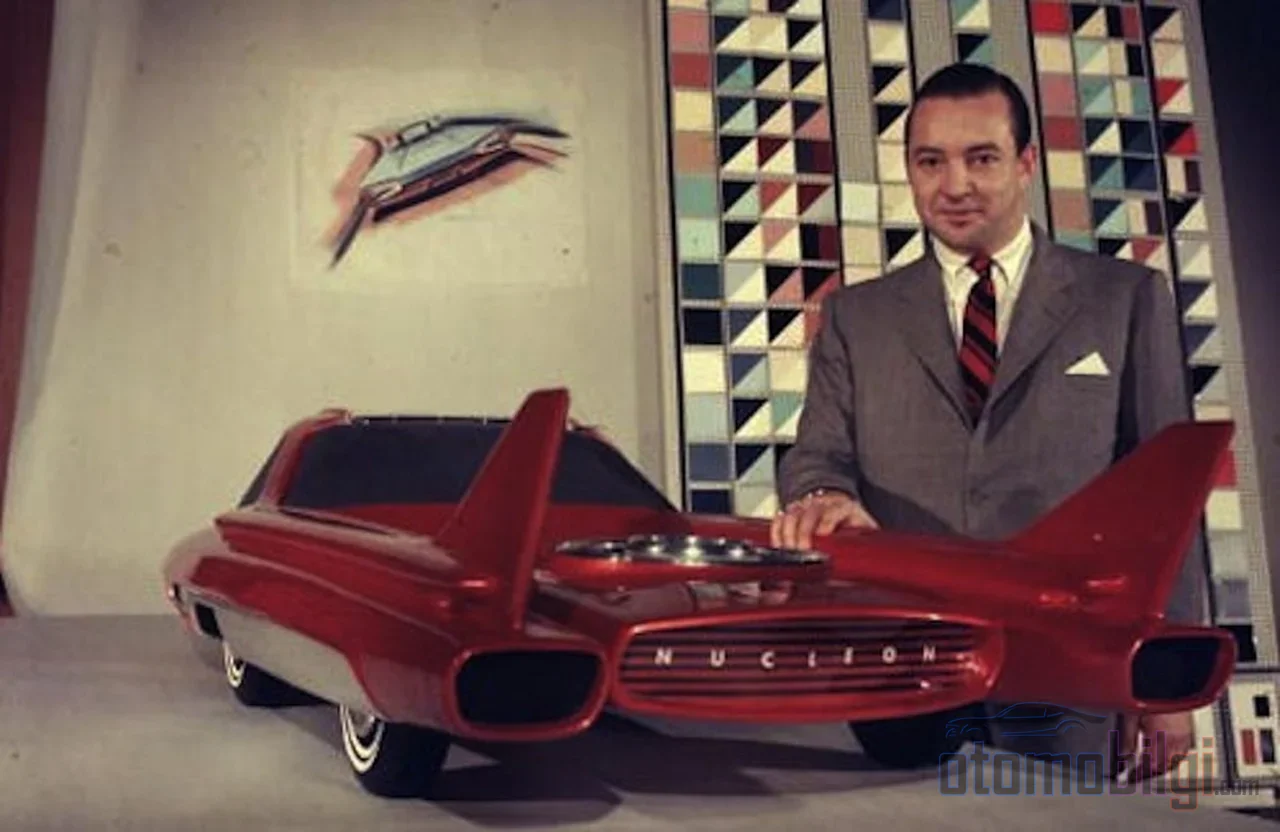
The Ford Nucleon, introduced by Ford in 1957, is one of the boldest concepts in automotive history. But here is the interesting part: the vehicle was never produced at full scale; it only came to life as a 3/8-scale model. This model, which you can see today at the Henry Ford Museum in Dearborn, Michigan, envisioned a steam engine powered by a small nuclear reactor to be placed at the rear of the car, spinning through uranium fission with the same logic as nuclear submarines.
Ford's vision was truly ambitious. Gas stations were to be replaced by service points that swapped reactors. The vehicle would be able to travel 5,000 miles (approximately 8,000 km) on a single reactor - meaning you could drive from Istanbul to Calcutta and back, and still have fuel left. The design even went so far that with every reactor swap, the owner could personally choose whether to select a fuel-efficient or a high-performance reactor. Instead of filling the tank, renewing the engine's character; imagine that!
Key Highlights
- The Ford Nucleon was introduced in 1957 and was never produced at full scale.
- Target range: 8,000 km on a single reactor.
- A 1937 radium study showed that a 50-ton lead barrier would be needed for protection from radiation.
- Even modern fission reactors require a radiation shield of approximately 1.5 meters.
- The concept was almost completely forgotten after 1958.
Why Wasn't a Nuclear Car Built? Here Is the Real Obstacle
Now hold on tight, because this is the most brutal part of the story. Radiation is not free - in fact, it sends an extremely heavy bill. Studies on radium in 1937 had shown that a driver would need a 50-ton lead barrier to be protected from radiation. Fifty tons! That is more like a ship type than a car. Ford's engineers were aware of this too; the entire premise of the design rested on the hope that much smaller and lighter shields would one day be possible. That hope never materialized.
Even today, the situation has not changed. A modern fission reactor powerful enough to drive a car still requires a shield of concrete, water and/or tungsten approximately 1.5 meters thick so that the operator is not exposed to a dangerous dose of radiation. Try to imagine putting that concrete in a car's trunk - the laws of physics are not cooperating. No matter how much the reactor is shrunk, it remains large, heavy, complex, and expensive. The idea of putting nuclear material in every vehicle on the road, combined with the massive weight the shielding brought, effectively killed the project.
Was the Shield the Only Problem? No
On top of the technical obstacles came a shift in the social climate. In the 1970s, nuclear energy became the subject of major public protests. While the risk of accidents, waste, and lack of transparency frightened people, the idea of thousands of tiny reactors driving around on the roads gradually became unthinkable. The concept disappeared after 1958; because nuclear energy technology - even today - was not ready to power a mass-produced passenger car.
The Atomic Age Car: A Short List of Bold Concepts
The Nucleon was not the only example of this dream. The atomic age optimism of the 1950s tried to fit a reactor into almost every means of transport:
- 1957 Studebaker-Packard Astral: A concept proposed with an atomic power plant or ionic motor.
- Simca Fulgur and Arbel Symetric: European design studies influenced by the nuclear age.
- 1954 Ford FX-Atmos: Ford's dream car that emerged from the nuclear age.
- The atomic locomotive (1954) and atomic aircraft (1955) proposals were also products of the same imagination.
So was the Nucleon a serious design, or just a showpiece? This is still being debated. Some see it as merely a futuristic fantasy resting on the hope of a small and light shield; others consider it a genuine engineering hope and say it was ahead of its time. Both readings could be true - but neither changes the fact that the idea collided with physics.
Why Did the Dream Live So Long?
The nuclear car idea died in 1958, but interest in steam power did not. Even without nuclear energy, the idea that steam had a future in the automobile stayed in circulation for years. So much so that the amateur and small-scale steam power magazine Light Steam Power was published throughout the 1970s, and curiosity about steam power remained alive into the 1980s. In the 1960s, steam cars were seriously considered as a response to smog; Aerojet installed a steam turbine in a Chevrolet Vega, and Steam Power Systems produced a vehicle called the Dutcher. General Motors also developed alternative-fuel vehicle prototypes starting in 1973.
Traces of this dream still appear in popular culture today. The Chryslus Corvega with the Atomic V8 engine in the Fallout game series draws direct inspiration from the Nucleon. Not to mention the fact that a vehicle that has not been produced for forty years still lives on in games and retro-futurist aesthetics.
Is a Nuclear Car Possible Today?
Here is the clear answer to the very question you were wondering about, in 40-60 words: No. Using nuclear energy in a passenger car is still not technically possible today; because the shield required for adequate radiation protection makes the vehicle unusable, and nuclear energy technology - neither in the past nor now - has ever become suitable for a mass-produced road vehicle. The idea turned to ash in the face of the laws of physics.
But would you like to draw a hope out of this nightmare? The only truly reasonable way for nuclear energy to meet the automobile is indirect: charging an electric vehicle from a grid powered by nuclear power plants. In other words, clean charging instead of radioactive fear; the reactor goes to the power plant, not the steering wheel. Meanwhile, public opinion on nuclear energy is also changing - support for more nuclear plants for electricity generation has increased noticeably in recent years.
Sources
- Ford Nucleon
- NOVA | Car of the Future | History's Innovative Autos
- The story of the Ford Nucleon concept car
- Nutty Nuclear Cars
- The 1958 Ford Nucleon: An idea that's still ahead of its time
- Here's Why the Nuclear-Powered 1958 Ford Nucleon Never Entered Production
- Remembering Ford Nucleon atomic car
- The Ford Nucleon: The Nuclear-Powered Car
- The Ford Nucleon: Petrol Omission to Nuclear Fission
- Light Steam Power
- Steam-Powered Cars Were Seriously Considered to Combat Smog in the 1960s
- The History of the Electric Car
- 4 wacko design concepts for nuclear-powered vehicles from the 1950s
- Atom Age Marvel: The 1954 Ford FX Atmos
- Anti-nuclear movement
- Support for expanding nuclear power is up in both parties since 2020