Why Did Bertha Benz Secretly Make History's First Long Car Journey?
Share This Page
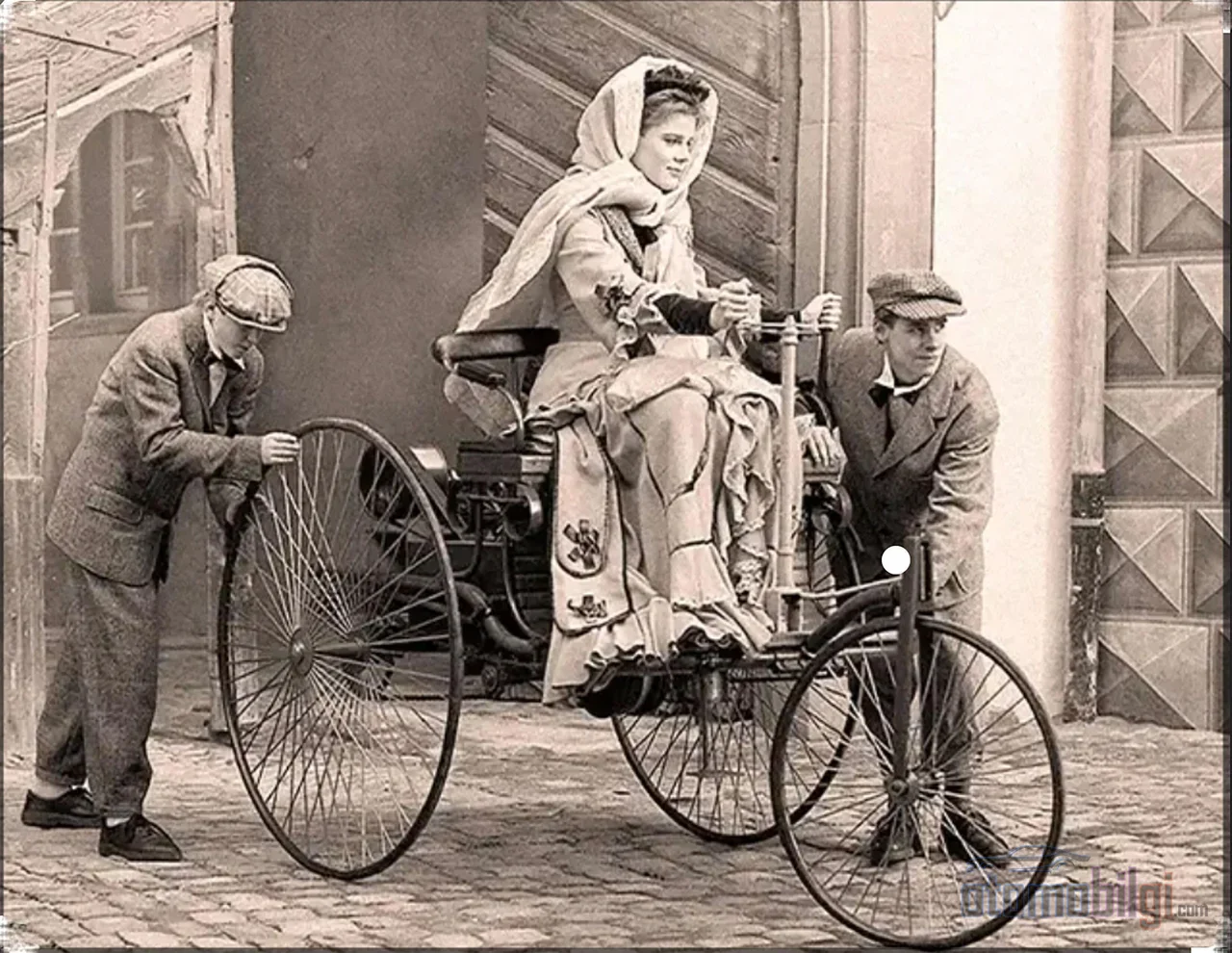
In August 1888, Bertha Benz, without her husband Karl Benz's knowledge, took her two sons and made history's first long-distance automobile journey, because the Patent-Motorwagen still wasn't selling. This secret drive from Mannheim to Pforzheim, covering approximately 104-106 kilometers, was a commercial rather than technical proof of the invention, and it changed the future of the automobile.
Highlights
- The journey was made in the Patent-Motorwagen No. 3 on August 5, 1888. Wait - correction needed below.
- The distance was approximately 104-106 km, and the duration over 12 hours.
- Ligroin purchased from pharmacies was used as fuel; the pharmacy in Wiesloch is considered the world's first filling station.
- The leather covering nailed onto the brakes in Bauschlott is regarded as the first brake pad repair.
- After the journey, Benz & Cie. became the world's largest automobile company.
Patent Granted, Customers Absent: The Slump Between 1886-1888
Karl Benz filed the patent application for the gasoline-powered automobile on January 29, 1886; the document numbered Reichspatent Nr. 37435 is the official birth certificate of history's first practical automobile, ahead of its widespread acceptance. The vehicle was the Benz Patent-Motorwagen, completed in 1885 with a three-wheeled structure. Technically revolutionary, this machine could reach about 19 km/h and went on sale with a price tag of 600 marks - roughly 150 dollars.
The problem was not the machine itself, but its market reception. The public saw the Patent-Motorwagen as a fragile curiosity; nobody took such a vehicle seriously for everyday use. Karl Benz had done a flawless job on the engineering side, but was reluctant about presenting and marketing the product to the public. Orders were not coming in, and the invention remained far from becoming a profitable product.
At this point, Bertha Benz's role became decisive. She met Karl in 1869, married him in 1872, and early in the marriage had spent her dowry to save her husband's first company. She took an active role in design and road tests; she believed in the vehicle's potential, but knew this potential would only translate into sales if proven before the public's eyes.
Why Was the Journey Made in Secret?
Karl Benz had been discouraged by the public's negative attitude and had come to a position of avoiding public displays of the vehicle. If Bertha had waited for approval, the invention would have headed toward commercial collapse. So on the morning of August 5, 1888, while her husband slept, she left a note, took 15-year-old Eugen and 14-year-old Richard, and they quietly pushed the vehicle out to a garage away from the house to start it. The apparent purpose was to visit her mother in Pforzheim; the real purpose was to prove that the automobile was a practical vehicle in the public's eyes.
In popular tellings, this story is sometimes called the world's first car theft; that phrase is entirely figurative. The journey was made by leaving a note - that is, with notice given - so the secrecy did not mean doing it without permission. Still, it is an effective exaggeration symbolically. the vehicle had embarked on its first serious test without its owner's knowledge.
The route stretched from Mannheim to Pforzheim, Bertha's hometown. Most of the roads were unpaved, and the journey took more than 12 hours. The trio arrived in Pforzheim at dusk and sent Karl a telegram. Three days later, they returned to Mannheim via a different and flatter route.
Problems Encountered on the Road and Field Engineering
The real value of this journey lies in the technical feedback it delivered. It functioned like what we would call a field test today, and every breakdown contributed directly to improving the vehicle.
The fuel problem and the world's first filling station
Ligroin, the lighting and cleaning solvent of the era, was sold only in pharmacies. Bertha purchased three liters of ligroin from the Stadt-Apotheke in Wiesloch; this pharmacy is therefore known as the world's first filling station, and the building still exists today. Throughout the journey, water and oil also had to be replenished constantly; more ligroin was purchased in Pforzheim on the return trip.
A clogged fuel line and an ignition wire
Along the way, the fuel line became clogged; Bertha solved the problem by cleaning it with a long, straight hairpin. She insulated the worn and broken electric ignition wire with her garter. Both solutions capture the early character of the automobile: breakdown was inevitable, but a repair was possible.
Brakes and the first brake lining repair
When the wooden brakes wore out, Bertha had leather fitted onto the brake blocks near Bauschlott/Neulingen, north of Pforzheim; a shoemaker nailed the leather on. This intervention is regarded as the world's first brake lining, i.e. brake pad, repair. While some accounts attribute this repair to a blacksmith, records based on route details associate the brake leather with the shoemaker in Bauschlott and the repair of a broken chain with the blacksmith in Bruchsal.
Hills and the lack of gears
The Motorwagen could not climb hills under its own power; the sons, and from time to time local residents, pushed the vehicle. On the return trip, Bertha chose a flatter route via Bauschlott to avoid steep hills. This experience formed the basis of the suggestion for an additional gear conveyed to Karl Benz - so that the vehicle could climb mountains.
The Commercial Outcome of the Journey: Orders and Growth
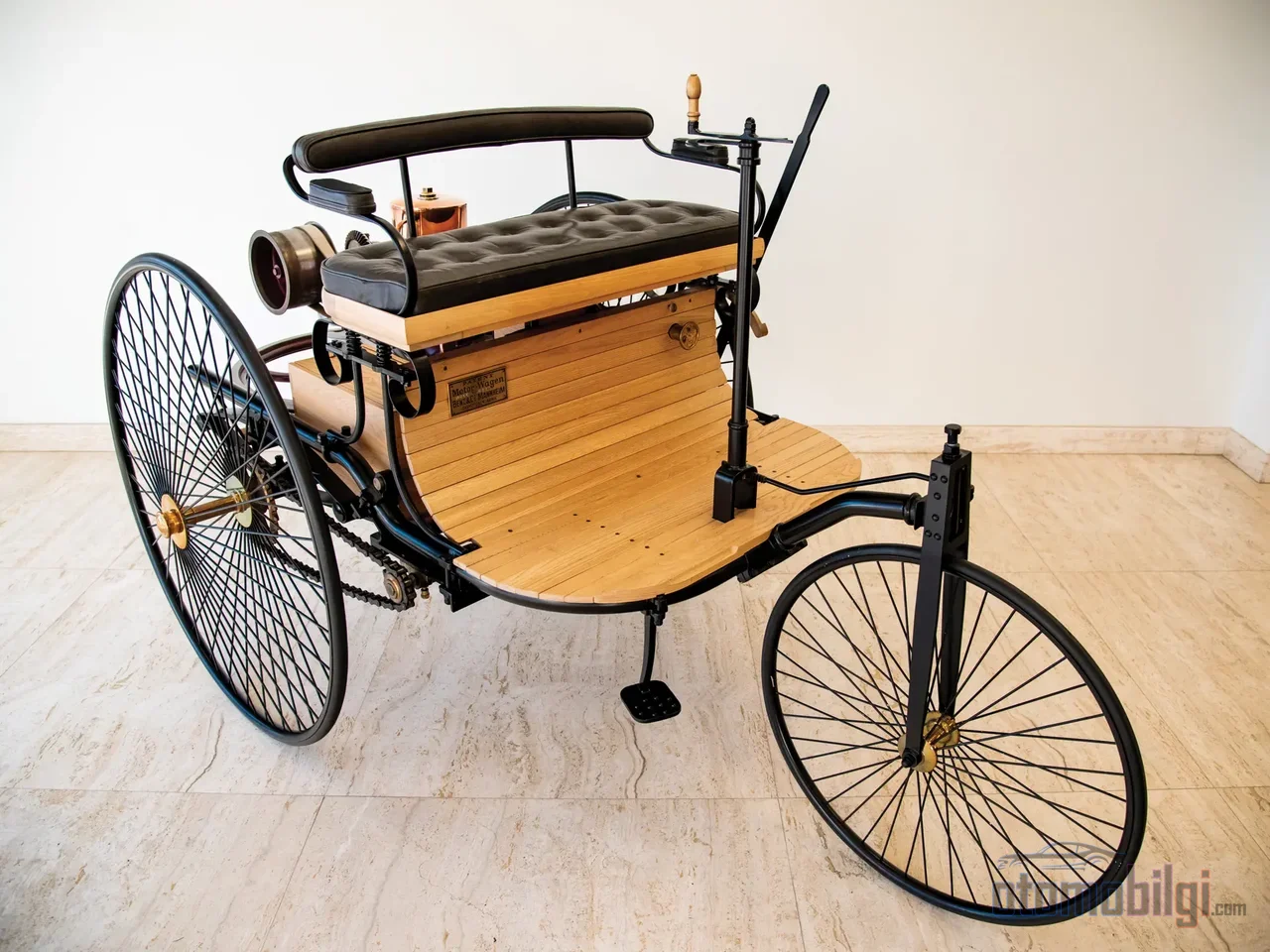
The journey is regarded as the automobile's first public demonstration drive. Along the Mannheim-Pforzheim route, people saw a moving automobile for the first time, proving that the vehicle was not a fragile toy and could cover real distances. The first orders for the patented motor car began to arrive following this visibility.
Karl Benz improved the vehicle using the observations his wife reported; the additional gear enabling hill climbing is the most tangible of these improvements. In December 1888, the well-known newspaper Illustrirte Zeitung covered the journey, taking the visibility to a national scale. What followed is one of the greatest commercial success stories in automotive history: After Bertha's test drive, Benz & Cie. became the world's largest automobile company.
At this point, we need to separate the founding myth from the facts. The journey laid the foundation for the brand being remembered not merely as a car company but as the founder of the automobile, and Bertha stood at the center of that myth. Yet the myth rests on a tangible engineering and logistics performance: a woman, two children, and a machine whose reliability had not yet been proven had completed a journey of just over 100 kilometers.
Bertha Benz's Later Life and the Memorial Route
Bertha Benz passed away in Ladenburg on May 5, 1944, just two days after her she passed away in Ladenburg just two days after her birthday; the family had been living in that city since 1906. Her legacy is also kept alive in the road itself. The Bertha Benz Memorial Route, which received official approval on February 25, 2008 and opened in September 2008, is a 194-kilometer tourist theme route: about 104 km outbound, about 90 km for the return. A member of the European Route of Industrial Heritage network in Baden-Württemberg, the route follows Roman roads and is described as a dynamic monument.
The route has long since outgrown being merely a nostalgic itinerary. In 2011, a documentary highlighting Bertha Benz's role was released, and that same year the first Bertha Benz Challenge was held as an event open to sustainable mobility vehicles. In 2023, the Karlsruhe Institute of Technology published Making Bertha Drive, an autonomous driving project on the memorial route; the field test of 1888 had become a testing ground for autonomous vehicles.
The Line Between Legend and Fact
The core facts of the story are solid: the date, the route, the distance, the length of time, the purchase of ligroin, and the brake lining repair appear identically in multiple independent records. The distinction that needs to be made lies in the embellishments. The vehicle was not stolen; a note was left. Although the sons' ages vary in some accounts, the record listing them as 15 and 14 years of age is taken as authoritative. The date of August 5, 1888 is clearly established, while some route accounts describe the event as early August. The distinction between the cobbler and the blacksmith in the brake repair also becomes clear according to route details.
The truth is strong enough not to need embellishment: an invention only becomes a sellable product when it is tested with the user's eye, in public, under real conditions. Bertha Benz proved this by planning and completing the first long automobile journey in history, entirely on her own.
Conclusion: The Drive That Made the Invention Sellable
From an engineering standpoint, the 1886 patent was already unique; Bertha's 1888 drive turned that uniqueness into a measurable commercial outcome. Every fault the journey produced, from the fuel line to the brake pads, was incorporated into the vehicle's next version and paved the way for the first orders. This journey is one of the earliest and clearest examples demonstrating that a product's success is determined not only by engineering but by field evidence and visibility.
Sources
- Bertha Benz | Mercedes-Benz Group
- Bertha Benz - Wikipedia
- Bertha Benz Memorial Route - Wikipedia
- Benz Patent-Motorwagen - Wikipedia
- Bertha Benz | Britannica
- Bertha Benz Memorial Route - Germany Travel
- Women in Transportation History: Bertha Benz - Transportation History
- Bertha Benz - DPMA
- Bertha Benz - the PR pioneer - Engelsberg Ideas
- Bertha Benz - National Motor Museum
- Making Bertha Drive - KIT