Bertha Benz's Historic Automobile Journey
Share This Page
On the morning of August 5, 1888, at dawn, Bertha Benz took her two sons and set out on a 104-kilometer journey with the world's first automobile, changing automotive history without her husband Carl Benz even knowing. Bertha Benz's historic journey was the first major step in an invention leaving the laboratory and becoming a product accepted by society; it is also considered one of the cleverest moves in marketing history. In this article, we tell the story of that morning, the problems encountered along the way, and the solutions found on the spot.
Highlights
- The journey was made from Mannheim to Pforzheim on August 5, 1888
- One way was about 104 km, with a total round trip of 194 km
- The pharmacy in Wiesloch is considered the world's first gas station
- The vehicle could reach a top speed of about 19 km/h
- After the journey, orders increased and the first sale took place
The Vehicle Where It All Began: Benz Patent-Motorwagen
Let's set the scene first. Carl Benz completed his three-wheeled vehicle in 1885 and patented it under Reichspatent No. 37435 on January 29, 1886. He patented it under number 37435. According to the widely accepted view, this was the world's first functional and put-into-production automobile. Benz Patent-Motorwagen No. 3 was the model that would be the hero of the journey; it was produced and sold between 1887 and 1893 and could reach a top speed of about 19 km/h.
Joking aside, try to imagine merging into today's traffic at 19 km/h - hold on, a machine you could race on a bicycle! But the crucial point was not speed, it was progress itself. The problem was this: people did not trust this "horseless carriage." The horse-loving public did not believe that a motorized vehicle would actually work, let alone be safe. Carl Benz was an engineering genius but hesitant on the marketing side; the car was not selling yet.
Who Was Bertha Benz and Why Did She Make This Journey?
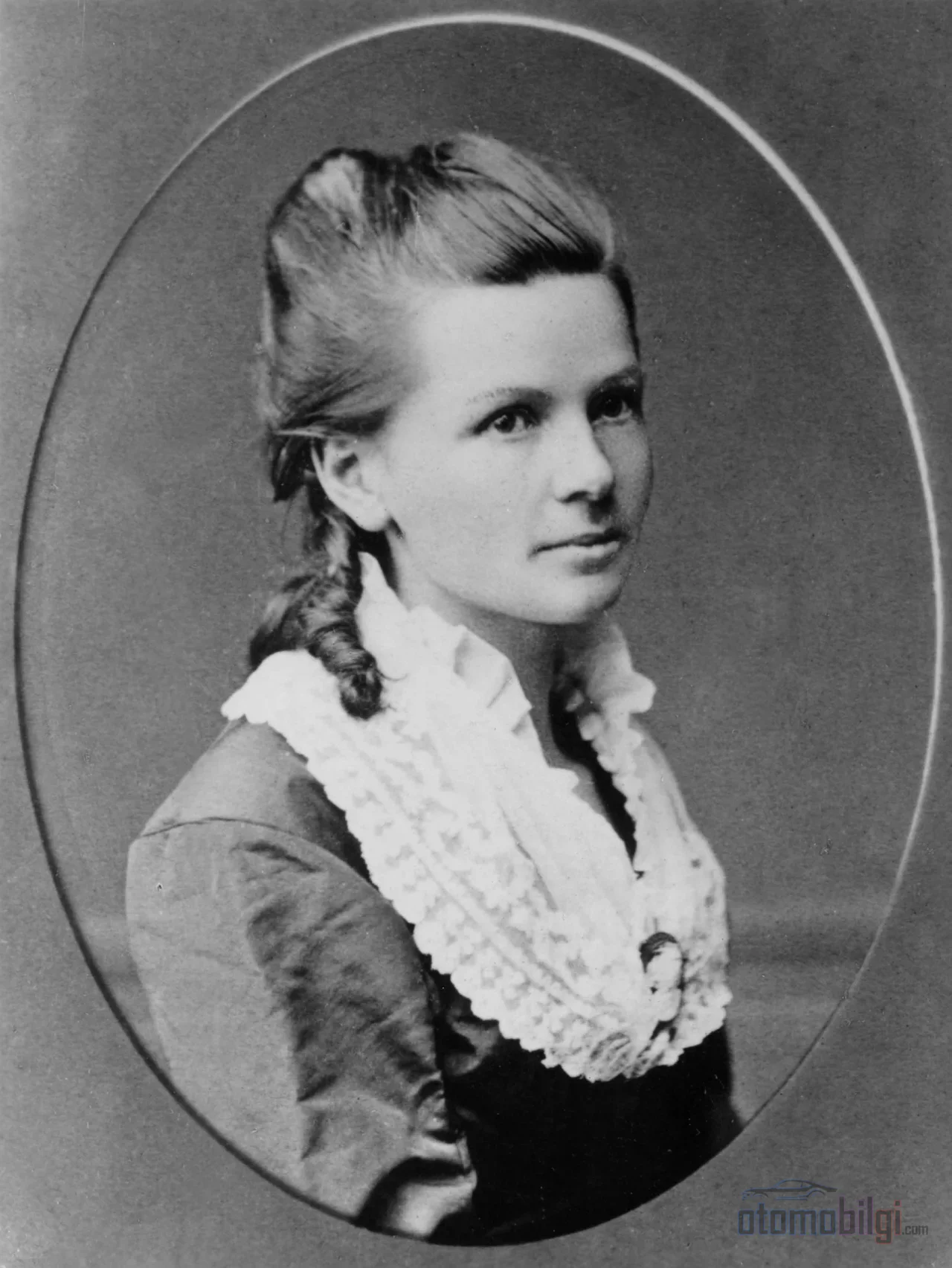
Bertha Benz (1849-1944) was the real hero of this story. She was a woman who had supported her husband's inventions from the start and spent her entire dowry financing these inventions. She moved forward with unwavering optimism, sincerely believing her husband's business would succeed. In today's language, she was the automotive age's first venture capitalist and marketing pioneer.
The Stated Purpose: Visiting Her Mother
The official excuse was simple: Bertha was going to visit her mother in Pforzheim, her birthplace. No one would ask someone going for coffee with their mother the questions they would otherwise ask. The real purpose was much bolder: to show the still-hesitant public that the "horseless carriage" really worked and was safe, to refresh her husband's shaken belief, and to prove that the automobile would bring financial success when presented to the public.
Without saying a single word to her husband, she set off, leaving a note while he slept. Her sons Richard and Eugen were with her; sources vary on Richard's age between 13 and 14, and Eugen was 15 years old. So imagine a mother setting off on the first automobile journey, with two teenage children, a fuel tank the size of today's wristwatch, and infrastructure that offered not the slightest hint of a roadmap. Just think about it: where would it leak, where would it smell of fuel - who knows?
What Problems Arose on the Road, and How Were They Solved?
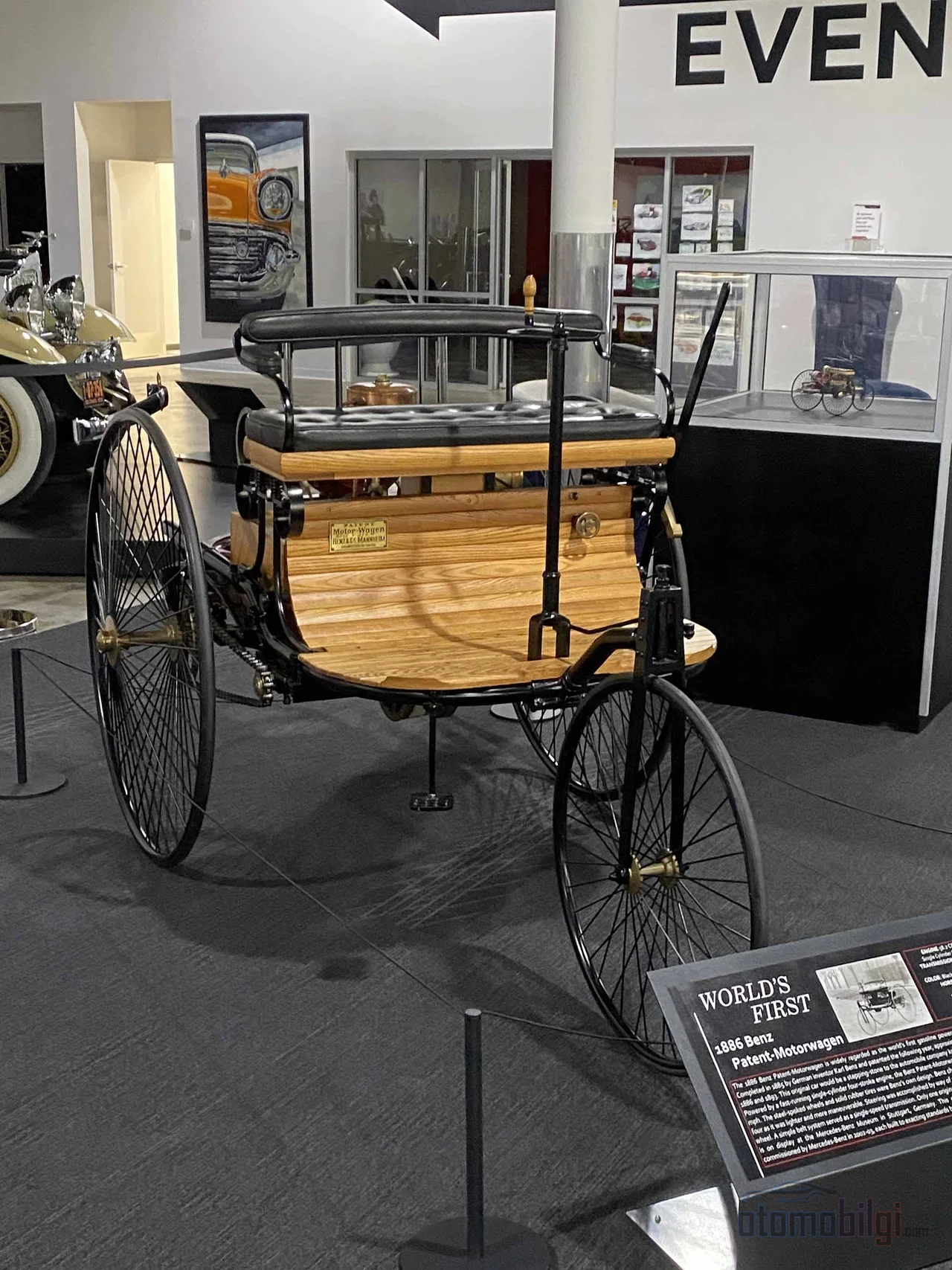
This is the most entertaining part of the story. On this journey, Bertha essentially conducted a mobile field test - and used her imagination in the face of every problem. The problems encountered and their solutions were roughly as follows:
- Fuel shortage: A solvent called ligroin was sold only in pharmacies. When the tank ran empty, 3 liters of ligroin were purchased from the Stadt-Apotheke in Wiesloch; that pharmacy is therefore considered the world's first gas station. So, going to a pharmacy to buy gasoline - how absurd, yet true!
- Blocked fuel line: It was cleaned using a long, straight hatpin. Yes, a pin from a hat and sewing kit brought the heart of the car back to life.
- Worn ignition cable: She wrapped the cable, whose insulation had deteriorated, with her own garter. She had no engineering training, but she had practical ingenuity.
- Worn brakes: The wooden brake blocks were reinforced with leather covering in Bauschlott/Neulingen, in front of the "Adler" inn of shoemaker Karl Britsch. This is regarded as the birth of today's brake pad concept.
- Broken chain: A blacksmith in Bruchsal repaired it.
- Hills: The Motorwagen could not climb hills under its own power; the sons and local people pushed the vehicle.
Setting off at dawn, they reached Pforzheim at dusk - in less than 12 hours. From there, Bertha sent a telegram to her husband: his wife and children were there, and the car worked! Three days later, they returned to Mannheim via a flatter route. On the return trip, fearing the steep hills, Bertha preferred to travel along the Rhine River.
How Did This Journey Secure the Automobile's Social Acceptance?
So why is it so important? Because, as Bertha intended, the journey generated enormous public interest. People saw this strange vehicle, talked about it, and were curious. Some were still afraid, but the message that "it works and it's safe" was now spreading by word of mouth. The horse-loving public was convinced that motorized transport was safe, and this journey came to be remembered as the first great publicity stunt.
The results came quickly: Karl Benz's first sale is attributed to the interest generated by the journey. Orders began to increase, and Benz's wife presented her husband with a detailed report after everything was over. The best known of these was her suggestion of an additional gear to make hill climbing easier. The journey was not merely publicity; it was a transformative field test that led to serious improvements of the vehicle. Doesn't the same apply to every new product? How users feel in the real world, what they wear, what they bump into - you can only learn that in the field.
Can This Route Be Followed Today?
Yes, it can be followed! On February 25, 2008, German authorities officially approved the 194 km long route in Baden-Württemberg as a scenic tourist route, and it opened in September 2008. This dynamic monument, named the "Bertha Benz Memorial Route," is part of the European Route of Industrial Heritage family. The southern leg between Mannheim and Pforzheim is about 104 km, while the return route follows a straighter path along the Rhine River for about 90 km.
Important Stops Along the Route
- Wiesloch: The Stadt-Apotheke pharmacy, considered the world's first filling station.
- Bruchsal: The city where the chain was repaired, which also hosts an impressive palace.
- Ladenburg: Automuseum Dr. Carl Benz and the Benz family's home.
- Heidelberg: Its legendary castle is one of the scenic stops on the route.
The route's legacy lives on in other ways as well. Between 2011 and 2013, the "Bertha Benz Challenge" event was held, open only to sustainable hybrid, electric, and hydrogen vehicles; its motto was "Sustainable Mobility on the World's Oldest Automobile Road." In other words, the same dirt roads welcomed the vehicles of the future, 130 years later. That's a pretty cool cycle, isn't it?
A Marketing Classic: Why Is It Still Cited as an Example?
Just imagine: no advertising budget, no press release, no social media. Bertha had only a vehicle, two sons, and great courage. Yet today, it is mentioned in marketing classes as one of the first great promotional moves and remembered as a brand's first marketing team. Because what she did was pure marketing logic: take the product off the table, show it in the real world, make it run before people's eyes.
Moreover, this move didn't just provide visibility; it also improved the product. This journey, stretching from pharmacy stops to old blacksmiths, both introduced the brand to the public and changed the direction of engineering. Here's a question for you: if you were in her place, would you drive 104 kilometers to your mother's without telling your husband?
Conclusion: How a Single Morning Changed the Fate of an Invention
With the courage of a single morning, Bertha Benz turned an invention into a product accepted worldwide. She solved every problem she encountered with her practical wit, reaching from hairpins to garters, from shoemakers to blacksmiths; from the idea of brake pads to an extra gear, she matured her husband's design. She went down in history as the person who made the first long-distance journey in an internal combustion engine automobile and provided the first proof that the automobile was a sellable product. Today, that 194-kilometer route that can be traveled on the roads of Baden-Württemberg stands as a living memory of an automobile's journey into the hearts of the public.
Sources
- Bertha Benz - Wikipedia
- Bertha Benz Memorial Route - Wikipedia
- Benz Patent-Motorwagen - Wikipedia
- Bertha Benz Memorial Route - Germany Travel
- Women in Transportation History: Bertha Benz
- Bertha Benz - Mercedes-Benz Group
- DPMA - Bertha Benz
- Bertha Benz and the First-Ever Road Trip - Mental Floss
- Bertha Benz's Historic Car Ride - Amusing Planet
- Bertha Benz Took the First Road Trip - Travel + Leisure
- Aug. 12, 1888: Road Trip! Berta Takes the Benz - Wired