800-Volt Cars Are Delivering on the Charging Promise
Share This Page
Full charge in 10-15 minutes. You've heard this sentence ten times in EV conversations; I've heard it at least a hundred times. But who is really charging in that time, in which car, at which station, in what weather conditions? That's exactly why today's topic, in my opinion, is far more important than the hydrogen vs. synthetic fuel debate: the 800-volt architecture. Because what determines whether your car can set off before you finish your morning coffee isn't a promising future from a chemistry lab, it's the voltage underneath the car.
So let's ask: 400 volts or 800 volts - is the difference really noticeable, or are these just the colorful numbers of marketing brochures? The answer is twofold enough to surprise even me. On the physics side, it's crystal clear; on the practical side, a small surprise awaits you.
What Is the 800-Volt Architecture, and Why Is Physics the Secret of Fast Charging?
Let me first correct a mistake: an 800-volt car doesn't mean a car that constantly reads 800 volts at the battery. Systems labeled 400 volts actually range between 300-500 volts, while those we call 800 volts hover between 600-900 volts. The voltage constantly changes according to the battery's state of charge, temperature, and age. So the label is a class name, not a precise number.
The real issue is hidden in this formula: power = voltage × current. Think of it like a garden hose. You want to pass the same amount of water (i.e. energy) through the hose. You can increase the pressure (voltage) and lower the flow rate, or you can push the flow rate up (current) and heat the hose like fire. High current means more heat, more loss, and thicker, heavier cables. Doubling the voltage and reducing the current is both an efficient and lightweight path. It's just like how, in a crowded corridor, a small number of people walking quickly gets everyone there sooner than people slowly shuffling along.
That's why, in 800-volt systems, the cables are thin, the electronic components are small, the vehicle is lighter, and more energy is recovered through regenerative braking. A concrete example: if you connect to an 180 kW charger that can deliver a maximum of 300 amps, a 400-volt vehicle draws at most 120 kW, while an 800-volt vehicle can easily use the station's 180 kW ceiling. Same station, same plug, but the flow is completely different.
Highlights
- The Taycan completes a 5-80% charge in 22.5 minutes; in the 2026 version, that time drops to 18 minutes and the charging speed to 320 kW.
- The Kia EV6 fills the 10-80% range in about 19 minutes.
- Only ~1.5% of DC fast chargers in the US and ~3% of those in the EU can deliver 800-volt output.
- The Lucid Air actually uses a 924-volt system.
- The marketing promise of a 10-15 minute charge is still the exception today; the typical reality is in the 18-22 minute band.
Which Cars Have 800 Volts, and in Which Segment?
This technology has stepped out of its luxury corner - let me break the news. First shining in the Porsche Taycan and performance sedans, the 800-volt architecture then leapt to budget-friendly models with the Hyundai IONIQ 5, IONIQ 6 and Kia EV6. Today's list features dazzling names:
- Porsche Taycan and Kia EV6, EV9
- Hyundai IONIQ 5 and IONIQ 6; Genesis's electric GV60, GV70 and G80
- BYD ATTO 3, Dolphin, Seal and Song; XPeng G9; Zeekr 001
- GMC Hummer EV, Tesla Cybertruck and Lucid Air
The Lucid Air also deserves a special mention, because it actually uses a 924-volt system; meaning it's even a step ahead of the 800-volt club. And the 2025-2026 period takes all of this fully mainstream: With models like the Mercedes CLA and BMW iX3, the technology is now on the agenda not only of tech enthusiasts but also of ordinary buyers. The arrival of models offering 800 volts at prices around £30,000 is rapidly erasing the luxury label from this architecture.
Does the 10-15 Minute Charging Promise Hold Up in Reality?
Now for the other side of the coin. The marketing language says 10-15 minutes; but what happens in practice? Industry-wide, 800-volt systems typically fill the 10-80% range in 15-20 minutes. Some 2026 model vehicles complete this range at 350 kW stations in about 18 minutes. So the promise isn't a flat no, but it's only enough for a conditional yes: when ideal conditions align you get close to 15 minutes, while in real life the 18-22 minute range is normal.
The secret of the time difference lies in the shape of the charging curve. The Porsche Taycan is the textbook example of this: thanks to its powerful thermal management, it can maintain a high charging speed for a long time; the 5-80% range takes 22.5 minutes and adds about 100 km of range in just 5 minutes. The 2026 version raises the bar again with a 320 kW charging speed and an 18-minute time. The Hyundai-Kia E-GMP platform does the same job; the Kia EV6 is considered the benchmark model with roughly 19 minutes for 10-80%.
The subtle point here is this: just as important as peak power is how long you can sustain that power. In long-distance tests, the Taycan sits at the top with an extremely flat charging curve averaging 175 kW; it can even outperform some of its 800-volt rivals at charge levels above 65%. So the idea that 800 volts automatically means fast is a myth. A well-tuned 400-volt vehicle can overtake the 800-volt ones in the final stage of charging; it's no coincidence that the 2026 Toyota BZ is talked about as one of the fastest-charging 400-volt vehicles.
The Most Critical Bottleneck: Charging Station Infrastructure
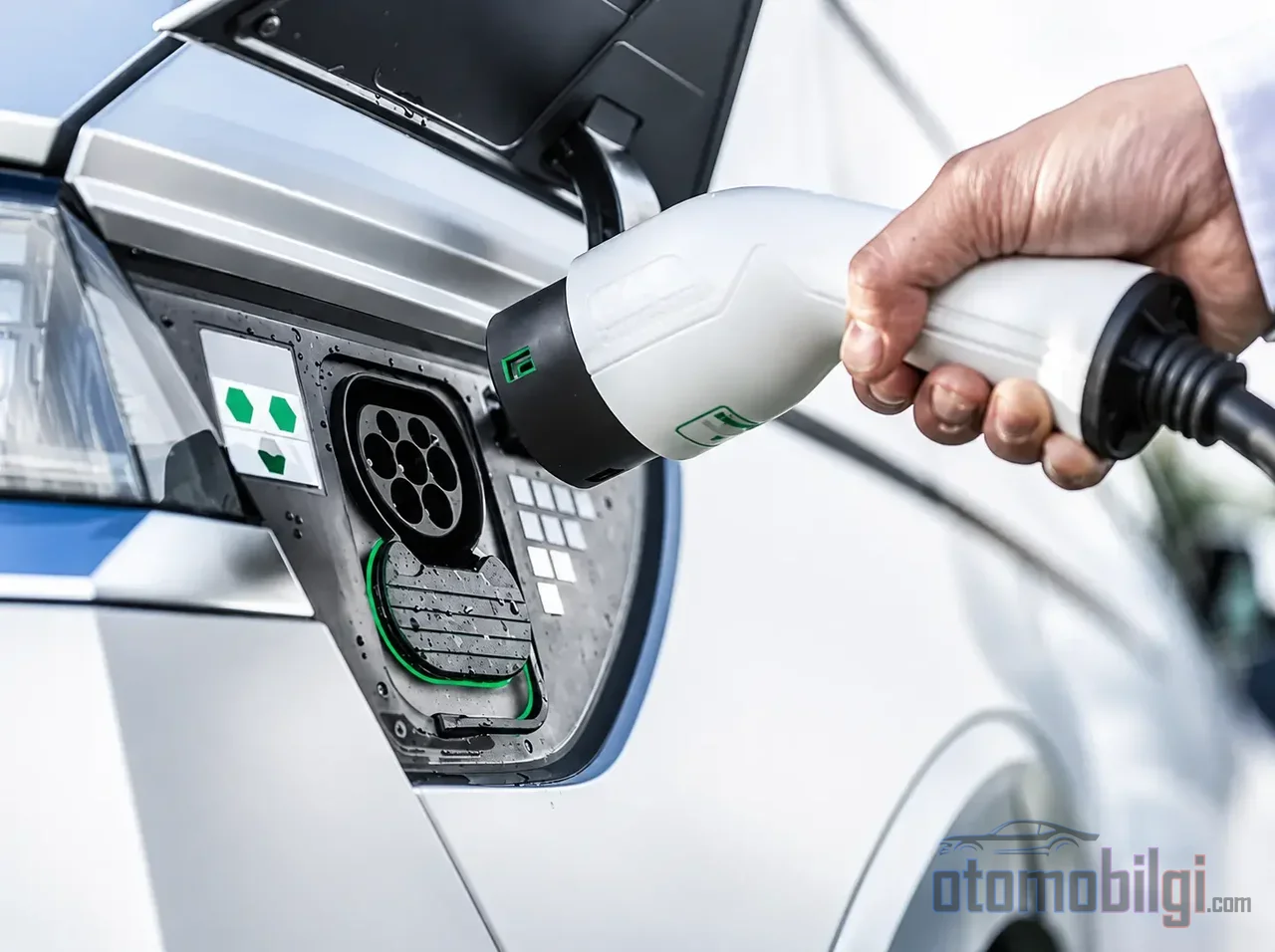
What's the value of a fast car if the stations don't keep up? This is where the most frustrating part of the story begins. Only about 1.5% of DC fast chargers deployed in the US, and about 3% of those in the EU, can deliver 800-volt output. We have left behind a period when only 400 of Europe's 40,000 stations supported these vehicles, but growth still lags behind the vehicle side. You plug in the hose, the car is waiting at 800 volts, the station whispers 400 volts. The magic ends in an instant.
Okay, is there no solution? There is, and it's interesting. High-power existing stations can be used by 800-volt vehicles, but the car has to carry an extra DC/DC converter to step down the voltage. Three paths have been drawn: installing new wide-voltage-range stations (expensive and takes years), upgrading existing 400-volt stations, or putting modular converters in the vehicle so it appears to the charger as a 400-volt battery. The claimed efficiency of the last approach is around 99.5%, and CATL shares a similar idea: splitting the 800-volt pack into two 400-volt modules and keeping losses below 1% at 400-volt stations through software. Also, a small practical warning: some 800-volt vehicles can get lower charging speeds under the new connector standards than with CCS, meaning even the shape of the plug affects your speed.
How Do Ambient Temperature and Battery Condition Limit Charging?
A cold battery on a winter morning is the silent killer of charging. Cold batteries charge well below normal speeds; the system restricts power to avoid damaging the cells. Think of it like an unwarmed muscle before exercise: if you push it, you get injured; if you don't, you're slow. The solution is preconditioning, that is, heating the battery on the road to an ideal temperature of around 25 °C before arriving at the station. When the battery temperature drops below a certain threshold, this system kicks in automatically.
To sum up the triple condition: a warmed or preconditioned battery, an appropriate state-of-charge window (speed drops in the 10-80% range because charging slows as the battery fills), and an 800-volt-compatible, high-power station. If any one of these three is missing, the 10-minute promise turns into a half-hour wait at the table. For someone who can charge at home, how important are all of these? Let's be honest: a driver with overnight charging at home doesn't really need 800 volts; this speed is worth gold for those who truly burn through kilometers and use many stations during the day.
When Solid-State Batteries Arrive, Will 800 Volts Become Irrelevant?
Fair question. It has been said for years that solid-state batteries could reach more than 75% charge in 15 minutes; there are claims circulating that silicon-interface cells can be charged from 15% to 90% at room temperature in 18 minutes. Silicon's theoretical capacity is truly impressive, and experts say that while today's lithium-ion hovers around 200-260 Wh/kg, solid-state packs target 300-500 Wh/kg. But let's be clear: none of this shortens today's charging table. Solid-state promises are still at the pilot production threshold; whereas 800 volts is a reality working on the roads and at stations today.
That's why I think the comparison is set up wrongly. If battery chemistry is the critical performance on stage, the 800-volt architecture is the stage lights: no one's performance is seen before the lights come on, and the lights are already on today.
So Should You Buy 400 Volts or 800 Volts?
Here is the summary I promised. The benefits of the 800-volt architecture - less heat loss, thinner cables, a lighter vehicle and faster DC charging - are physically real. But that famous 10-15 minute charging promise is an exceptional scenario for now; the typical reality is 18-22 minutes. And there are three conditions for accessing this benefit: finding a station with an 800-volt output (a 1.5% chance in the US, 3% in the EU), warming up the battery, and being in the right state-of-charge window. If all three happen together, the promise holds.
My answer is this: if you mostly drive long distances and rely on en-route fast charging, 800 volts is the smartest step toward the future; if you charge at home, even 400 volts may be more than enough. The real promise is not the pledge itself, but knowing under which conditions the pledge is kept. Which side do you think you are on?
Sources
- 400V vs 800V Charging
- Pump the brakes when it comes to EV fast-charging stations
- 400V vs 800V EV Architecture Explained
- 2026 Fastest Charging EVs
- Porsche Taycan (93 kWh Battery) Fast Charging Analysis
- P3 Charging Index 2024: Porsche Taycan is the long-distance champion
- 2026 Porsche Taycan Charging Speed & Battery Specs
- 350kW vs 800V EV Charging: Infrastructure Comparison
- New E-Car Generation 2025/2026: 800V Technology
- 800V Electric Vehicle Architecture Market
- 800V vs 400V Charging: Which EV Charges Faster?
- CATL 800V dual-module charging
- Preconditioning and Cold-Weather EV Performance
- Warming cold batteries fast
- Safer and Powerful Solid-State Batteries for EVs
- Silicon-based anodes for solid-state batteries
- Solid-State Batteries 2026
- Best Electric Cars 2026