Why Did Scion Shut Down and How Did It Come Back in 2026?
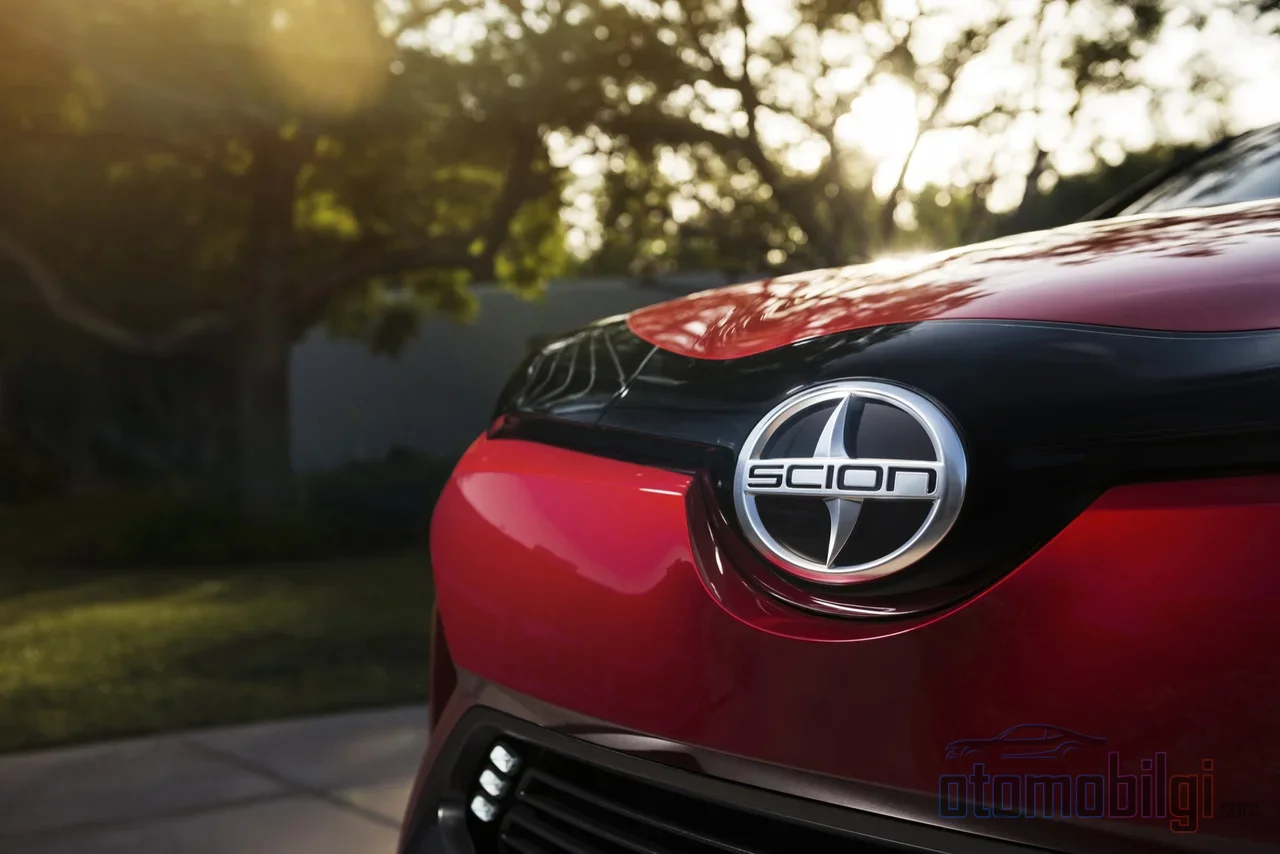
Say there's a brand that: is launched for young people, becomes a culture, and then one morning wakes up to a shutdown announcement... and exactly ten years later returns, this time with a kei pickup no less. Sounds like fiction, right? But that's exactly how Scion's story goes. So why was Toyota's bold experiment born, why did it shut down in 2016, and is the 2026 comeback actually not the comeback we think it is? Buckle up, because this story has both a cultural rise and a painful truth in it.
Why Was Scion Founded? Toyota's Youth Project
In the early 2000s, Toyota had a big problem: the hair of buyers in its showrooms was getting whiter and whiter. According to 2007 data, the median age of a Toyota buyer was 54. In other words, the brand was appealing not to passionate young people, but to family dads and retirees. The first attempt to draw a young audience under the Toyota umbrella was Project Genesis, launched in 1999; the Toyota Echo, the final-generation MR-2 and the Celica were part of this project. The result was a fiasco: the project was cancelled in 2001.
Toyota didn't give up. This time it moved to a completely separate brand concept, namely Project Exodus. Fresh Machine, a Los Angeles-based design firm, developed the brand's identity, logo and website from scratch. In Japan, Toyota's local attempt aimed at young buyers, called WiLL, also inspired this idea. The brand was first announced at the New York Auto Show in March 2002; the bbX (later xB) and ccX (later tC) concepts took the stage. The name was meaningful too: Scion meant a descendant of a family. So both the cars and the young people who owned them would be this brand's "grandchildren".
Boxy Cars and No-Haggle Pricing: How Did the Brand Become a Culture?
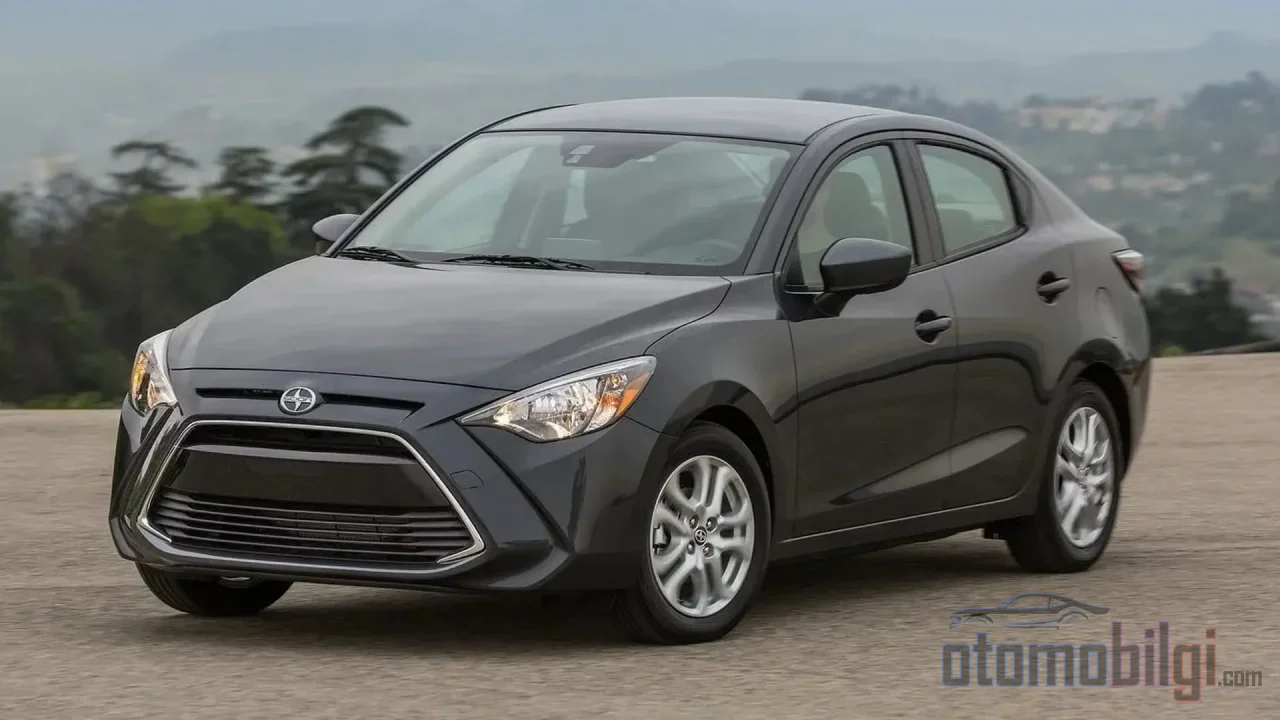
On January 2, 2003, the xA and xB were introduced at the Los Angeles Auto Show. In June 2003, a soft launch was carried out at 105 Toyota dealers in California, and in 2004 the brand spread across the country. So what made Scion different? Three things.
The first was the sales model: Pure Price, meaning a single, no-haggle price. One trim level, a sticker price that couldn't be negotiated, and a massive accessory catalog that could be installed at the dealer. The brand offered around 150 different accessories, and legendary names from the tuner world like GReddy were part of the official program. This approach was new in the US; in the early 90s, GM's Geo and Saturn brands had tried something similar, but Scion did it by leaning on young people, tuning culture and music.
The second was marketing. Instead of classic TV commercials, Scion relied on guerrilla and viral campaigns: the 17 alternative channels of the internet radio station Scion Radio 17, Scion AV which funded music, art and film projects, a collaboration with Gaia Online, and the 2008 "United by Individuality" campaign that brought more than 300 customers' cars to the screen. The brand was present where young people lived, in the language of the moment.
The third, and perhaps the most important, was the cars themselves. With its boxy silhouette, the xB and the sporty coupe tC became symbols of a personalization culture never before seen in the US. Starting in 2004, the limited-production, special-color Release Series models (for example, the 2100-unit xB RS 1.0 in Hot Lava Orange) gained collector value. The result was clear: peak sales of 173,034 units in 2006 and the youngest buyer base in the industry, with a median age of 39. The tC alone accounted for more than 40 percent of the brand's lifetime sales; with 427,571 units in total, it was the backbone of the brand.
Highlights
- Scion was founded in 2003, sold 173,034 vehicles in its peak year 2006, and had a median buyer age of just 39.
- Total career sales were 1,092,675 vehicles; the best-selling model was the tC (427,571 units).
- The brand decided to shut down on February 3, 2016; the FR-S, iA and iM were moved to the Toyota brand.
- In November 2026, Scion by Toyota was announced; the first product is a 660 cc KEI-01 kei pickup.
- The KEI-01 comes as a low-speed vehicle (LSV), with its top speed limited to 40 km/h.
How Did the Decline Begin? The Bleeding of Sales
As in every good story, this rise did not last forever. In 2009, sales crashed to 57,961, and to 45,678 in the 2010 model year. A recovery effort of 56,167 units in 2015 remained at around one-third of the peak. The picture was even more striking by model: while the second-generation xB's peak was above 60,000 units, it fell to 17,017 in 2011, and the xD dropped from 32,603 to 9,573.
One of the reasons was the production strategy. Scion was built on short product cycles and aggressive pricing based on low dealer margins; after the 2008 financial crisis, this model could not survive. By the end of 2013, the xD and second-generation xB were still being sold without a serious update for a full seven years. Toyota also stayed silent as dealers gave up on Scion. The tiny iQ fell far short of expectations and was openly assessed as a disappointment in 2014. There was also an interesting internal problem: the FR-S was actually eating into its own family's sales; it had become a rival to the tC, which targeted a similar audience.
Why Was Scion Shut Down? The Truth Behind the 2016 Decision
On February 3, 2016, Toyota announced that Scion would be discontinued at the end of the 2016 model year. The official justification was this: a separate brand was no longer needed to target young demographics. To be honest, there was solid logic behind this as well. In a world where the main brands had merged with Toyota, a special name no longer seemed necessary to attract young buyers.
But this is also the bitter side of the story. Scion sold more than 1 million vehicles over its career; more than 70 percent of them were new customers to Toyota, and more than 50 percent went to buyers under 35. The average age of the tC buyer was 29, the lowest in the industry. In other words, the brand perfectly accomplished the first half of its mission, the part about attracting young people. The problem was in the second half: these young customers could not be converted into profitable Toyota and Lexus repeat purchases. Gen Y buyers had become more pragmatic in their choices due to economic conditions, and few Scion owners stayed under the same roof for their next car. Young people invited into the family, having received no compliments after the invitation, had turned to other doors.
The practical side of the closure was surprisingly quiet: The FR-S continued on as the Toyota 86, the iA as the Yaris iA, and the iM as the Corolla iM. The C-HR, introduced as a Scion, also hit the road with a Toyota badge. Since the vehicles were already sold and serviced at Toyota dealers, customers experienced no major disruption. As for the tC, it quietly went out of production; the 2016 FR-S Release Series 2.0, in Lunar Storm color, became a farewell series of 1000 units.
A Comeback in 2026: Scion by Toyota and the KEI-01
Now let's get to the most surprising part of this story. In the first week of November 2026, Toyota introduced Scion by Toyota with simultaneous events in Michigan and Texas. But don't think the youth brand of 2003 has come back exactly as it was; because this comeback is something very different from what you might guess.
KEI-01: A Kei-Based Ultra-Compact Pickup
The KEI-01, the first product of the new Scion, is an ultra-compact pickup based on the Daihatsu Hijet / Toyota Pixis Truck. This tiny worker, drawing on Japan's legendary kei-class vehicle culture, will be produced at Toyota's factory in Princeton, Indiana. On the technical side, there's a 660 cc three-cylinder engine and a standard CVT transmission. The supercharged version offers 63 hp and 67 lb-ft of torque, while the naturally aspirated version delivers 46 hp and 44 lb-ft; Toyota has not yet clarified which version's power figures will come to the US.
The really interesting detail is in the classification: The KEI-01 will meet the federal low-speed vehicle (LSV) safety requirements in the US, and its top speed will be limited to 25 mph, or about 40 km/h. It will offer a payload capacity of about 272 kg, and will even come as right-hand drive. So this is not a vehicle you'll cruise with on the highway in flowing traffic; it's the vehicle of the campsite, the farm, the university campus, and fleet operations. Classic performance metrics like the 0-100 km/h figure are therefore meaningless; Toyota didn't announce such a figure either.
Fleet First, Retail Later
The sales strategy is also very different from the old Scion: The KEI-01 will first be offered exclusively to fleet customers through a small number of "Scion by Toyota" dealers to be selected from the existing Toyota dealer network. Limited retail sales for individual buyers will only be evaluated later. The vehicle will reach the US market in the second half of 2027; some publications also refer to it as the 2028 model year. Two more concepts were shown alongside it: the SxS Concept with a turbo four-cylinder hybrid power unit producing over 300 hp and an electric silent mode, and the BKE Concept exploring the idea of compact personal mobility.
Is the New Scion the Old Scion? The Real Meaning of the Comeback
So what is the summary of this comeback? Let's put it briefly, because the full answer to the story is right here: Scion went from being a brand that sold hatchbacks to young people to becoming a laboratory for Toyota's experimental mobility ideas. The new brand was built around curiosity, possibility, and the freedom to explore; rather than being a separate brand, it is being defined as a Toyota-badged identity. The company positions it as a kind of freedom laboratory, a launch point for experimental ideas. In other words, the logic is no longer the 2003 "sell cool cars to young people," but "try small and strange ideas in the real world."
Even so, there are connections between the two Scions that cannot be ignored. The marketing approach that echoed the DIY, do-it-yourself spirit has been preserved. The personalization and the close bond with subcultures are being kept alive this time through kei pickups, side-by-side vehicles, and micromobility. While the 40 km/h speed limit and LSV status are seen as a serious challenge in a country in love with giant pickups, isn't this exactly what Scion's spirit was all about: breaking out of the mold?
While publications like Fortune describe Scion as Toyota's most successful effort at reaching a new generation of buyers, they also discuss it as an example of how good brands can be killed by perfectly logical decisions. This contradiction is what still keeps the brand's legacy interesting. More than a million vehicles, the boxy xBs, Release Series collections, and the industry's youngest buyer base are proof that Scion really worked for a while. But success that fails to turn into a solid business model is, unfortunately, the classic scenario that prepares the end of every brand.
As for 2026, the picture is clear: Scion is no longer a nostalgic youth brand; it is a playground Toyota has set aside for bold experiments. The KEI-01 is the first move in this playground, and if it catches on, it could open the door to kei culture in the US. And if it doesn't? At the very least, we will be at the dealership to see how the story unfolds this time. After all, Scion taught us one thing: in the automotive world, the most interesting brands are sometimes the ones born from the strangest ideas.
Sources
- Scion (automobile) - Wikipedia
- Introducing the Scion by Toyota Brand and KEI-01 - Toyota Pressroom
- Scion Fact Sheet - Toyota Pressroom
- Scion Brand to Transition to Toyota - Toyota Global
- Scion by Toyota Opens the Door to New Mobility Ideas - Toyota Times
- Toyota Revives the Scion Name on a Kei Truck for the U.S. - Car and Driver
- Scion Is Officially Back As A US-Built Tiny Truck - CarBuzz
- Intel and Toyota made perfectly logical decisions - Fortune
- What Happened To Scion? - Motor1
- 2028 Scion KEI-01: 25-MPH Kei Truck Coming to America - Motor Trend