2026 MINI Cooper 5-Door: What Does It Offer in the Small Class?
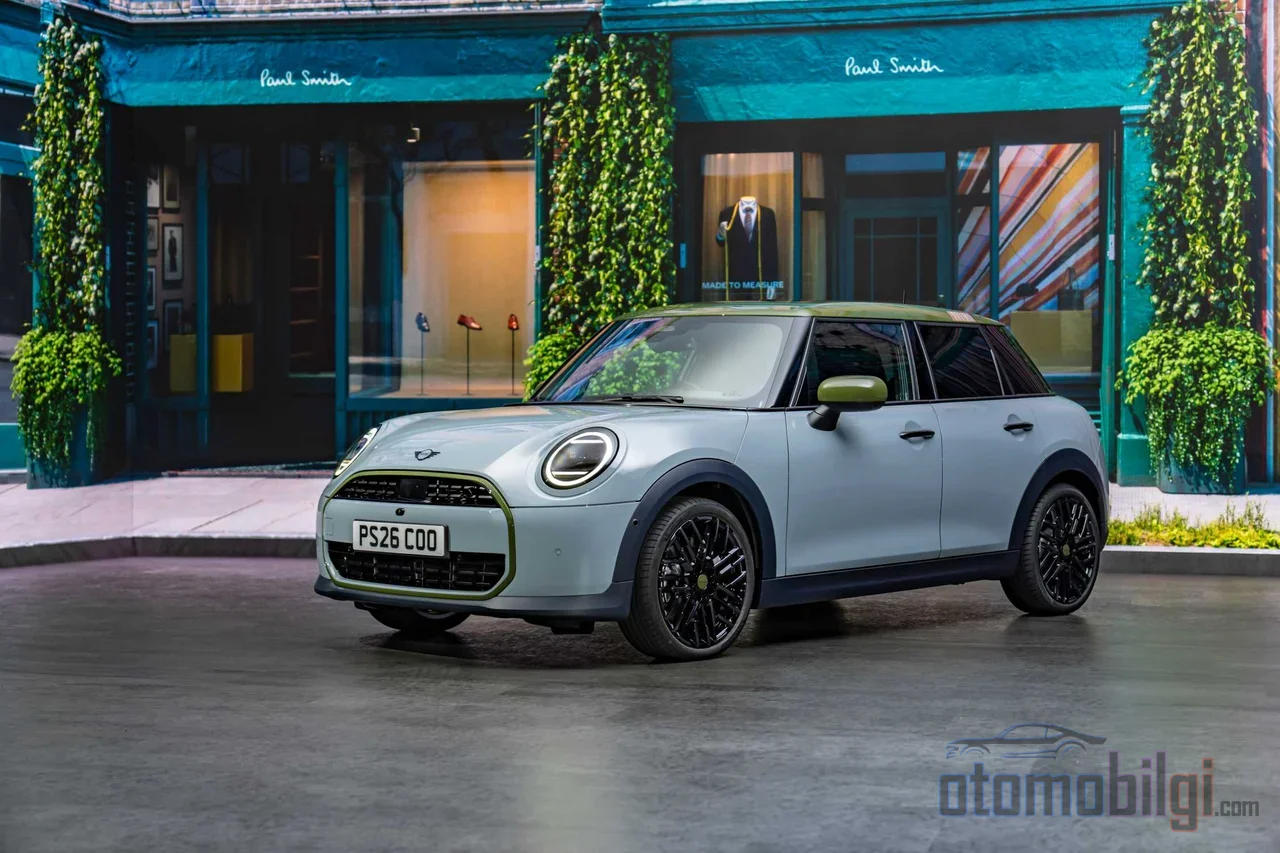
When it comes to small-class premium hatchbacks, most people think either of fully electric models or of the long-bodied cars in the C segment. Yet the petrol MINI Cooper 5 Door, still sold new in Turkiye, is a rare offer sitting exactly between these two poles: a premium internal combustion car that keeps the compact dimensions of the small class, but answers family use with five doors and an automatic transmission. So who exactly is this car aimed at, how adequate is its 1.5-liter three-cylinder engine, and is it really practical with its 275-liter trunk?
Premium in the Small Class: What Need Does the MINI Cooper 5 Door Answer?
The MINI Cooper 5 Door sits in the small class known as B-Hatchback in the Turkiye market. The brand's own description of the model sums up the essence of the matter: more doors, unchanged MINI agility; the original icon, more space. In other words, this car aims to close the practical shortcomings of the three-door form without compromising the driving character MINI calls the go-kart feeling.
This positioning fills a clear gap in Turkiye. The number of premium brands selling petrol internal combustion engines in the small class has steadily declined; even within MINI's own lineup, the standout version of the Countryman is now fully electric. Compact dimensions in the city, but a petrol engine with no range anxiety on long roads; a family setup requiring a second child or regular rear passengers; for the buyer who wants all of this in one body, the Cooper 5 Door is currently one of the most direct answers in the category.
Highlights
- 1.5-liter, three-cylinder petrol engine: 156 HP and 230 Nm of torque
- 0-100 km/h in 8 seconds, top speed 225 km/h
- WLTP combined consumption 6.3 l/100 km, CO₂ 142 g/km
- Trunk: 275 liters, up to 925 liters with 60:40 folding seats
- Body: 4,036 mm length, 1,744 mm width
Engine and Transmission: Is the 156 HP Three-Cylinder Enough?
The engine list of the petrol Cooper 5 Door sold in Turkiye is extremely simple: there is one option. This option is a 1.5-liter three-cylinder petrol unit producing 156 HP of power and 230 Nm of torque. In the new-generation MINI naming scheme, this version is called the Cooper C; there is also a four-cylinder 204 HP Cooper S under the same body, but the petrol offer of the 5 Door in the Turkiye market is currently shaped around this 156 HP base engine.
The performance figures paint a balanced picture for its class: 0 to 100 km/h in 8 seconds, top speed 225 km/h. These values match the real-world needs of the car's potential user. Since the three-cylinder engine's 230 Nm of torque comes in at relatively low revs, urban responsiveness is better than expected; what defines the car's character is not outright speed, but the instant response to the throttle pedal. On the transmission side, there is a single combination: automatic. In Turkiye sales lists, the petrol 5 Door is offered with an automatic transmission, and at this point the model differs from its three-door sibling's manual-focused setup.
What is remarkable from an engineering standpoint is that this engine preserves the MINI character despite its small displacement. Three-cylinder units usually work in their favor in economy-focused vehicles; here, however, the tuning is oriented toward prioritizing driving enjoyment. This choice also has a price: a driver seeking maximum silence on long journeys will feel the characteristic vibration and sound signature of the three cylinders.
Fuel Consumption: What Does 6.3 lt/100 km Actually Mean?
The official figure is clear: WLTP combined consumption of 6.3 l/100 km, with a corresponding CO₂ value of 142 g/km. The brochure gives this range as 6.0-6.3 l/100 km and 136-142 g/km; the difference stems from tire and equipment variations that change according to the equipment package. It should be remembered that WLTP figures are laboratory measurements; in real-world use, the numbers can rise above this band depending on driving style and traffic.
Looking at the field performance of the 1.5-liter MINI engines, the picture is still reasonable: in usage experiences with similar units, urban averages of around 6.5 liters and extra-urban averages of around 4.6 liters stand out. In other words, when driven quietly and steadily on the highway, it is possible to drop below the five-liter band; and in the city, there is no reason to rise significantly above seven liters. These figures count as an achievement for a petrol car in the compact premium class and are the car's strongest economic argument.
Five-Door Body: Interior and Luggage Practicality
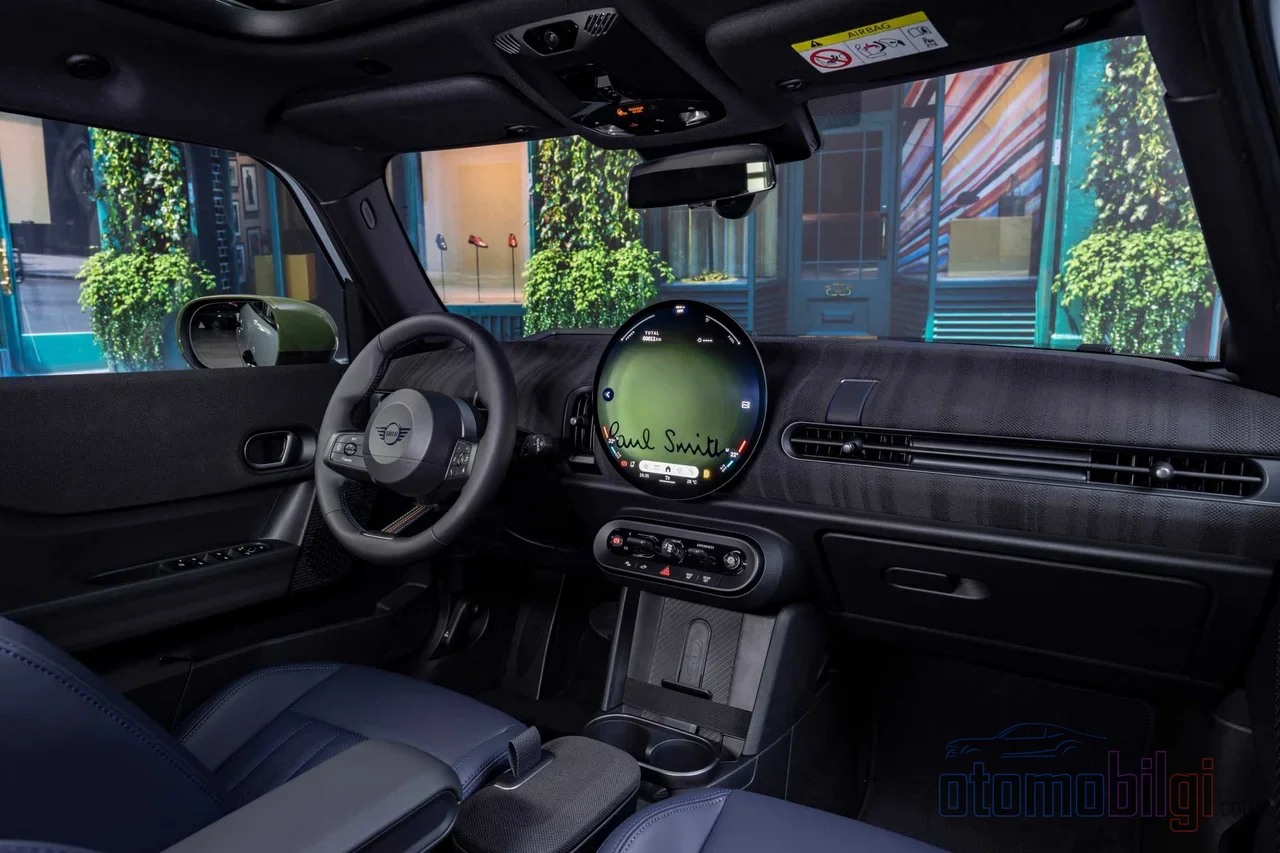
The reason for the Cooper 5 Door's existence is its body form. A length of 4,036 mm and a width of 1,744 mm keep the car at the compact end of the small class; in return, the rear doors and the arranged second row solve the weakest point of the three-door version. According to the manufacturer's data, the rear seats offer a noticeably wider seating area for three passengers, and headroom has increased compared to the three-door.
On the luggage side, the official value is 275 liters; when the rear seats are folded at a 60:40 ratio, the volume extends to 925 liters. As an absolute figure, this is not the best in the class; but everyday practicality is another calculation: fitting a child seat in a five-door body, carrying items in a tight parking spot, or loading weekend luggage is a qualitatively different experience from that in a three-door car. MINI had also increased the luggage volume with the move to five doors; compared to the relatively narrow and deep luggage compartment of the 3 Door, a more usable opening and floor are obtained.
In the new-generation interior, the technical equipment has also been updated: MINI Operating System 9 built around a 240 mm circular OLED display, Experience Modes, and directly accessible basic functions have settled into the cabin. Solutions like a wireless charging unit instead of a gear selector on the center console are concrete examples of gaining space in a small cabin. Outside, the octagonal grille, three different LED headlight design options and a wide color palette - 13 body colors, 8 interior colors - continue the model's emphasis on personalization.
3 Door, 5 Door, or Countryman?
For the buyer trying to decide among the three options, the critical lines of distinction are these: The 3 Door offers the iconic form and the most compact dimensions; with a 4-seat layout and a relatively small trunk, it is essentially a style choice. The 5 Door keeps the same design language while adding accessibility and interior width; it is the sensible candidate for anyone regularly carrying passengers in the back. The Countryman, on the other hand, answers an entirely different need: a bulkier body, greater mass and, consequently, higher consumption.
| Criterion | Cooper 3 Door | Cooper 5 Door | Countryman |
|---|---|---|---|
| Position | Style-focused, most compact | Compact premium, family-friendly | Family and volume-focused |
| Rear seat access | Limited | Two rear doors | Two rear doors, wide |
| Trunk approach | Smallest volume | 275 liters, up to 925 liters | Above-class volume |
| Notable version in Turkiye | Gasoline | Gasoline 1.5, 156 hp | Fully electric Countryman E |
| Power | 156 hp (C) | 156 hp (C) | 170 hp (C) / 204 hp (E) |
| Torque | 230 Nm | 230 Nm | 280 Nm (C) / 250 Nm (E) |
| 0-100 km/h | 7.7 s | 8.0 s | its rivals are C-segment representatives that have scaled up. |
A special dynamic of the Turkish market should also be noted: because the Countryman's standout version is electric, unexpected price intersections can occur between the two models depending on the tax advantage. For a committed buyer of gasoline engines who has no range anxiety, the Cooper 5 Door stands in this picture as the category's sole gateway to premium gasoline internal combustion.
The Cooper 5 Door Alongside the Audi A3 and BMW 1 Series
The classic two rivals of the premium compact hatchback equation, the Audi A3 Sportback and BMW 1 Series, have been swimming in the same waters for over twenty years. A comparison of dimensions is the clearest indicator of the divergence: the BMW 1 Series is roughly 325 mm longer and 56 mm wider than the Cooper 5 Door; MINI is only 5 mm taller. In other words, MINI in this trio is truly a proper small-class car; while its rivals are C-segment representatives that have scaled up in size.
This difference works in both directions in practice. The smaller body gives MINI a clear advantage in tight city parking and traffic; combined with the direct steering and balanced chassis summarized as the go-kart feeling, it offers a liveliness in driving character that the A3 and 1 Series do not provide. In return, it falls behind its German rivals in absolute space metrics such as rear seat width and trunk volume. Moreover, MINI's personalization range - body and interior color combinations, equipment packages - is broad compared to the rivals' standardized catalog. The A3 or 1 Series is more car; the Cooper 5 Door is a more characterful and more compact car; the choice is made between these two sentences.
Strengths and Weaknesses: A Balanced Assessment
The strengths are not hard to count: a body that carries four adults despite its compact exterior dimensions, an economical gasoline engine backed by 6.3 l/100 km WLTP consumption, the ease of use offered by the automatic transmission as standard, the up-to-date cabin experience brought by MINI Operating System 9, and wide personalization options. Road holding and a lively driving character remain the signature the model has preserved in every generation.
The weak points are the realities of the class: at 275 liters, the trunk volume is absolutely behind its rivals; the characteristic sound of the three-cylinder engine may require an adjustment period for users expecting maximum comfort; there is feedback from some users that the climate control temperature setting is not precise. For someone seeking the three-door iconic form, the five-door body may not always establish the same aesthetic connection. These are not flaws to be eliminated, but conscious balances stemming from the model's positioning.
Conclusion: Whose Car Is the Cooper 5 Door?
The gasoline MINI Cooper 5 Door is the car of the buyer who wants to combine style and practicality in one body in the small class, and who prioritizes a premium identity and characterful driving over absolute trunk volume. The 1.5-liter 156 hp engine offers a technically balanced package with its 8-second zero-to-hundred and a WLTP value of 6.3 l/100 km; the five-door body opens the door to family use without compromising MINI agility. For the driver who can forgo the space offered by the Audi A3 or BMW 1 Series, and in return wants a more agile and distinctive premium hatchback in the city, this model remains the clearest gasoline answer in the category.
Sources
- MINI Cooper 5 Door | MINI Türkiye
- MINI Türkiye
- New MINI Cooper C and New MINI Cooper S | MINI Türkiye
- New MINI Cooper 5 Door | MINI Türkiye
- MINI Cooper 5 Door e-brochure | MINI Türkiye
- New Mini Cooper 5 Door Price List Fuel Consumption | Arabam.com
- Fuel Sippers Series: Mini Cooper 1.5 Review | Arabam.com Blog
- Cooper 1.5 Favoured 2026 | Sahibinden oto360
- MINI Cooper 5 Door 2026 Brochure | Araclo
- Should You Buy the 5-Door Mini Cooper? | Arabalar.com.tr
- MINI 3 Door and 5 Door models | Koç-Şifler
- Head to Head: BMW 1 Series and Audi A3 Sportback | Motor1 Türkiye
- BMW 1 Series 120 vs Mini Cooper 5K comparison | Otomobilkarsilastirma.com
- MINI Countryman E Review 2026 | Araclo
- Mini User Reviews | Sıfır Araç Al