Why Is the 2026 Hyundai i20 One of the Most Balanced Cars in Its Class?
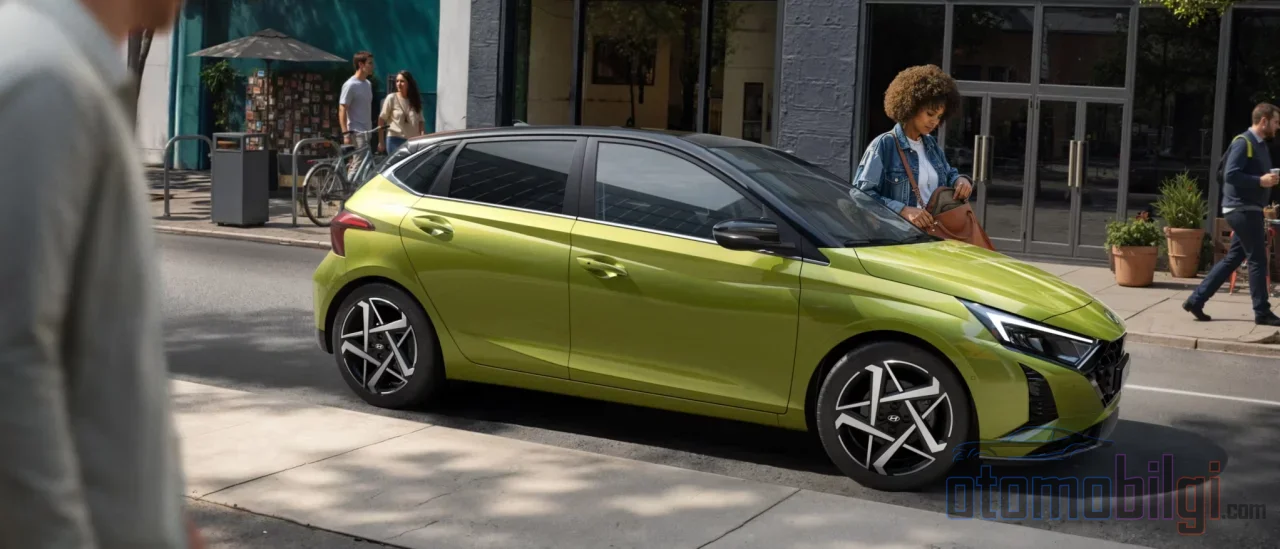
Buying a non-hybrid gasoline car in the B segment in 2026 means making a choice from an ever-shrinking pool of options. The Hyundai i20 is one of the best-known faces of this shrinking pool: a B-segment hatchback whose third generation was introduced in 2020, refreshed in 2024, and sold on the Turkiye market in its non-electrified 1.0 T-GDI gasoline version. So is this 998 cc three-cylinder turbocharged engine really enough for daily city use? The answer is more complex than a single horsepower figure; low-end torque, transmission choice and real-world consumption must all be evaluated at once.
On this page we break down the identity of the gasoline i20 piece by piece: engine and transmission character, interior and trunk practicality, its strengths and weaknesses, and the aspects that set it apart from rivals like the Clio, Corsa, Ibiza and Sandero. We are not covering hybrid or fully electric versions; the subject is what the pure gasoline package offers to the city user.
The i20's Place in the B Segment and What Need It Answers
With a length of 4,065 mm, a width of 1,775 mm and a wheelbase of 2,580 mm, the i20 has typical B-segment hatchback dimensions. The 2024 refresh renewed the exterior styling, simplified the product lineup and improved the standard equipment level. The result is a car that tries to meet the basic transportation needs of small families and city users in a single package.
The critical point is this: Many rivals in this segment are now offered only with hybrid versions. For buyers who do not want a hybrid or whose budget makes it difficult, the 1.0 T-GDI gasoline i20 is one of the few pure gasoline options left on the market. The car's identity largely stems from this positioning: a promise of a gasoline car that is practical in narrow streets, well equipped and backed by a long warranty - not the latest electrification technology.
What Kind of Character Do the 1.0 T-GDI Engine and Transmission Options Have?
At the heart of the non-electrified version sold in Turkiye is the 1.0 T-GDI engine with a displacement of 998 cc, three cylinders and turbocharging. This engine is offered as a classic gasoline setup, without a 48-volt mild-hybrid system; the 48V versions achieve roughly a 3-4 percent improvement in consumption and CO2 figures, but the package we are discussing does not have this system.
On the power side, different levels are seen depending on the version: Horsepower figures around 90 PS and 100 PS stand out in manual packages, while 100 PS (with upgraded versions reaching up to 118 bhp also available) comes with the automatic options. The torque figure is stated as 172 Nm in the manual versions. On the transmission side there are two paths: the 6-speed manual and the 7-speed dual-clutch automatic (7DCT).
Highlights
- 1.0 T-GDI engine: 998 cc, three-cylinder turbo gasoline, 90-100 PS band
- Trunk: 352 liters, 1,165 liters with the seats folded
- Transmission: 6-speed manual or 7DCT dual-clutch
- Warranty: 5 years unlimited mileage
- Standard equipment: 10.25-inch touchscreen and digital instrument cluster
Manual or DCT?
The manual gearbox is the more sensible choice for most buyers. The DCT adds cost and mechanical complexity; in return, it does not improve performance on paper. Quite the opposite: With the 100 PS engine, 0-100 km/h acceleration is about 10.4 seconds with the manual, rising to 11.4 seconds with the DCT; the difference is roughly one second. In heavy traffic routes, if automatic convenience outweighs everything else, the DCT makes sense, but for those who want speed and simplicity, the manual is clearly ahead.
| Version | Power | Torque | 0-100 km/h |
|---|---|---|---|
| 1.0 T-GDI 6MT | 100 PS | 172 Nm | 10.4 s |
| 1.0 T-GDI 7DCT | 100 PS | 172 Nm | 11.4 s |
Is the 1.0 T-GDI Enough for City Use?
The short answer to the question: yes at everyday city pace, but with one condition. The engine offers sufficient traction in the urban speed range; it does its job at intersections, on ramps and during short accelerations. However, the typical trait of small three-cylinder turbocharged engines applies here too: there is a lack of torque at low revs. This shortcoming is felt especially when starting off on a hill or when loaded, forcing the driver to shift gears frequently. Ride quality and city consumption are affected by this.
On the consumption side, there is a gap between official figures and the real world. While the manual version is quoted at around 53-55 mpg (approximately 5.1-5.3 lt/100 km) in the official cycle, a realistic expectation in real use is around 50 mpg (approximately 5.6 lt/100 km). In city use, this figure can drop to as low as 42 mpg (approximately 6.7 lt/100 km). This range, which moves depending on the driver's foot and traffic density, cannot rival the city efficiency of hybrid rivals; the i20's consumption balance improves on the highway, at steady speeds and with fewer gear changes.
There is also a measurable area of advantage: While the 100 PS manual i20 keeps the acceleration and consumption balance at the segment average, the DCT's comfort cannot strike that balance. The practical conclusion for the city user is this: for a driver who does not drive harshly and knows how to keep the engine in its rev band, the 1.0 T-GDI is sufficient; for a driver who tries to lug it at constantly low revs, frequent gear changes and increased consumption are inevitable.
Interior and Boot Practicality
One of the i20's strongest selling points is its interior balance. There is adequate space for tall adults in the front seats; cabin width is interpreted above the segment standard. Rear seat width is cited among the best in class, which makes the car a serious candidate for family use. Short and medium-distance journeys with four adults can be done comfortably.
The boot is also a strong asset: 352 litres of volume is offered with the rear seats in place, reaching 1,165 litres when the seats are folded. The comparison is clear: The Volkswagen Polo is only 1 litre ahead at 355 litres, while the Toyota Yaris at 286 litres and the Dacia Sandero at 328 litres trail behind. Practicality details have also been considered: the boot floor is adjustable, and it can be raised to reduce the loading lip.
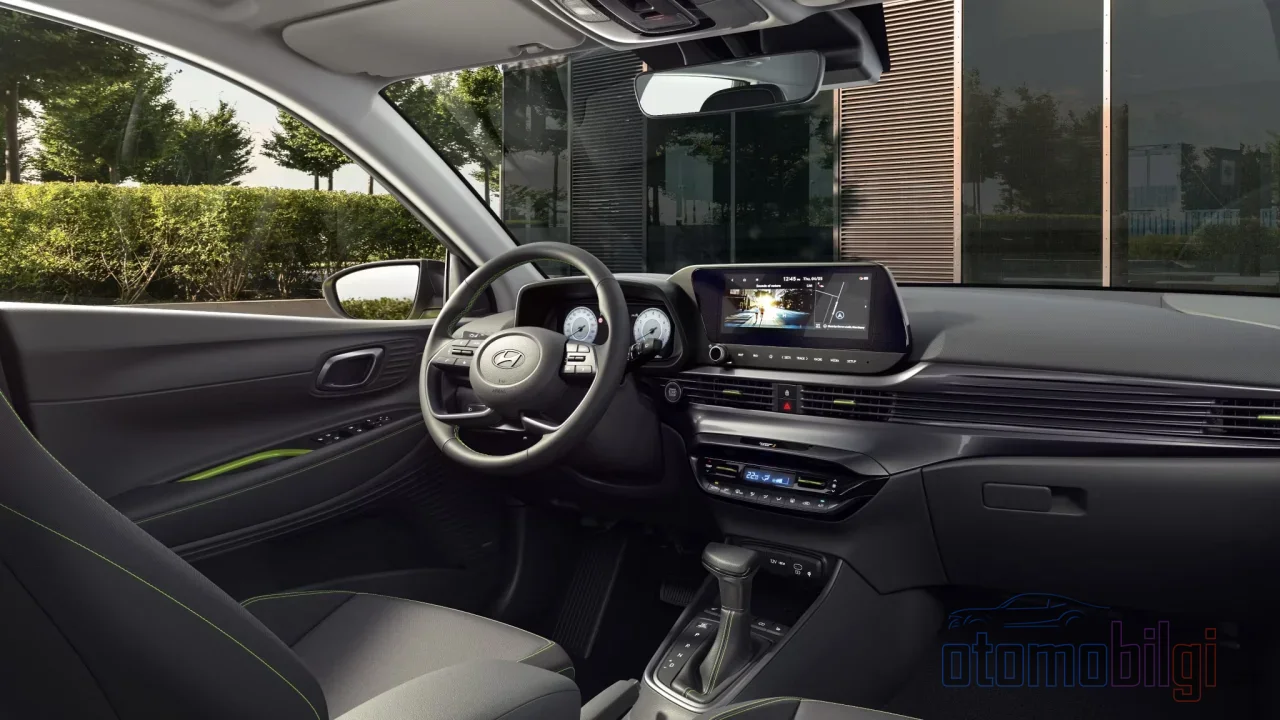
On the equipment side, the picture is broad. Every car gets a 10.25-inch touchscreen with navigation plus CarPlay and Android Auto support, and a 10.25-inch digital instrument cluster as standard. Higher trims add wireless charging, Bluelink connectivity and a Bose sound system. The safety package is also full: Under Smart Sense there is autonomous emergency braking, lane keeping, blind spot warning and an eCall emergency call system. A 4-star result from the 2021 Euro NCAP test is a score that is not the best in the segment.
Strengths and Weaknesses
- Plus: Generous standard equipment and a wide technology package
- Plus: Rear seats that are roomy for its class and a 352-liter boot
- Plus: 5-year unlimited-km warranty; minimum 24-month warranty and 12-month roadside assistance in the certified used car program
- Minus: Interior material quality is average; hard plastics dominate
- Minus: On larger wheels the suspension stiffens, reducing ride comfort
- Minus: Steering feel and overall driving pleasure are not class-leading
In short, the i20 is not a car focused on grip and driving pleasure; it stands out with the trio of equipment, space and warranty, while its driving character is an average highway machine. If that description sounds critical, one thing must be added: the Fiesta, accepted as the segment's driving benchmark, is no longer in production and the market feels this gap.
How It Differs From Its Rivals: Clio, Corsa, Ibiza, Sandero
Production of the Ford Fiesta ended on July 7, 2023; rising parts costs and the market's shift toward SUVs formed the backdrop to this decision. This is a development that strengthens the i20's hand. Although the Fiesta's steering feel is still a benchmark that is missed, its absence from the new car market also steers driving-focused buyers toward the remaining options of the B segment.
Against the Renault Clio, the picture is two-sided. The hybrid Clio is clearly ahead in power and efficiency; but in the petrol comparison, the i20's 352-liter boot is noticeably larger than the hybrid Clio's. The Opel Corsa is 10 mm narrower in width (1,775 mm vs 1,765 mm), so it carries a small advantage in tight spaces, and with a top speed of 210 km/h it surpasses the i20's 181 km/h; but in a city car this difference remains a theoretical detail. The Dacia Sandero appeals to a completely different buyer base by offering a nearly twice-cheaper price than the i20 at the entry level; in return, its 328-liter boot cannot compete in the same class as the i20's 352-liter one. The size difference with the Seat Ibiza is minimal: the i20 is about 1.9 cm shorter and 0.6 cm taller, with a weight difference of around 1 percent.
The i20's real point of differentiation
When the rivals are examined one by one, each is ahead in one area; the i20's difference is keeping all areas at an upper-mid level at the same time without being at the bottom of the class in any of them. In boot space it is right behind the Polo, ahead of the Yaris and Sandero; it comes with one of the fullest equipment packages in the segment; with 5 years unlimited km warranty, ahead of most rivals. On the other hand, it lags behind the Fiesta in driving fun and the Polo in comfort and style. From an engineer's perspective, this describes a well-balanced product that is not a class leader in any single area.
Conclusion: Who Is It Enough For, And Who Is It Not?
Let's give a clear answer to the question: The 1.0 T-GDI petrol i20 is a car sufficient for daily city use; with adequate engine power, its 352-liter boot, well-equipped trim, and 5-year unlimited km warranty, it fully meets the practical needs of the city user. Its limits must also be known: the lack of low-end torque keeps the driver busy with gear shifts, city consumption remains high compared to hybrid rivals, and interior material quality is above average for its price.
The right buyer profile is clear: a city user who does not want the cost and complexity of hybrid systems, seeks a spacious interior and a long warranty, and is willing to sacrifice driving fun for practicality. For a buyer matching this profile, the manual 1.0 T-GDI is one of the most balanced packages among the few pure petrol options left in the segment. If driving passion is the priority, meeting that expectation will not be easy for the i20, since the Fiesta has been discontinued.
Sources
- Hyundai i20 Review 2026: Price, specs & boot space | Drive
- Hyundai i20 | Stylish Small Car | Specs, price and offers
- 2026 Hyundai i20 3gen/II 5-Door Hatchback full range specs
- Hyundai i20 Hatchback 1.0T Gdi Petrol Specs - Parkers
- Hyundai i20 Review 2026, Price & Specs - WhatCar
- Hyundai i20 Review - Top Gear
- 2026 Hyundai i20 (90 HP) POV Test Drive
- 2026 Hyundai i20 Review - auto.co.za