What Does the Ford Puma 1.0 EcoBoost Offer?
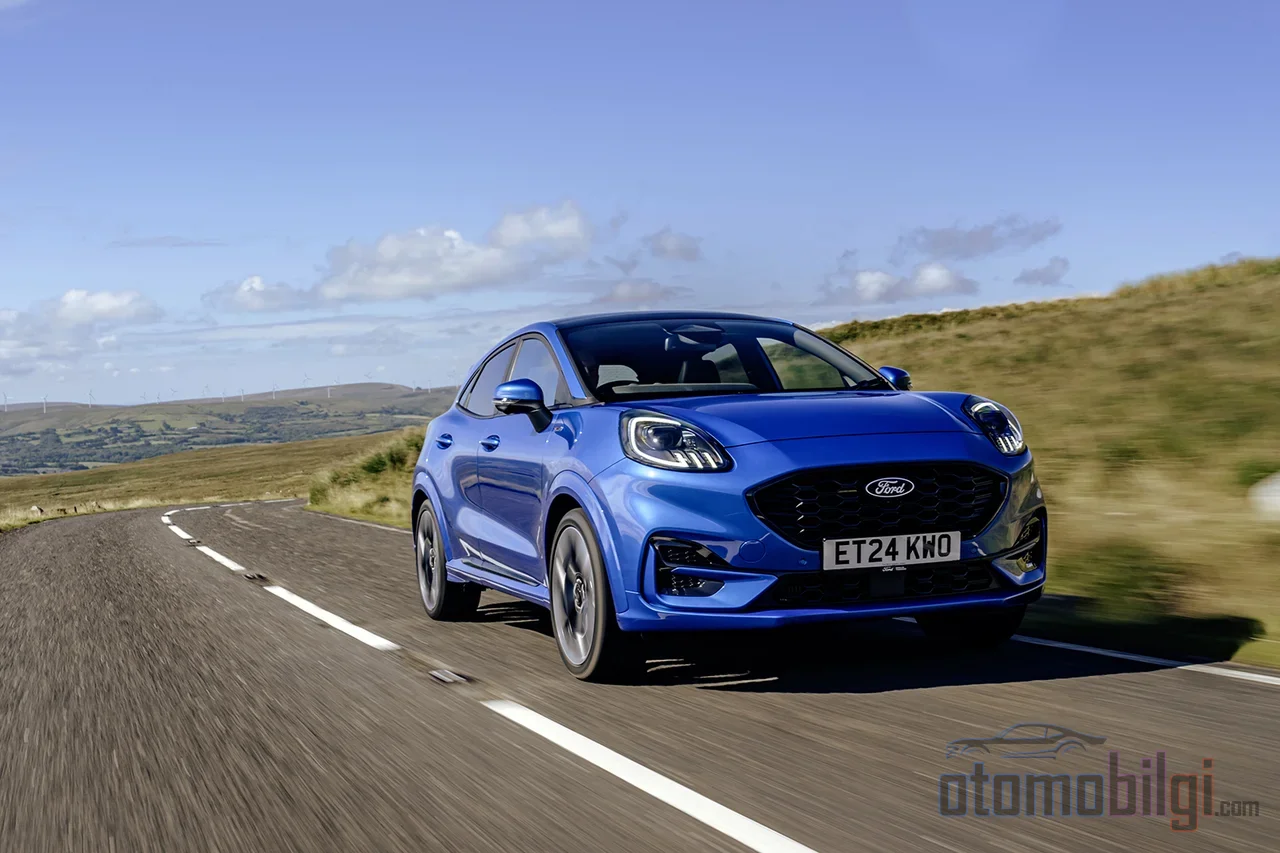
In the small SUV class, trunk capacity competition is usually talked about in liters as a decisive factor; The Ford Puma, however, is the one that ends this competition outright with 456 liters. Yet the most interesting part of the Puma's story is not the trunk, but what lies on the engine side. While most of the European market now sells this car with a 48-volt mild hybrid system, the pure gasoline 1.0 EcoBoost version remains a little-known, rarely discussed option. So what does the non-electrified Puma with the 1.0 EcoBoost offer, and for whom is it the right choice?
What Is the Puma's Place in the B Segment?
The Ford Puma is a B-segment small crossover SUV produced since 2019. Its technical foundation comes from the Fiesta: Built on Ford's global B platform, the vehicle is manufactured at the plant in Craiova, Romania; Ford invested 200 million euros in this facility and employs around 1,700 people. Its position in the family tree is clear: In Europe, it sits above the EcoSport and below the Kuga.
Its exterior dimensions are typical for its segment: 4,186 mm length, 1,805 mm width, 1,537 mm height and a 2,588 mm wheelbase. Kerb weight is 1,205 kg. This compact body is the car of a user who moves between city driving and weekend getaways and wants a single vehicle to meet both needs. The facelift in February 2024 brought a new front grille, new headlights, a revised interior and a larger infotainment screen; the model remains up to date in the lineup into 2026 as well.
Who Is the Pure Gasoline 1.0 EcoBoost Version For?
An honest distinction needs to be made here. Ford's current European positioning offers the Puma primarily as the EcoBoost Hybrid, that is with a 48-volt mild hybrid system; and the official consumption and emissions data belong to these versions. The non-electrified pure gasoline 1.0 EcoBoost, on the other hand, is an option that is not available in all markets and varies by sales region. For this reason, the current official power and performance table is far less documented than that of the mild hybrid versions.
The concrete data at hand is as follows: the pure gasoline 1.0 EcoBoost is offered with a 1.0-liter three-cylinder turbocharged gasoline engine widely reported to produce about 125 hp and 200 Nm of torque; 0-100 km/h acceleration is just over 10 seconds, with the published figure for the automatic version being 10.2 seconds for 0-62 mph. The manual 125 hp version's 0-60 mph acceleration is reported as 9.7 seconds. Exact and up-to-date official figures should be confirmed from the Ford price list in your region before purchase; the power and performance figures on this page reflect the published data available for the pure gasoline version.
Highlights
- With a 456-liter trunk capacity, it has the largest load area in its segment, extending up to 1,216 liters with the folding seats
- A washable MegaBox compartment offering an additional 80 liters of volume beneath the trunk
- Pure gasoline 1.0 EcoBoost: about 125 hp / 200 Nm, 6-speed manual or 7-speed dual-clutch automatic
- 4,186 mm length, 2,588 mm wheelbase, 1,205 kg kerb weight
- Production location: Romania Craiova, since 2019
Engine and Transmission Character: How Does the 1.0 EcoBoost Work?
The Logic of the Three-Cylinder Engine
The 1.0 EcoBoost is the best-known member of Ford's family of small-displacement three-cylinder turbocharged petrol engines. The logic chain is simple: small displacement, low friction and lightweight construction; noticeable torque fill in the mid-rev range thanks to the turbocharger. Torque of 200 Nm is more than enough for everyday use in a vehicle of this class; for a user who frequently does stop-and-go driving in the city, the car never feels strained even at low revs. The 125 hp of power is a balanced match for a 1.2-ton body: neither dull, nor excessive.
Manual or Dual-Clutch?
On the transmission side there are two options: a 6-speed manual and a 7-speed dual-clutch automatic. The choice actually depends on your usage profile. The manual is mechanically simple, has predictable maintenance costs, and in the mild hybrid version it is generally more efficient than the automatic. The dual-clutch automatic, on the other hand, gives your foot a rest in city traffic; however, reviews share a common finding that this transmission is slow and delayed in its gear selections, reacting late to the driver's intent. Even for city-focused use, many users find the manual more sensible. A note for performance enthusiasts: the ST version's 7-speed automatic is a different, sport-tuned unit and should not be confused with it.
Consumption and Real-World Efficiency
The official WLTP consumption of the mild hybrid versions is in the range of 5.3-6.5 l/100 km; the most efficient pairing stands out as the low-power version with the manual transmission. For the pure petrol version, official catalog figures are not widely available; in the real world, Pumas with this engine are observed to typically consume about 5.5 to 7.5 liters per 100 kilometers. Another concrete finding: for the 2022 model year, it has been reported that real-world consumption can come out about 8% higher than the laboratory value. This means you need to leave a realistic margin when looking at WLTP figures; especially in use with frequent short trips, approaching the upper end of the range is normal.
Interior and Luggage: What Makes the Puma a Puma
456 Liters and MegaBox
The Puma's most concrete card is its trunk. The base volume of 456 liters is the largest figure in the small SUV class; with the rear seats folded, this figure reaches 1,216 liters. The real engineering trick lies beneath the trunk floor: the MegaBox compartment, with a washable surface, offering 80 liters of extra volume. Muddy boots, wet items and sports equipment can be carried in this compartment without soiling the main load area. The trunk floor can drop down about 15 cm, which means a deep load area and more flexible placement. The loading sill is almost nonexistent in its lowness, and the squarish shape of the opening noticeably increases practicality when carrying large items.
Living in the Cabin
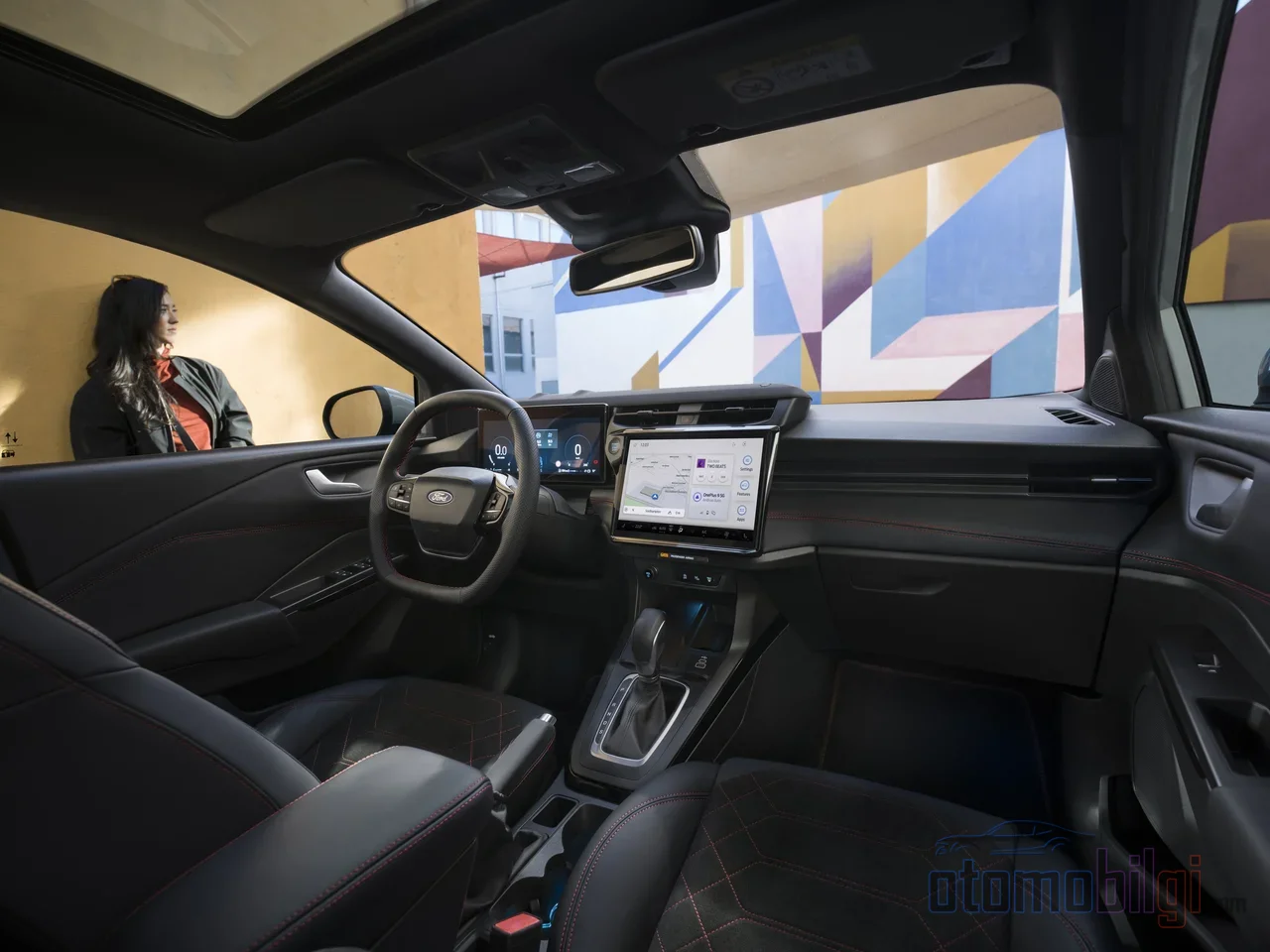
Seating in the front seats, along with head and shoulder room, is generous; the driving position can be well adjusted. Rear seat space, however, is somewhat more limited than some rivals; tall adults may feel slightly cramped in the back. The large glass surfaces reduce this feeling, and the cabin is perceived as more spacious, especially for children in the rear seats. During driving, the cabin is relatively quiet for its segment; the larger screen and revised interior that came with the 2024 facelift have raised the visual quality.
Strengths and Weaknesses: Evaluation from an Engineer's Perspective
The strong points are worth listing. Driving dynamics are one of the references in the Puma's class; the model has an award-winning chassis, and the balance between suspension and comfort earns praise in this segment. Steering feel and body control are above B-segment crossover expectations. The boot and MegaBox flexibility are a measurable advantage. The sales-side evidence is also clear: the Puma was the best-selling car in the United Kingdom in 2023, 2024 and 2025; in 2023 it ranked among the top ten in Europe with approximately 160 thousand units sold.
The weak points are real too. Even the 155 hp mild hybrid engine does not promise a refined cabin quietness; on the pure petrol three-cylinder engine, the characteristic vibration and noise are more noticeable at high revs. The dual-clutch automatic transmission, in forms other than the performance version, does not meet expectations. Rear seat space is one of the areas where it falls behind its rivals.
The reliability issue, however, must be handled carefully. Previous generations of the 1.0 EcoBoost experienced problems caused by the wet timing belt; the past versions of this engine that ran on a timing belt are a well-known point of controversy. It is stated that the new Puma uses a timing chain, which largely eliminates the belt-related risk. Still, user experiences include complaints such as 12V battery weakness and irregular idle. In short, the engine is a structure that must be managed with regular maintenance and an up-to-date oil change protocol.
How Does It Stand Apart from Its Rivals?
The B-segment crossover field is crowded; but the Puma's points of differentiation are measurable. First, the boot: 456 litres is clearly above most direct rivals, and a MegaBox-like solution is not common in this class. Second, driving: the Puma is one of the few models that consistently stands out in the driving enjoyment criterion for this body type. Third, data: it draws a more efficient consumption profile than most rivals equipped with similarly sized engines; in user experiences, the Puma consumes noticeably less fuel than rivals with larger engines.
On the other hand, some of its rivals offer wider rear seat space and softer ride comfort. When evaluating the Puma, this trade-off must be taken into account: in return for the driving dynamics and boot gains, you forgo a few centimetres in the rear seat and the suspension's firmer character.
So What Does the Ford Puma 1.0 EcoBoost Offer?
| Feature | Value |
|---|---|
| Segment | B (small crossover SUV) |
| Length / Width / Height | 4,186 / 1,805 / 1,537 mm |
| Wheelbase | 2,588 mm |
| Curb weight | 1,205 kg |
| Engine | 1.0 EcoBoost, three-cylinder petrol |
| Power (published figure) | Approximately 125 hp |
| Torque | 200 Nm |
| 0-100 km/h | A little over 10 seconds |
| Transmissions | 6-speed manual / 7-speed DCT |
| Trunk / MegaBox | 456 L / +80 L |
The short answer is this: The pure petrol 1.0 EcoBoost Puma offers one of the most practical and most enjoyable-to-drive small crossover options in the segment for users who do not want electrification or who find this option in their market. Approximately 125 hp and 200 Nm are sufficient for everyday use in a 1.2-ton body; the manual transmission is the most balanced form of this pairing. The 456-liter trunk, the 80-liter MegaBox and the award-winning chassis are measurable advantages over its rivals. In return, there are certain compromises in rear-seat space, automatic transmission speed and refinement. For the user who accepts this trade-off, the Puma is one of the most rational choices in its class.