Where Does the 2026 Nissan Juke Stand in Its Gasoline Class?
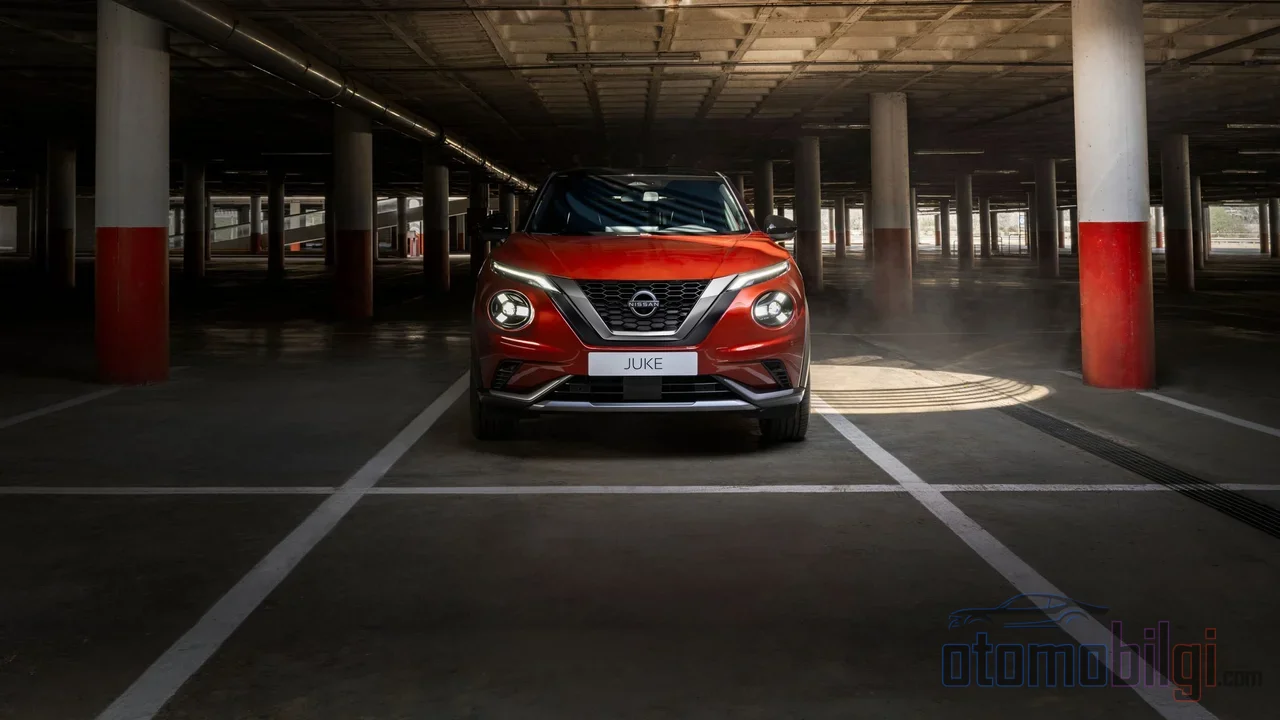
A car's character sometimes comes from its positioning more than from the liter displacement of its engine. The Nissan Juke is exactly such a vehicle: A model that has carried the coupé SUV form in the B segment since 2010, even popularizing this form, has reached an interesting threshold as of 2026. Its third generation was introduced by Nissan in 2026 as fully electric and will hit the roads in spring 2027. This means the 1.0 DIG-T petrol Juke's final generation without electrification. So where does this three-cylinder, 1.0-liter, turbocharged petrol version really stand on the crowded B-segment SUV scene? The answer lies not in a single number; it is hidden in the engine's character, the trunk capacity, and the design philosophy that sets the Juke apart from its rivals.
The Juke's Identity: The Model That Carries the Coupé SUV Form in the B Segment
The Juke is a subcompact crossover produced since 2010. The second generation (F16) was introduced in Europe in September 2019 and shares Renault-Nissan's CMF-B HS platform with the Renault Clio V and Captur II. Production takes place at the Sunderland factory in the UK; the design was born at Nissan Design Europe in London and refined in Japan. This international collaboration gives the car both European road manners and Japanese design boldness.
Its positioning is clear: The Juke combines the elevated seating position of an ordinary B-segment hatchback with a silhouette unique to coupés. The concealment of the rear door handles near the C-pillar, within the window frame, is the key to this coupé look. Nissan describes the Juke as a blend of crossover ruggedness and sportiness; it is hard to find another model in its segment that uses such a bold and polarizing design language. Behind the fact that it is Nissan's second best-selling model in Europe after the Qashqai lies exactly this extraordinary identity.
Highlights
- 1.0-liter three-cylinder turbo petrol engine producing 117 PS of power and 200 Nm of torque
- 6-speed manual or 7-speed DCT dual-clutch transmission option
- 0-100 km/h: 10.7 seconds with the manual, 11.8 seconds with the DCT
- A 422-liter trunk capacity, considered generous for the segment
- The last petrol Juke generation before the fully electric third generation that will hit the roads in spring 2027
The Character of the 1.0 DIG-T Engine: Small Displacement, Balanced Output
The Juke's petrol heart is the three-cylinder turbocharged 1.0-liter DIG-T engine. Fed by direct injection, this unit produces 117 PS of power at around 5250 rpm and delivers 200 Nm of torque from low revs. By the nature of its three-cylinder architecture, it runs quieter than some of its rivals; especially when compared with the same-displacement engine in the Ford Puma, the Juke's three-cylinder stands out with a lower noise level.
On the performance side, the picture is segment-realistic: 0-100 km/h acceleration takes 10.7 seconds with the manual transmission and 11.8 seconds with the DCT. Top speed is 180 km/h. These figures will not pin you to your seat; but they are sufficient for a 1.2-ton B-segment SUV and smooth in everyday use. The point to watch out for is turbo lag: on sudden throttle inputs the engine pauses for a moment before responding. This is a common characteristic of small-capacity turbocharged engines; smooth in the city, but a noticeable delay during hard overtaking.
On the consumption side, official combined figures go as low as 48.7 mpg, or about 5.8 L/100 km. Real-world use is likely to stay above this figure; independent reviews rate the fuel economy as mediocre compared to the segment average. Still, some owners report impressive figures like 4.5 L/100 km on highway drives; this is a range that depends on pedal discipline and usage profile.
Transmission Options: Manual or DCT?
The Juke is one of an increasingly shrinking number of models that still offer a manual transmission in the B segment. There are two options: a 6-speed manual and a 7-speed dual-clutch automatic (DCT). The CVT from the previous generation has been completely phased out; those who want an automatic are now steered toward the DCT.
| Specification | 6-Speed Manual | 7-Speed DCT |
|---|---|---|
| Power | 117 PS | 117 PS |
| Torque | 200 Nm | 200 Nm |
| 0-100 km/h | 10.7 s | 11.8 s |
| Top speed | 180 km/h | 180 km/h |
The comparison is clear: the manual. Nissan emphasizes that the manual box offers short gear throws and quick response; the acceleration data confirms this: the manual Juke reaches 100 km/h 1.1 seconds faster than its DCT sibling. The harmony between the engine and transmission feels more natural in the manual. On the other hand, the feel of the manual clutch is criticized; the clutch bite point requires careful adjustment. The DCT provides comfort in heavy city traffic, but doesn't carry the driving passion the way the manual does. In summary: those who want performance and engagement should go for the manual, while those with traffic-heavy usage should opt for the DCT.
Interior and Luggage Practicality
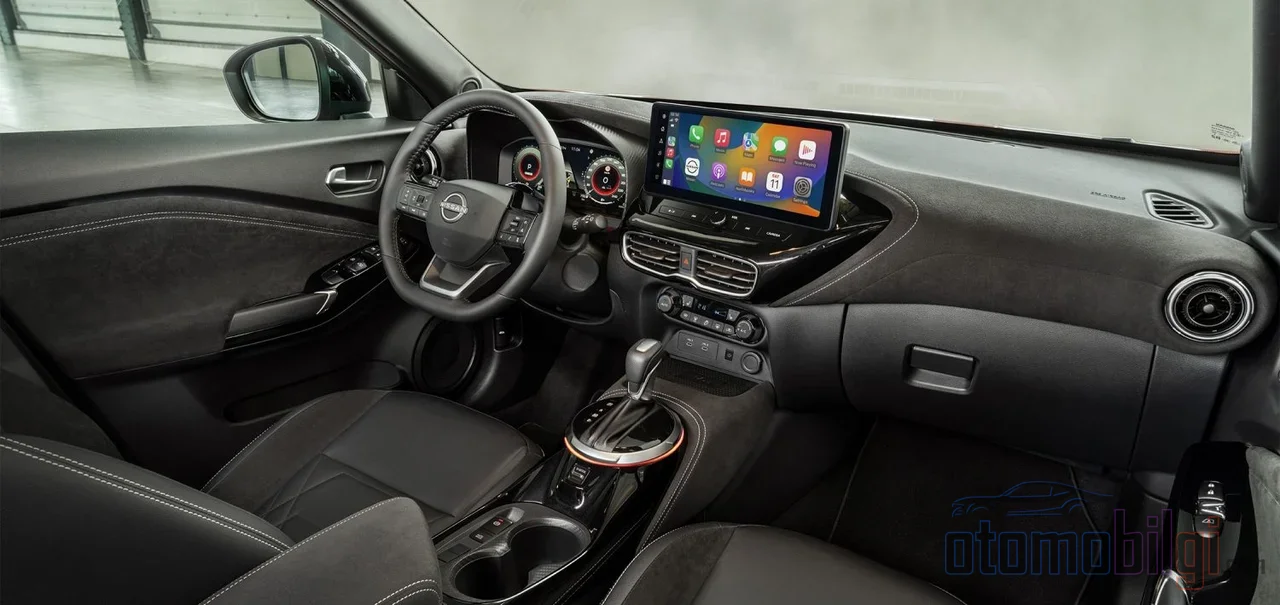
Does the coupe silhouette carry over into the interior? Partly. With the second generation, Nissan addressed the most criticized aspect of the first: cargo volume grew by 20 percent, rear knee room increased by 58 mm, and rear headroom by 11 mm. The result is a 422-liter cargo area (without a spare wheel), considered relatively generous for the segment. This figure surpasses the 400 liters of the Škoda Kamiq and SEAT Arona; against the Volkswagen Taigo's 351-440 liter range it falls into the lower class, though it doesn't come close to its upper limit.
The rear seats fold independently in a 60/40 split; an easy-folding release mechanism from the cargo area adds to the practicality. In daily use, four adults can be carried without trouble, along with luggage on weekend trips. The overall picture can be summarized like this: the Juke is a reasonably priced small SUV with good equipment; but it is neither very spacious nor very comfortable. The price of the coupe lines is paid in the form of a narrowing rear window and a wider C-pillar; this is a trade-off consciously made by those who choose cars with open eyes in the B segment.
What Sets It Apart from Its Rivals: Against the Puma, Taigo, Kamiq and Arona
In the B-segment coupe SUV niche, the Juke's main rivals are the Ford Puma, Volkswagen Taigo, Škoda Kamiq and SEAT Arona. Each of them has a trump card against the Juke; the Juke, in turn, has two strong ones: character and design.
- Ford Puma: In fuel economy the two cars are nearly even (Juke 47.9 mpg, Puma 46.3 mpg on average). The Puma's 1.0-liter engine is more powerful; the Juke's three-cylinder unit is quieter. In body height, the difference is clear: while the Juke rises up to 1595 mm, the Puma stays between 1520-1555 mm. The Juke offers a more grounded SUV stance, the Puma a lower, sportier one.
- Volkswagen Taigo: In terms of boot space the two cars are close; on price, the Juke starts roughly 1,400 pounds below the Taigo in the UK market.
- Škoda Kamiq and SEAT Arona: With their 400-liter boots they cannot surpass the Juke's 422 liters; where they win is rear seat space and ride comfort.
The summary of the comparison is this: the Juke is not the most practical or the most sporty car in the segment; but it is the most characterful and most easily recognized one. On a shortlist where design is the priority, most of its rivals look subdued next to the Juke.
Strengths and Weaknesses: An Engineer's Assessment
Strengths
- Polarizing but boldly unique design within its segment
- Boot volume in the upper half of the segment at 422 liters
- Generous standard safety equipment and an attractive entry price
- The smooth operation of the 1.0 DIG-T engine for its class
- Good spare parts availability and low insurance costs
- One of the few models still offering a manual transmission
Weaknesses
- Mediocre fuel economy; official figures are optimistic compared to real-world use
- 117 PS of power is noticeably less than rivals' turbo units
- Turbo lag felt at low revs
- The sensitive feel of the manual clutch
- Turbulence in the brand's reliability history
Reliability should be read from both angles. Although the model's past saw notable problems, current data paints a more balanced picture: only 18 percent of Nissan owners reported a fault in the first year, a rate below the industry average. Despite its small engine, the car feels like an SUV; that is a sign of correctly tuned suspension and seating position.
Where Does the Petrol Juke Stand? Conclusion
The clear answer to the question is this: The Nissan Juke 1.0 DIG-T is not the most practical or fastest car in the petrol B-segment, but as the most characterful coupe SUV option it stands in a club of its own within the segment. The 117 PS three-cylinder engine is sufficient for daily use, its 422-liter boot beats most rivals, and the manual transmission option still keeps the door open for driving enthusiasts. In return, mediocre fuel economy, limited power reserve and turbo lag are the trade-offs.
The timing also carries its own meaning: when the fully electric third generation takes to the roads in spring 2027, the Juke with the 1.0 DIG-T will be remembered as the final non-electrified generation. For a buyer looking for a petrol coupe SUV today who wants a design that stands out from the crowd, this is one of the clearest-identity answers in the segment; a car defined not by its power, but by its character.
Sources
- Nissan Juke - Wikipedia
- New Nissan Juke: Reinventing the B-segment. Again. - Nissan Europe Newsroom
- Nissan Juke Hybrid and Petrol Engine Details - nissan.ie
- New Juke: Dimensions and Boot Space - nissan.ie
- Nissan Juke Review 2026 - TopGear
- Nissan Juke review - Auto Express
- Nissan Juke (2026) boot space and practicality - Parkers
- Nissan Juke Review 2026 - carwow
- Nissan Juke vs Ford Puma - Vanarama
- Nissan Juke N-Connecta 1.0 DIG-T 117 Review - GreenCarGuide