Kia Picanto 1.0 Review: City Efficiency with 67 HP
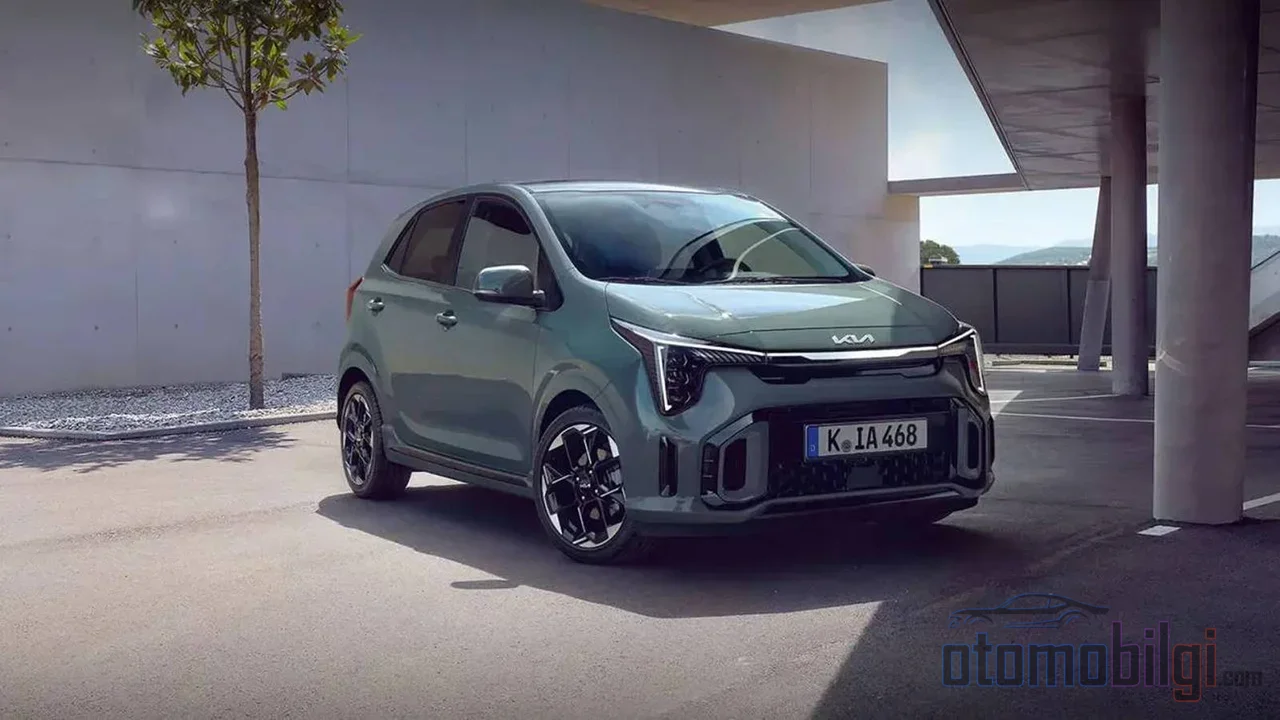
A 998 cc three-cylinder engine, 67 horsepower, and a world where even idling at a traffic light in the city can count as a luxury. With figures that look unimpressive on paper, the 1.0 naturally aspirated petrol version of the Kia Picanto strikes one of the most balanced cost-of-ownership equations in the A-segment. Although it is its brand's smallest and most affordable model, the Picanto ranks as Kia's second best-selling model worldwide. The chain of logic behind this contradiction is the subject of this page.
This guide covers only the 1.0 naturally aspirated petrol Picanto: engine character, transmission options, interior and boot practicality, strengths and weaknesses, and how it differs from rivals such as the Hyundai i10 and Dacia Sandero.
What Need Does the A-Segment Picanto 1.0 Answer?
The A-segment is the smallest body class in the car market, and the priorities of someone buying a car from this class are usually clear: maneuvering in narrow streets, low fuel consumption, reasonable insurance and maintenance costs, and exterior dimensions that can fit in a covered parking spot in one go. The Picanto 1.0 is positioned precisely as the answer to this list. Its length varies between 3,595 and 3,670 mm depending on the trim; its 2,400 mm wheelbase is considered long for its class, and this translates directly into interior usability.
Another important criterion in the model's identity is its safety equipment. ABS, EBD and brake assist, ESC with vehicle stability management, hill start assist and tire pressure monitoring all come as standard. Six airbags (dual front, side and curtain) and ISOFIX anchors are also on the standard list. Offering this entire package as standard in the A-segment is one of the arguments that convinces buyers who feel the Picanto should not look cheap.
Highlights
- 998 cc, three-cylinder naturally aspirated petrol engine: 67 Hp @ 5,500 rpm, 96 Nm @ 3,500 rpm
- 0-100 km/h acceleration in approximately 14 seconds, top speed 161 km/h
- WLTP combined consumption 5.6 l/100 km (CO2: 128 g/km)
- Boot capacity: 255 litres with seats upright, 1,010 litres with seats folded
- 7-year / 100,000-mile vehicle warranty; approximately 650 km of range with the 35-litre tank
Character of the 1.0 Naturally Aspirated Engine: Kappa MPI in Numbers
At the heart of the Picanto 1.0 sits a 998 cc, three-cylinder, naturally aspirated petrol engine from Kia's Kappa family. Being naturally aspirated means there is no forced induction system such as a turbocharger or mechanical supercharger; the engine is fed by the atmospheric pressure that reaches the intake manifold. The practical consequences of this design are clear: fewer parts, simpler maintenance, and consistent but modest traction at low revs.
According to official technical data, the engine produces 67 Hp of power at 5,500 rpm and 96 Nm of torque at 3,500 rpm. The weight-to-power ratio is approximately 14 kg/Hp; on a car with a kerb weight of 935 kg, this ratio accurately describes the character of the class: there is urban agility, but no sudden acceleration. 0-100 km/h acceleration takes roughly 14 seconds, with a top speed of 161 km/h. This is a car that cruises comfortably above legal highway speed limits; but for planning quick overtakes, you need to downshift and raise the revs.
On the consumption front, the picture is satisfying. In the WLTP cycle, combined consumption is 5.6 l/100 km, with CO2 emissions of 128 g/km; the old NEDC measurement shows 5.0 l/100 km. In real-world use, independent tests measure around 6.0 l/100 km; it has also been recorded that it drops to as low as 5.2 l/100 km in non-aggressive highway driving. With the 35-liter fuel tank, the theoretical range is about 650 km. On the emissions side, the engine meets the Euro 6d TEMP standard.
Why can the power figure vary?
For the Picanto 1.0, values between 62 and 68 PS circulate among publications. The reason is the measurement standard, model year, and market differences: while the post-facelift UK specification lists a value of around 62-63 horsepower, the official technical datasheet gives a 66-68 PS band. The value taken as the basis on this page is the manufacturer's official technical datasheet: 67 Hp and 96 Nm.
Transmission Options: Manual or Automated?
With the 1.0 naturally aspirated engine, a 5-speed manual transmission is paired as standard. The manual gearbox stands out with its light clutch pedal and smooth gear changes; it offers a driving experience that does not tire the left leg in city traffic. The manual Picanto's driving character strikes a balance consistent with the engine's modest power.
For those who want an automatic, an automated manual transmission, i.e. AMT, is offered. The AMT's operating principle is simple: the electronic control unit performs the clutch and gear operations of a single-clutch manual transmission itself. The gain is combining the manual gearbox's fuel efficiency with the comfort of automatic use. The price, however, is mechanical reality: gear changes can be slow and jerky in stop-and-go traffic due to clutch hesitation. The AMT has been measured to add roughly 3.4 seconds to the 0-100 km/h performance compared to the manual version. In some markets, a 4-speed automatic alternative is also available.
In short, the choice with this engine rests on a clear chain of logic: for city-focused, calm use, the manual gearbox is both faster and smoother; for the driver who does not want to use the clutch pedal, the AMT is a compromise, not the pinnacle of a choice.
Interior and Luggage Practicality
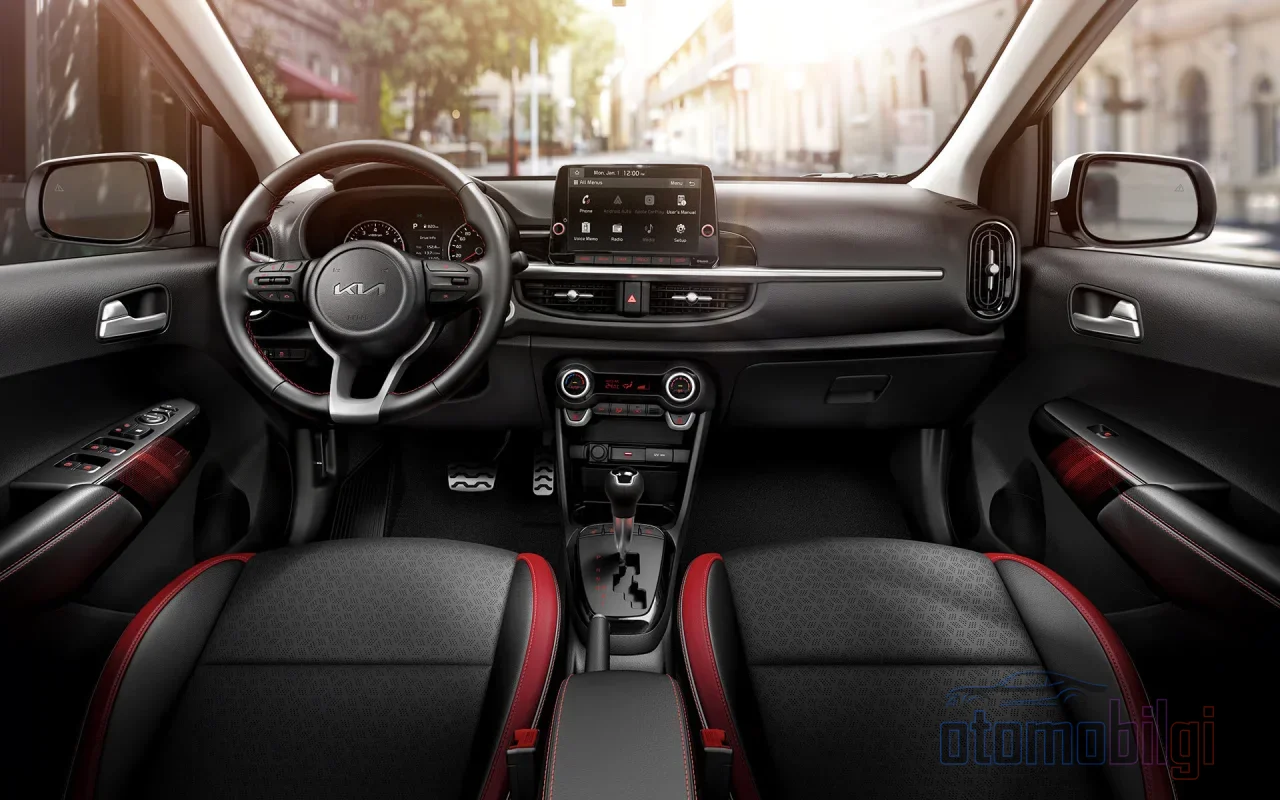
Although the exterior dimensions are small, the Picanto offers an interior that is generous for the A segment. The rear seats fold in a 60:40 ratio, and the luggage volume of 255 liters with the seats upright reaches 1,010 liters when the seats are folded. 255 liters is a class-transcending value for such a short vehicle; two suitcases fit in comfortably. Higher trim levels also feature practical details such as a dual-height luggage floor, a cargo net, and a hook.
There is one point to be aware of: when the seats are folded, the floor does not form a flat surface, because the folded seatbacks remain somewhat above the luggage floor. The shape of the luggage compartment is also not a perfect rectangle. These details, which pose no problem for daily use, are worth knowing for those who regularly want to transport large items.
On the multimedia side, a 7-inch touchscreen is offered; Apple CarPlay and Android Auto connectivity come from the upper hardware levels onward. The service interval is defined as 12 months / 10,000 miles.
Picanto 1.0 Technical Specifications
| Specification | Value |
|---|---|
| Engine | 1.0 MPI, 3-cylinder naturally aspirated petrol |
| Engine displacement | 998 cc |
| Maximum power | 67 Hp @ 5,500 rpm |
| Maximum torque | 96 Nm @ 3,500 rpm |
| Transmission | 5-speed manual (optional AMT) |
| 0-100 km/h | Approx. 14 seconds |
| Top speed | 161 km/h |
| WLTP combined consumption | 5.6 l/100 km |
| Trunk capacity | 255 / 1,010 liters |
| Fuel tank | 35 liters |
Strengths and Weaknesses
Listing the strengths of the Picanto 1.0 one by one clarifies this car's identity:
- Low cost of ownership: low consumption, low insurance class, fixed-price and affordable maintenance costs
- Generous trunk for its class: 255 liters, leaving many rivals behind
- Standard safety equipment: six airbags, ESC, hill start assist
- 7-year / 100,000-mile warranty and 12-year anti-perforation warranty
- Urban agility and easy parkability
The weaknesses must also be written with the same honesty. The engine is not ideal for fast highway use; the 14-second 0-100 km/h figure requires planning when overtaking. The AMT transmission is jerky and slow. In versions with 16-inch wheels and low-profile tires, the suspension feels harsh; with 14-15-inch wheels, this criticism largely disappears. Among the problems reported in the long term, air conditioning failures and clutch wear at high mileage stand out. The trunk's non-folding flat seat backrest is also one of the practicality limitations.
What Sets It Apart from Its Rivals: Against the i10 and Sandero
In the A-segment, one of the Picanto's most natural rivals is its own group sibling, the Hyundai i10 family. In comparisons made, while the similarly bodied rival car produces 61 kW of power, the Picanto 1.0 offers less power with 49 kW; however, with its consumption of 5.1 l/100 km, it moves ahead on the fuel economy side. In other words, the i10 family stands out in power, while the Picanto stands out in the balance of consumption and cost of ownership. Since both brands are products of the same group, their safety and multimedia equipment also largely overlap.
On the Dacia Sandero front, the equation works differently: with similar money, it is possible to get a larger body. The Picanto's answer is its better city-car character, its richer standard equipment philosophy, and low running costs that stand out thanks to a long warranty. The Sandero's power advantage and spacious interior are also real; the choice depends on where your usage profile lies.
The external recognition the Picanto has achieved also reinforces its identity: model, was named City Car of the Year by an award-winning automotive publication in 2026, and was highlighted especially for new drivers thanks to its low insurance group, good fuel economy and strong value proposition. The critics' common verdict was that the car is a fun, surprisingly practical and cheap-to-run city car; in return, with the same budget, larger vehicles could also be found.
Who Is It the Right Choice For?
The Picanto 1.0 offers a clear recommendation for the driver seeking efficiency and predictable costs in transportation: in a life dominated by city and town driving, where daily kilometers are high but speeds are low, the 67 Hp naturally aspirated engine and 255-liter trunk form one of the most balanced packages in the A segment. Low fuel consumption, affordable maintenance costs, a 7-year warranty and standard safety equipment strongly tip the cost of ownership equation in its favor.
On the other hand, a usage profile involving long weekend highway journeys, mountain roads with a full load and frequent overtaking falls outside this engine's character. That user should be looking in larger segments. The Picanto 1.0 is not an ambitious car; it is a car that reflects the cost advantage of being unpretentious most clearly on the invoice. For those seeking an economical and practical solution in the A segment, the answer lies largely in that sentence.
Sources
- Kia Picanto Official Technical Specifications (Kia UK)
- Kia Picanto Specifications & Features | Kia UK
- City Car of the Year 2026: Kia Picanto - Auto Express
- Kia Picanto Review 2026 - RAC
- Kia Picanto (2026) engines & performance - Parkers
- Kia Picanto (2026) boot space & practicality - Parkers
- Kia Picanto III 1.0 (67 Hp) Technical Specs - auto-data.net
- KIA Picanto 5 doors Specs - autoevolution
- Kia Picanto Review 2026 | Price, Interior & Boot Space - Carwow
- 2026 Kia Picanto: Affordable First Car - Sandicliffe