2026 Hyundai Tucson 1.6 T-GDI: C-SUV with a Quiet and Spacious Cabin
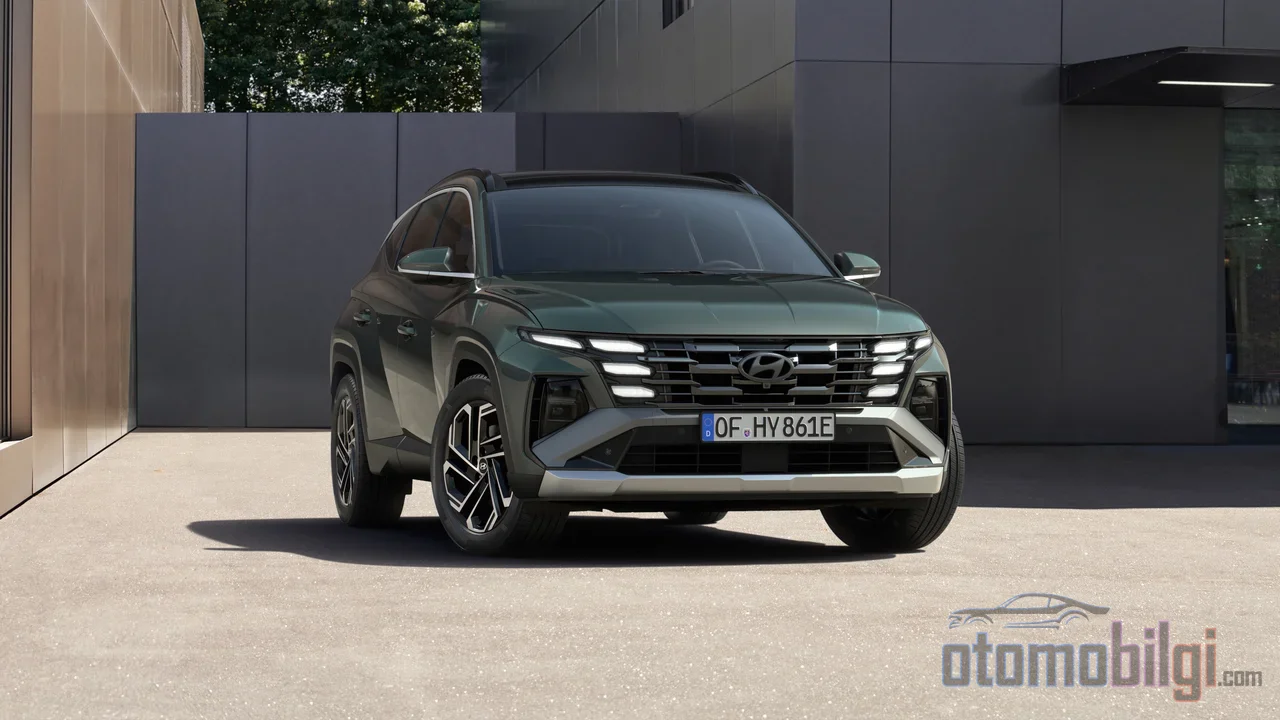
In an era when every model in the C-segment SUV aisle has a hybrid story to tell, the 1.6 T-GDI petrol version of the Hyundai Tucson answers a simpler question: for the family that wants less drama, fewer surprises and a spacious cabin, is this the right car? This page deals only with that petrol version; it examines the engine's character, its harmony with the dual-clutch transmission, cabin and luggage practicality, and its standing in its class through a single fuel type, from an ownership perspective.
What Need Does the Tucson 1.6 T-GDI Answer?
The Tucson is Hyundai's best-selling model in the compact SUV (C-SUV) class and sits at the center of the brand's engineering budget in this segment. It has a five-seat, family-oriented body that strikes a balance between daily use and long-distance travel. Its body dimensions are above the class average: length of approximately 182 inches (4.63 m), width of 73.4 inches, height of 65.6 inches and a wheelbase of 2,756 mm. This wheelbase is a figure that translates directly into rear knee room, placing the Tucson among the members of its class with the roomiest interiors.
In short, this is the car of the user caught between a child seat, weekend luggage and urban maneuvering, yet who also expects a refined ride on the highway. So can the 1.6 T-GDI live up to this job description? The answer lies largely in the engine-transmission pairing.
1.6 T-GDI Engine and Transmission: The Story the Numbers Tell
At the heart of the non-electrified Tucson sits a four-cylinder turbocharged, direct-injection petrol engine coded 1.6 T-GDI with a displacement of 1,598 cc. This unit is offered in multiple power outputs across the Tucson family: around 180 PS in front-wheel-drive configurations, while in the four-wheel-drive automatic version it produces 193 hp @ 6,000 rpm and 265 Nm of torque @ 1,700-4,500 rpm. A power density of roughly 121 hp per liter is a healthy figure for a 1.6-liter unit; the torque band starting at 1,700 rpm also means it can get the job done at low revs in daily use without straining the gearbox.
On the transmission side, there are two characters. While some configurations offer a 6-speed manual gearbox, for those who want an automatic, Hyundai's own-developed 7-speed dual-clutch transmission (7DCT) does the job. The logic of the dual-clutch layout is simple: one clutch prepares the odd-numbered gears, the other the even-numbered ones; thus gear changes are completed almost without the throttle interruption being felt. In stop-and-go city traffic, getting used to the response at the moment the clutch engages takes a little adaptation; but once the road opens up, this transmission behaves quickly and directly, like a manual box.
Performance: Adequate or Overwhelming?
The 0-100 km/h acceleration of the front-wheel-drive 1.6 T-GDI comes in at around 8.7 seconds in independent measurements; some measurements have also recorded figures as low as 8.4 seconds. Numerically, this is an acceptable result for a compact SUV weighing around 1.6 tons. However, a careful evaluation is required: International tests agree that the Tucson finds acceleration calm rather than enthusiastic. When you floor the throttle, you hear the engine noise quite a bit inside the cabin, and some rivals offer a livelier drive for the same money. In short: performance is adequate, and the driving character is tuned toward comfort.
Highlights
- 1,598 cc turbocharged gasoline engine with 193 hp of power and 265 Nm of torque in the all-wheel-drive version
- 7-speed dual-clutch transmission (7DCT) or 6-speed manual option
- 0-100 km/h in approximately 8.7 seconds (front-wheel drive, independent measurement)
- Cargo volume of up to 620 liters with the seats in place
- With a wheelbase of 2,756 mm, it is among the class's members with roomy cabins
Fuel Consumption: Setting Expectations Right
The consumption character of the gasoline Tucson is the item that most determines the cost of owning the vehicle. Official cycle figures correspond to roughly 9 liters per 100 km in combined consumption for the front-wheel-drive version (25 mpg city, 33 mpg highway cycles). The real world is not more generous: in user reports, especially in city driving and on the first kilometers, values like 11.5-12 L/100 km are seen even in Eco mode. At constant highway speed, it is possible to approach the cycle value.
To interpret this with an engineer's eye: a 1.6-liter turbocharged engine is efficient when working with torque at low revs; as load and revs rise, consumption increases rapidly. The Tucson's curb weight exceeding 1.6 tons also feeds this picture. With a light foot and constant speed, consumption is reasonable; in city traffic, however, it can stay above the average of the gasoline compact SUV segment. A user with high annual mileage and a route mainly within the city should honestly write this item into their budget.
Interior and Cargo Practicality
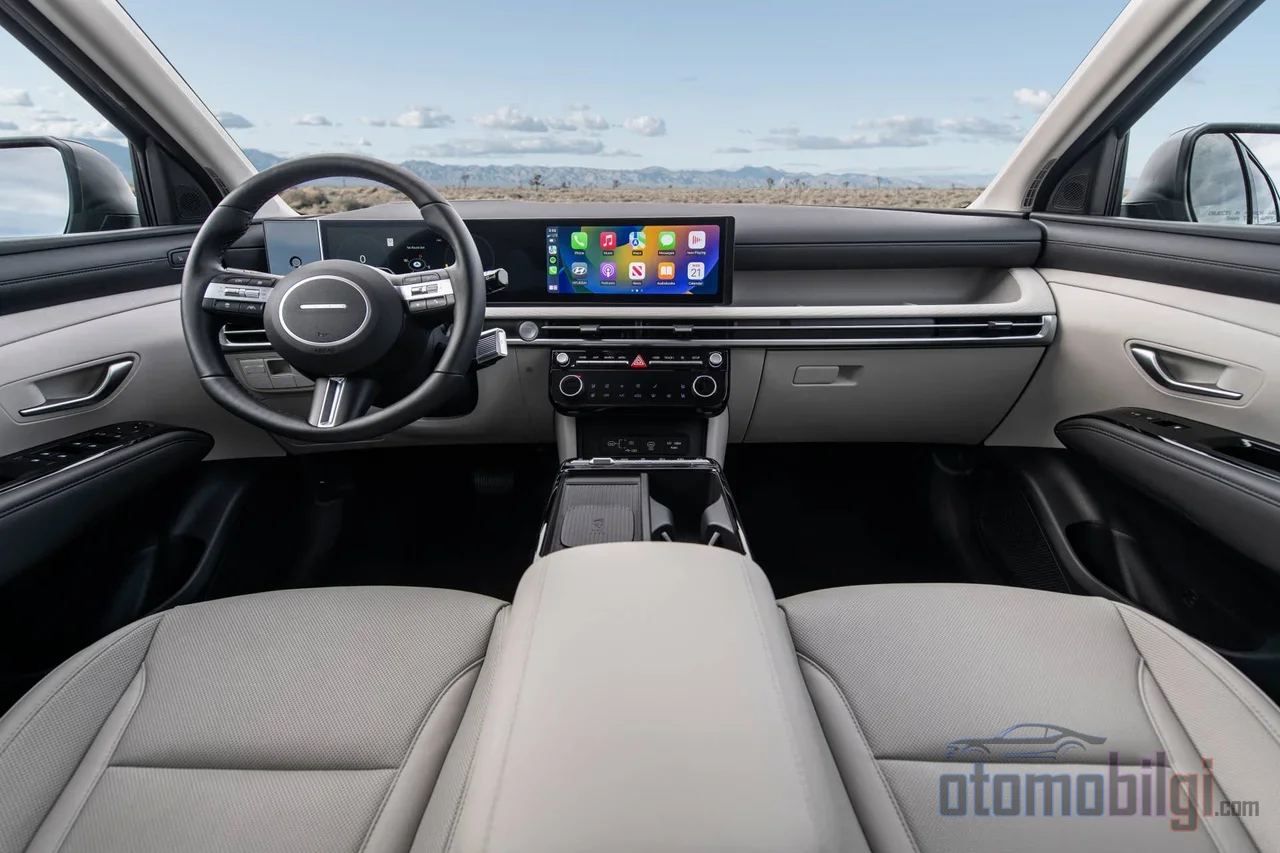
This is the Tucson's strongest card. Tests find its interior more spacious than most compact crossovers; thanks to a passenger volume of 106 ft³ (about 3 m³), five adults can travel with reasonable comfort. The cabin architecture is also well thought out: a digital instrument cluster, a gear selector mounted on the steering column, and a climate panel with physical buttons offer ease of use in an era dominated by touchscreen madness. A single 12.3-inch infotainment screen is standard; in higher trims, there is an option for a dual 12.3-inch monolithic panel. Wireless Apple CarPlay and Android Auto come as standard, while the options list includes a Bose sound system and a digital key.
On the cargo side, the figures are encouraging: up to 620 liters with the seats in place, and up to 1,651 liters with the seats folded (this varies between 546-620 L depending on trim and body version; folded, it can go up to 1,799 L). In one independent test, 9 suitcases fit in the cargo area, and that number rose to 22 with the seatbacks folded. For a family user, this means a stroller + weekly shopping + large suitcase trio can be carried all at once.
Safety Equipment
On the safety side, the base package is solidly configured: automatic emergency braking (with pedestrian detection), lane departure warning and lane keeping assist come standard, while Adaptive Cruise Control (ACC) with lane centering is offered on higher trims. This set covers the basic layer that reduces highway fatigue and prevents accidents in the city.
Strengths and Weaknesses: A Balanced Report Card
The joint assessments of international testing organizations draw a clear line in the Tucson's favor. Strengths: stylish and bold design in every respect, a roomier cabin than most rivals, easy and smooth handling, quiet and refined highway driving (tests describe a sense of luxury rare in this class) and comfort-focused suspension. Owner feedback is also mostly positive, centering on the quiet ride, roomy cabin and useful equipment.
The weaknesses are real too: acceleration is unenthusiastic, fuel economy is mediocre in tests, and rivals (Honda CR-V, Mazda CX-50, Volkswagen Tiguan) offer more driving fun. Drivers who use heavy throttle will miss the extra power. Although there are forum-level concerns about the DCT, high-mileage users report trouble-free operation; this is a manageable issue with regular maintenance and especially gentle throttle in stop-and-go traffic.
How It Differs from the Kona and the Class's Founding Members
The most frequently asked question within the brand: Kona or Tucson? The numbers answer most of the question. The Tucson is about 11.4 inches (29 cm) longer, 3.4 inches taller and 1.5 inches wider than the Kona; yet the difference in total passenger volume is only 7 ft³. The engineering interpretation is this: the Kona offers surprising cabin efficiency relative to its small body; the Tucson, on the other hand, establishes a clear advantage in comfort and cargo, although with its heavier body it falls behind its little brother in acceleration. If rear-seat living space and a cargo area exceeding 600 liters are the priority, the choice is clear.
Its relationship with its corporate twin, the Kia Sportage, is also a matter of curiosity. Both offer a wide range of powertrain options; the Tucson is slightly larger than the Sportage and stands out with a total cargo volume of around 80 ft³ (2,270 L). There are small differences in the interior layout: while the Sportage's center console is wider, the placement of the climate and audio controls in the Tucson is found to be more orderly. On the warranty front, Hyundai offers one of the most generous packages in the segment with a 5-year/60,000-mile limited warranty and a 10-year/100,000-mile powertrain warranty; 3 years/36,000 miles of free maintenance also softens the cost table.
So, Who Is the Tucson 1.6 T-GDI Gasoline Right For?
Let's clarify the answer: The Tucson 1.6 T-GDI petrol is the right vehicle for the family user who prioritizes a spacious cabin and large trunk, defines driving more in terms of comfort than excitement, and wants straightforward petrol ownership without venturing into electrification options. Someone looking for a compact SUV with a reasonable annual mileage, a mixed city-highway route, a 0-100 km/h time of 8.7 seconds, and 265 Nm of torque that is more than enough for daily tasks strikes a good deal with this version.
In contrast, the driver who prioritizes performance, the high-mileage user who tracks consumption liter by liter, or the person who considers driving pleasure the sole criterion can find alternatives in the class that will satisfy them more. The Tucson's area of expertise is different: a quiet, spacious, and well-organized cabin built on a 2,756 mm wheelbase; a trunk of up to 620 liters; comprehensive safety equipment and a strong warranty. The 1.6 T-GDI, as the version that offers this package with a non-electrified cost structure, is one of the sensible answers to pragmatic ownership.
Sources
- Hyundai Tucson V 1.6 T-GDI (193 Hp) AWD Automatic
- 2026 Hyundai Tucson Review, Pricing, and Specs
- Hyundai Tucson 1.6 T-GDI (Mk IV 180 PS) specs
- 2026 Hyundai Tucson 1.6 T-GDI 150 2WD
- Hyundai Tucson (2026) boot space and practicality
- Hyundai Tucson Specifications and Dimensions
- How dual-clutch transmission works - Hyundai Newsroom
- Hyundai Tucson dimensions, boot space, weight
- Hyundai Kona vs. Hyundai Tucson Comparison
- Kia Sportage vs Hyundai Tucson