Megane Sedan 1.3 TCe Review: Performance and Consumption
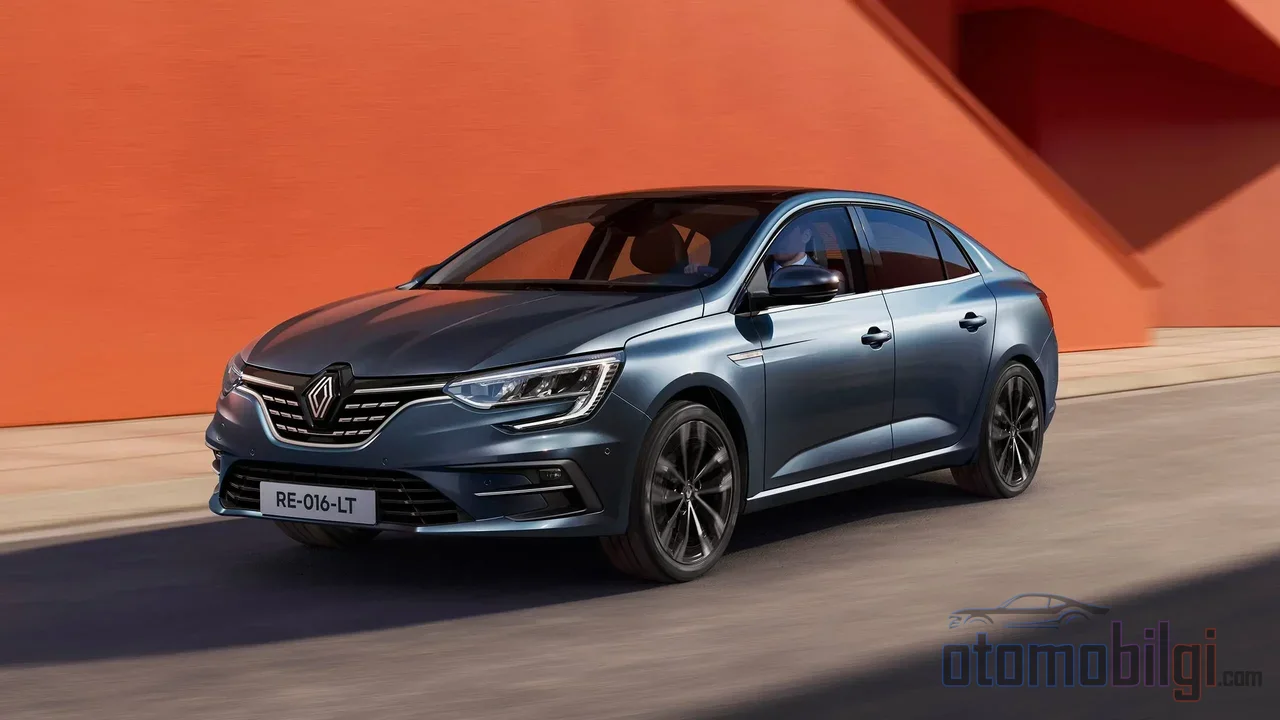
With electrification now on every model's agenda, buying a D-segment sedan with no plug, no battery, and running purely on gasoline is becoming an increasingly deliberate choice. The 1.3 TCe version of the Renault Megane Sedan represents exactly the question that needs to be asked at this point: How well does a turbocharged gasoline engine in a classic three-box body format still hold up in 2026? On this page, we will answer this question through the gasoline-only 1.3 TCe, covering every aspect from the engine's character to trunk capacity, and from real-world consumption to competitor comparisons.
The Megane Sedan is the three-box member of the fourth-generation Megane family and Renault's sedan-bodied representative in the upper tier of the compact class, namely the D segment. generation Megane family and Renault's sedan-bodied representative in the upper tier of the compact class, namely the D segment. This body, which remained in production after 2020, received a facelift in February 2021, following its hatchback and estate siblings; the interior was refreshed with this facelift, gaining a 10.2-inch digital instrument cluster and a 9.3-inch multimedia screen. The fact that the car is produced at Renault's facilities in Turkiye is one of the notable manufacturing details in the model's global story.
What Do the Numbers Say About Its Character? What Does the Character Look Like in Numbers?
The Megane Sedan's petrol heart comes from the 1.3-liter turbo direct-injection engine that the Renault Group has used across a wide range of models since 2017. This four-cylinder unit, coded H5HT, has an architecture proven in models such as the Duster and Scenic; its use of a timing chain, with a recommended replacement interval of 250,000 km for the chain, are clear signs that the engine was designed for longevity. The compression ratio is 10.5:1, the engine oil capacity is 6 liters, and the recommended viscosity is 0W-40 or 5W-40.
On the power side, the picture is clear: the engine produces 140 hp (102 kW), and this power reaches its peak value at 5000 rpm. The torque value changes depending on the gearbox choice; the manual gearbox offers 260 Nm, while the dual-clutch EDC automatic provides 240 Nm, and in the EDC the torque is available from as low as 1600 rpm. This distinction also defines the character of both gearboxes: the manual promises stronger traction, while the EDC targets a comfort-oriented driving experience.
1.3 TCe engine:
- 1.3 TCe engine: 140 hp, with 260 Nm on the manual and 240 Nm on the EDC
- 0-100 km/h: 9.8 seconds, with a top speed of 205 km/h
- Luggage capacity: 503 liters, expanding to up to 987 liters with the seats folded
- Long-distance fuel consumption drops to as low as 5.4 lt/100 km according to owner data
- The fuel tank is 50 liters; a range of approximately 800 km on a single tank
Performance and Driving Character
The sprint figure holds a respectable place in its segment: is completed in 9.8 seconds 0-100 km/h and the top speed is 205 km/h. These figures bring the Megane Sedan closer to the sporty side of the compact sedan class. In these comparisons, the most frequently measured rival, the Toyota Corolla's 1.5-liter gasoline version, completes the same sprint in 11.5 seconds; The Megane is clearly ahead on the performance side with a difference of about 1.7 seconds. Users frequently emphasize that the 1.3 TCe carries a lively and bold character in everyday driving; the torque delivered at low revs makes the car feel light in the city and when overtaking.
Manual or EDC: How Should the Transmission Choice Be Made?
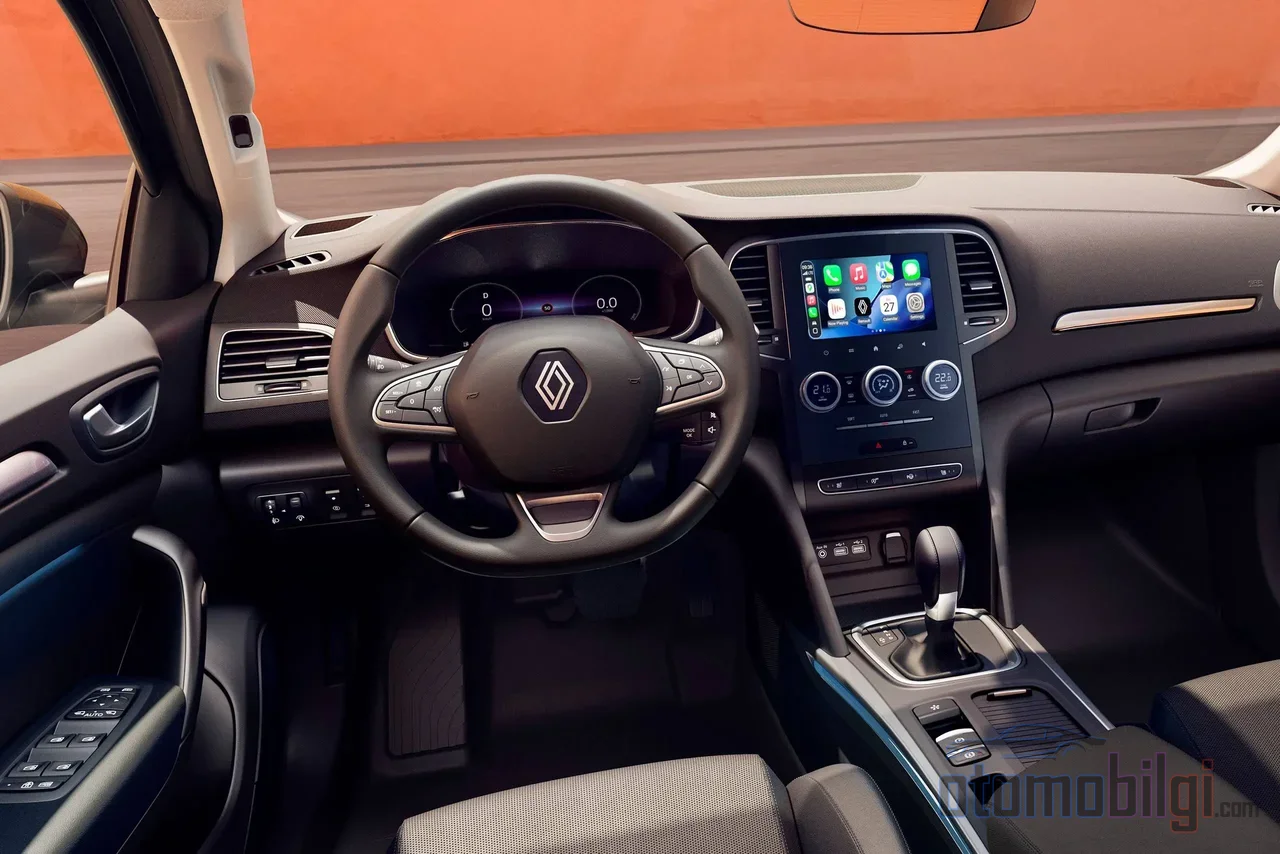
The difference between the two transmission options shows up not only in gearbox behavior but also in the technical specifications. The manual version carries 260 Nm of torque and, with a curb weight of 1372 kg, is heavier than the EDC version; the EDC, at 1307 kg, stays lighter, and its robotized, dual-clutch design offers comfort in city traffic. Limiting torque to 240 Nm in the EDC is a classic engineering choice aimed at protecting the clutch and transmission's lifespan; the 20 Nm difference does not create a noticeable lack of power in daily use.
| Feature | 1.3 TCe Manual | 1.3 TCe EDC |
|---|---|---|
| Power | 140 hp (102 kW) | 140 hp (102 kW) |
| Torque | 260 Nm | 240 Nm @ 1600 rpm |
| 0-100 km/h | 9.8 s | 9.8 s |
| Curb weight | 1372 kg | 1307 kg |
| Maximum weight | - | 1888 kg |
Interior and Luggage Practicality
One of the main reasons for buying a D-segment sedan is space, and the Megane Sedan delivers a presentation in this area that will not shy away from its rivals. The body is 4632 mm long, 1814 mm wide, and 1443 mm high; the 2711 mm wheelbase translates directly into rear seat knee room. The five-seat cabin stands out with rear passenger comfort in daily use and on long journeys; the model is characterized by its spacious interior for commuters and families.
The trunk offers a strong value for segment standards: the 503-liter capacity grows to up to 987 liters when the rear seatbacks are folded down. With a 50-liter fuel tank and a laboratory combined consumption figure of approximately 6.0 lt/100 km, a range of up to 800 km on a single tank is possible. The turning circle is 11.1 m; the 145 mm ground clearance provides adequate margin for city driving.
Real-World Consumption: The Gap Between the Lab and Daily Life
The official combined consumption is around 6.0 lt/100 km; real-world figures, however, vary depending on usage. Owner experiences show that a range of 6.5-7 lt/100 km is common in normal city and mixed use. On the highway the picture improves noticeably: users report that an average of 5.4 lt/100 km was achieved on a 2030 km journey, showing the engine runs efficiently over long distances. In short, this is not the consumption you would expect from a quick and torquey engine; rather, it is an engine that is sensitive to driving style. High-revving aggressive driving can push consumption well above the laboratory figure.
Reliability and Ownership Experience
The projected engine life for the 1.3 TCe is estimated at between 220,000 and 370,000 km; this range shows that, as long as regular maintenance is performed, the engine can rival the lifespan of the car itself. The timing chain having been chosen over a belt means a periodic cost advantage in the long run. The engine is said not to be overly sensitive to fuel quality and is generally considered reliable. The weak point worth knowing concerns the service network: in some markets, finding spare parts and repairs in case of a breakdown can become difficult. The electronic and transmission-related issues seen in older-generation Meganes cannot be directly attributed to this engine and body; IV. the picture is cleaner for the fourth generation.
How Does It Stand Out From Its Rivals?
The two central names of the compact sedan market are the Megane Sedan and the Toyota Corolla. The picture is two-sided: in performance, the Megane is clearly ahead with a 0-100 km/h time of 9.8 seconds, while in consumption the Corolla is the more economical side at 6.2 lt/100 km. While the Corolla's 1.5-liter three-cylinder naturally aspirated unit offers a calm and efficient character, the Megane's 1.3-liter four-cylinder turbo unit leans toward driving enjoyment. In three-way comparisons, when evaluated alongside the Fiat Egea Sedan, the Megane takes the top spot with its engine power and acceleration figures. With its 503-liter trunk, the sedan body also holds a practicality advantage over hatchback-based rivals.
So Is It Still Worth Buying in 2026?
The answer depends on the definition of your need, and a clear answer is possible: for a user looking for a strong turbo gasoline engine, a large trunk and the comfort of a sedan body who does not want to switch to electrification, the Megane Sedan 1.3 TCe is still a consistent and balanced choice. The engine is proven, having been used in different models within the group for nine years; its chain-driven timing and long-life expectation make the cost side predictable. Its performance is ahead of its class, long-distance consumption is reasonable, and the interior and trunk are sufficient for family use.
Its weak points should also be listed honestly: real-world consumption can run above the laboratory figure, torque is raised to 240 Nm in the EDC version, and small risks tied to electronics and parts supply can affect the ownership experience in some markets. These points do not make the model unbuyable; they simply require that the transmission and usage style choices be made consciously. For the reader who values a single fuel type, a three-box body and measurable performance, the Megane Sedan 1.3 TCe maintains its respected place among the still-relevant classics of 2026.
Sources
- Renault Group - The New Renault Megane Sedan
- Renault Egypt - New Megane Dimensions & Engines
- Auto ABC - Renault Megane 2021 1.3 TCe Automatic
- Sparrowcar - Renault Megane Specs, Engines & Dimensions
- Zeperfs - Renault Megane IV 1.3 TCe EDC 140 hp
- Wikipedia - Renault Mégane
- Otokokpit - Corolla vs Megane vs Egea DCT Comparison
- Ekiyasla - 2026 Toyota Corolla vs Renault Megane
- Vidyoto - Renault Megane Toyota Corolla Comparison