Is the Ford Kuga 1.5 EcoBoost Enough for Families?
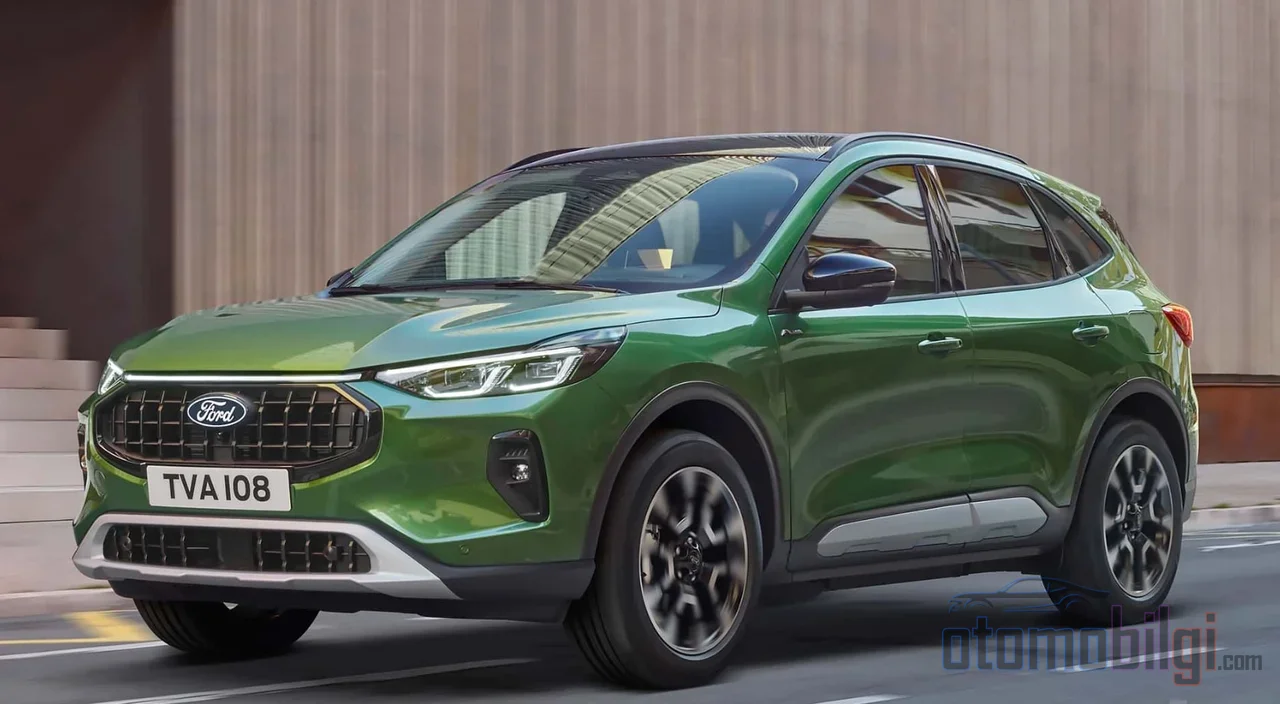
In the C-segment SUV class, families' expectations have become clear in recent years: a roomy rear seat, a growing trunk, and an engine that is calm in the city but doesn't feel strained on the highway. The Ford Kuga is a vehicle designed precisely around this list of criteria; moreover, its 1.5 EcoBoost gasoline version carries one of the most interesting engineering choices in the class: a three-cylinder, 1497 cc block, tasked with moving a family SUV weighing around 1.5 tons. So, does this equation hold up in real life? Will a family willing to accept a manual gearbox walk away satisfied with this engine?
This guide covers only the 1.5 EcoBoost gasoline version of the Kuga; it examines the engine's technical character, cabin and trunk practicality, and the aspects that set it apart from rivals such as the Tiguan and Sportage, all through a single fuel type.
The Kuga's Place in the C SUV Segment and Its Promise to Families
The Kuga is Ford's representative in the C-SUV segment and one of the brand's best-selling models in Europe. Its body dimensions are right above the class average: length varies between 4604 and 4645 mm depending on equipment, width is 1882 mm, and the wheelbase is 2711 mm. This wheelbase is the main reason the Kuga is generous with its rear row; because in many rivals in the segment, rear legroom is squeezed below this value.
One more practical figure that is critical for family use: a braked towing capacity of up to 1730 kg. Considering the stability of a caravan on a trailer or of transported loads, that's a solid figure for this class. On the roof, loads of up to 75 kg can be carried; a sufficient limit for bike carriers.
Highlights
- 1.5 EcoBoost: 150 PS, 240 Nm of torque, 0-100 km/h in 9.5 seconds
- Only a 6-speed manual transmission, no automatic option
- With a sliding rear seat, trunk space of 412-553 liters, and 1534 liters with the seats folded
- WLTP consumption of 6.3-7.2 l/100 km
- Braked towing capacity of 1730 kg
1.5 EcoBoost Engine: Three Cylinders, One Turbo, Clear Character
The 1.5 EcoBoost in the current Kuga is the largest-displacement member of Ford's three-cylinder engine family. With a cast aluminum cylinder block and head, a chain-driven camshaft, and four valves per cylinder, it has a durability-focused architecture. The compression ratio is 11.0:1; a bold value for a turbocharged engine, and what makes it possible is a direct and port-supported dual injection system: each cylinder gets both high-pressure direct injection and multi-point port injection. This combination reduces the risk of knock under load while supporting clean combustion at low revs.
Let's get to the numbers: the engine produces 150 PS (110 kW) of power at 6000 rpm, while its maximum torque of 240 Nm is delivered across a wide band between 1600 and 4000 rpm. The torque being available at 1600 rpm practically closes the low-end gap, the typical weak point of a three-cylinder engine. The tolerance for passing without downshifting in city-paced driving is a direct reflection of this wide torque band.
Performance: What Do the Numbers Say?
The 1.5 EcoBoost completes 0-100 km/h acceleration in 9.5 seconds and has a top speed of 195 km/h. Not numbers to set anyone on fire; yet right in the range you would expect for a front-wheel-drive family SUV with a curb weight of 1526 kg. In real life, this means an acceleration profile that remains reasonable even on highway ramps with a full family and luggage aboard. At high revs, a slight vibration texture belonging to the three cylinders hints at character; Ford has neutralized this with engine balance weights.
In the WLTP cycle, consumption is reported at 6.3-7.2 l/100 km, with CO2 emissions in the 144-163 g/km band. Depending on equipment level and tire choice, this range can approach 7-8 liters in real-world use; it is normal for consumption to rise under load in turbocharged small-displacement engines.
Transmission: One Option, Six Gears, Zero Compromise
Here is one of the most critical engineering facts on this page: there is no automatic transmission option in the 1.5 EcoBoost Kuga. The sole offering is a 6-speed manual. This is an increasingly rare choice in its segment; while rivals like the Tiguan and Sportage move toward automatic and dual-clutch transmissions, Ford is insisting on the manual in the petrol Kuga.
This has two consequences. First, a thoroughly clean experience for those who love driving with three pedals: the ratios of the six gears are engineered in harmony with the engine's torque band, and the clutch pedal is light. Second, a serious decision point when a second driver in the family expects an automatic. For a family that does not want to use a manual gearbox every day in city traffic, this should be the top question on the list. The decision logic is simple: if the manual is no bother, the petrol Kuga is a strong candidate; if it is, eliminate it from the start.
Cabin and Luggage: Sliding Seats, The Family's Key
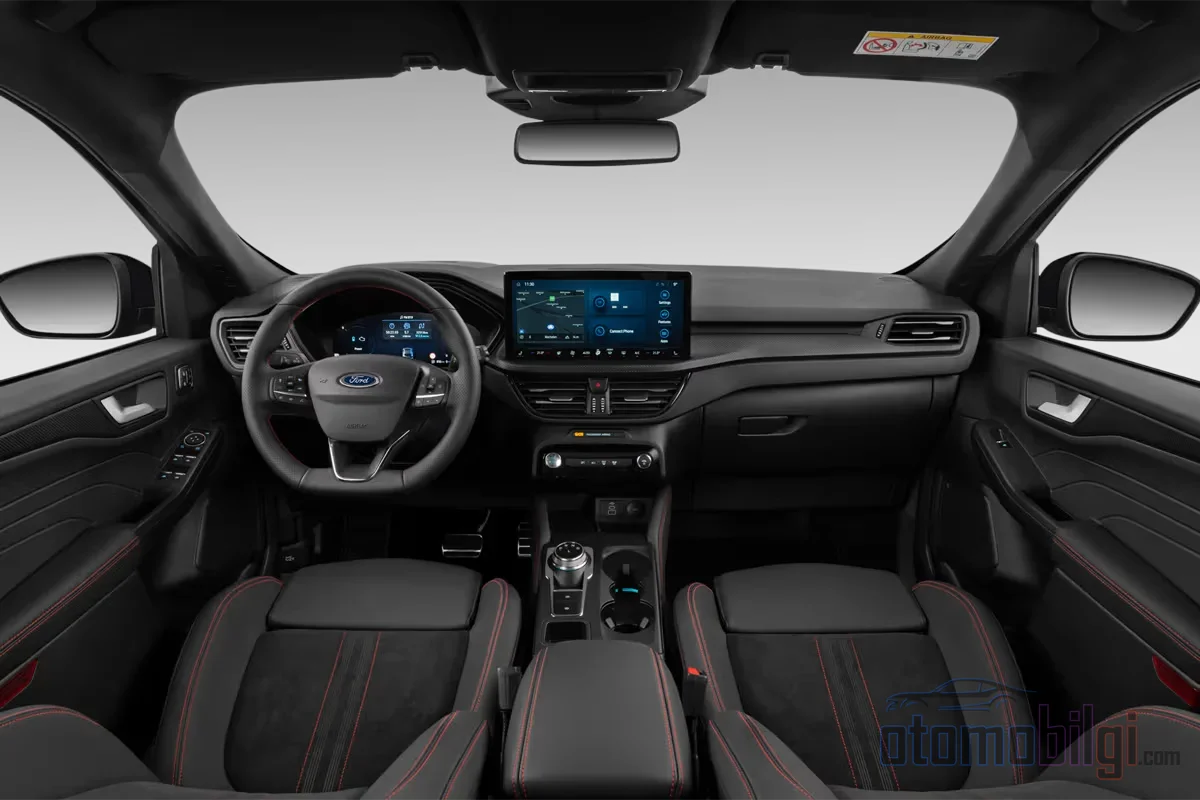
The star of the Kuga's interior is the rear seat row that can slide 15 cm. This system gives you the chance to trade between rear legroom and luggage volume: when the seats are pulled back, second-row legroom goes up to 1035 mm from 986 mm; when moved forward, the luggage area expands. For families, this means being able to switch with one hand between weekday child-seat comfort and weekend vacation luggage.
In the front row, headroom is 1021 mm and legroom is 1076 mm; in the rear row, headroom is 998 mm. The numbers are of the kind that will let even 1.90-meter passengers be comfortable in both rows. There is no doubt it is one of the leaders in interior space in the class; the criticism material comes not from ergonomics but from aesthetics: the cabin design is found to be plain, even a bit dull. A clear situation for those who want to choose between practicality and visual show.
How Many Liters Is the Luggage Volume in Reality?
Ford's official measurement reports a volume of 412 to 553 liters below the cargo cover, depending on the position of the sliding seat; with the seats folded, 1534 liters up to the roof. In independent measurements, values reaching 628-645 liters with the seats in place are also seen; the difference stems from seat position and measurement method. A reference for comparison: With the seats folded, the Skoda Karoq surpasses the Kuga with 1605 liters. So the Kuga is not the largest in its class; however, in daily family use, together with the sliding seat, it has one of the most flexible cargo areas in its class.
| Specification | Value |
|---|---|
| Engine | 1.5 EcoBoost, 3-cylinder turbo petrol, 1497 cc |
| Power | 150 PS (110 kW) @ 6000 rpm |
| Torque | 240 Nm @ 1600-4000 rpm |
| 0-100 km/h | 9.5 seconds |
| Top speed | 195 km/h |
| Transmission | 6-speed manual, front-wheel drive |
| WLTP consumption | 6.3-7.2 l/100 km |
| Cargo | 412-553 l (seats folded: 1534 l) |
| Braked towing capacity | 1730 kg |
What Sets It Apart from Its Rivals: Against the Tiguan and Sportage
The VW Tiguan and Kia Sportage are two solid references of the C-SUV segment and the Kuga's natural rivals. The picture on the power side is interesting: the petrol Tiguan's base engine delivers 201 hp, and the Sportage's petrol turbo unit 187 hp; the Kuga's 150 PS falls behind on paper. Yet in family use, the 240 Nm torque band and 1730 kg towing capacity are the real parts of the daily equation; competition is not won with horsepower.
The Kuga's standout strengths are road holding and interior space: with its tidy chassis character and a genuinely spacious cabin with sliding seats, it stands out in practicality. The Tiguan is a conservative and practical package, while the Sportage stands out with the boldness of its equipment list; the Kuga, on the other hand, carries a clear identity in ride comfort and family-oriented flexibility. With the seats in place, the Kuga's cargo volume of up to 628 liters depending on the measurement method is a level that challenges both of its rivals. Its weak point is the petrol version's lack of an automatic transmission and an interior design far from flashy.
Is the 1.5 EcoBoost Reliable? Separating the Legend from the Current Engine
Nearly all of the coolant leak, cracked block, and head gasket discussions you come across online when searching for the 1.5 EcoBoost belong to the pre-2019 four-cylinder unit. The engine used in the current Kuga is a three-cylinder unit with a different architecture; the previous generation's block-design-related risks do not apply to this engine. At the same time, longevity indicators such as chain-driven camshaft and cast aluminum block are also on the favorable side of the picture.
The short answer: the three-cylinder 1.5 EcoBoost does not carry a legacy from the previous generation's track record. Of course, as with any turbocharged engine, regular oil and coolant maintenance is a prerequisite for longevity.
Conclusion: Is It Enough for Families?
Yes, with a single condition: if you are a family at peace with a manual transmission, the 1.5 EcoBoost Kuga is a complete family vehicle in the C-SUV segment. The wide 240 Nm torque band, the spacious cabin fed by the 2711 mm wheelbase, the 15 cm sliding rear seat, and a towing capacity of up to 1730 kg tick the items at the top of the list one by one. Its rivals' automatic transmissions and more powerful engine options are the decisive point of the choice; When it comes to road holding, interior space and boot flexibility, the advantage is with the Kuga. If an automatic transmission is a mandatory criterion, this version is eliminated; if not, the three-cylinder engine has a character that will never leave you stranded halfway.
Sources
- Ford Kuga Technical Specifications 2024 (Ford Press)
- Ford Kuga review 2026
- Ford Kuga 1.5 EcoBoost Petrol specs
- 2024 Ford Kuga 1.5 EcoBoost Specs
- 2026 Ford Kuga 1.5 EcoBoost 150 4x2
- Ford Kuga dimensions, boot space
- Ford Kuga vs VW Tiguan comparison
- Ford Kuga Mk2 1.5 EcoBoost Reliability
- 2025 Ford Kuga 1.5 EcoBoost 150 ST-Line performance