Dacia Jogger ECO-G: 7 Seats and 1,807 Liters of Luggage
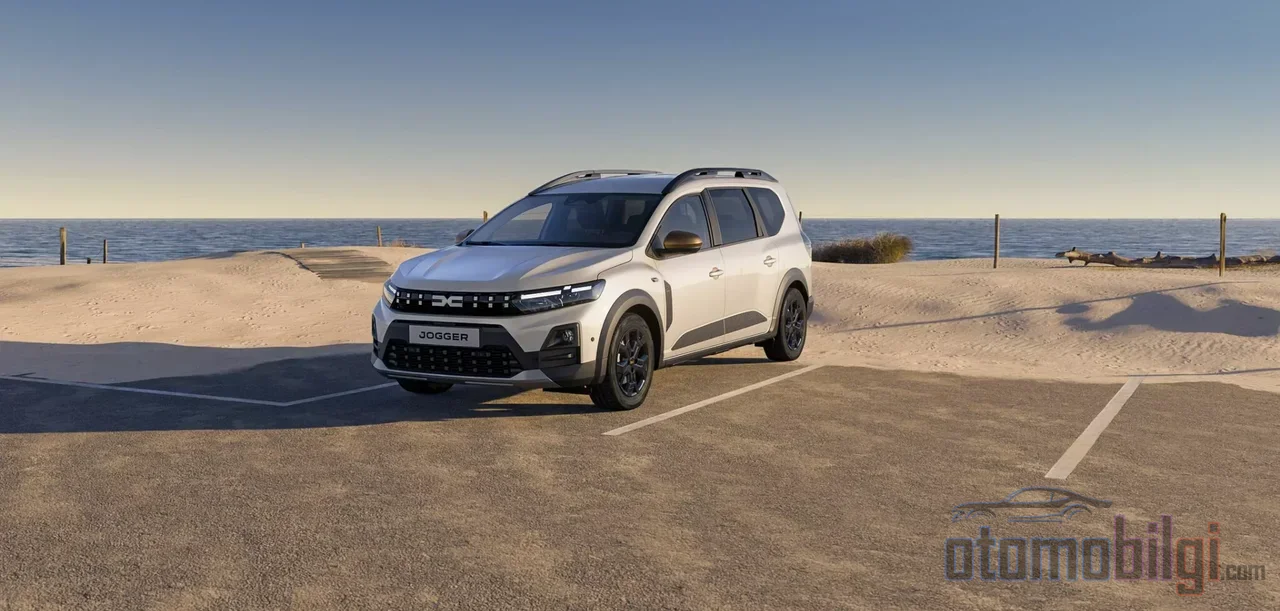
The cost of buying a seven-seat family vehicle approaches the price of a mid-range SUV in most markets. The Dacia Jogger is a model that steps outside this equation: It packs three rows of seats into a 4.55-meter body and carries an engine prepared at the factory to run on LPG. So how well does this combination answer the daily load of a real family, the need for long-distance travel, and expectations about running costs? The answer emerges from reading the figures in the tables together.
What Does Factory-Fitted LPG Mean, and Why Does It Matter?
Most LPG-powered vehicles on the market switch to this fuel through aftermarket conversion. The Jogger is different: The system called ECO-G comes from the 1.0-liter turbocharged three-cylinder engine being prepared as dual-fuel right on the production line. The car carries a 50-liter gasoline tank along with a 40-liter LPG tank and switches between the two fuels without any driver intervention.
This setup has two concrete engineering consequences. First, the LPG system is integrated with the engine management from the start: the fuel transition is based on calibration, and the compatibility issues seen in aftermarket conversions do not occur. Second, the warranty matter: under the manufacturer group's official policy, the warranty on LPG-powered Dacias is the same as their gasoline equivalents, meaning 3 years or 100,000 km (whichever comes first). An owner who converts a vehicle aftermarket usually loses this protection; with the factory-fitted system, there is no such risk.
Highlights
- 101 HP of power and 170 Nm of torque (on LPG, 1.0 TCe ECO-G 100)
- 50 L gasoline tank plus 40 L LPG tank
- WLTP LPG consumption: 7.6-7.8 l/100 km (7-seat version)
- Trunk volume of 160 L with the third row in use, and 1,807 L with the seats folded
- Warranty same as the gasoline version: 3 years / 100,000 km
The 1.0 TCe ECO-G 100 Engine and Transmission Character

The engine is a 999 cm³ turbocharged three-cylinder unit matched with a 6-speed manual transmission; power is delivered to the road through the front wheels. Performance figures vary slightly depending on the fuel: On LPG, 101 HP is produced at 4,600-5,000 rpm and 170 Nm at 2,000-3,500 rpm, while on gasoline these figures remain at 91 HP and 160 Nm. What stands out is that power and torque in LPG mode are higher than on gasoline; top speed also rises to 175 km/h on LPG instead of 172 km/h.
On the acceleration side, the picture is more modest. The seven-seat version does 0-100 km/h in 13.2 seconds on gasoline and 13.0 seconds on LPG; in the five-seat body, these figures drop to 12.5 and 12.3 seconds. The numbers honestly summarize the car's character: the Jogger is not a performance vehicle, but a carrier with low running costs. In city driving and at highway speeds of up to 100-110 km/h, the 170 Nm of torque, delivered from 2,000 rpm onward, provides enough traction for daily use with a family load. In flat-out territory, however, the engine's limits become noticeable; LPG consumption also increases noticeably at high speeds.
Seven-Seat Layout and Luggage Practicality
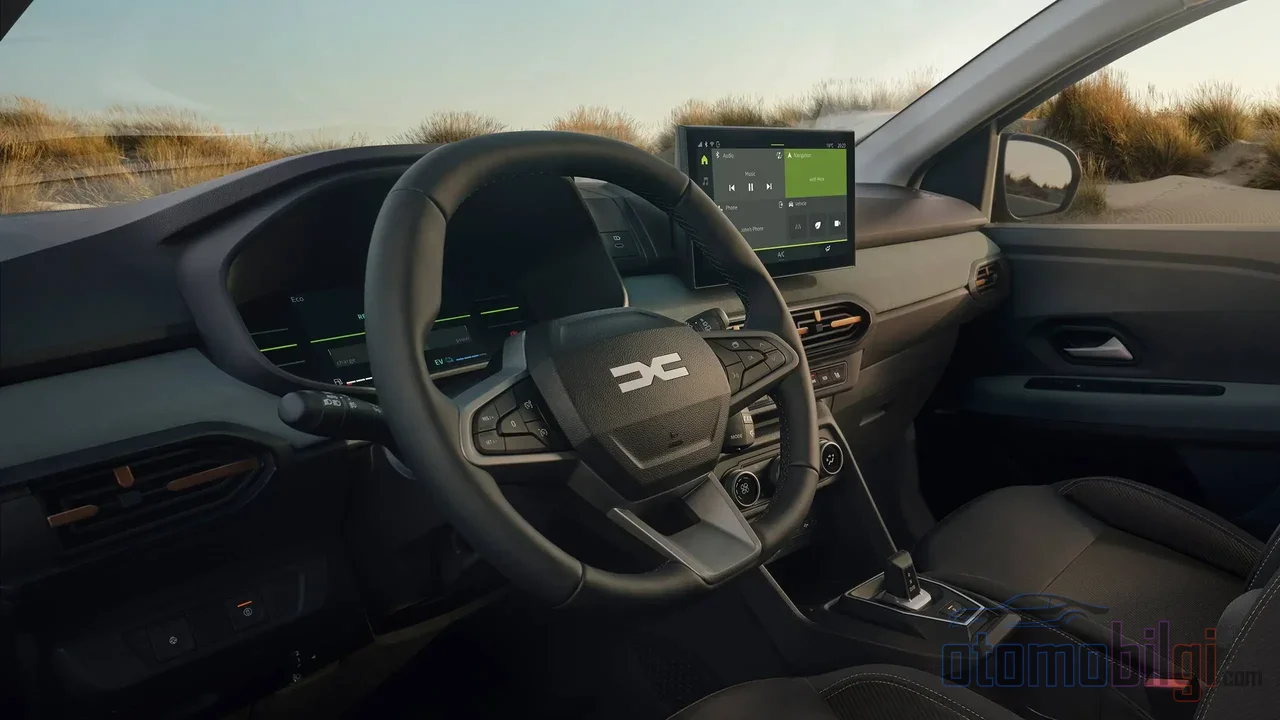
The Jogger's fundamental engineering decision is to place three rows of seats on a long 2,897 mm wheelbase. The third row is foldable and removable; this flexibility is a decisive practicality for families whose vehicle use alternates between five seats on weekdays and seven seats on weekends. In fact, the two seats of the third row can be removed from the luggage area and used as chairs; a thoughtfully designed detail for picnic or camping scenarios.
Let's look at the numbers: in the seven-seat LPG version, luggage volume is 160 liters with the third row in use, and 1,807 liters with all rear seats folded down. The five-seat version starts at 607 liters and opens up to as much as 1,819 liters. The 160-liter figure may look small at first glance, but this volume is the net space achieved when the third row is in use; in a six-passenger configuration with the rear row fully folded, the available volume reaches far more useful levels. Compared with rival models, the Jogger sits in the upper region of this class in terms of luggage volume.
There are a few realistic notes that temper the cabin picture. Due to the seven-seat layout, the rear floor is not flat; the footwell of the second row is designed according to the folding seat logic. Second-row comfort is the part of the vehicle that remains simpler than the rest. In contrast, access to the third row is easy, and the interior is built with durable, easy-to-clean materials. With a curb weight of 1,252 kg, the seven-seat version, boasting a 1,200 kg towing capacity for braked trailers, is also competitive in family vacation scenarios.
Operating Cost: The Arithmetic of LPG
In the WLTP cycle, the seven-seat version's LPG consumption is 7.6-7.8 l/100 km, while its petrol consumption is at the level of 6.0-6.1 l/100 km. In terms of cost per liter, LPG is significantly cheaper than petrol across most of Europe; when fuel expense per kilometer is factored in, the difference adds up line by line in the family budget. Considering the 40-liter tank together with the 50-liter fuel reservoir, the vehicle can travel long distances with both fuel tanks full without searching for a pump.
Another measurable advantage of LPG is on the CO2 side: while WLTP figures are 119-121 g/km with LPG, they are 137-138 g/km with petrol. Lower carbon emissions are a coefficient working in the same direction as fuel economy.
Maintenance Requirements
Unlike a petrol vehicle, the maintenance schedule of the dual-fuel system includes the periodic replacement of LPG filters: gas and liquid phase filters are renewed approximately every 30,000 km or every two years. The LPG tank undergoes a pressure test approximately every 10 years. These items create additional costs but are not excluded from warranty coverage; in the total operating cost equation, LPG's savings on the fuel side more than covers this periodic maintenance difference.
Technical Specifications: Dacia Jogger 1.0 TCe ECO-G 100 (Seven-Seat Version)
| Specification | Value |
|---|---|
| Engine | 1.0 TCe ECO-G 100, 999 cm³, 3 cylinders, turbo |
| Power (LPG / petrol) | 101 HP @ 4,600-5,000 / 91 HP @ 4,800-5,000 |
| Torque (LPG / petrol) | 170 Nm @ 2,000-3,500 / 160 Nm @ 2,100-3,750 |
| Transmission | 6-speed manual, front-wheel drive |
| 0-100 km/h (LPG / petrol) | 13.0 s / 13.2 s |
| Top speed (LPG / petrol) | 175 km/h / 172 km/h |
| WLTP consumption (LPG / petrol) | 7.6-7.8 l/100 km / 6.0-6.1 l/100 km |
| Fuel capacity | 50 L petrol + 40 L LPG |
| Boot capacity | 160 L (7 seats) - 1,807 L (maximum) |
| Kerb / gross weight | 1,252 kg / 1,889 kg |
Strengths and Weaknesses
- Strength: Being one of the most cost-effective seven-seat vehicles on the market; third-row and boot flexibility; low per-kilometre fuel cost and low CO2 with LPG; the same warranty terms as the petrol version.
- Strength: Braked towing capacity of up to 1,200 kg and versatile use with removable third-row seats.
- Weakness: Limited performance, as shown by the 12-13-second 0-100 km/h times; noticeably increased consumption at high speeds.
- Weakness: Second-row comfort remains basic, and wind noise around the windscreen at high speeds.
How Far Is the Jogger LPG Enough for a Family?
The clear answer to the question is this: The Dacia Jogger ECO-G is more than enough for a family that spends most of its daily use in the city and on weekend roads, regularly carries more than five passengers, and makes per-kilometre cost the deciding factor; for drivers with high performance expectations, it is a car designed with different goals. Three rows of seats, a maximum load volume exceeding 1,800 litres, 1,200 kg of towing capacity, and an engine that keeps the factory warranty intact with a low-priced fuel are the strong sides of this equation. On the other side, there is 13-second acceleration and basic second-row comfort.
From an engineering standpoint, what the Jogger does is clear: give exactly as much of each feature as is needed, and keep costs low. When this discipline is combined with LPG, the result is a balance rarely found in its segment. Seven seats and low running costs coming together in the same list is still a matter of choice for most rivals; in the Jogger, it is the car's very identity.