VW Tiguan Diesel: 800 km Range and 652-Liter Trunk
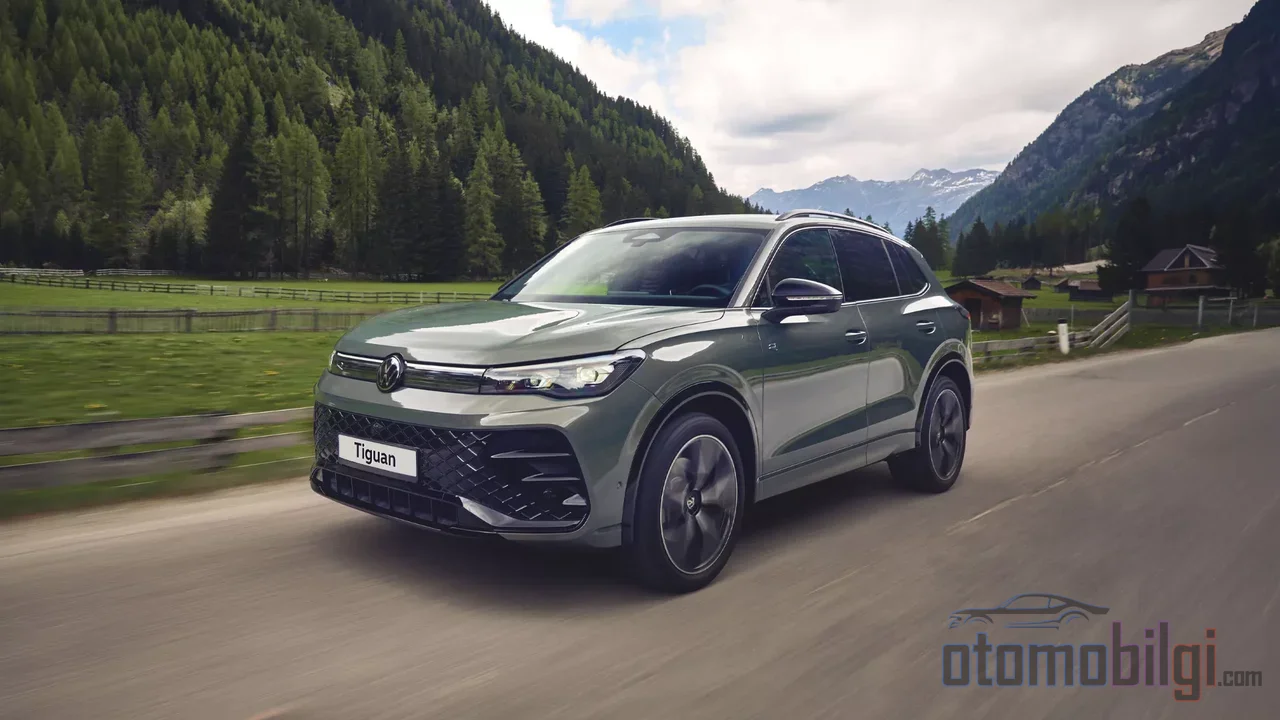
When buying a C-SUV, still seeing a diesel option on the list is no longer an unexpected situation in 2026. While the third generation of the Volkswagen Tiguan comes entirely with a DSG automatic transmission, the 2.0 TDI that keeps its place in the lineup... frankly the 2.0 TDI, represents the scenarios where diesel in this segment is a leftover but still convincing: high annual mileage, long highway stretches, a family of four and a full trunk. So what does the 2.0 TDI offer today, where is it strong, and where does it struggle?
This guide covers only the 2.0 TDI diesel version of the Tiguan: the engine's power and torque character, transmission structure, interior and trunk practicality, and its real performance in long-distance and load-carrying scenarios. We will also clearly address what is given up in return for the range advantage diesel offers.
Power and Torque Character of the 2.0 TDI Engine
while one gear is engaged, the next gear is pre-selected, and shifts are completed within milliseconds without any loss of clutch grip. 2.0 TDI engine is offered in two power levels. The 150 PS (110 kW) version produces 340 Nm of torque in the 1,750-3,000 rpm range; the 193 PS (142 kW) version delivers 400 Nm of torque from the same block in the 1,750-3,250 rpm band. In both versions, maximum torque is available across a wide window dipping almost to the floor of the rev counter, unlike naturally aspirated petrol engines. This is exactly what a fully loaded family car needs most: the need to downshift to accelerate decreases, and overtaking passes become less dramatic.
The 150 PS version accelerates from 0-100 km/h in 9.4 seconds, with a top speed of around 207-208 km/h. These figures may look dull on paper; but for a family SUV weighing around 1.6 tons, they are sufficient, and more importantly, the acceleration character is linear enough that a single number cannot describe it. The torque arriving at low revs makes the car feel light in city traffic and on uphill roads. The 193 PS version, meanwhile, continues the performance line of its predecessor, the 190 PS second-generation diesel (400 Nm, 0-100 km/h in 8.2 seconds).
| Version | Power | Torque | Torque band | 0-100 km/h | Top speed |
|---|---|---|---|---|---|
| 2.0 TDI 150 PS | 150 PS (110 kW) | 340 Nm | 1,750-3,000 rpm | 9.4 s | ~208 km/h |
| 2.0 TDI 193 PS | 193 PS (142 kW) | 400 Nm | 1,750-3,250 rpm | Not stated | Not stated |
A note: The 2.0 TDI is not offered in the North American market; in the USA, the Tiguan is sold only with a petrol engine. The diesel lineup is a choice specific to Europe and similar markets.
Transmission and Drivetrain: All DSG
There is no manual transmission option in the third-generation Tiguan; all versions come with the DSG automatic. The structure paired with the diesel engine is the 7-speed dual-clutch DSG, and on some versions, the 4MOTION all-wheel-drive system. The logic of the dual-clutch transmission is simple but effective: while one gear is engaged, the next gear is pre-selected, and shifts are completed within milliseconds without any loss of grip. On the highway, this means a smooth and quiet drive.
Looking at the diesel Tiguan's past, it is possible to see traces of lessons learned on the transmission side. The dry-clutch DSG unit used in the early 2.0 TDI engines of the second generation was known to exhibit malfunctions caused by electrical heating in winter months; newer generations show a marked improvement in this regard. Versions above 190 PS use the wet-clutch DQ500 unit, which is a more robust structure capable of handling higher torque. Although there were cases reporting a metallic creak at low speeds with this gearbox in the second generation, it does not stand out as a widespread structural problem.
Highlights
- The 2.0 TDI 150 PS version comes with 340 Nm of torque and does 0-100 km/h in 9.4 seconds.
- Cargo volume is 652 liters with the rear seats upright and 1,650 liters with the seats folded.
- In real-world use, consumption is measured in the 6.0-6.8 l/100 km range.
- A range exceeding 800 km is possible on a full tank.
- Braked towing capacity reaches up to 1,800 kg in some markets.
Which Family Needs Does It Answer in the C-SUV Segment?
The Tiguan is one of the founding members of the compact SUV class, namely the C-SUV segment. The essence of this segment is to bring together everything a family looks for in a single car: enough rear seat width for child seats, cargo space for the weekend getaway, and reasonable dimensions for daily use. The current generation of the Tiguan strikes this balance with a length of 4,539 mm, a width of 1,842 mm and a height of 1,660 mm; its five-seat layout meets the segment standard.
The role of the 2.0 TDI in this picture is specific: a sensible option for families with high annual mileage whose routes consist largely of highways and state roads. Low-end torque makes driving easier even with a full load and, if needed, a trailer behind. For short-distance, predominantly urban use, however, the diesel's advantages evaporate; a buyer with this profile would be better off looking at other engine options.
Interior and Cargo Practicality
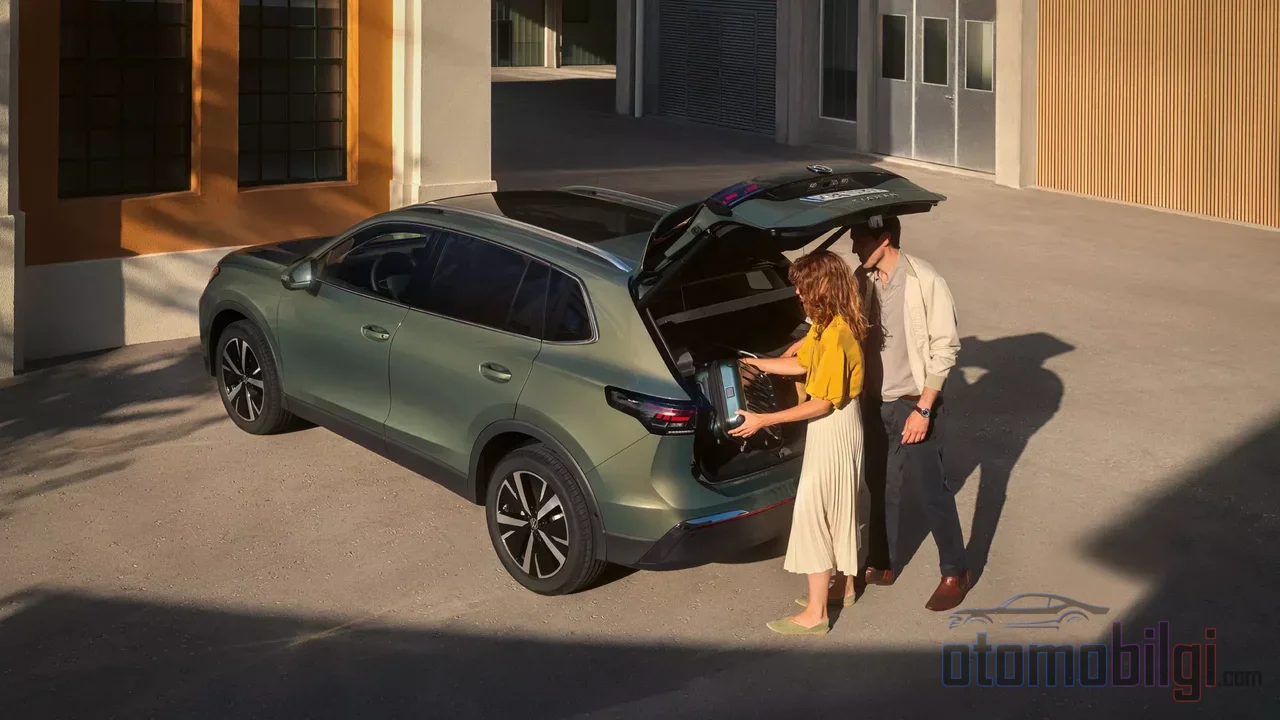
One of the most tangible gains of the current generation is the cargo area. Larger than the previous generation by 37 liters, the cargo area offers 652 liters with the rear seats upright and 1,650 liters when the seats are fully folded. These figures are strong compared to the segment at large: very few compact SUVs can surpass the Tiguan in this area. A five-person family's one-week holiday luggage, a stroller and sports equipment all find their place comfortably in this volume.
Inside, the second row is considered spacious for adults, with knee room of around 1,020 mm. The rear bench is generally wide enough for attempts to fit three child seats; three ISOFIX points are a standard expectation in this segment. The previous generation of the Tiguan had a sliding rear seat base, which could be moved forward and backward to vary cargo volume from 520 liters up to 615 liters; since the current generation starts with a larger volume anyway, the need for such flexibility has diminished.
Long Distance and Load Hauling: Diesel Territory
Consumption and Range
Let's get to the numerical side of the job. Real-world user records exceeding 100,000 km show that the 2.0 TDI delivers consumption in the 6.0-6.8 l/100 km band in real-world use. In independent environmental assessments, 5.0-5.8 l/100 km was measured in mixed extra-urban use, while city consumption in cold winter conditions can climb to as much as 8.8 l/100 km. What these figures mean is this: the diesel's advantage is maximal with a warm engine and at constant speed; on short and cold stages the advantage narrows.
On the range side the picture is striking: it is possible to cover a distance of over 800 km on a full tank. Not having to add a third close stop between two breaks on a summer holiday is a small but real gain in comfort. There are also those reporting around 32 mpg at constant highway speed (approximately 8.8 l/100 km); the usage profile affects consumption that much.
Load and Towing
For families carrying a trailer or bicycles, the braked towing capacity is decisive. The 2026 Tiguan offers a braked towing capacity of up to 1,800 kg in some markets; the towing limit of the all-wheel-drive versions is higher than that of the front-wheel-drive ones. With 400 Nm of torque, pulling away on an incline with a loaded trailer is no problem. Moreover, the 1,650-liter cargo volume already solves most no-trailer load scenarios on its own.
Weaknesses and Known Issues
The diesel Tiguan's character limit becomes apparent on winding roads: even though the engine is well refined, it is by nature designed for steady, relaxed highway speeds; on short and dynamic transitions it does not offer the gasoline version's fluidity. Also, diesel exhaust aftertreatment requires an SCR system with AdBlue injection, and the tank heating element of this system is a known weak point across the VW Group diesel lineup. In-tank pump component wear leading to low fuel pressure fault codes has also been reported in older 2.0 TDI generations. These are realities that must be factored into the maintenance cost side when making a purchase decision.
Who Is the 2.0 TDI Diesel Tiguan the Right Choice For?
Let's sum up. The 2.0 TDI Tiguan is still a strong offer in the segment for families who drive high mileage per year, have made long highway stages a part of their lives, and regularly use their vehicle with four occupants and a full trunk. With torque in the 340-400 Nm range, a range exceeding 800 km, a 652-liter trunk, and a towing capacity of up to 1,800 kg, the diesel Tiguan answers the entire wish list of the long-distance family. What is accepted in return are the increased consumption in cold and short-distance use, the additional maintenance items that come with the AdBlue system, and the heavier character on winding roads. In a profile dominated by city driving and low annual mileage, this trade-off does not turn into an advantage; but for the family whose comfort zone is the highway, the diesel's math still works in its favor.
Sources
- 2026 Volkswagen Tiguan Technical Specifications (VW Media)
- Volkswagen Tiguan (2026) engines & performance - Parkers
- Volkswagen Tiguan (2026) practicality - Auto Express
- Volkswagen Tiguan 2.0 TDI 150 PS 4MOTION DSG - VehicleSpecs
- VW Tiguan 2.0 TDI Green NCAP 2026
- Tiguan 2.0 TDI real-world consumption records - Spritmonitor
- Volkswagen Tiguan 2026 towing capacity - CarsGuide