MG HS 1.5T Review: Where Does It Stand in Its Segment with 170 PS?
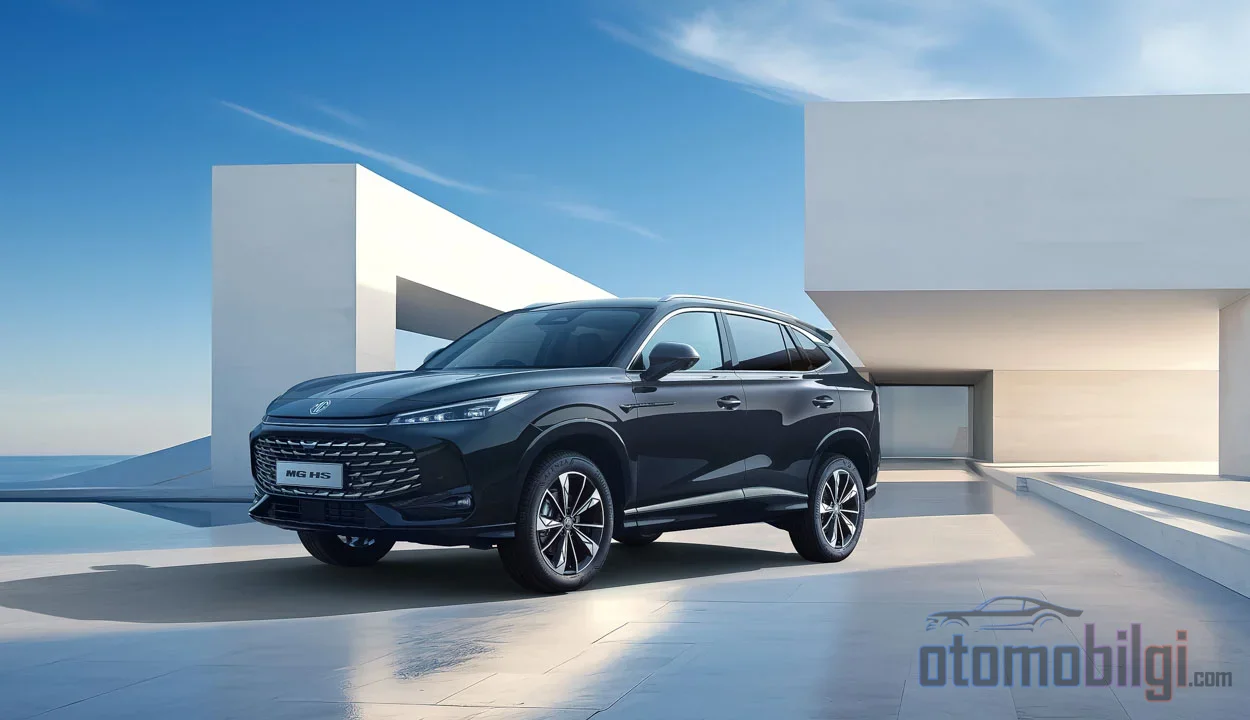
When looking for a family SUV in the D segment, the names usually at the top of the list are the Hyundai Tucson, Kia Sportage and Peugeot 3008. The MG HS, however, comes from outside this list, with a different logic: the claim of offering measurable value, not power or electrification. In the Türkiye market, the car is sold only with its 1.5T petrol version, and this is a fact that clarifies the choice. So how well does the HS, with its 170 PS turbo petrol unit, carry through that claim?
This guide covers only the 1.5T petrol MG HS: engine and transmission character, interior and boot practicality, safety equipment, the reliability debate, and the points where it differs from its rivals.
What Is the MG HS 1.5T, and Where Does It Stand in the Segment?
The MG HS is a compact crossover SUV produced by the Chinese SAIC Motor under the British MG brand. It was first introduced in 2018 and replaced the MG GS; in the brand's global lineup, it sits above the smaller ZS. The second-generation HS was introduced at the 2024 Goodwood Festival of Speed, and since its launch it has been on the radar of family SUV buyers.
Its dimensions allow it to fit comfortably into the D segment: length 4,655 mm, width 1,890 mm, height 1,664 mm and wheelbase 2,765 mm. Compared with the first generation, it has a body that is 60 mm longer, 14 mm wider and 22 mm lower. That width figure is considered generous compared with an average family SUV in its class, and it provides a serious margin for three adults to sit comfortably in the rear seats.
Highlights
- 1.5T turbo petrol engine: 170 PS, 275 Nm
- Transmission: 6-speed manual or 7-speed dual-clutch (DCT)
- Boot: 507 litres, 1,484 litres with the seats folded
- Twin 12.3-inch displays, standard Apple CarPlay and Android Auto
- Five-star Euro NCAP test result and the comprehensive MG Pilot package
What Character Do the 1.5T Engine and Transmission Options Have?
Engine: A Turbo Unit with a Wide Torque Band
The petrol heart of the second-generation HS is SAIC's 1.5-litre turbocharged inline four-cylinder engine coded GS61H. In the European specification, it produces 170 PS (125 kW) at 5,000 rpm and delivers its 275 Nm of torque in the 3,000-4,000 rpm range. This torque figure ranks near the top among the class's 1.5-1.6-litre turbo petrol units. Its character is one where power is felt not from low revs but from the mid-range onward; there is sufficient torque for intermediate acceleration bursts in city driving.
It is worth noting: MG offers the HS with different ratings from market to market. While some Asian markets have a 160 PS and 250 Nm variant, even with a CVT transmission option, the figures used as the basis in the European market are 170 PS and 275 Nm.
Transmission: Manual or DCT?
There are two options: a 6-speed manual and a 7-speed dual-clutch automatic (DCT). The performance difference on paper is small, but the difference in character is clear. The manual, with its 9.4-second 0-100 km/h acceleration and 190 km/h top speed, is actually faster than the DCT; the dual-clutch unit completes the same test in 9.6 seconds, with a top speed of 195 km/h. The DCT's role is not acceleration, but comfort in everyday traffic.
We will return to the DCT topic in the reliability section; because this transmission is the vehicle's most discussed component.
What Does Consumption Mean?
The WLTP combined figure is 7.6 l/100 km; this value is marked as the highest-consumption version of the range, because the petrol unit is thirstier than the hybrid variants in other markets. In real-world measurements, around 7.5 l/100 km is seen in city eco use; while the NEDC figure in some markets is declared as 6.9 l/100 km. In summary: a realistic expectation is the 7.5-8 liters per 100 km band.
| Specification | Value |
|---|---|
| Engine | 1.5T turbo petrol, 4 cylinders |
| Power | 170 PS (125 kW) @ 5,000 rpm |
| Torque | 275 Nm @ 3,000-4,000 rpm |
| Transmissions | 6-speed manual / 7-speed DCT |
| 0-100 km/h | 9.4 sec (MT) / 9.6 sec (DCT) |
| Top speed | 190 km/h (MT) / 195 km/h (DCT) |
| WLTP combined consumption | 7.6 l/100 km |
Interior and Boot: Does the Family SUV Promise Hold Up?
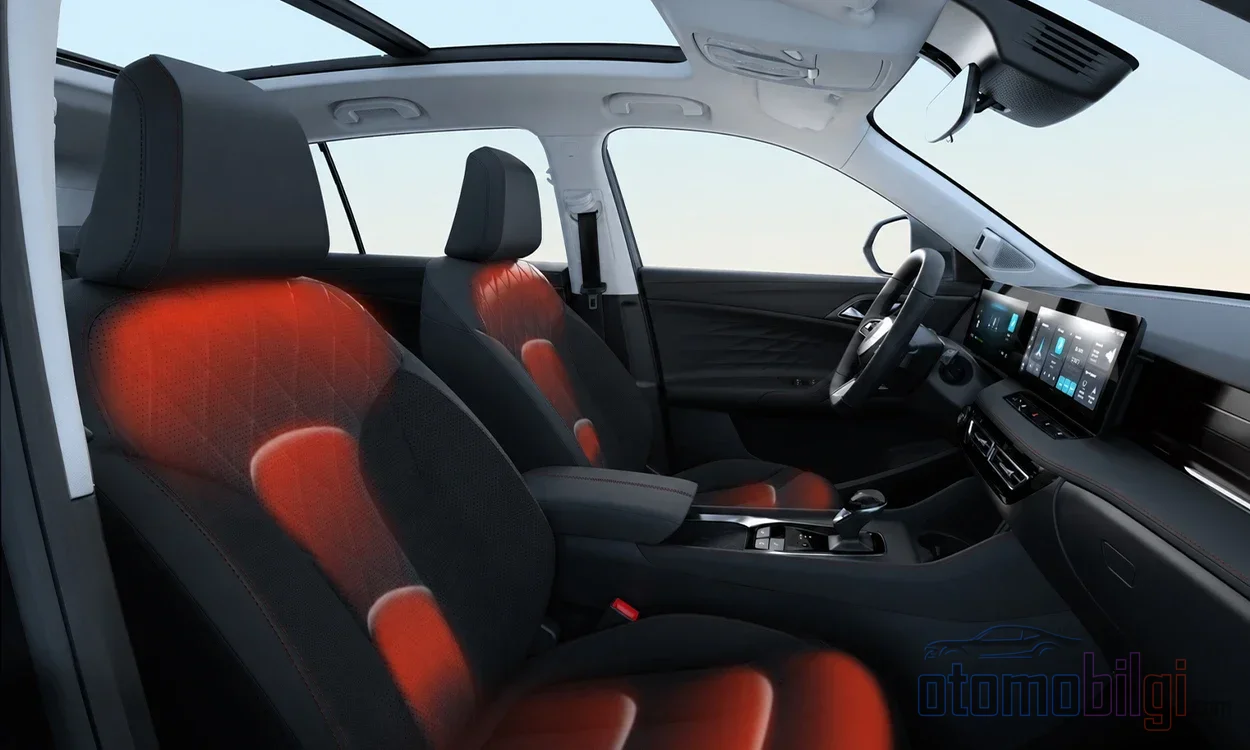
The HS's strongest card is played inside. The dual 12.3-inch screen layout, meaning an instrument cluster and a multimedia screen of the same size, is standard across all trim levels. Apple CarPlay and Android Auto connectivity, navigation and Spotify integration, a 6-speaker sound system and a 360-degree camera package are on the equipment list. The LED lighting package, 19-inch alloy wheels and PU leather seats are offered on higher trims.
The boot side speaks with numbers: 507 liters with the seats in place, 1,484 liters when the second row is folded. Practical details such as a retractable boot shelf and a cargo net are also available. This volume is above the class average and means capacity that will be more than enough for a family of four for a weekend getaway's luggage. The rear seats folding down easily also proves useful in daily use.
Safety Equipment and NCAP Result
Safety is the HS's most praised headline. It received five stars from the first-generation Euro NCAP; the 2024 ANCAP tests (aligned with Euro NCAP) scored 90% for adult occupant protection, 87% for child occupant protection, 83% for protection of pedestrians and 74% for safety assists across all versions.
On the equipment side, the MG Pilot package is broad: emergency braking system, lane keeping assist, Adaptive Cruise Control and, on DCT versions, a traffic jam assist that follows vehicles up to 56 km/h. Some markets offer 7, others 8 airbags; ABS, EBD and hill descent control (HDC) are complementary elements.
Weak Points: What Should You Know?
Every vehicle has its bill, and the HS's comes in three items. The first is the dual-clutch transmission: the most frequently reported complaint from owners is the DCT hesitating during gear changes at low speeds and occasionally producing a clunky sound. The second issue is the infotainment: the touchscreen freezing or responding slowly to commands is a point that strains the user experience. Third is the brand's overall reliability record; this should be read as a risk at the level of brand image rather than a verified finding specific to a single model. It is also noted that, as a minor everyday annoyance, the speed limit warning needs to be turned off again on every use.
Trying the DCT especially at low speed, in reverse maneuvering and parking scenarios during a test drive would be a correct check before purchase.
How Does It Differ From Its Rivals?
The HS competes directly with midsize family SUVs such as the Hyundai Tucson, Kia Sportage and Peugeot 3008. Against these rivals, its point of differentiation is clear: a more spacious interior and a longer standard equipment list for the same money. An equipment-packed, premium-feeling midsize SUV assessment accurately summarizes the vehicle's positioning.
When compared with Chinese rivals (GWM Haval H6, Chery Tiggo 7), MG is noted for evaluations saying it pulls ahead in overall driving refinement. Compared to the brand's ZS model, the HS is bigger, more premium and naturally positioned one step above.
Conclusion: Who Is the MG HS 1.5T For?
The clear answer to the question is this: The MG HS 1.5T, with its spacious interior, 507-liter trunk, rich standard equipment and five-star safety test rating, is a strong D-segment SUV option for families who want to spend their budget in favor of equipment and space; you pay for it with the DCT transmission behavior, infotainment speed and the brand's reliability record.
The manual transmission is a small but smart alternative in this equation: actually better in acceleration, and free of the debatable DCT risk it could carry. 170 PS and 275 Nm deliver performance in the same league as 1.6-liter turbocharged rivals. If your answer to the question of electrification is definitely no, and you are looking for a simple ownership experience with a single fuel type, the HS 1.5T is a candidate that deserves to be on the list.
Sources
- MG HS
- MG HS | Car Models | MG MOTOR UK
- MG HS Price South Africa - Premium SUV Specs & Features
- MG HS 1.5T GDI petrol FWD automatic - Green NCAP
- MG HS Boot Space, Size, Luggage Capacity & Cargo - CarsGuide
- MG HS problems (2019-2025) common faults & reliability - VehicleFaults
- MG HS review 2026, Price & Specs - What Car
- 2025 MG HS Essence Price and Specifications - CarExpert