Hyundai Bayon 1.0 T-GDI Review: Is 90 HP Enough?
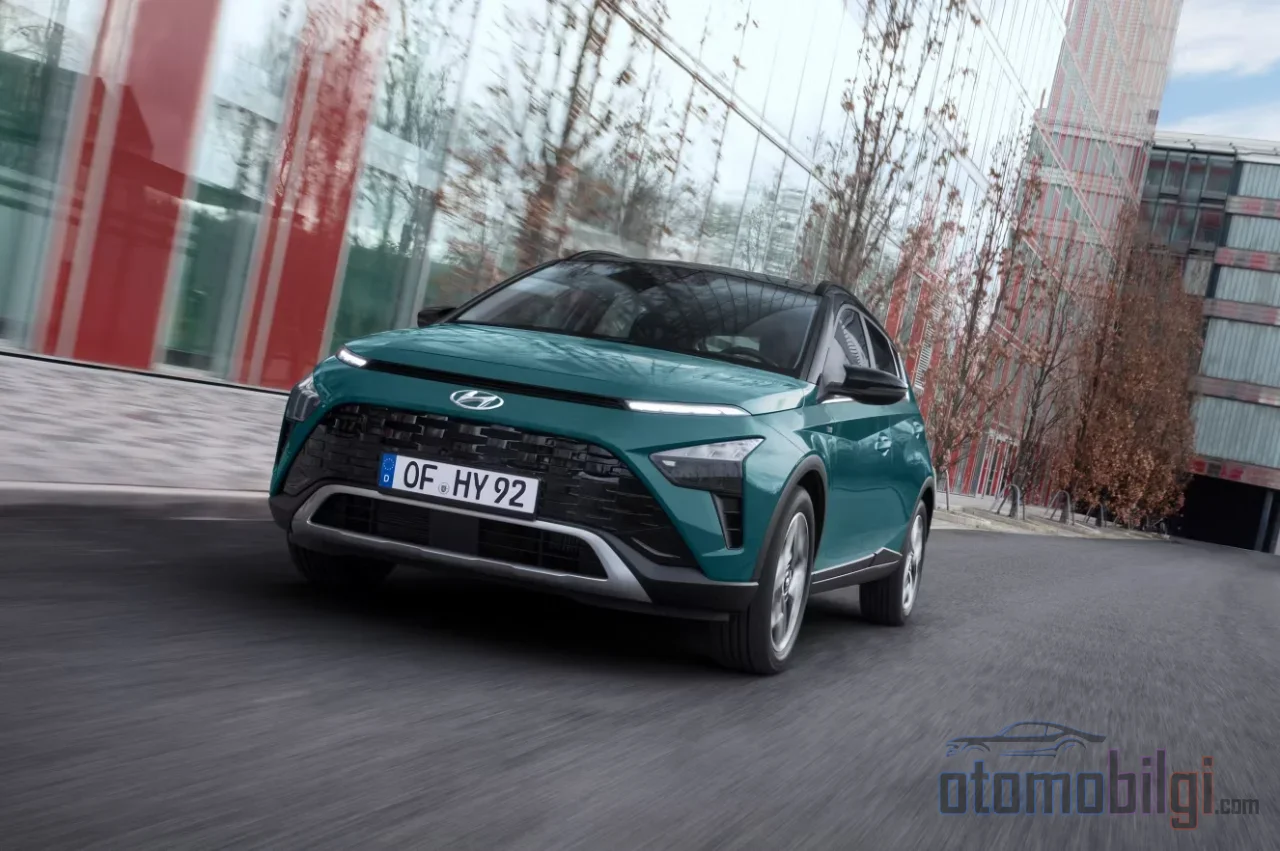
The B-segment SUV market is one of the most competitive areas of recent years; every manufacturer carries a model in this class, and the differences between them are often hidden in much subtler places than the power figures on paper. The Hyundai Bayon stands in exactly this crowd, built on the i20 platform and positioned just below the Kona as a compact solution. In its current lineup, this model, named after the French city of Bayonne, has a single petrol engine option in Europe: the 1.0-liter turbocharged three-cylinder T-GDI. For someone who wants an affordable B-SUV and doesn't want to touch electrification at all, is this engine really enough, or do you have to accept one of the least powerful units in the class?
The answer to this question is not just about raw power figures. To understand the Bayon's character, you need to look together at the engine's torque distribution, the effect of the two different transmissions on performance, the practicality of the trunk and interior, and its positioning relative to rivals. And that is exactly what this guide does.
What Need Does the Bayon Answer?
The Bayon, Hyundai's B-segment hatchback i20, is built on the same foundations; meaning technically it is a B-segment car, with a raised, more practical SUV body. This position below the Kona targets users who focus on city use, take occasional weekend trips, but don't want to enter the size and cost of a C-segment SUV.
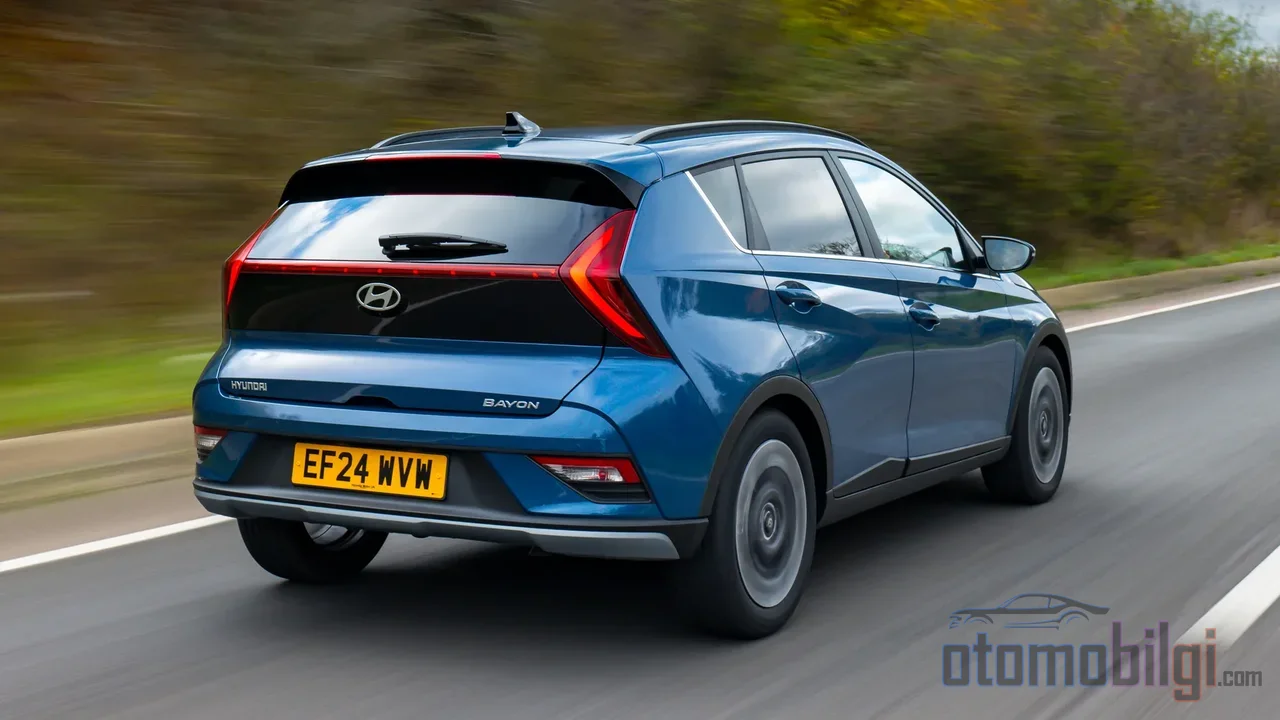
The facelift in 2024 clarified this identity: the front end was redesigned and the electrified power units were removed from the lineup. The most tangible benefit of this was seen in the trunk; when the mild-hybrid system's battery was removed from the trunk floor, the volume increased from 334 liters to 411 liters. So today, the Bayon is sold as a simple, mechanically easy-to-understand petrol package. Outside Europe, it is offered in selected markets such as Central Asia and the Middle East-North Africa; it is not a fully global model, but a vehicle shaped for its own market.
Highlights
- Current 1.0 T-GDI engine: 90 HP / 172 Nm, torque in the 1500-3000 rpm band
- Transmission options: 6-speed manual or 7-speed dual-clutch DCT, both front-wheel drive
- Trunk volume: 411 liters with seats upright, 1205 liters with seats folded
- Rear seat legroom: 882 mm
- 0-100 km/h: 11.9 seconds with manual, 13.3 seconds with DCT (90 HP)
The Character of the 1.0 T-GDI Engine: How Far Does 90 Horsepower Go?
The 1.0 T-GDI is a turbocharged three-cylinder petrol unit kept small in displacement. The figures in the current European lineup are 90 HP and 172 Nm; the key figure here is not horsepower, but torque and at which rpm the torque arrives. The 172 Nm of torque is available in the 1500-3000 rpm range, meaning the moment you press the accelerator, it is right at hand in the region where you operate in city traffic. The typical weakness of three-cylinder engines is sluggishness at low rpm; the narrow torque band partly compensates for this.
Notably, this engine has also been offered in the past with 100 and 120 hp versions. With the facelift, power was raised to 90 hp; on paper, that is a step back. In practice, since the 172 Nm of torque remains the same, city flexibility is largely preserved. The difference is felt on highway ramps, in a fully loaded vehicle, and during overtaking maneuvers. One of the stronger older versions measured between 10.7 and 11.3 seconds for the 0-100 km/h run; the current 90 HP manual stretches to 11.9 seconds, and the DCT to 13.3 seconds. These figures are not class-leading, but they are far from embarrassing either.
The Consumption and Emissions Reality
The WLTP-based CO2 value varies between 118-134 g/km for the gasoline version. Real-world consumption can come out noticeably higher than the official figure; in long-term use, results well above the official consumption claim are reported, while owners' mixed-use figures hover around approximately 5.5 L/100 km. Exceeding this figure with city-heavy use is normal. In short: reasonable, but no miracle.
Manual or DCT: The Transmission Decision Determines Performance
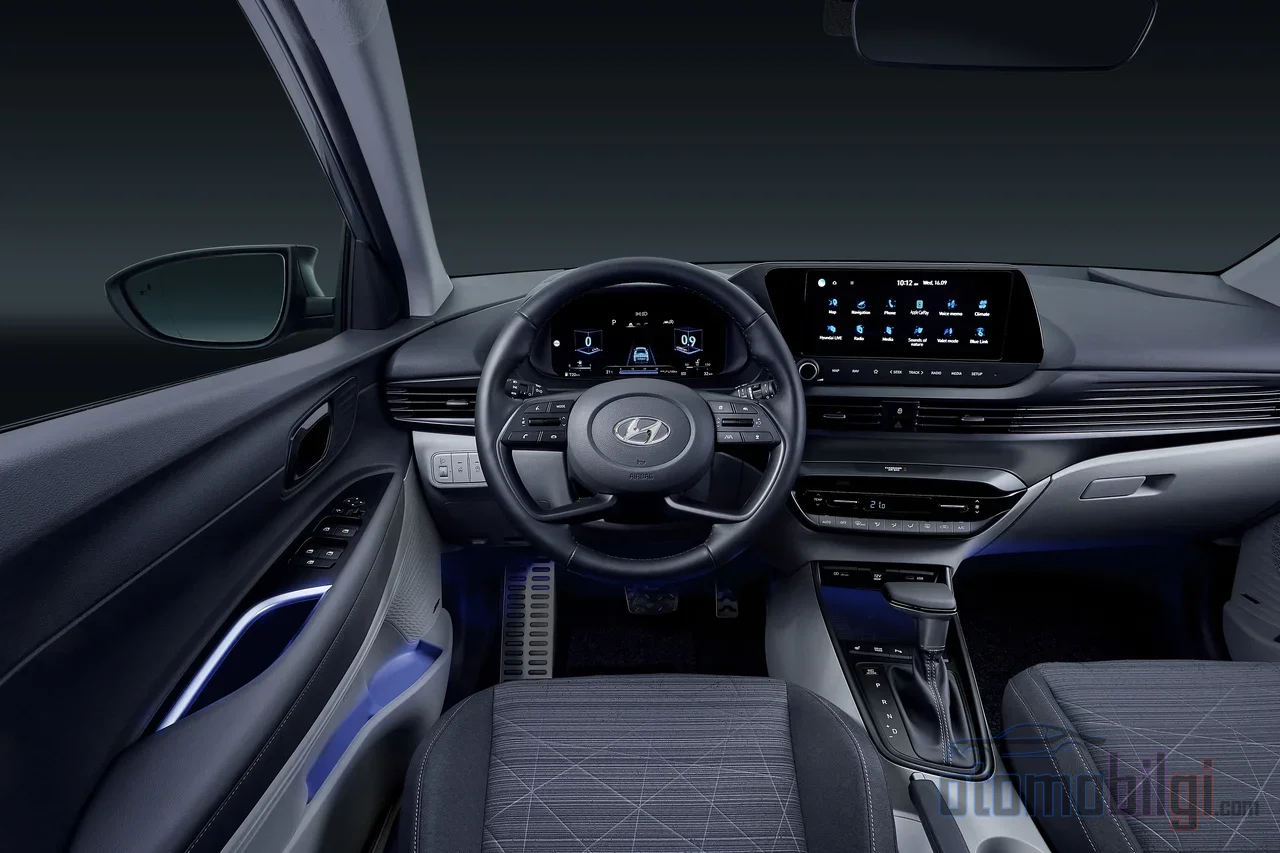
The Bayon offers two transmission options: a 6-speed manual and a 7-speed dual-clutch DCT. Both are front-wheel drive and neither has any electrification support. The choice matters more than it seems; because the performance difference is not small.
| Version | Power | Torque | Transmission | 0-100 km/h | Top Speed |
|---|---|---|---|---|---|
| 1.0 T-GDI (current) | 90 HP | 172 Nm (1500-3000 rpm) | 6-speed manual | 11.9 s | 174 km/h |
| 1.0 T-GDI (current) | 90 HP | 172 Nm (1500-3000 rpm) | 7-speed DCT | 13.3 s | 172 km/h |
| 1.0 T-GDI (older, 100 HP) | 100 HP | 172 Nm (1500-3500 rpm) | Manual | 10.7-11.3 s | 179-183 km/h |
The most striking row in the table is the DCT: in the 90 HP version, the dual-clutch transmission takes 0-100 km/h to 13.3 seconds. The reason is that the DCT stays more cautious at launch and low speeds to protect the clutch. In city flow, the DCT is comfortable and overall user satisfaction is high; but when the throttle is pressed impatiently, a response delay from the transmission is felt. With the manual, the situation is clearer: the gearbox offers more feedback and resistance than its rivals' manuals, meaning the mechanical connection with the driver is richer.
The practical advice is this: for city-traffic-heavy use and comfort priority, the DCT makes sense; for those who want a sense of performance and control, the manual is clearly the faster car with the same engine.
Interior and Cargo Space: The Bayon's Strongest Trump Card
The most prominent aspect of the Bayon's technical identity is practicality. The 411-liter cargo volume is not just on par with the class average, it is in the upper half of the class; noticeably larger than its sibling the i20, and even slightly more spacious than some longer rivals. Although it falls behind a cargo champion rival like the Ford Puma, it gets ahead early in comparisons against direct alternatives like the Kia Stonic. The seats fold in a 60:40 split, and when folded flat they open up a load area reaching 1,205 liters.
Rear legroom is 882 mm; a level that feels comfortable within the segment and does not discomfort three adults on short trips. The overall feel of the interior is also perceived as roomier than the class average. The weak point is the versatility of the rear seats: no flexibility such as stepped adjustment or sliding is offered, and some rivals have more advanced luggage solutions.
One more detail: ground clearance is 165 mm, on the low side of the segment. The T-Cross offers 190 mm, the Juke 180 mm. In other words, the Bayon makes no real claim to off-road capability; it is a vehicle designed for high seating position and visibility.
How Does It Stand Out From Its Rivals?
Its direct rivals are the Kia Stonic, VW T-Cross, Seat Arona, Ford Puma, Nissan Juke and Skoda Kamiq. Within this crowded field, the Bayon's points of differentiation can be counted clearly:
- Cargo volume: at 411 liters, a numerical advantage against rivals like the Stonic and T-Cross.
- Price positioning: with the 2024 update, it is offered noticeably more affordable than the Juke, and also cheaper than the T-Cross.
- Manual gearbox feel: Fuller feedback than its rivals' manual gearboxes.
- Simplicity: An understandable mechanical structure without electrification.
On the other side, there are drawbacks too. In terms of driving, the Bayon behaves like a reasonable urban companion; but on variable road surfaces, rivals like the T-Cross are calmer and more balanced. On the safety side, it received 4 stars in the Euro NCAP 2021 test; behind the class's 5-star names. The resale value picture is not bright either: roughly 45% of the value is retained after three years, while the Ford Puma leads in this area with a 49-55% band. Some reliability complaints from owners -high consumption, a 12V battery that dies early, rear shock absorber problems- are also cost signals to be aware of before buying.
Is It Enough in the City? Clear Answer
The short answer to the question: yes, it is enough for the city; because Bayon's design priority was never speed, but usable torque at low revs and everyday practicality. 90 hp is one of the lowest power figures in the class on paper, but the 172 Nm of torque delivered in the 1500-3000 rpm band handles every maneuver city traffic demands. The place where you will have trouble with this engine is not the city; it is highway overtaking stretches, hills with a full load, and passing at constant speed.
The right setup is this: a Bayon bought with the manual gearbox is both faster and more mechanically satisfying a package than the DCT version. If you prefer urban comfort with the DCT, you need to know what a 0-100 km/h time of 13.3 seconds means and use the throttle accordingly. In return, you get a 411-liter trunk, an interior that feels spacious and an accessible price; also factor in the 165 mm ground clearance and the 45% three-year value retention rate.
The Bayon is a vehicle in the B-SUV segment that is not technically ambitious, but does its daily job properly. It is a sensible choice for someone who does not want electrification, has a reasonable budget, and uses the car mostly in the city; if you are someone looking for a feeling of performance, there are other more suitable names in this class.