2026 Polestar 4: The Fiery SUV Coupé Reaching 600 km of Range
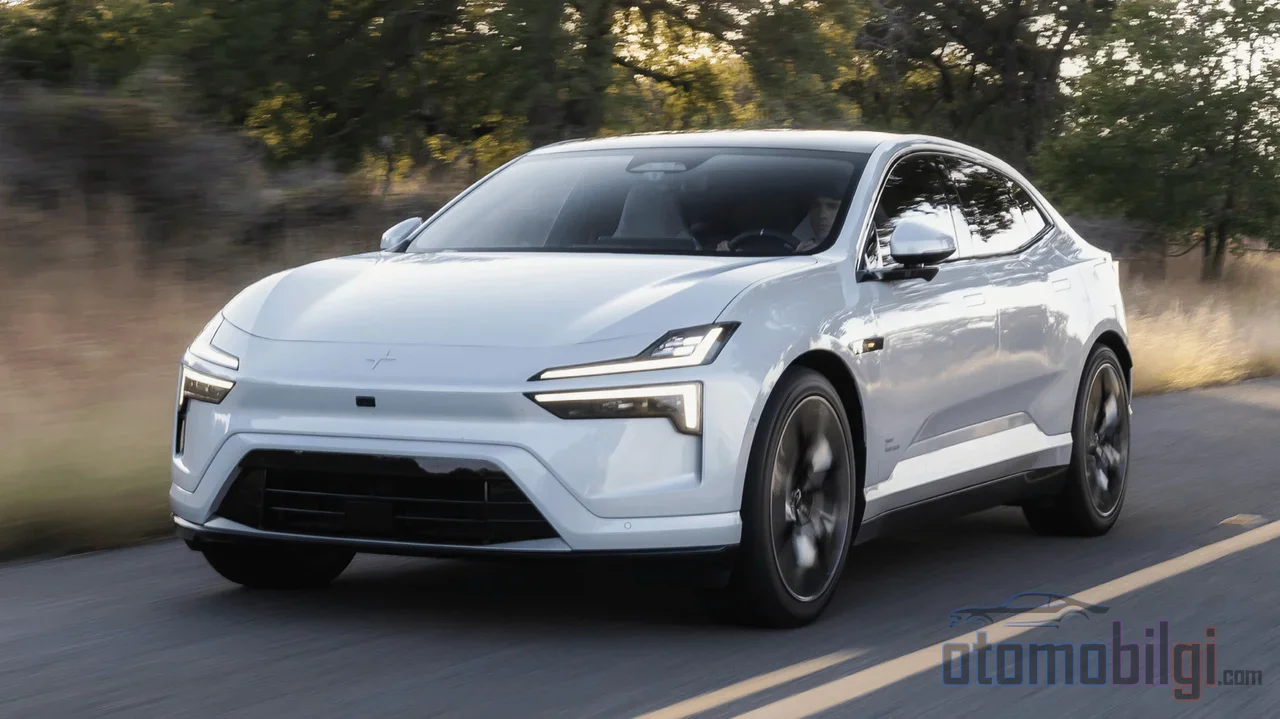
While most models in the electric SUV world have started to look alike, the Polestar 4 entered the scene with a contrarian decision: it removed the rear window entirely. At first glance this radical move by the Gothenburg-based brand seems risky, but it captures the car's identity in a single sentence - coupé aerodynamics, SUV spaciousness and a range of up to 620 kilometers on the WLTP cycle all come together in one body. So what really lies behind these numbers, what does each motor option promise, and where does this car stand against the Tesla Model Y or Kia EV6?
Highlights
- WLTP range: 620 km in the rear-wheel-drive version, 590 km in the dual-motor version
- 400 kW of power in the dual-motor version and 0-100 km/h in 3.8 seconds
- 100 kWh battery, 10-80% charging with 200 kW DC in 30 minutes
- On sale in the US starting from $56,400 (as of June 2026)
- Sold in 28 global markets; a record 30,423 retail sales in the first half of 2026
What is the Polestar 4 and which segment does it occupy?
The Polestar 4 is an electric SUV coupé first unveiled in April 2023 and today sold in 28 markets ranging from North America to Europe and Asia. Its dimensions clearly support this identity: 4,840 mm in length, a 2,999 mm wheelbase and a height of only 1,534 mm. The long wheelbase provides a spacious seating position in the cabin despite the low roofline, while the low height forms the foundation of aerodynamic efficiency. Curb weight ranges between 2,230-2,355 kg; this is a reasonable figure for a vehicle with a 100 kWh battery.
The brand's official positioning is built on three concepts: coupé aerodynamics, SUV spaciousness and innovation for the electric age. The practical counterpart of this abstract definition is that the car sits at a performance-oriented yet daily-usable point. Its launch for sale in the US starting from $56,400 from June of the 2026 model year is also a tangible indicator of this claim; four different trim levels are tiered within the $56,400-68,400 range.
Range and consumption: How was the 600 km threshold crossed?
At the center of the range story is the 100 kWh liquid-cooled NMC battery. The cells are integrated directly into the pack with a cell-to-pack architecture; in other words, the module layer has been eliminated and more cells have been fitted into the same volume - this 110-cell structure increases weight and volume efficiency at the same time. The 400-volt system voltage is a classic solution compatible with today's fast-charging infrastructure.
The WLTP figures differ depending on the motor configuration:
- Long Range Single Motor: 620 km WLTP range, rear-wheel drive, 200 kW (approximately 272 hp), 343 Nm of torque
- Dual Motor: 590 km WLTP range, 400 kW (approximately 544 hp), 686 Nm of torque
On the consumption side, EV Database's measurement gives a nominal value of 184 Wh/km for the single-motor version; this is a striking level of efficiency for a vehicle approaching two tons. In the US market, the stricter EPA cycle applies: 310 miles with the single motor, 280 miles with the dual motor, and 255 miles of claimed range for the Performance version, with the usable battery stated as 94 kWh. This difference between WLTP and EPA is a normal distinction arising from the harshness of the measurement cycles - not a contradiction, but the same car measured with two different yardsticks.
On the performance front, the dual-motor version accelerates from 0-100 km/h in 3.8 seconds; top speed is 200 km/h. For the single-motor version, this figure is 6.9 seconds according to official data, while some technical pages show it in the 7.1-7.4 second range - a line item showing minor deviations depending on model year and market.
Charging characteristics: 10-80% in 30 minutes
Maximum DC charging power is 200 kW according to official data; charging time from 10% to 80% is 30 minutes. On the AC side, the 11 kW onboard charger requires about 11 hours to fully charge the battery from zero - a sufficient speed for overnight home charging. Thanks to Plug & Charge (ISO 15118) support, charging starts at compatible stations without a card or app; the vehicle's identity is automatically verified at the plug.
The character of the charging curve should also be known: peak power occurs at low battery levels, and after 30% the power gradually decreases. This is standard behavior stemming from the cell protection logic of lithium-ion chemistry; when planning a journey, charging in the 30-50% band and continuing on the road yields a practically faster total travel time than waiting for a full charge in one long stop.
There is also movement on the future-of-technology front: the brand published a demo test showing extremely fast charging above 350 kW with StoreDot's silicon-based cells. This is still a technology demonstration; the character of the current production vehicle is defined by the official values above.
No rear window - what's in its place?
The most debated design decision of the Polestar 4 is the complete removal of the rear window. Behind this lies a practical rationale as much as an aerodynamic one: on the coupe roofline the rear window is practically useless anyway, whereas when removed, it opens up a much wider view and seating area for passengers in the rear seats. Filling the gap is an 8.9-inch digital interior rearview mirror; it allows switching between the image from the rear camera at 1,480x320 pixel resolution and a classic mirror image.
Independent assessments say this solution works, but requires an adjustment period and that wide side blind spots remain. For drivers looking for an alternative to the digital mirror, the 360° view system supported by side cameras, 12 ultrasonic sensors, and mid-range radar are the compensating elements; in total, 11 cameras surround the vehicle.
Interior and technology equipment
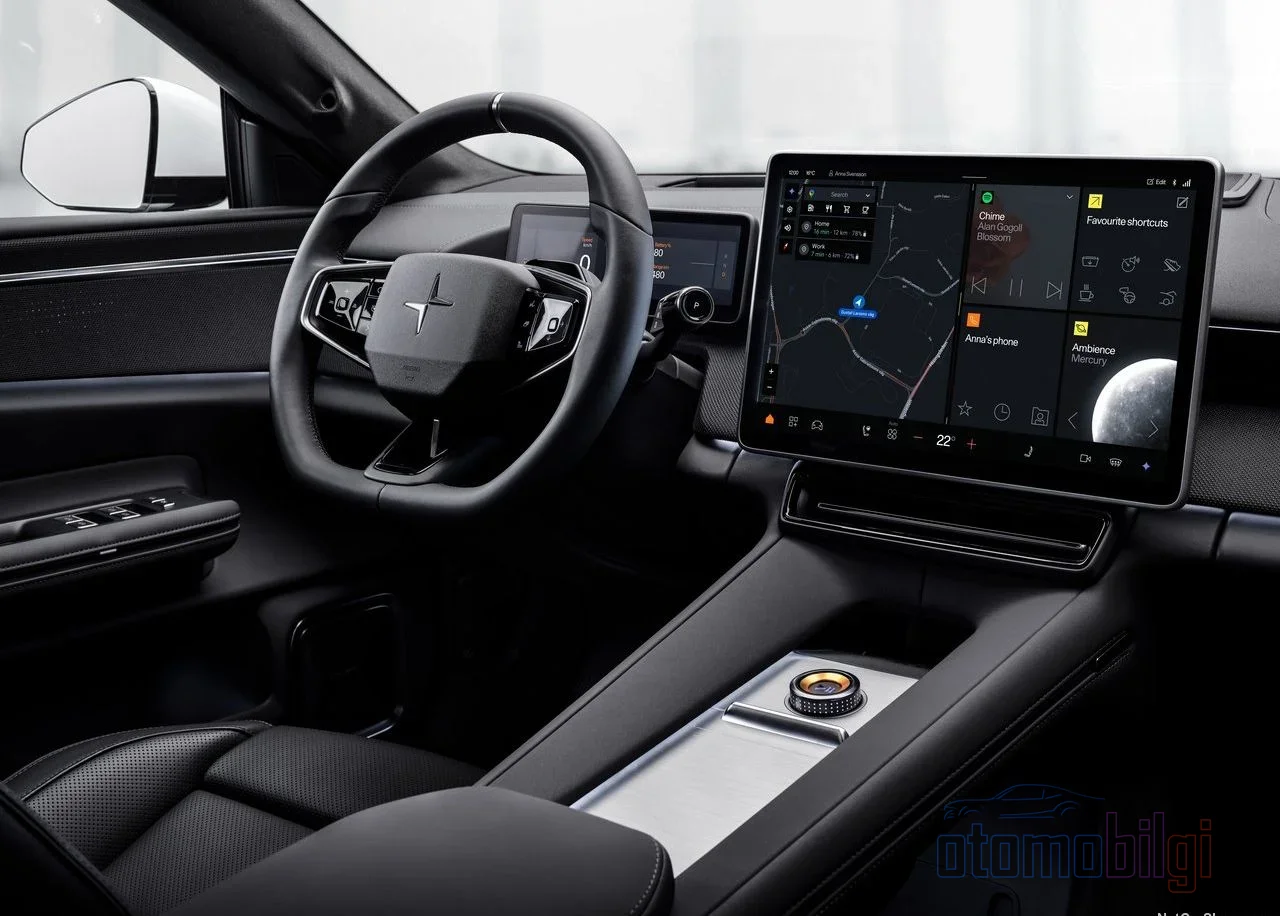
The cabin's digital architecture consists of three screens: a 15.4-inch center display (1,920x1,200 pixels), a 10.2-inch driver display, and a 14.7-inch head-up display added with the Plus package - plus a 5.7-inch control panel reserved for rear passengers. Google built in on the software side: Maps, Assistant, Gemini and Play apps run directly in the vehicle. Wireless CarPlay, OTA updates, 5G connectivity and an ultra-wideband digital key are also part of the standard package.
The audio system tiers are clear: 8 speakers in standard equipment; 12 speakers and 1,320 watts signed by Harman Kardon with the Plus package; and 16 speakers with 1,400 watts in the Nappa trim, including 4 speakers embedded in the headrests. Cargo volume is 526 liters ( 1,536 liters with the seats folded), plus an additional 15-liter front trunk. Towing capacity is 1,500 kg for the single motor and 2,000 kg for the dual motor - a serious figure for an electric SUV coupé.
Sustainability figures also stand in the catalog as numbers: Tailored Knit upholstery woven from 89% recycled PET, an animal welfare-certified Nappa option, battery cells produced with renewable electricity, and a declared value of 19.3-20.2 tCO₂e for the carbon footprint before leaving the factory.
Comparison with Tesla Model Y and Kia EV6
The most effective ruler for understanding the Polestar 4's position is putting it side by side with its direct rivals. In comparison tests, the Tesla Model Y stands out in performance and practicality, while the Polestar 4 holds the advantage in acceleration and interior quality. On the range side, the WLTP figure of 620 km creates a 52-kilometer advantage against the Model Y's 568 km; on the other hand, the Model Y answers even the dual-motor Polestar with its 4.8-second acceleration. Australia-based reviews find the Polestar cabin noticeably more premium than the Model Y's.
| Feature | Polestar 4 | Tesla Model Y | Kia EV6 |
|---|---|---|---|
| Range (WLTP) | 590-620 km | 568 km | - |
| 0-100 km/h | 3.8 s (Dual) | ~5.0 s (LR AWD) | 5.3 s (AWD) |
| Power | Up to 400 kW (544 hp) | ~397 hp (LR AWD) | 239 kW (325 PS, AWD) |
| Cabin character | Minimalist, premium | Practicality-focused | Vibrant design |
In comparisons with the Kia EV6, the Polestar 4's interior is found more minimalist and premium, while the EV6 stands apart with a more vibrant design language. To sum up, the Polestar 4 is a product in the same league as the Model Y in the speed and efficiency table, but one notch above in material quality and cabin atmosphere. The criticisms are no secret either: the note that the rear windowless design requires getting used to, that the menu layout bothers some users, and that the Brembo calipers and ZF active dampers in the Performance package come at the cost of a stiffer ride.
The content of the Performance package is meanwhile technically meaningful: active ZF CCD dampers, gold-colored Brembo brake calipers, 22-inch forged wheels and a Polestar Engineered chassis tune. The turning circle is 11.64 meters - a figure that makes a difference in urban maneuvering for a vehicle of this size.
Its place in the global market and roadmap
Sales figures show the brand's momentum: In the first quarter of 2026, 13,126 retail sales marked the best first quarter of all time, growing 7% year over year; the distribution network reached 230 retail sales points. The first-half total came to 30,423 units. The fact that the 2026 model year is selling out in the US market is a signal that demand remains above supply; according to Edmunds data, cash discounts of up to $25,000 are also a typical indicator of an inventory-clearing period.
The plan ahead is clear: The investor presentation dated February 2026 envisions four new vehicles within three years, with the fourth quarter of 2026 marked for the SUV version of the Polestar 4. The notable detail is that this new body is designed with a rear window and targets a range of 630 km - in other words, the most radical design decision of the current coupé is being revised in the next step of the product family. This raises the key question: was the rear window really unnecessary? Polestar 4's answer is, for now, split in two - the coupé stands by the decision, while the SUV takes a step back.
The result: exactly who is the 600 km SUV coupé for?
The Polestar 4 is an electric SUV coupé that effectively eliminates range anxiety with a range of 620 kilometers in the single-motor version on the WLTP cycle, a 100 kWh cell-to-pack battery, and a 30-minute 10-80% charging time. In the dual-motor version, the 3.8-second 0-100 km/h acceleration moves it to the performance side; while its clean, premium cabin makes it appeal to a different audience than the Model Y. The design without a rear window is a calculated risk, and independent assessments say this risk has largely paid off, with the digital mirror quickly becoming second nature. From an engineering standpoint, what we have is a mature product, sold today in 28 markets, that tries to reconcile aerodynamics with practicality and defends its claim with its numbers - and if the SUV sibling with a rear window arrives in the last quarter of 2026, we will see more clearly how the Polestar 4 family looks in reality.
Sources
- Polestar 4 coupé - Tech Specs
- Polestar 4 coupé - Overview
- 2026 Polestar 4 electric performance SUV coupe now on sale - Polestar Media
- Polestar 4 Long Range Single Motor (MY24-26)
- 2026 Polestar 4 Review, Pricing, and Specs
- Comparison Test: Tesla Model Y Performance vs. Polestar 4
- Polestar reports highest ever first quarter retail sales
- Polestar - four new cars in three years (Investor PDF)
- Polestar 4 2026 Pricing & Specifications