2026 Tesla Model 3: Still the Right Choice in Türkiye?
Share This Page
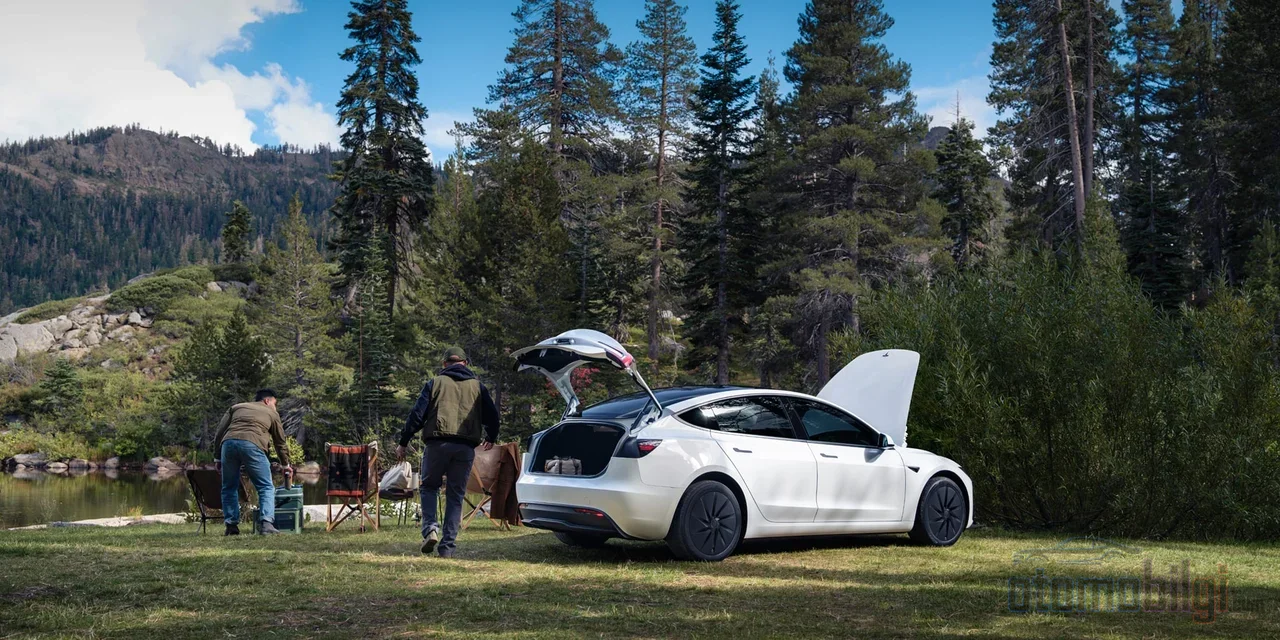
The Tesla Model 3 is a mid-size electric sedan with a fastback body, introduced in 2017 and significantly matured with the 2023 Highland refresh. Although it remains in the shadow of the Model Y's SUV form, it is still one of the benchmarks of its class in terms of range, efficiency, and driving character. In this article, we examine the Model 3's technical identity, the aspects that set it apart from its rivals, and its position in the Türkiye market through measurable data.
Highlights
- The Long Range RWD version offers 702 km WLTP range; in the base Standard version, this figure is 534 km.
- According to manufacturer data, the 13 kWh/100 km WLTP consumption ranks among the most efficient electric sedans on the market.
- DC fast-charging power is 175-225 kW in the base model and around 250 kW in the other versions.
- The Performance version accelerates from 0-100 km/h in 3.4 seconds.
- With the front trunk included, total cargo capacity reaches 682 liters.
Which Segment Is the Model 3 In, and What Is Its Identity?
The Model 3 is positioned in the battery-electric mid-size (D) sedan segment. Tesla describes the model as a mid-size electric sedan designed for affordability and performance; the trio of rapid acceleration, long range, and low running costs forms the backbone of this definition. The fastback body type adds a sporty slant to the classic sedan silhouette and allows the rear window to open together with the trunk lid - the practical flexibility of a hatchback with the look of a sedan.
From an engineering standpoint, two factors define the model's identity. First, the dimensions: the Model 3 measures 4,720 mm in length, 1,850 mm in width, and 1,440 mm in height; the 2,875 mm wheelbase allows the cabin to sit on a long chassis. The second is efficiency: a consumption figure of 13 kWh/100 km on the WLTP cycle is below nearly every rival in this class. Longer range with a smaller battery is an engineering achievement that translates directly into a cost advantage.
Range and Charging Characteristics: The Model 3 in Numbers
The 2026 lineup consists of four versions, and the technical table is enough to clarify the differences between them. Tesla does not officially disclose battery capacities; the capacity figures below are approximate.
| Version | Battery | WLTP Range | Power | DC Charging |
|---|---|---|---|---|
| Standard (RWD) | ~64 kWh LFP | 534 km | 286 hp | 175 kW |
| Long Range RWD | ~84 kWh NMC | 702 km | 320 hp | 250 kW |
| Long Range AWD | ~84 kWh NMC | 629 km | 441 hp | 250 kW |
| Performance | 82.0 kWh | 571 km | - | 250 kW |
On the charging side, two metrics must be distinguished: peak power and average power. On the Performance version, DC charging from 10% to 90% takes 39 minutes, drawing an average of 98 kW during that time; on the base model, the same range is completed in 44 minutes with an average power of 79 kW. Since peak value is reached only briefly, the effect of preconditioning the battery - that is, heating it before charging - is critical here. Tesla's navigation-integrated battery preconditioning keeps the charging curve high by bringing the battery to its ideal temperature as you approach a Supercharger. An estimated range gain of approximately 270 km in 15 minutes is projected for the standard version.
The choice of LFP chemistry in the base version is also a notable engineering decision: Although LFP batteries lag behind NMC in energy density, they are advantageous in terms of cycle life and tolerance to 100% charging, which means using the range budget in daily driving without stress. In the Long Range versions, however, the priority on range requires NMC chemistry.
Interior and Technology: The Cost and Reward of Minimalism
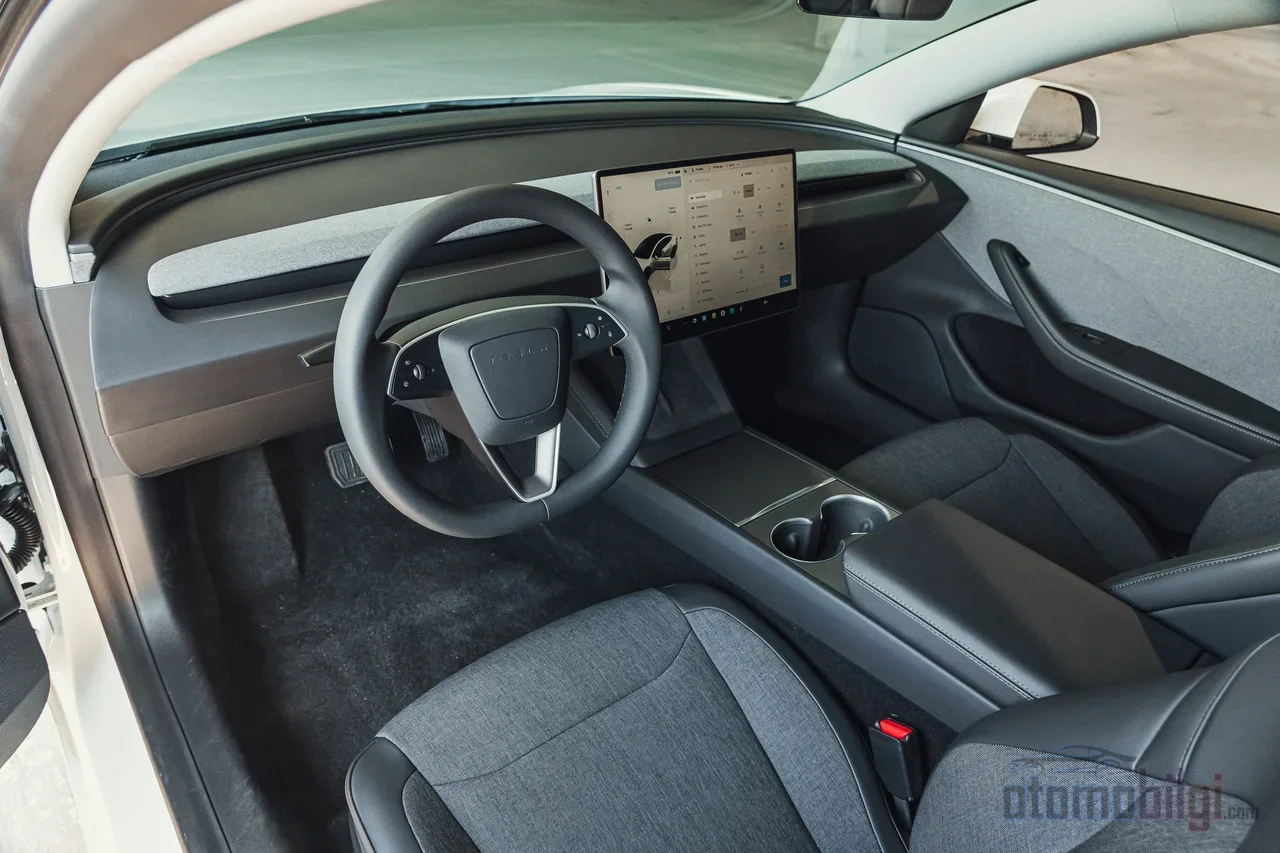
There is a single center in the cabin: A 15.4-inch touchscreen. All systems, including navigation, multimedia, climate control and cameras, are managed from this screen; there is no instrument panel in the classic sense. In the Premium and Performance versions, an 8-inch second screen on the rear seat offers passengers control options. The Highland refresh brought a noticeable leap in comfort and perceived quality; thanks to the four-layer glass, acoustic glass roof and improved sound insulation, the cabin is significantly quieter than before.
This minimalism has an undeniable cost. Apple CarPlay and Android Auto are not supported; there is no AM radio or satellite radio either. In return, content options such as Netflix, YouTube and arcade games are standard. There are almost no physical buttons, which means the driver has to search for every function on the screen - a serious dealbreaker for those bothered by screen dependency. An interesting detail: After criticism over the removal of the turn signal stalk in the Highland's first year, the turn signal stalk returned as standard in the Standard version.
Driver Assistance Systems and Safety
The standard safety package includes adaptive cruise control, automatic emergency braking and lane departure warning; it receives 5 stars from Euro NCAP. The Full Self-Driving (Supervised) package is regarded as one of the most capable driver assistance systems in the industry, but it is offered with a monthly subscription and requires active driver supervision. Exactly when some features such as automatic parking and smart summon will become fully active in Türkiye remains an uncertainty tied to the software calendar.
Where Does It Stand Against Its Rivals?
Its most direct rivals in the electric sedan class are the BYD Seal and Hyundai Ioniq 6. An interesting data point: The RWD version of the Model 3 nearly catches up with the Seal Performance in WLTP range despite that car's significantly larger battery. In cargo volume, too, the Model 3 holds its own; the Ioniq 6's shallow trunk, despite its fastback form, is a weak point in this comparison.
- Range/efficiency: The Model 3's consumption figures show efficiency above the real-world road tests of many premium rivals, including the BMW i4.
- Driving character: In independent comparison tests, when the Model 3 is compared with the BYD Seal and MG IM5, it stands out as the most enjoyable to drive of the three.
- Charging infrastructure: Among D-segment sedans in a similar price band, the Supercharger network is cited as the strongest asset in the charging experience.
- Technology choices: The lack of CarPlay/Android Auto could push users who value physical controls toward alternatives such as the Kia EV4 or BMW i4.
These four headline points essentially frame the Model 3's purchase equation: strong on range, efficiency, charging infrastructure and driving; unconventional on connectivity and physical controls. The right choice depends on which side carries more weight for you.
Model 3 or Model Y: Is the Sedan Shape Still Meaningful?
The Model Y shares roughly 76% of its parts with the Model 3, which makes the character difference between the two models even more meaningful: Depreciation in the first year is rapid, but afterwards OTA updates and strong second-hand demand stabilize the value. The Model Y offers a higher seating position and more headroom; its 3,500-pound towing capacity and larger cargo volume are decisive for family users. The Model 3, on the other hand, stands out with a lower starting price, slightly better efficiency and a sportier driving character.
The practical comparison can be summarized as follows: The Model 3's trunk volume reaches 682 liters including the front trunk - 594 liters of rear cargo plus 88 liters of front trunk - and thanks to the 60/40 folding rear seats, long items can be carried. That volume is more than generous for a sedan, but falls short of an SUV's load capacity. If a large cargo volume is not your primary need, the sedan shape remains the most sensible choice in terms of price, efficiency and driving enjoyment. For users in Türkiye who deliberately choose the sedan body style, that is exactly the summary of this equation.
Is the Tesla Model 3 Still the Right Choice in Türkiye?
The picture in Türkiye consists of two components: the product and the infrastructure. On the product side, the strengths we listed above - range, efficiency, charging - are not limited by geography. On the infrastructure side, the Supercharger network is growing: As of 2026, there are more than 35 Supercharger locations and over 200 connectors in Türkiye; Tesla had announced its goal of more than doubling the network. The charging fee has risen from 9.90 TL/kWh to 10.40 TL/kWh, representing an increase of roughly 5%. In addition, the process of opening the Supercharger network to all brands in 2026 is maturing; this is a development that will make the network denser for Tesla users.
There are also things to know on the ownership side. First-year depreciation is rapid, but afterwards OTA updates and strong second-hand demand stabilize the value. In user discussions, chronic problem topics such as phantom braking, suspension creaks and screen crashes are being raised; The criticism that the service network's capacity needs to keep pace with sales growth is frequently repeated among Turkish users. Corrosion falling outside the scope of warranty is also a detail that should be examined before purchase.
It is necessary to point out one thing honestly: The status of the Model 3's zero-kilometer sales in Türkiye on a model-by-model basis can fluctuate within the year; some sources state that the model was not offered new in our country during certain periods, and therefore there is no direct purchase option. For this reason, checking Tesla Türkiye's current sales channel before making a purchase decision is a must. On the other hand, a product that ranks high in international ownership satisfaction surveys still offers a meaningful option, depending on the second-hand market or current stock situation.
Conclusion: Summary of the Equation
The Model 3 is an electric sedan whose price-range-equipment balance still remains unbeaten. The Long Range RWD's 702 km WLTP range, 13 kWh/100 km consumption, and Supercharger integration measurably support its technical claims. In return, the absence of CarPlay/Android Auto, a screen-dependent cabin, and rapid first-year depreciation are accepted as trade-offs. If the Model Y is the right answer for users needing volume, the Model 3 preserves its arguments for those who prefer the sedan form in 2026 as well - of course, after confirming the current situation through the sales channel in Türkiye.
Sources
- Model 3 – Sports Electric Sedan
- Tesla Model 3 Standard: price, range, specs, and reviews 2026
- 2027 Tesla Model 3 Review, Pricing, and Specs
- Tesla Model 3 Performance (Highland)
- Tesla Model 3 Performance – Full Specs, Features, Range
- 2026 Tesla Model 3 Performance Specs & Features
- 2026 Tesla Model 3 v BYD Seal v MG IM5 comparison – Drive
- BYD Seal vs Tesla Model 3 vs Hyundai Ioniq 6
- Which Tesla Model Should You Buy In 2026?
- Tesla Model 3 vs Tesla Model Y
- Supercharger | Tesla Türkiye
- Tesla Supercharger Türkiye Map 2026
- Tesla raises Supercharger prices in Türkiye
- Tesla Supercharger network opens to all brands
- Driver Power 2026