2026 Opel Combo Electric: An Electric Answer to Commercial Needs
Share This Page
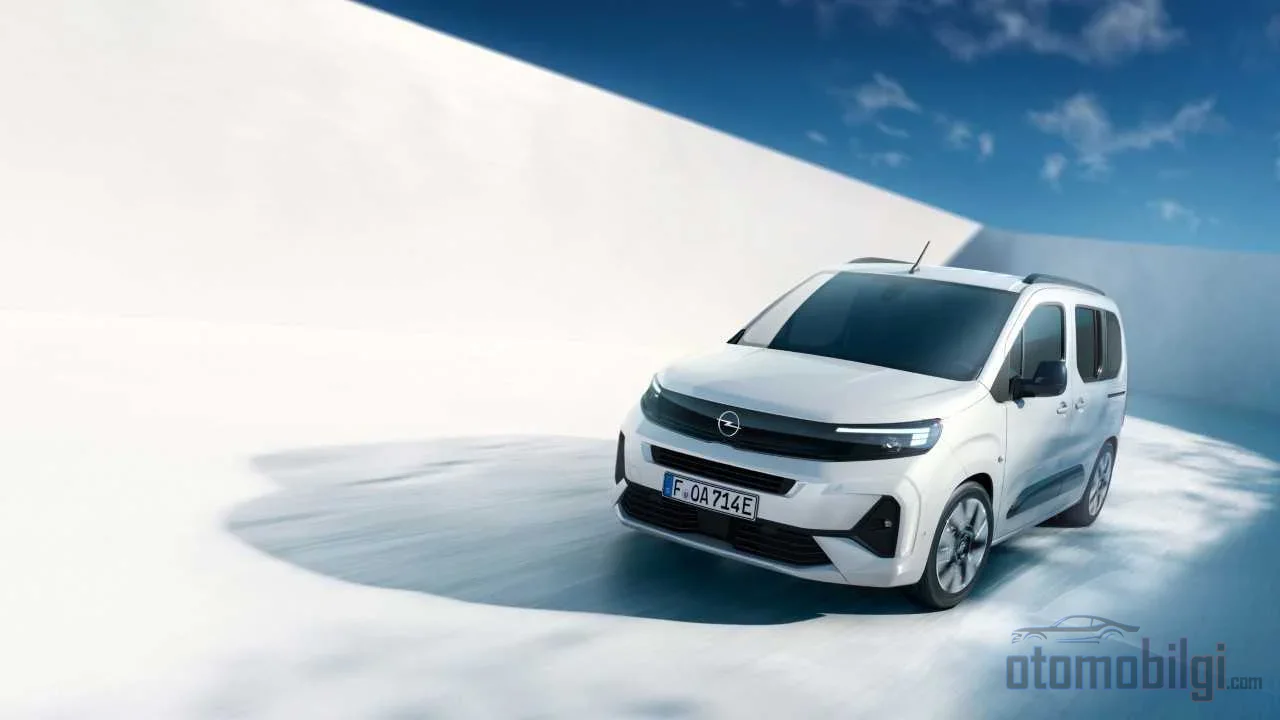
The 2026 Opel Combo Electric, the best-known electric light commercial model in its class still sold as brand new in Türkiye: With a 50 kWh battery, a 136 HP electric motor and up to 346 km of range on the WLTP cycle, a vehicle designed for tradespeople and fleet operators looking for an electric alternative in the small panel van segment. On this page, we examine the model's technical identity, loading capacity, charging characteristics and its position against rivals with measurable data.
Highlights
- 346 km WLTP average range, roughly 50 km longer than the previous generation thanks to the heat pump
- Charges from 20 to 80 percent in about 30 minutes with 100 kW DC fast charging
- Loading volume of up to 4.4 m³ and a payload capacity of up to 800 kg
- 136 HP / 260 Nm electric motor, 135 km/h maximum speed
- One of the few electric light commercial models still on sale in Türkiye
Why does the Combo Electric stand out when it comes to electric light commercial vehicles?
The talked-about side of Türkiye's electric passenger car market consists almost entirely of SUV and sedan models aimed at individual use. Yet on the light commercial side, the picture is very different: the number of electric panel vans sold as brand new can be counted on one hand, and the Opel Combo Electric is one of the most established names on that short list. In the official price list, both diesel and electric versions of the Combo sit side by side; meaning it is a genuine mass-production product still found at dealerships, serviceable under warranty, and suitable for fleet purchases.
The model's positioning is also meaningful in this respect. The Combo Electric is not a passenger car; it is defined in the small commercial panel van segment: urban delivery, cargo distribution, service vehicles and tradesperson use. Considering that volume in the Turkish light commercial market is concentrated on the Ford Transit family, Fiat Doblo and Renault Kangoo/Express side, it must be said that the electric Combo answers a niche but genuine need.
Motor, battery and range: what do the numbers say?
As its technical heart, the Combo Electric uses Stellantis Group's compact electric commercial architecture. The single-motor setup producing 100 kW (136 HP) of power and 260 Nm of torque draws a character that is sufficient for load-carrying work in this class. Maximum speed is deliberately limited to 135 km/h: since high speed rapidly erodes range in light commercial use, this limit serves energy efficiency. Consumption average is stated in the 18-19.5 kWh/100 km band, and CO₂ emissions are of course zero.
The battery has a 50 kWh capacity and is placed under the vehicle floor; usable capacity is around 45 kWh. Underfloor placement provides two things: the cargo area does not shrink, and the lower center of gravity improves balance when driving loaded. The WLTP range is officially given as 346 km on average with a footnote; compared to the previous generation, there is a gain of about 50 km thanks to the heat pump. The fact that range figures are quoted differently, between 330 and 350 km, is related to how the cycle is measured: 346 km is the average WLTP value, the most up-to-date official definition.
But what does this figure mean in the real world? Range depends heavily on three variables: load, temperature and speed. In urban use, it is possible to see values approaching WLTP in traffic where speeds are low and regenerative braking is engaged frequently. On the highway, however, the picture changes; user experiences show a noticeable drop in range at a steady speed of around 110 km/h. For a commercial buyer, the practical conclusion is clear: The Combo Electric is a vehicle designed for delivery and service jobs whose daily routes fall within the 200-250 km band.
Driving modes and regeneration
The driver can choose between three modes: Eco, Normal and Power. In Eco mode, power and climate control consumption are curtailed, with range prioritized. Three levels of regenerative braking can be adjusted using the paddles behind the steering wheel; at the highest level, the vehicle approaches one-pedal logic, recovering braking energy back to the battery in city driving. Stop-and-go traffic on a delivery route turns this feature into what is effectively an efficiency tool in terms of energy economy.
Charging character: how does it fit into the working day?
Charging is as critical a parameter as range in a commercial electric vehicle, because charging time directly affects the plan for the working day. This is where the Combo Electric is strong: With support for up to 100 kW DC fast charging, you can go from 20 to 80 percent in about 30 minutes at public fast-charging stations. A coffee break during the day is enough to cover the entire remaining distance.
On the overnight charging side, the vehicle comes as standard with a 7.4 kW single-phase onboard charger, and a full charge via this route takes about 5 hours; the 11 kW three-phase unit is optional. From an operational standpoint, the scenario is clear: the vehicle is at the depot or on a charge post overnight, and at 100 percent in the morning. The charging cable comes with the vehicle; a small detail, but exactly what is needed to start work on day one in fleet operations.
Load volume and carrying capacity: the commercial user's real question
Whoever buys an electric panel van does not ask about horsepower; they ask about cubic meters. In this respect, the Combo Electric's report card is striking: Stellantis quotes an upper limit of 4.4 m3 of load volume and payloads of up to 800 kg; the manufacturer positions this volume as best in class. Depending on the version, volume varies between 3.3/3.9 m3 and 3.8/4.4 m3, and the choice of short or long chassis also determines load length: the standard chassis offers a 3,090 mm load length, while with the long chassis this figure rises to 3,440 mm with the bulkhead door open.
When it comes to carrying capacity, it is important to know the version differences: because curb weight changes according to body type and trim level, useful payload also varies across versions within a range of a few hundred kilograms. The 800 kg maximum payload on the electric version is below the diesel Combo Cargo's 1,000 kg figure; users carrying heavy loads need to factor this difference in. In contrast, for urban cargo, courier, climate service vehicle and tradesman use, 800 kg covers a good deal of the job.
| Parameter | Value |
|---|---|
| Engine power | 100 kW (136 HP) |
| Torque | 260 Nm |
| Battery | 50 kWh (45 kWh usable) |
| WLTP range | average 346 km |
| DC fast charging | up to 100 kW, ~30 min (20-80%) |
| AC charging | 7.4 kW series, 11 kW optional, ~5 hours |
| Top speed | 135 km/h |
| Load volume | up to 4.4 m³ |
| Payload capacity | up to 800 kg |
Interior and technology: the cabin is moving beyond being a mere work tool
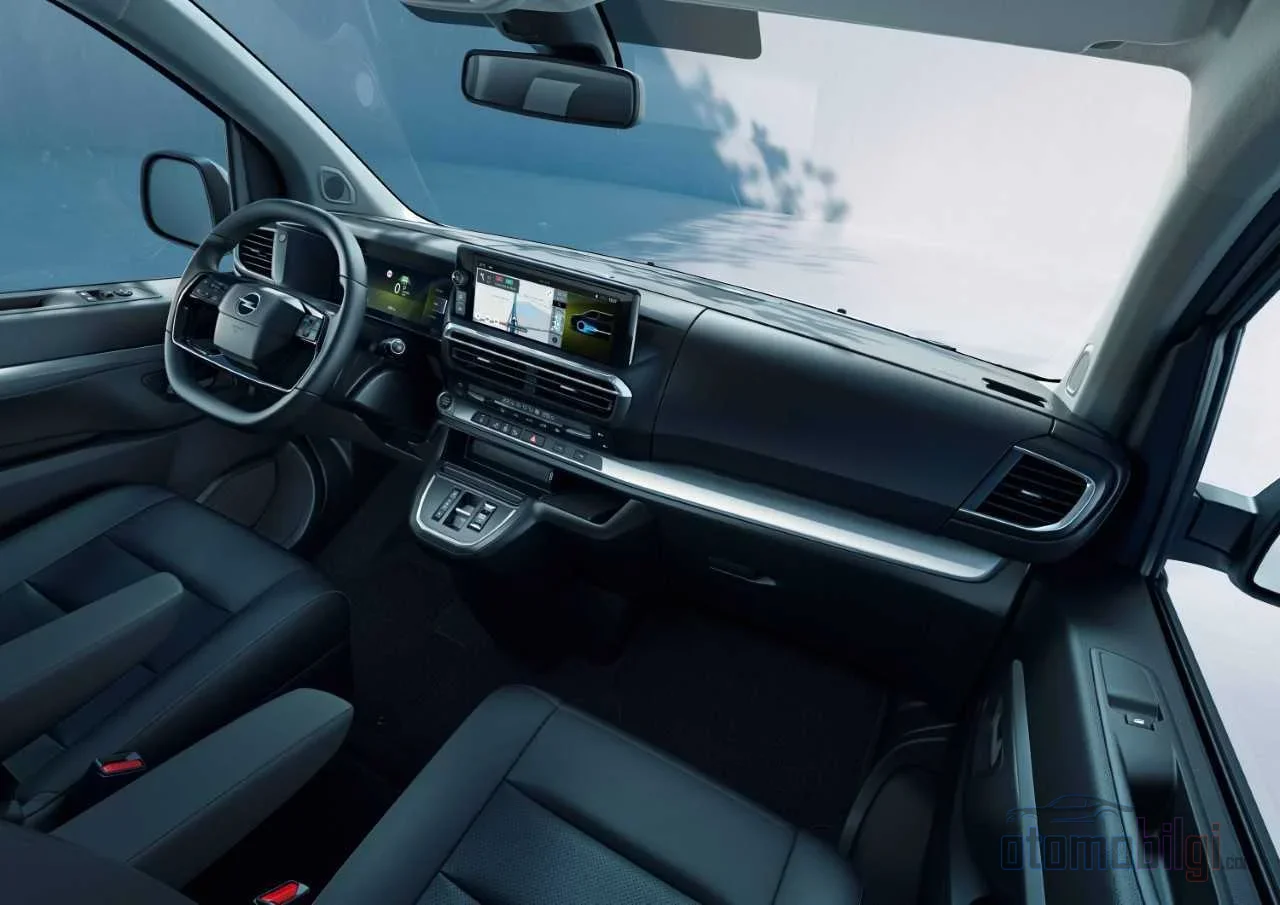
The Combo Electric's cabin offers a level of technology the light commercial segment is not used to. At the center, there is an infotainment system with a 10-inch color touchscreen; the system is built on the Qualcomm Snapdragon Cockpit platform, supports wireless Apple CarPlay and Android Auto, and wireless phone charging is among the standard equipment. A voice command assistant lets you handle navigation and climate control settings by talking to the vehicle; the driver gets the job done without taking their hands off the steering wheel.
On the night vision front, there is a segment first: The IntelliLux LED Matrix headlights, with 14 LED cells in total, 7 per headlight, illuminate the road without dazzling oncoming traffic. For delivery vehicles working in the early and late hours of the night, this is a measurable advantage on the safety side.
Safety equipment
The manufacturer offers up to 18 advanced driver assistance systems. These include active emergency braking, lane keeping and departure warning, blind spot warning, driver fatigue detection, traffic sign detection, front and rear sensors, a rear view camera providing a 180-degree image, and the Intelli-Grip traction mode for snow-mud-sand conditions. Viewed through the fleet manager's eyes, this package means not only safety but also damage cost control: a large portion of low-speed urban collisions occur in exactly the scenarios these systems intervene in.
Where does the Combo Electric stand against its rivals?
In the small electric panel van segment, the most direct rival is the Renault Kangoo E-Tech Electric. In terms of power, with 136 HP the Combo Electric is slightly ahead of the electric version of the Kangoo, which produces around 122 HP. In terms of size and volume, both models answer the same need; the distinguishing factors are more about the upper limit of charging speed, equipment level, and the dealer/fleet service network. In Europe, it is known that electric light commercials reaching 340 km of range are positioned in the affordable price band in this segment; in this equation, the Combo Electric sits at the strong end of the range side.
On the market side, a piece of data also comes from Vauxhall - Opel's United Kingdom brand: the Combo Electric has reached monthly sales leadership in the small electric panel van segment there and is a widespread choice among fleet buyers. British review sites are reporting opinions that highlight the model's practicality and cabin technology. In Türkiye, however, the picture is more niche: the model is on sale as a separate category in Opel Türkiye's official price list, but the market's volume is still concentrated in diesel light commercial vehicles. That means the Combo Electric is not a volume product for today, but a product that tips the calculation in its own favor for businesses with the right operational profile.
The calculation for fleet and tradesman buyers: who does it work for?
It is possible to summarize the usage profile where the Combo Electric makes sense in three points:
- Intra-city and metropolitan cargo/courier delivery: if the daily route stays within the 200-250 km band, the WLTP range leaves a comfortable buffer; overnight depot charging keeps operations uninterrupted.
- Service and maintenance fleets: up to 4.4 m³ of volume and an 800 kg load limit cover the need to transport technical equipment, spare parts, and gear; charging cost is significantly lower per kilometer than diesel.
- Businesses with green fleet requirements: zero CO₂ emissions provide an operational advantage in regions where environmental regulations are tightening and in site access zones.
In contrast, long highway routes, regular loads over 1 ton, or distances exceeding 300 km per day are the territory of diesel versions, not this model. On the battery warranty side, the manufacturer's international practice is at the level of 8 years/100,000 miles; it would be a correct step to confirm the warranty conditions in Türkiye through the dealer. On the pricing side, since figures change rapidly depending on the period, checking the current price list is a must; on this page, we prefer to describe the model's identity rather than its price.
Conclusion: a measurable commercial solution
The Opel Combo Electric grounds its promises in measurable parameters rather than abstract marketing rhetoric: 346 km WLTP range, 80 percent charge in 30 minutes, 4.4 m³ of volume, 800 kg load. These four figures summarize what the model is. Being one of the rare electric light commercial models with ongoing zero sales in Türkiye positions it among the only valid options for a distinct user base with specific needs. For every business with a measured route, access to charging infrastructure, and a desire to recover its fuel costs, the Combo Electric is one of the most rational commercial electric answers of 2026.
Sources
- Opel Combo Electric | Overview (Opel Türkiye)
- New Opel Combo Electric and Zafira Electric (Stellantis Türkiye Press)
- New Opel Combo-e Compact Van (Stellantis Press)
- Opel Combo-e Cargo | Overview (Opel Ireland)
- Opel Combo Electric 50 kWh (EV Database)
- Combo Life Electric (Vauxhall UK)
- Vauxhall Combo tops small electric van market (Van Reviewer)
- Opel Combo E Van Combo-e L2H1 50kWh Specs (Ultimate Specs)
- Opel Commercial Price List (arabam.com)
- Most Preferred Light Commercial Vehicles in 2026 (Ticariport)