Will the 2026 Audi Q6 e-tron Shake Up the Premium Electric SUV Class?
Share This Page
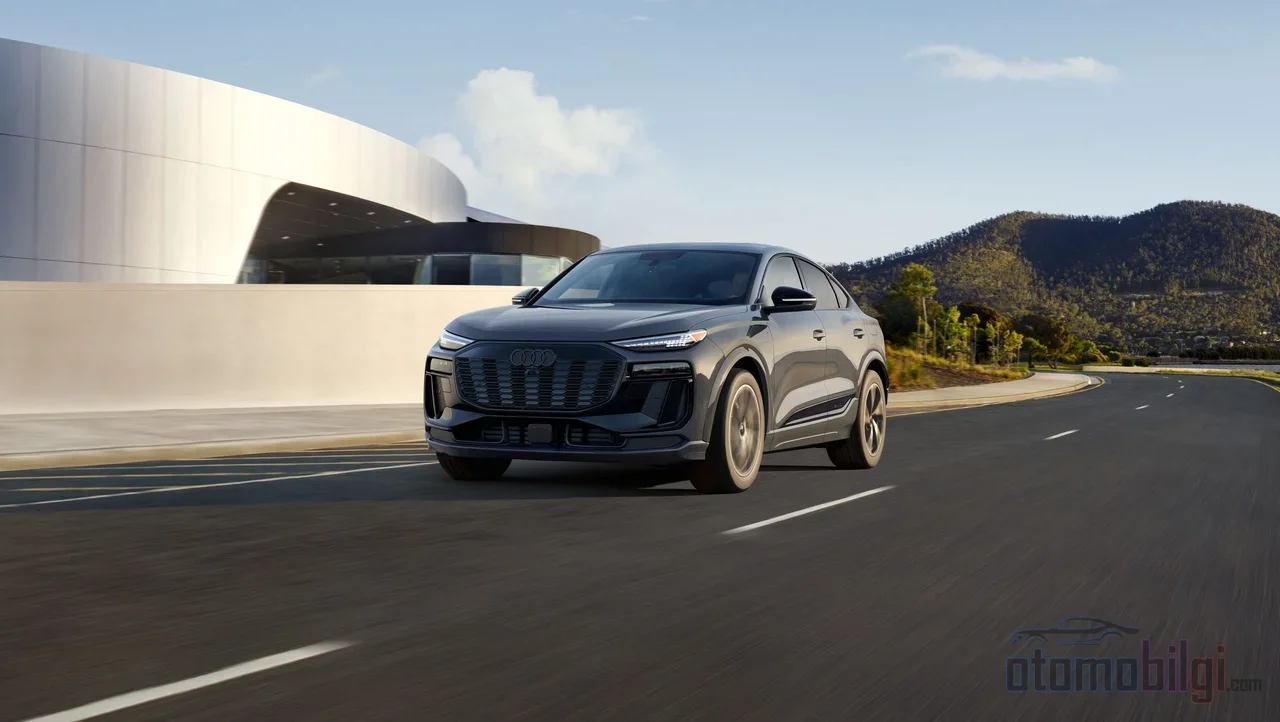
The Audi Q6 e-tron is the first series-production model to use the PPE platform, which the Ingolstadt brand developed together with Porsche; with its 94.9 kWh battery, 800-volt architecture, and 270 kW DC charging speed, it sits clearly above the Q4 e-tron and positions itself as a serious player in the premium electric SUV class. The clear answer to the question is this: in terms of range and charging, it pulls clearly ahead of the Mercedes EQE SUV, while against the new BMW iX3 it falls behind in the technology race, but it still remains a strong alternative thanks to its cabin quality and platform maturity. To correctly understand the identity of this model, which is still sold new in Türkiye, we need to look at three questions: how much does it differentiate itself from the Q4 e-tron, what is its technical balance against its rivals, and who is it aimed at?
Highlights
- 94.9 kWh usable battery, range of 623 km (SUV) and 648 km (Sportback) on WLTP
- 800-volt architecture with 270 kW DC charging; 10-80% range in about 21 minutes
- Larger body than the Q4 e-tron with 4.77 m length and 526 liters of cargo volume
- Starting price in Türkiye signals a band of 6.46 million TL
- The SQ6 version 380 kW of power and 0-100 km/h in 4.3 seconds sits at the top
What is the Q6 e-tron and where does it fit in Audi's electric lineup?
Audi's electric SUV portfolio now has three layers: the MEB-based Q4 e-tron at the entry and mid-level, the Q8 e-tron at the top, and the newly arrived Q6 e-tron right in the middle of these two. This middle gap was important, because the Q4 e-tron comes from VW Group's budget-focused electric platform, while the Q8 e-tron is a model carried by previous-generation technologies. The Q6 e-tron takes a different path from both: Premium Platform Electric, or PPE, developed jointly with Porsche.
The most tangible benefit of PPE is the 800-volt electrical architecture. To translate that: it can draw and deliver current at higher voltage from the same battery, thereby increasing both charging speed and efficiency at high speeds. The platform is shared with the Porsche Macan Electric, and this partnership gives the Q6 an engineering pedigree that Audi could not offer in an ordinary SUV. You feel it in the dimensions too: 4.77 m length means a body that is wider and taller than the Q4. Car and Driver's description is apt: the Q6 can roughly be thought of as a quieter, electric version of the Q5.
Range and charging: where do the numbers tell the real story?
The battery is the same across all Q6 e-tron versions: 100 kWh gross, 94.9 kWh usable. This is not one of the largest packs in its class, but it works well with PPE's efficiency. The range table breaks down by version as follows:
| Version | Power | 0-100 km/h | WLTP Range |
|---|---|---|---|
| Performance RWD (SUV) | 240 kW | 6.6 s | 623 km |
| Performance RWD (Sportback) | 240 kW | 6.6 s | 648 km |
| quattro (SUV) | 285 kW | 5.9 s | 572 km |
| quattro (Sportback) | 285 kW | 5.9 s | 595 km |
| SQ6 | 380 kW / 820 Nm | 4.3 s | 540 km |
Consumption is also within predictable limits: the Q6 SUV sits in the 15.6-19.3 kWh/100 km band, the Sportback is a touch more efficient, and the SQ6 pays the price for its performance with 17.7-18.6 kWh. As a practical note, it is a healthy approach to expect a realistic daily range below the WLTP figure, around 440-480 km; the WLTP cycle is measured under laboratory conditions and is rarely matched exactly even in mild out-of-town use.
What does 270 kW charging mean?
This is where the real difference lies. Thanks to its 800-volt architecture, the Q6 e-tron can reach 270 kW of peak power in DC fast charging and completes the 10-80% range in about 21 minutes. On the AC side, 11 kW is standard; 22 kW three-phase charging is optional. To put it in perspective: being able to fill four-fifths of the battery during a break on a long journey is the single factor that brings the electric vehicle travel experience closer to the rhythm of a gas station. In this respect, the Q6 is one of the fastest SUVs in its class.
Interior and technology: What does the Digital Stage offer in daily use?
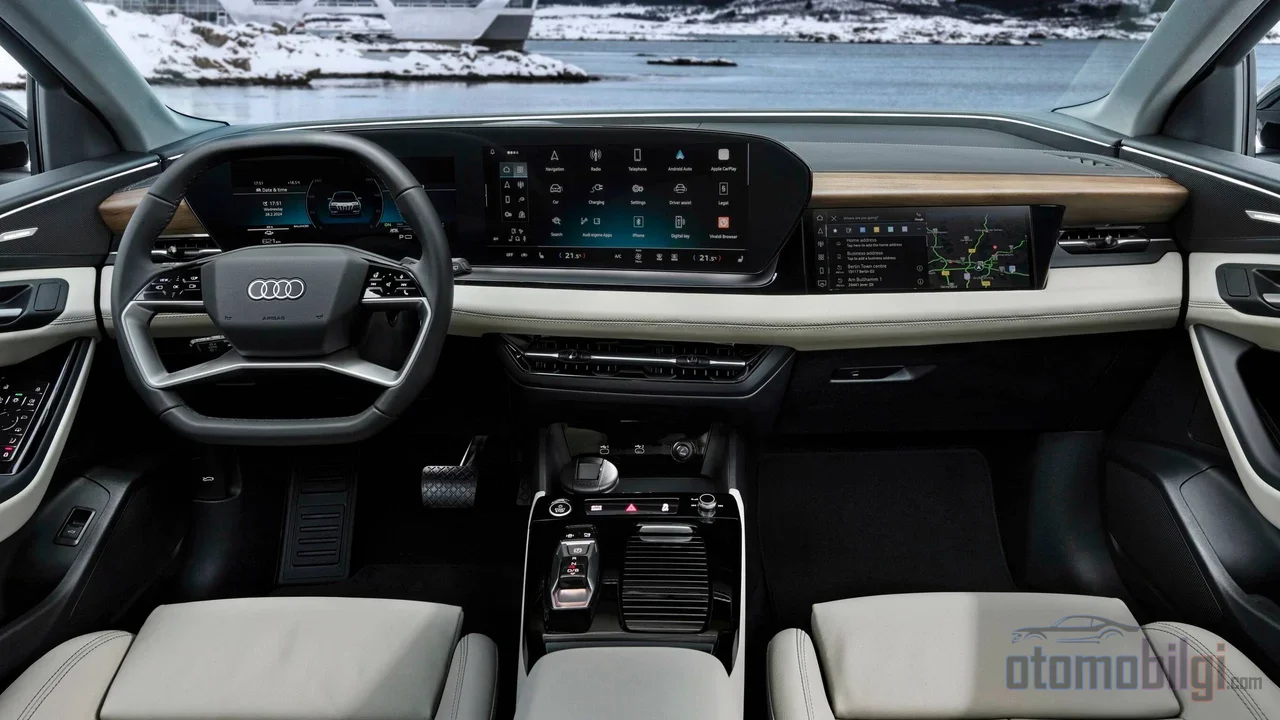
The Q6 e-tron's cockpit is a first for Audi: the brand calls it the Digital Stage and it houses two main screens on its curved surface - an 11.9-inch virtual cockpit and a 14.5-inch central OLED touchscreen. Audi Türkiye's model page also emphasizes that futuristic OLED displays are used for the first time. The system is based on Android Automotive and comes with Google Maps built in; meaning navigation no longer relies on phone mirroring but on the vehicle's own operating system.
Two hardware details stand out. The first is the optional 10.9-inch front passenger screen: while on the move, privacy mode kicks in, separating the passenger's video watching from the driver's field of view. The second is the augmented reality head-up display: this system, which shows navigation instructions as arrows floating on the road, is genuinely functional in the city. Together, these two elements make the Q6 the model speaking Audi's most current language in terms of cockpit technology.
How does it differ from the Q4 e-tron, and is the switch worth it?
This question is the most debated topic both in Türkiye and on the global stage, because the two models stand side by side at dealerships. The difference can be summed up on four axes:
- Platform: The Q4 is MEB-based and 400 volts; the Q6 is PPE-based and 800 volts. This alone is the source of the difference in charging speed.
- Battery and range: With its 94.9 kWh pack and WLTP range of up to 623 km, the Q6 stays a class above the Q4.
- Body: With a length of 4.77 m, a wider body, and 526 liters of trunk space, the Q6 is larger than the Q4; the Q4's trunk is 520 liters.
- Cabin: With the MMI Panorama display and a new software architecture based on Android Automotive, the Q6 offers Audi's most up-to-date interior.
To be clear: in some points such as front knee room, the Q4 surprises and can offer a more generous value than the Q6. The decision is a simple equation: if 800-volt charging speed and the new cabin don't sway you, the Q4 is a cheaper ticket. If your usage is mostly long-distance and you want a cabin with fresh technology, the Q6 earns its difference.
How does it balance against the Mercedes EQE SUV and BMW iX3?
There are two different scenarios in the rival comparison, because the two rivals come from different generations.
Mercedes EQE SUV: a clear difference in charging
The EQE SUV has a 400-volt architecture and comes with a battery pack of up to 90.6 kWh; in the 350+ version, about 96 kWh of usable capacity and 596 km of WLTP range are cited. DC charging peak power is limited to 170 kW, and the 10-80% range takes around 32-33 minutes. Placed side by side with the Q6's 270 kW and 21-minute figure, the difference becomes concrete: in a similar battery class, the Q6 significantly shortens stop-and-go charging breaks compared to the EQE SUV and also leads in range. The EQE's strength is its classic luxury identity; but in the debate over the technical charging-range balance, the Q6 is superior.
BMW iX3 (Neue Klasse): a new rival, new rules
The new-generation iX3 enters from a completely different league: 108.7 kWh battery, 805 km WLTP range, 400 kW DC charging power, and 309-372 km of additional range with a 10-minute fast charge. BMW Türkiye's technical page officially provides these figures; the Turkish media also described a journey experience exceeding 1,000 km on a single charge. In the range and charging race, the iX3 is currently measurably ahead. The Q6's counter-answer is not technical but character-based: the mature PPE platform and a more conventional, higher-quality-feeling luxury cabin. On the price side, US data shows the iX3 starts about $3,000 cheaper; meaning the Q6 lags in this race not in technology but in price and range items.
Its place in the Türkiye market and target buyer profile
The Q6 e-tron was officially launched for sale in Türkiye; Doğuş Oto's model page highlights the PPE platform and 800-volt architecture, and it is listed alongside the e-tron family in Audi Türkiye's current price list. The price picture is clear: the starting price signals a band of 6.46 million TL, which makes the model appeal to a truly very limited audience in Türkiye. The fact that 2025 listings appear in the used market in the 5.2-6.1 million TL band also shows there is pressure above the new price.
The target buyer profile naturally narrows with these figures: the Q6 e-tron appeals to a buyer who wants long-distance range, fast charging, and fresh cabin technology in one package, weighing brand value alongside technical equipment. For a user in this profile, the Q6's strongest argument is faster charging and range than the EQE SUV, and maturity and cabin character compared to the iX3. Its weakness is the positioning reflected in the price: if one rival has a clear advantage, the other speaks with price, and the Q6 does heavy work on both fronts.
To summarize: the Q6 e-tron does not shake up the premium electric SUV class, but it reminds the class of its benchmarks. The 800-volt architecture and 21-minute 10-80% charging show an engineering depth not usually found at this level in an Audi; the 623 km WLTP range makes daily use comfortable. It wins against Mercedes in the charging-range balance, and against BMW in cabin and platform maturity. Rather than "shaking up," "consolidating" would be a more fitting description.
Sources
- Q6 SUV e-tron - Audi Türkiye
- Audi Q6 e-tron - Audi Global
- Audi Q6 SUV e-tron Specifications - Doğuş Oto
- Audi Q6 e-tron | Electric Model - Audi ME
- 2026 Audi Q6 e-tron Price, Specs and Range - CarTell.tv
- 2026 Audi Q6 e-tron Australia: Price, Specs and Range - Evee
- 2027 Audi Q6 e-tron - Car and Driver
- 2027 Audi Q6 e-tron - Audi USA
- BMW iX3 technical specifications - BMW Türkiye
- High-voltage battery EQE SUV - Mercedes-Benz Türkiye
- New Audi Q6 e-tron launched for sale in Türkiye - Log
- Audi Q4 e-tron vs Q6 e-tron - Sinclair Group