2026 Hyundai INSTER: The Small But Smart Electric City SUV
Share This Page
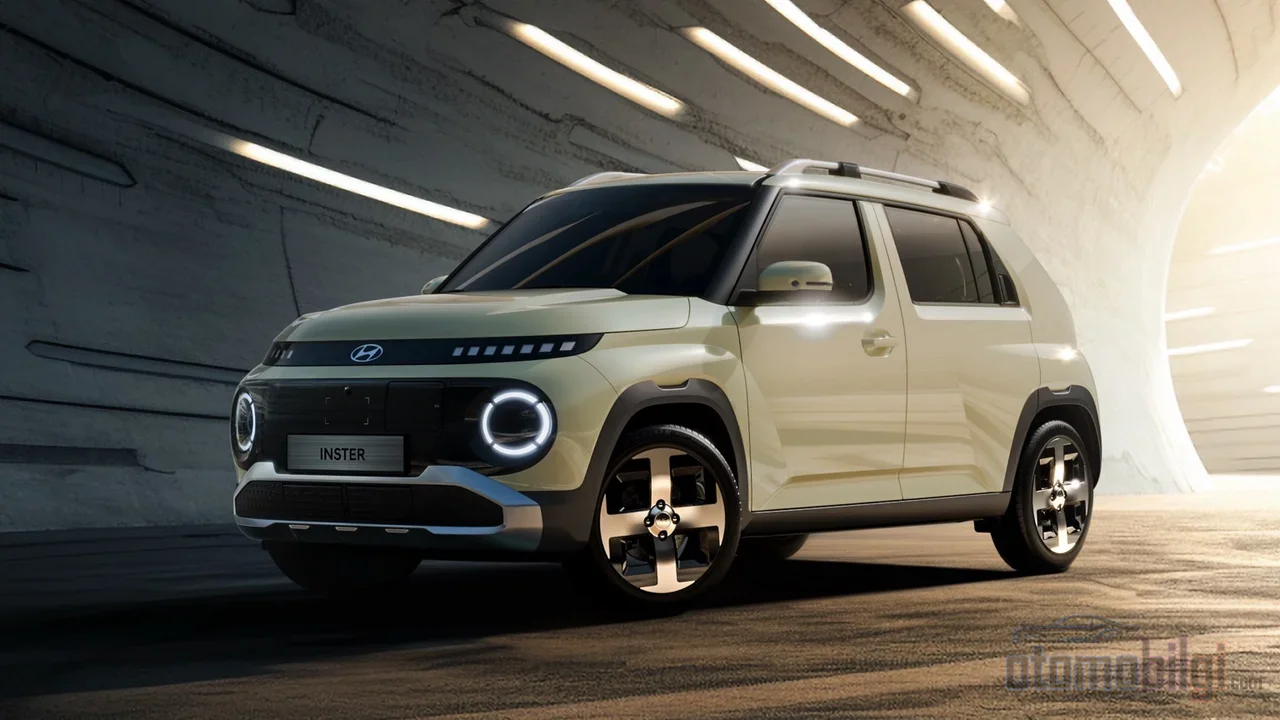
Hyundai INSTER, the brand's smallest fully electric car: an A-segment city vehicle that combines the robustness of SUV design with interior volume close to the B segment in a single body. INSTER, is on sale as a brand-new vehicle in Türkiye; with two battery options, a WLTP range exceeding 300 km and a flexible interior, it is positioned as an electric car based on city use that also dares to venture beyond the city when needed. This page clarifies the model's place in its segment, its technical character and its role in the Hyundai lineup.
Highlights
- Length 3,825 mm - a size right in the middle between A-segment and B-segment models
- Two batteries: 42 kWh and 49 kWh; WLTP range 327 km up to with 42 kWh, 370 km up to with 49 kWh
- With DC fast charging, the 10-80% range at an 80 kW station takes about 22 minutes
- Dual 10.25-inch screens, wireless phone charging and V2L external power supply capability
- Awards: World Electric Car of the Year 2025, Golden Steering Wheel 2025, TopGear Supermini of the Year 2026
What is the Hyundai INSTER and which segment does it belong to?
The INSTER is the smallest fully electric car in Hyundai's lineup. On paper, it is defined as A-segment; however, its dimensions place it right in the middle between a traditional A-segment city car and broader B-segment models. With a length of 3,825 mm, a width of 1,610 mm and a height of approximately 1,575-1,715 mm (varying by variant), the vehicle can move as comfortably as a classic city car in cramped city streets, while the high-roofed SUV silhouette gives the interior a remarkable sense of spaciousness.
In the Turkish market, the INSTER is introduced as Hyundai's first A-class SUV model and is sold in three trim levels: Dynamic, Advance and Cross Advance. Of these, the Cross is the adventure-oriented version; with 17-inch alloy wheels, black wheel cladding, special bumpers, a skid plate and an optional roof basket, it stands apart visually from the standard INSTER. The matte green special color option is also exclusive to this version.
The awards the model has received exceed what would be expected of a small car in this segment: World Electric Car of the Year 2025, Golden Steering Wheel 2025 in the under €25,000 category, and TopGear Supermini of the Year 2026. This trio is an indication that the INSTER is talked about not only for its price tag but also for its product success.
Range, battery and charging character: is it enough for the city?
The INSTER comes with two battery options: 42 kWh and 49 kWh. In the version with the larger battery and 15-inch wheels, the WLTP range goes up to 370 km; in the 42 kWh version this figure is 327 km. Hyundai Türkiye markets the model in the context of city use with a range of approximately 360 km and fast charging capability. The apparent difference between the figures stems from the battery and wheel configuration; which combination you choose directly determines your range.
The drivetrain is simple and logical: front-wheel drive, 71-84.5 kW of power (depending on trim), 147 Nm of torque, 0-100 km/h in about 10.6 seconds and a 140 km/h top speed. The performance figures are not exciting; but the intended use of this class is not about 0-100 scores either. The 147 Nm of torque provides instant and fluid propulsion in stop-and-go traffic; the 140 km/h top speed leaves a sufficient reserve on secondary intercity roads.
How long are the charging times?
On the AC side it charges at 11 kW; this is a standard and sufficient value for overnight charging at home or at work. On the DC side, the 10-80% range takes about 35 minutes at a 50 kW station and about 22 minutes at an 80 kW station. In other words, the "30-minute DC charging" claim emphasized in the campaign communication points to a realistic target in daily use: it is possible to recover most of the range during a coffee break.
As for real-world range: WLTP values reflect laboratory conditions in every electric vehicle, and the range in use falls behind due to factors such as cold weather and speed profile. For the 42 kWh version, an estimated real-world range of around 260 km is projected in mild conditions; even this is enough to practically eliminate charging worries in weekday city use.
On the battery side, the standard Hyundai policy applies: 8 years / 160,000 km battery warranty. For a buyer thinking about long-term total cost of ownership, this period is more than the reassurance expected from a small electric car in the segment.
| Feature | INSTER 42 kWh | INSTER 49 kWh |
|---|---|---|
| WLTP range | 327 km | up to 370 km |
| Power | 71-84.5 kW | 71-84.5 kW |
| Torque | 147 Nm | 147 Nm |
| 0-100 km/h | ~10.6 s | ~10.6 s |
| Top speed | 140 km/h | 140 km/h |
| DC 10-80% (80 kW station) | ~22 min | ~22 min |
| Battery warranty | 8 years / 160,000 km | 8 years / 160,000 km |
Interior flexibility: how does a 3.8-meter body hold so much volume?
One of the INSTER's strongest cards is cargo and seat flexibility. The standard cargo volume is 238 liters; when the rear seats are slid forward, this value rises to 351 liters , and when the seats are folded, it reaches 1,059 liters . The 50/50 split rear bench makes it possible to carry two people in the back while hauling cargo; the rear seats can slide 16 cm forward and backward, and all seats fold fully flat.
Behind this flexibility lies an architectural choice: a flat electric floor, a battery placed under the body, and a high roof. We see the same trio formula in large electric SUVs; the INSTER fits it into a 3.8-meter body. The result is a vehicle that looks like an A-segment car from the outside but feels two sizes larger once you sit inside. Foreign test editors emphasize the same point: the interior is "surprisingly spacious" and the car is like "a Tardis on wheels." The seat count in the spec lists varies by market: European listings show 5 seats, while some market listings show a 4-seat configuration; the Turkish market is based on the five-seat layout.
Technology equipment: big screens in a small body
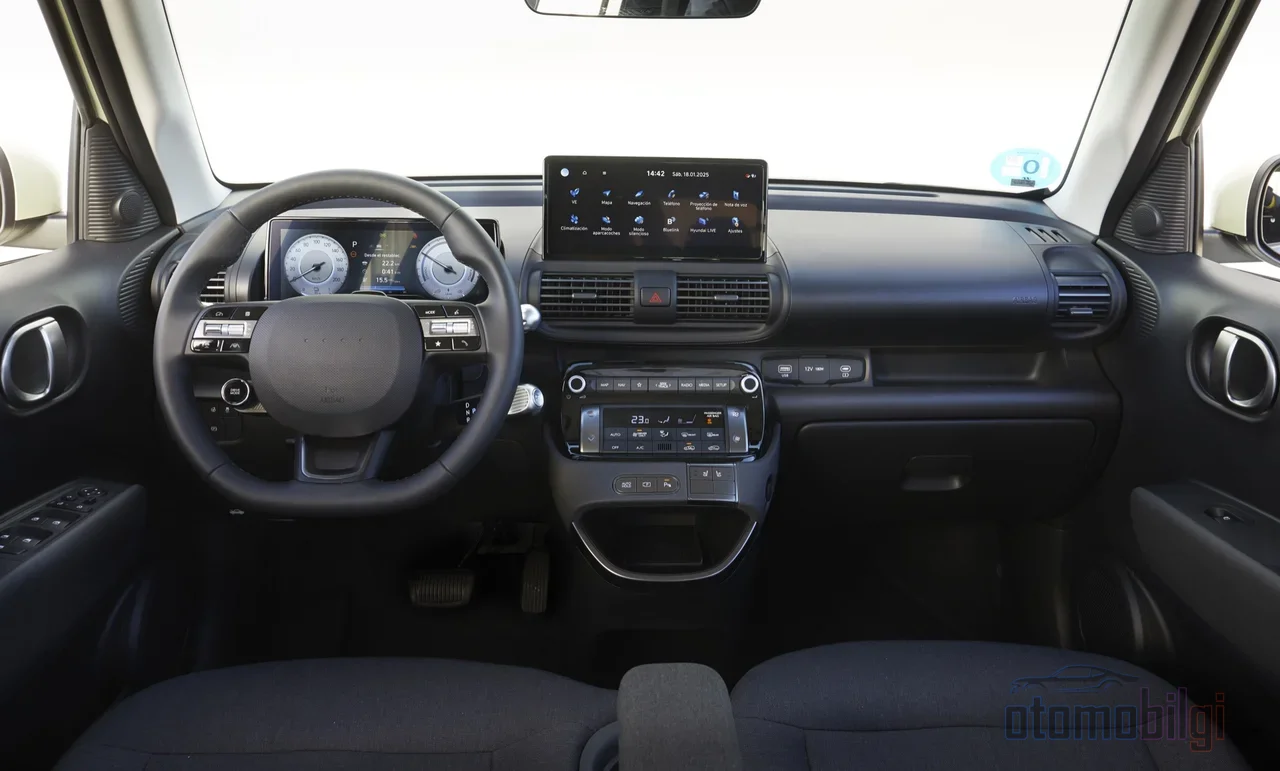
The INSTER's technology package is positioned above its class. The dual 10.25-inch the screen is standard; the instrument cluster and touchscreen multimedia display sit in the driver's line of sight. Apple CarPlay and Android Auto are offered as standard - one note to add: wired connection is required for smartphone mirroring. The console also has a wireless phone charging unit, so a practical balance can be struck between charging the phone without plugging it in and using CarPlay via cable.
- Heated seats and heated steering wheel
- 64 colors LED ambient lighting
- One-touch opening sunroof
- INSTER Lounge trim features fabric/leather upholstery and fully folding seats
The driver assistance systems list is also generous: forward collision avoidance assist, intelligent speed limit assist, lane following and lane keeping assists, rear occupant alert and smart cruise control with Stop&Go function. Cruise control coming with Stop&Go in a small city car - where you might not think you would use it much outside the highway - brings tangible comfort in traffic congestion.
There is also a practical capability unique to INSTER: V2L, meaning powering external devices with energy from the battery. From a kettle at a campsite to charging climbing gear after a summit, the vehicle's battery can be used like a portable energy source.
How does it differ from the Kona Electric and the Ioniq family?
Hyundai's electric lineup has three different philosophies. The Ioniq family is the representative of ultra-fast charging and high performance offered by the 800V E-GMP architecture; this architecture is absent in INSTER. The Kona Electric is a longer-bodied option offering longer range in compact crossover form. INSTER, on the other hand, sits below these two approaches as a deliberately smaller and more focused definition: an electric vehicle that takes up little space, is highly maneuverable in the city, yet can also venture outside the city with up to 370 km of WLTP range.
When compared directly with the Kona Electric, the Kona's long-range versions are clearly ahead in terms of range; INSTER is positioned at a more accessible price point and offers a parking/maneuvering advantage with its more compact body. In product reviews, it is stated that INSTER acts like "a distilled version of the Kona," transferring the brand's electric experience into a smaller and denser package. This observation is correct: INSTER should be read not as the Kona's shortcoming, but as the answer to a different need.
INSTER's position in Türkiye: who is it aimed at?
INSTER is actively on sale in Türkiye and listed with the 2026 model year; during campaign periods it is positioned as one of the most accessible electric SUVs in Türkiye. On the marketing side, the "cheapest" claim is not emphasized; the focus is on offering the most consistent experience in the city within the entry segment. In a market like Türkiye where demand for SUV-bodied electric vehicles is intense, INSTER's position as one of the two models offering a true SUV silhouette in this size is meaningful.
Defining the target audience is not hard: buyers whose daily use mostly takes place within the city, looking for a reasonably ranged electric car as a second vehicle or sole vehicle, but preferring an SUV stance over the classic hatchback form. The luggage space stretching between 238-351 liters, the 22-minute fast-charging break, and extra capabilities like V2L are parts of a package that fits this profile. We will not give the price list on this page; however, what can be said about the model's identity is clear: the INSTER is one of the few vehicles that demonstrates, with measurable data, that the electric transition does not have to be "big and expensive."
Conclusion: a small but smart electric city SUV?
From an engineering standpoint, the INSTER's equation is consistent: limited battery capacity balanced by a body close to low weight and an efficient drivetrain; instead of range anxiety, real-world usage was targeted. 327-370 km WLTP range, 22-minute 10-80% charging at an 80 kW station, and an 8-year/160,000 km battery warranty make a measurable and reassuring trio in this class. The 10.6-second 0-100 figure, which does not look competitive on the performance side, does not pose a problem in city use thanks to the nature of torque.
The answer is yes: the INSTER is a small but smart electric city SUV. For the Turkish buyer who wants to step outside the big-SUV-focused electric narrative, it is an alternative with measurable justifications, also supported by awards in its segment.
Sources
- INSTER | Highlights | Hyundai Motor Türkiye
- INSTER | Equipment - Hyundai Motor Türkiye
- INSTER | Hyundai Motor Europe
- INSTER | Features - Hyundai Motor Europe
- INSTER | Highlights - Hyundai Motor UK
- Hyundai Inster Signature 42kWh | EV Ireland
- Hyundai INSTER Long Range - EV Database
- Hyundai INSTER 2026 Pricing & Specifications - carsales
- Hyundai Inster Review 2026: Prices, specs and verdict - RAC
- Hyundai INSTER review 2026 | Road-tested - cinch
- Hyundai Inster review 2026 - price, interior & range - AutoExpress
- Hyundai Inster Review 2026 - TopGear
- Hyundai INSTER September 2026 - electric SUV - adze.com
- Hyundai INSTER vs Hyundai Kona Electric Comparison - hibritelektrik.com